

BridGene Biosciences Advances Chemical Proteomics into Commercial Era with Nearly $900M in Strategic Partnerships

BridGene Biosciences
Pharmaceutical R&D Developer

Galapagos
Small Molecule and Antibody Therapeutics Developer
In the vast landscape of the human proteome, approximately 85% of proteins are classified as “undruggable” or “difficult-to-drug” targets. Their limited ability to effectively bind with small molecules has long posed a significant challenge in drug development. The emergence of chemical proteomics offers a systematic solution to this challenge.
Chemical proteomics integrates covalent chemistry, proteomics, and mass spectrometry to comprehensively study and identify the binding of small molecules to protein targets in living cells, thereby supporting drug discovery for “undruggable” targets, as well as research into drug selectivity, mechanisms of action, and pathogenic mechanisms.Globally, chemical proteomics technologies have been translated into pharmaceutical platforms for the screening of small-molecule drugs and pipeline discovery.
Thus, chemical proteomics technologies have opened up broad commercialization prospects, demonstrating their potential in collaborations with pharmaceutical industry giants through their superior drug discovery capabilities.In January 2024, BridGene Biosciences entered into a collaboration agreement with Galapagos, with a total potential value exceeding $700 million. Under the agreement, BridGene will leverage its cutting-edge IMTAC™ platform to discover novel small-molecule drug candidates targeting specific targets.In August, the two parties further expanded their collaboration, raising the total value to nearly $900 million. Such partnerships not only ensure BridGene’s financial stability but also drive continuous technological innovation by leveraging the resources and expertise of its partners.
Meanwhile, chemical proteomics platform companies are also actively building their clinical development pipelines—marking the formal entry of this technology into the commercialization stage.Taking BridGene as an example, leveraging its proprietary IMTAC™ platform, the company has successfully incubated and advanced multiple independent R&D pipelines. Among these, the TEAD inhibitor program has entered Phase I clinical trials.
Furthermore, companies specializing in chemical proteomics platform technologies have also become hotspots in the M&A and IPO markets, demonstrating significant commercialization opportunities.In 2021, Bayer acquired Vividion Therapeutics for $2 billion, setting a record at the time for the highest upfront payment in an acquisition of a preclinical company. In March 2024, Frontier Medicines completed an oversubscribed $100 million Series C financing round.
As the commercialization of chemical proteomics flourishes, how can proprietary drug discovery platforms be developed and established? Which small-molecule drug development pathway should be chosen? And how can a steady influx of vitality be introduced into R&D iteration and commercialization? To address these questions, VCBeat interviewed Dr. Cao Ping, Co-founder and CEO of BridGene Biosciences.

Dr. Ping Cao: Co-founder and CEO of BridGene Biosciences, a mass spectrometry expert with over 20 years of R&D experience in protein characterization and proteomics. He previously served as the Head of the Protein Characterization Mass Spectrometry Team at Amgen.
BridGene is a biotechnology company focused on the discovery and development of innovative small-molecule drugs. Leveraging its proprietary chemoproteomics platform, IMTAC™, BridGene enables the screening of small-molecule interactions with the entire proteome in living cells, aiming to rapidly discover and develop potential drug candidates against high-value but “undruggable” targets.
The human proteome comprises over 20,000 proteins, of which approximately 12,000 have been confirmed to play roles in human diseases and hold potential as targets for precision therapy. However, statistics from 2017 indicate that the 1,578 small-molecule drugs and biologics approved by the U.S. FDA over the preceding decades targeted only 667 unique proteins. In other words, the majority of potential drug targets within the human proteome currently lack corresponding therapeutic agents.
Prior to co-founding BridGene Biosciences, Dr. Ping Cao had already accumulated nearly two decades of experience in the biopharmaceutical industry. As a mass spectrometry expert, Dr. Cao spent nearly 14 years at Amgen, where he served as the Head of the Protein Characterization Mass Spectrometry Analysis Team. Recalling that period, he stated, “While at Amgen, my team primarily focused on novel target discovery and pipeline support. We frequently heard scientists lament that many high-value targets were notoriously difficult to drug. Since then, I have been conceptualizing how to leverage proteomics technologies to develop therapeutics for ‘undruggable’ targets.”
While Dr. Cao Ping has been deeply engaged in mass spectrometry-based proteomics, Professor Chao Zhang, another co-founder of BridGene Biosciences and a faculty member in the Departments of Chemistry and Biological Sciences at the University of Southern California, has focused his research on chemical genetics, covalent kinase inhibitors, and chemoproteomics. In 1998, Professor Zhang joined Professor Kevan Shokat’s laboratory at Princeton University to pursue his Ph.D., where he participated in and witnessed the foundational and pioneering work of the Shokat lab in the field of protein kinases. In 2003, Professor Zhang collaborated with Professor Jack Taunton to develop covalent kinase inhibitors targeting the RSK family, as well as a systematic and efficient method for discovering covalent kinase inhibitors. Since then, developing more efficient approaches for covalent drug discovery has become one of Professor Zhang’s primary research focuses.
In 2013, Professor Kevan Shokat first reported in *Nature* molecules capable of covalently and selectively binding to the mutant cysteine of KRASG12C, bringing new hope to drug development for KRAS, the most renowned target among those considered “undruggable.” In early 2017, Vividion Therapeutics, a company founded by Professor Benjamin Cravatt based on chemical proteomics technologies and having previously collaborated with Professor Chao Zhang in the field of chemical proteomics, secured $50 million in Series A financing. This led Professor Chao Zhang to realize that the era of chemical proteomics had arrived.
Thus, in 2018, Professor Zhang Chao, who specializes in covalent drug development and chemical proteomics applications; Dr. Cao Ping, former Chief Scientist of the Proteomics and Mass Spectrometry Team at Amgen; and Ms. Irene Yuan, who brings extensive operational management experience, jointly founded BridGene Biosciences.
Over the nearly six years since its founding, BridGene has progressively established a global R&D footprint and an interdisciplinary, end-to-end team. In 2022, the company established Suzhou Qiaoji Biology, leveraging advantages in talent, speed, cost, and operations, and set up R&D centers in both China and the United States. Its team comprises scientific researchers from multiple countries around the world, with backgrounds spanning industrial drug development and academic research.
By integrating diverse innovative elements, BridGene has established IMTAC™, a next-generation chemoproteomics technology platform dedicated to identifying covalent small-molecule ligands for over 20,000 proteins across the entire proteome and developing small-molecule drugs for high-value, difficult-to-drug targets.
Fundamentally, the phenomenon of "undruggability" highlights the limitations of existing drug discovery strategies. Since the 21st century, target-based drug discovery (TDD) has become the mainstream approach, relying on researchers’ in-depth understanding of specific target proteins. The TDD strategy typically involves screening small-molecule libraries against a single purified protein in an in vitro environment to identify potential drug candidates.
Dr. Cao Ping pointed out that over the past few decades, during which target-based drug discovery (TDD) has been the mainstream approach, the number of new molecular entities and new biologics approved by the FDA has fallen short of expectations, while drug development costs have surged. Furthermore, the prevalence of target clustering and severe homogenization indicates an urgent need to adjust TDD strategies to break through current bottlenecks. In recent years, with the development and application of multi-omics technologies and increasingly complex cellular models, phenotypic drug discovery (PDD) is experiencing a renaissance.
Chemical proteomics has emerged at this pivotal juncture, creating a novel drug development strategy integrating PDD and TDD:Since chemical proteomics screening can be performed in disease-relevant live cells, just like phenotypic screening, researchers can first identify molecules that affect disease phenotypes through phenotypic screening. Subsequently, they can employ chemical proteomics techniques to determine the proteins bound by these drug candidates (identified via phenotypic screening) in live cells, as well as their binding affinities. This approach helps clarify the corresponding drug targets, mechanisms of action, and development directions, thereby accelerating the development of drugs with strong relevance to the disease.
Technologically, BridGene has established the IMTAC™ (Isobaric Mass Tagged Affinity Characterization) screening platform, which employs covalent small molecules to screen the entire proteome in live cells. The platform primarily consists of three components:

Part III involves qualitative and quantitative mass spectrometry analysis of proteins bound to small molecules, assessing the binding interactions and quantifying relative binding affinity and selectivity.
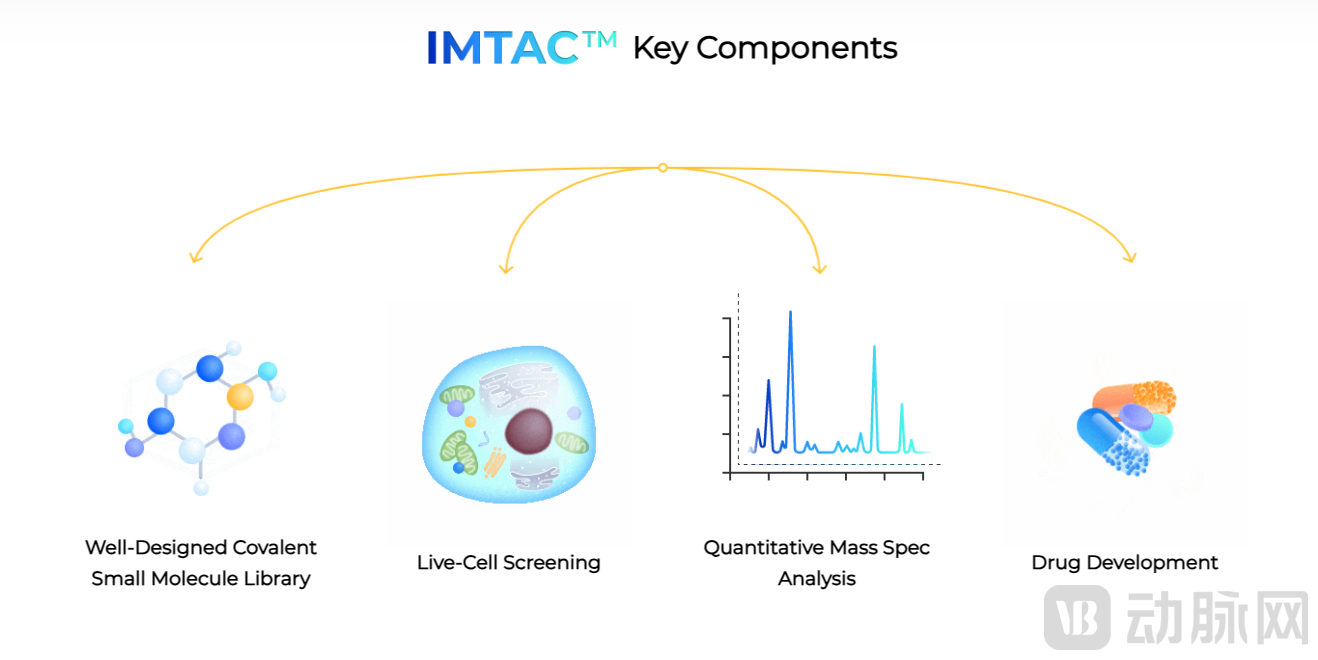
Key Components of IMTAC™ (Source: BridGene Biosciences Official Website)
BridGene’s IMTAC™ platform features four unique advantages:
High Proteome Coverage
Through its proprietary covalent molecular library design and direct competition technology, IMTAC™ can screen for effective binding of small molecules to various amino acids. In addition to cysteine, it can also bind to other amino acids containing nucleophilic groups, such as lysine and tyrosine.
Unique Screening Methodology
This method reduces background noise and improves the accuracy of qualitative and quantitative mass spectrometry analysis of binding proteins. IMTAC™ analyzes only proteins covalently bound to small molecules, while washing away proteins that do not bind to small molecules, thereby significantly reducing background noise and enhancing the accuracy and reproducibility of results. Other techniques, such as isoTOP-ABPP, determine which proteins bind to small molecules by analyzing extensive background noise and inferring sites lost after competition.
Screenable covalent and non-covalent small molecules
IMTAC™ technology can screen both covalent and non-covalent small molecules, greatly expanding the application scope of chemical proteomics.
IMTAC™ Targeted Screening Technology
It is one of BridGene’s core collaborative technologies, enabling the rapid identification of small-molecule ligands for high-value, difficult-to-drug targets through targeted screening against specific targets (such as those with low expression levels or gene mutations). Compared with whole-proteome screening, targeted screening offers higher throughput, allowing small-molecule ligands to be obtained in a short period and accelerating subsequent R&D.
Therefore, IMTAC™ can rapidly discover small-molecule ligands for multiple classes of “undruggable” targets, including:
Covalent-Driven Selectivity: Covalent inhibitors can target and modify unique cysteine residues in specific members of a protein family.
Leveraging the IMTAC™ platform, BridGene has identified small-molecule ligands for over 4,000 proteins, 75% of which had no previously known small-molecule ligands.These proteins include transcription factors, epigenetic regulators, splicing factors, E3 ligases, and other targets traditionally considered “undruggable.”, it can be directly developed into first-in-class small-molecule inhibitors or allosteric modulators that affect protein activity, or combined with protein degradation technologies to develop degraders.
In previous reports, Professor Zhang Chao, co-founder of BridGene Biosciences, used the analogy of ports and fishing boats to illustrate the similarities and differences between covalent and non-covalent drugs. The action of a non-covalent drug on its target is akin to a boat (the non-covalent small molecule) docking in a port whose shape closely matches that of the boat (the protein binding pocket of the target). This boat blocks traffic within the port, thereby modulating signal transduction and ultimately controlling disease progression. However, this non-covalent drug “boat” remains in a floating state; it can enter the port but can also depart from it at any time.
Covalent drugs are different. After this “ship” docks into the “port” of the protein pocket, its covalent warhead can form a covalent bond with an amino acid residue surrounding the protein pocket. This is akin to dropping an anchor at the bow, preventing the ship from leaving the port.For "undruggable" targets, non-covalent drugs struggle to "dock" and exert efficacy. In contrast, covalent drugs leverage their unique "anchor"—the covalent bond—to retain the covalent molecule and control target signal transduction.
Covalent drugs are a class of pharmaceuticals containing reactive functional groups that can form covalent bonds with target proteins, thereby conferring additional affinity.Therefore, the long-term targeted binding of covalent drugs can provide unique pharmacodynamic profiles and high biochemical efficiency.A highly representative example is the KRAS G12C mutation, which has spurred the development of multiple small-molecule covalent inhibitors targeting KRAS G12C, including Amgen’s Sotorasib and Mirati’s Adagrasib, both of which have received marketing approval.
Chemical proteomics has brought new rational development strategies to the research and development of covalent drugs.Leveraging the IMTAC™ platform, BridGene Biosciences is capable of systematically developing safe and effective covalent drugs against the entire proteome in a live-cell environment. IMTAC™ quantitatively evaluates the reactivity of covalent warheads (known or novel) targeting various amino acids with proteins across the whole proteome, and selects those with moderate reactivity for the design of covalent molecules, thereby maximizing their druggability.
In addition to covalent inhibitors, BridGene has also established a technology platform for covalent protein degraders (Covalent PROTACs). Leveraging its IMTAC™ platform, BridGene has identified small-molecule ligands for over 4,000 proteins, including more than 100 E3 ligases. Due to their involvement in protein–protein interactions and the lack of well-defined hydrophobic pockets, E3 ligases are often considered “undruggable” targets.BridGene is developing covalent degraders targeting multiple high-value targets.
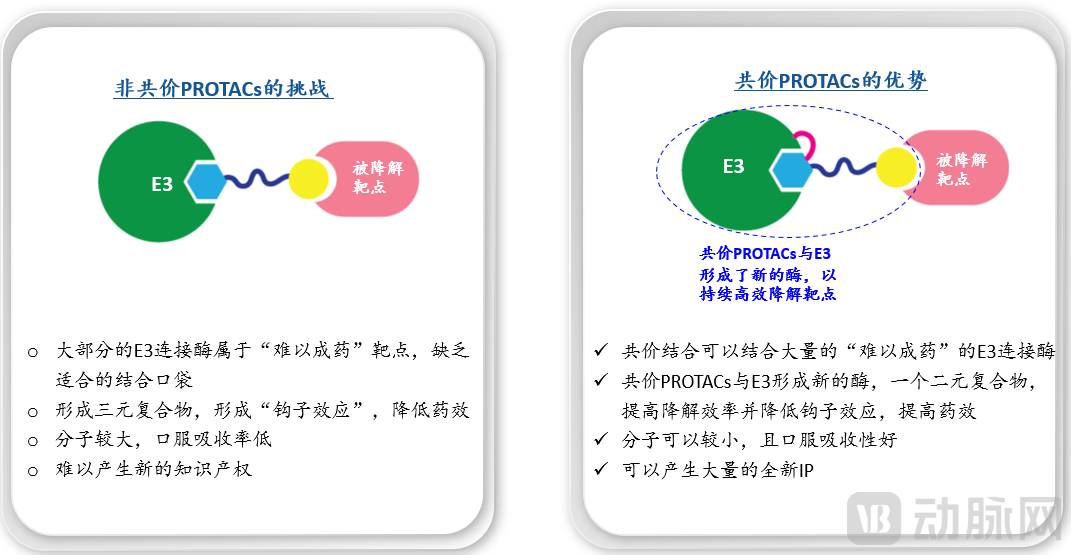 Non-covalent andCovalent Protein Degraders (PROTACs)
In an interview, Dr. Cao Ping highlighted the profound significance behind the name of its partner, Galapagos: The Galápagos Islands, as the sacred ground that inspired Darwin’s theory of natural selection, have become a symbol of innovation, adaptability, and scientific progress. This spirit of exploration aligns perfectly with BridGene’s pioneering ethos.
Dr. Cao Ping clearly stated: “Platform and project collaborations are a core component of BridGene’s development strategy.We will leverage our proprietary technology platform and collaborate with partners possessing extensive experience in the pharmaceutical sector, as well as robust capabilities in drug development and commercialization, to advance the project.“We believe this collaborative model will not only accelerate the development and discovery of drug candidates and broaden the application scope of our proprietary technologies, but also generate significant commercial returns for us.”
Taking the collaboration with Galapagos as an example,BridGene Biosciences will leverage its IMTAC™ platform to discover novel small-molecule drug candidates targeting specified oncology targets. By combining Galapagos’ strengths in clinical development and funding, the two parties will work together to advance these candidates into clinical-stage drugs.Under the collaboration agreement, Galapagos holds exclusive rights to the development and commercialization of these drugs, while BridGene is eligible to receive tiered royalties based on net product sales.
Meanwhile,BridGene is also actively advancing its R&D pipeline, with seven programs currently under development. Notably, its TEAD protein inhibitor (targeting the Hippo signaling pathway) has entered Phase I clinical trials, providing strong validation for the efficacy of BridGene’s development platform.
Dr. Cao Ping added, “As a biotechnology company, we will focus on a few select independent pipelines, but the IMTAC™ platform has already identified several highly promising targets. Looking ahead, we will continue to seek opportunities for licensing or co-development with large pharmaceutical companies.”In fact, BridGene has previously partnered with Takeda Pharmaceutical twice to jointly advance the development of multiple new drug programs.
Globally, drugs discovered by innovative companies such as Vividion, BridGene, and Frontier using their proprietary chemoproteomics technology platforms have successfully entered clinical stages, heralding the significant potential of chemoproteomics in drug discovery and commercialization.Ongoing clinical trials are gradually validating the efficacy and development potential of this technology.
The widespread application of chemical proteomics not only provides a key to unlocking the mysteries of the human proteome but also opens new avenues for drug discovery, research into disease mechanisms, and the exploration of druggability. This heralds an imminent and significant transformation in the biomedical sector: many targets once considered undruggable are now being translated into therapeutic interventions, thereby addressing substantial unmet needs in human health.