

Otsuka Pharmaceutical to Acquire Jnana Therapeutics for $1.125 Billion to Expand Autoimmune and Rare Disease Pipeline

Otsuka
Drug Developer

Jnana Therapeutics
Pharmaceutical R&D Developer
On August 1, Otsuka Pharmaceutical and Jnana Therapeutics (“Jnana”) jointly announced that they had entered into a definitive agreement. Under the terms of the agreement,Otsuka Pharmaceutical to Acquire Jnana Therapeutics, Making It a Wholly Owned Subsidiary of Otsuka America, Inc. (OAI)。
In accordance with the terms of the agreement,Otsuka Pharmaceutical will pay Jnana Therapeutics’ shareholders $800 million upon completion of the acquisition, along with up to $325 million in development and regulatory milestones. The total value of the transaction could reach $1.125 billion (approximately RMB 8.15 billion).. Subject to customary closing conditions, the acquisition is expected to be completed in the third quarter of fiscal year 2024.
Through this acquisition, Otsuka Pharmaceutical Co., Ltd. will gain JNT-517, a potential first-in-class small-molecule inhibitor, and expand its autoimmune disease portfolio and drug discovery technologies.
Founded in 2017, Jnana is a biopharmaceutical company dedicated to leveraging its next-generation chemoproteomics platform, RAPID, to address targets that have proven difficult to drug, including metabolite transporters of the solute carrier (SLC) family. Jnana focuses on developing innovative therapies for a variety of diseases, including immune-mediated, neurological, and metabolism-dependent disorders.
Leveraging its superior technology platform and team strengths, Jnana completed three rounds of financing totaling $207 million within five years, with investors including renowned companies and institutions such as AbbVie, Pfizer, and RA Capital.
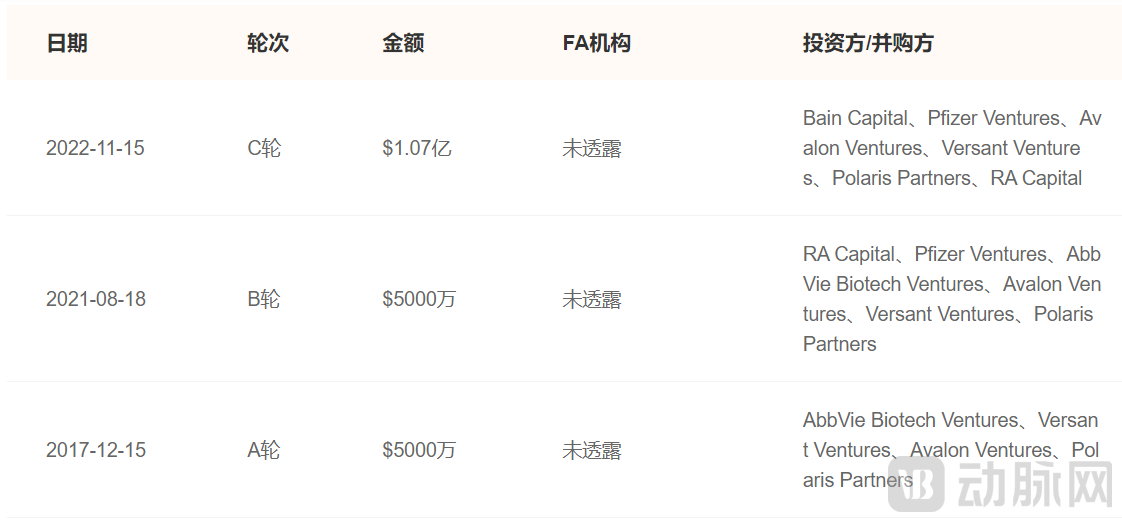 Image source: VCBeat
It is reported that Jnana Therapeutics has developed RAPID, a next-generation chemoproteomics platform designed to develop innovative drugs for highly validated yet therapeutically challenging targets. RAPID employs a high-throughput, binding-based screening approach with inherent flexibility to identify binding sites on the surface of target proteins and discover small molecules that elicit distinct pharmacological effects, such as allosteric inhibitors, protein localization modulators, or molecular glues.
Leveraging RAPID, Jnana is able to address a range of historically challenging drug target classes, including SLC transporters, transcription factors, signaling scaffold proteins, phosphatases, GPCRs, and helicases. To date, Jnana has successfully used RAPID to identify first-in-class compounds. Notably, the RAPID platform is not limited to any specific therapeutic area; however, Jnana has established a unique competitive position by focusing on phenylketonuria (PKU) and autoimmune diseases.
Phenylketonuria (PKU) is a rare inherited metabolic disorder primarily caused by a deficiency of phenylalanine hydroxylase (PAH). Phenylalanine (Phe) is an amino acid found in many dietary proteins. Under normal circumstances, PAH converts Phe into tyrosine, which is then further metabolized. However, in patients with PKU, Phe cannot be effectively converted and accumulates in the blood to abnormally high, toxic levels. If left untreated, elevated blood Phe levels can lead to progressive and severe neurological impairment and neuropsychological complications.
JNT-517, developed by Jnana Therapeutics, is an allosteric inhibitor of SLC6A19, a transporter responsible for the renal reabsorption of phenylalanine (Phe), facilitating its return to the bloodstream. In January 2024,Jnana Therapeutics Announces Statistically Significant Positive Interim Results from Phase 1 Clinical Trial of JNT-517 in Patients with PKU。
Data show that JNT-517 has a rapid onset of action, achieving a significant reduction in blood phenylalanine (Phe) levels after 7 days of treatment, which was sustained throughout the 28-day dosing period. Compared with placebo, the mean blood Phe level in the JNT-517 group decreased by 51% on Day 28 (p=0.0019). JNT-517 demonstrated a favorable safety and tolerability profile; no serious adverse events occurred during the trial, and there were no clinically significant changes in laboratory parameters, consistent with the safety profile observed in the Phase 1a study in healthy volunteers.
Based on these interim results, Jnana has amended the protocol of its ongoing trial. The company expects to announce top-line data from the second dose cohort in mid-2024 and plans to engage in discussions with regulatory authorities in the second half of 2024, seeking the possibility of directly initiating pivotal Phase 3 clinical trials of JNT-517 in the first half of 2025.
In the field of autoimmune diseases, Jnana is seeking highly validated but pharmacologically challenging small-molecule drug targets, such as interferon regulatory factor 3 (IRF3). Currently, through its RAPID platform, Jnana has identified RAPs with significant selectivity for IRF3 and, via high-throughput screening, has discovered drug-like small molecules that displace these RAPs and bind to IRF3.。
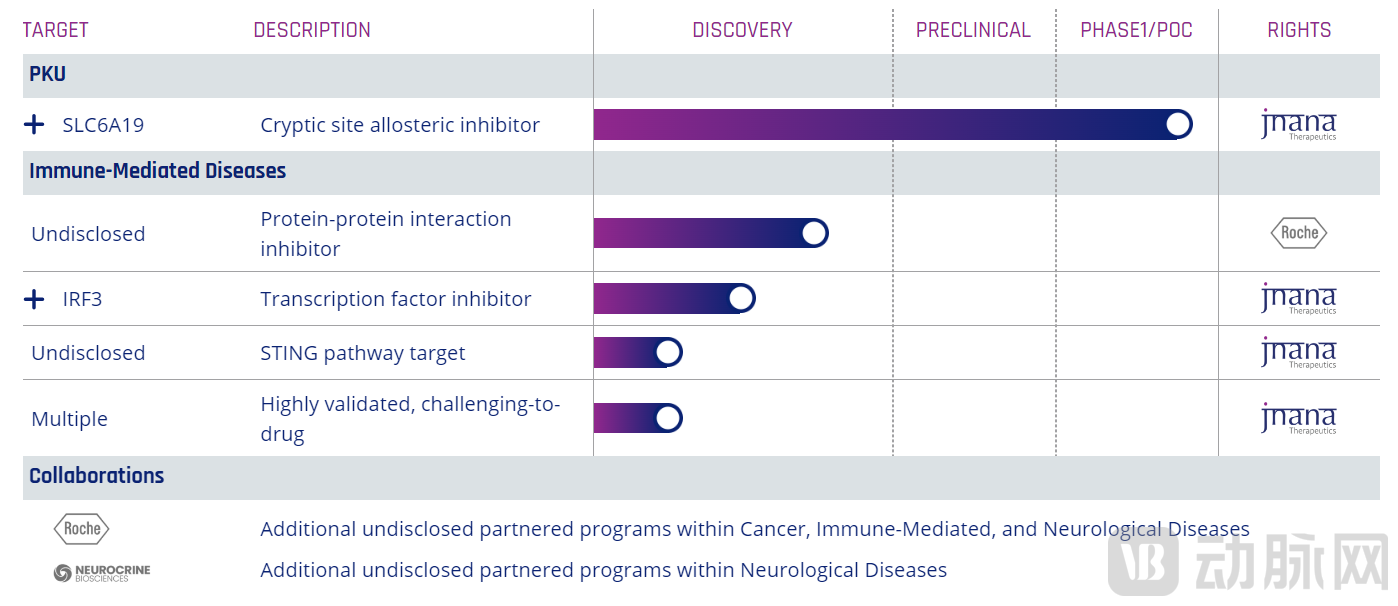 Jnana’s Pipeline in Development. Image source: Jnana official website
Otsuka Pharmaceutical is a global healthcare company whose primary operations are divided into two major segments: pharmaceuticals and nutraceuticals. In the pharmaceutical sector, Otsuka prioritizes research in psychiatry, neurology, and oncology. Additionally, the company engages in a broad range of other fields and businesses, including cardiovascular and renal systems, gastroenterology, ophthalmology, diagnostics, intravenous injections, and medical devices, providing comprehensive healthcare services from diagnosis to treatment.
In terms of specific products, Otsuka Pharmaceutical has established a broad product portfolio. It features four global products: the antipsychotic Abilify Maintena, the antipsychotic Rexulti, Samsca (the first drug for treating autosomal dominant polycystic kidney disease [ADPKD]), and Lonsurf (for colorectal cancer and gastric adenocarcinoma). According to Otsuka Pharmaceutical’s 2023 annual report, these four products contributed to double-digit sales growth, with sales increasing by 17.4% to reach JPY 726.9 billion.
According to the ranking of Japanese pharmaceutical companies released by AnswersNews in May 2024, Otsuka Holdings (HD) ranked second with revenue of ¥1,818.6 billion. Of this, overseas sales amounted to ¥1,347.7 billion, a year-on-year increase of 24.4%, indirectly reflecting the growth of its four global products.
This also means that in the highly competitive Japanese market, the gap among the top pharmaceutical companies by market share is minimal. Otsuka Pharmaceutical faces strong competition from several powerful domestic pharmaceutical companies, including Takeda Pharmaceutical, Astellas Pharma, Taisho Pharmaceutical, and Ono Pharmaceutical.As competition in the Chinese market intensifies, Otsuka Pharmaceutical is accelerating its overseas expansion and continuously pursuing strategies such as acquisitions and mergers to grow its business.。
Therefore, Otsuka Pharmaceutical's acquisition of Jnana Therapeutics, on one hand,This is because Jnana Therapeutics’ product technology aligns with its strategic objective of expanding its portfolio of rare disease and specialty medicines, and complements its subsidiary, Astex Pharmaceuticals.。
On the other hand,Furthermore, Jnana can further complement the collaboration between Otsuka Pharmaceutical and Visterra.. Visterra is an innovative company advancing antibody drug technologies in the field of autoimmunity. In 2018, Otsuka Pharmaceutical acquired the Boston-based Visterra for approximately $430 million, thereby gaining a portfolio of investigational products targeting indications such as IgA nephropathy and other kidney diseases, including sibeprenlimab. The integration of Jnana Therapeutics’ technology with that of Visterra will further propel Otsuka Pharmaceutical’s new drug development efforts in the area of autoimmune diseases.
Currently, Otsuka Pharmaceutical has JINARC (approved for autosomal dominant polycystic kidney disease), sibeprenlimab (for IgA nephropathy), and voclosporin (for lupus nephritis) in the renal field, while also adding novel specialty drugs such as donidalorsen (for hereditary angioedema), thereby providing multiple treatment options for patients with rare diseases.
Makoto Inoue, President and Representative Director of Otsuka Pharmaceutical Co., Ltd., also stated in the press release: “I am pleased that Otsuka Pharmaceutical has reached an agreement with Jnana Therapeutics. The addition of Jnana’s drug development technologies and small-molecule product pipeline in the fields of PKU and autoimmune diseases will strengthen our R&D capabilities in the Boston area of the United States, and the combination of the two companies will create synergies for Otsuka Pharmaceutical’s global expansion.”