

Stealth Biotech Segment on the Verge of Breakout as IPOs Emerge: The Rise of Bioinks
As the global bio-3D printing market surges ahead, a niche sector is gaining traction!
This sector focuses on bio-3D printing materials (also known as “bioinks”)—by selecting appropriate bioinks, 3D printing technology can fabricate substitutes for human tissues and organs that function within the human body.
In other words, driven by innovations in bioinks, 3D bioprinting can create vast application opportunities in fields such as regenerative medicine, drug testing, and medical research.
Currently, bioinks are generating significant research interest in the scientific community. Since 2016, research efforts on bioinks by relevant scientific institutions have been rapidly increasing, with a continuous rise in the number of journal publications and patent filings, which will facilitate substantial industry growth.
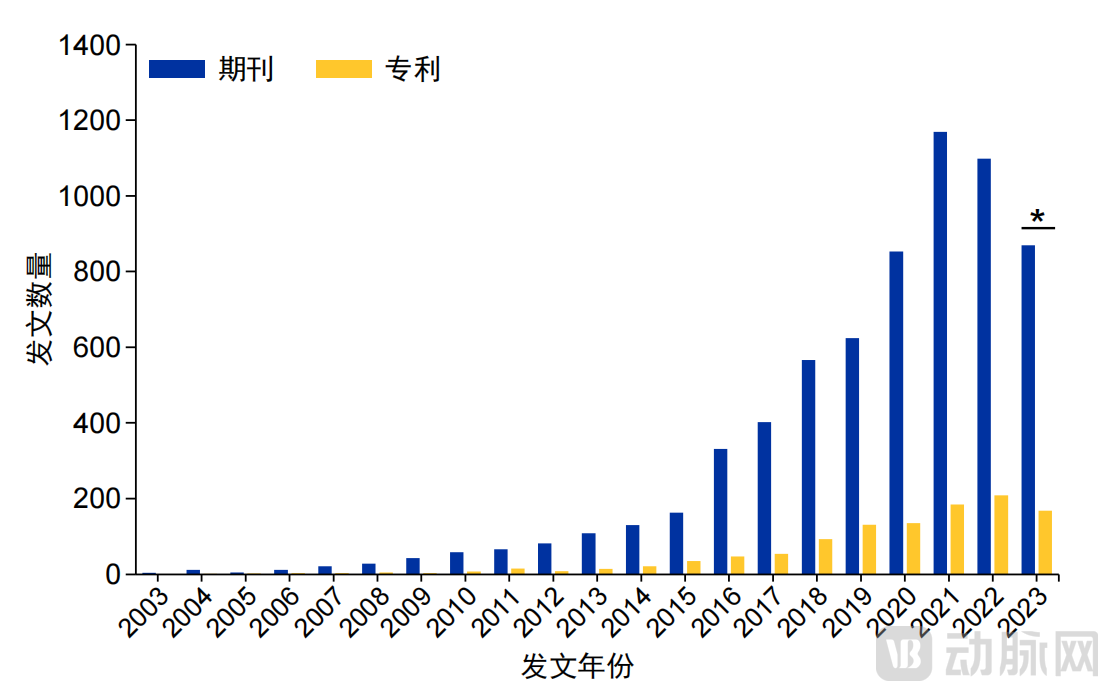 ▲Annual Number of Journal Publications and Patent Filings in the Field of Bioinks, 2003–2023
Image source: "2024 Future Health: Emerging Biomaterials" report
Meanwhile,The bioink sector has seen an influx of innovative companies, whose entry is paving the way for large-scale industrialization of the industry.Taking the United States as an example, there are more than 130 physical service providers in the field of biological 3D printing locally, among which 41 are bio-ink research and development enterprises. In China, innovative companies such as Born Biomedical, Huaxia Siyin, Janus Bio, Blue Light Innovate, Medprin Regenerative Medical Technologies, Shangpu Biotechnology, and Suzhou Yongquanquan Intelligent Equipment (listed in alphabetical order by company abbreviation) have been focusing on the bio-ink sector, with multiple companies securing financing. Meanwhile, BICO (formerly Cellink), a bio-ink R&D company from Sweden, has successfully completed its IPO on NASDAQ.
More importantly, on the demand side, although there is currently no authoritative statistical report on the market size of bioinks, the demand for bioinks is bound to rise in tandem with the global bio-3D printing market, which maintains an annual growth rate of 21.91% (according to data from the "China Bio-3D Printing Industry Report").
From the surge in supply spanning research to industrialization, to the massive demand on the market side, the bioink sector is on the verge of an explosive breakthrough.
Advances in Bioink Are Closely Linked to the Development of the Bioprinting Industry.
You can imagine that to print a human organ, at least three things are required: a 3D printer, living cells, and biomaterials. This material is known as bioink.
In terms of composition,The primary materials of bioinks are polymers (including natural polymers, synthetic polymers, etc.); they may also be loaded with living cells during bioprinting and supplemented with cytokines or other biomolecules.
It is worth noting that, according to an interview with VCBeat, there is currently no industry-wide consensus on the definition of bioinks, particularly regarding whether biomaterials must be cell-laden. One perspective holds that bioinks must necessarily contain cells, as regeneration cannot occur without them; another perspective maintains that any material utilizing biomaterials (whether natural or synthetic polymers) can be classified as a bioink.
Regardless, as the bioink ultimately used to print human organs, it must possess three core elements: printability, biocompatibility, and mechanical properties.
·PrintabilityThis primarily refers to the formability of bioinks, i.e., tunable and controllable material viscosity, a wide processing window for printable parameters, etc.;
·BiocompatibilityIt depends on the ability of bioinks to mimic the extracellular matrix, requiring that the bioink closely resemble the in vivo microenvironment of the printed cells to promote cell proliferation and differentiation, ultimately enabling intercellular communication; meanwhile, good biocompatibility also reflects the low immunogenicity of the bioink.
· Mechanical PropertiesThis necessitates that the bioink possesses sufficient mechanical strength to support subsequent culture and in vivo implantation processes.
Only when the aforementioned conditions are met can bioinks be truly utilized for research or clinical applications.
Next, let’s look at the key components of bioinks—synthetic polymers and natural polymers.Synthetic polymers include polyethylene glycol (PEG) and its derivatives, such as poly(ethylene glycol) diacrylate (PEGDA), as well as polycaprolactone (PCL). Among these, polyethylene glycol is one of the most prominent synthetic polymers, owing to its excellent biocompatibility and its versatile applications in programmable biomaterials, such as serving as the basis for programmable hydrogels.
Natural polymers constitute the largest category of materials in bioinks. These materials can be further subdivided into polysaccharides and proteins: polysaccharides include alginate, cellulose, hyaluronic acid, chitosan, and agarose; proteins include gelatin, collagen, peptides, silk fibroin, fibrin, and fibrinogen. Furthermore, many natural polymers can form hydrogels that allow for free cell migration, creating a microenvironment similar to the extracellular matrix. Therefore, hydrogels formulated from natural polymers have become an indispensable component of 3D bioprinting.
“Natural biomaterials can mimic the in vivo microenvironment, which is particularly conducive to cell proliferation, differentiation, and regeneration,” Dr. Chen Huimin, Founder and CEO of Huaxia Siyin, told VCBeat. “Meanwhile, natural biomaterial-based 3D printing can precisely replicate in vivo spatial structures, and by modulating the relevant properties of natural biomaterials, it can better simulate in vivo mechanical properties.”
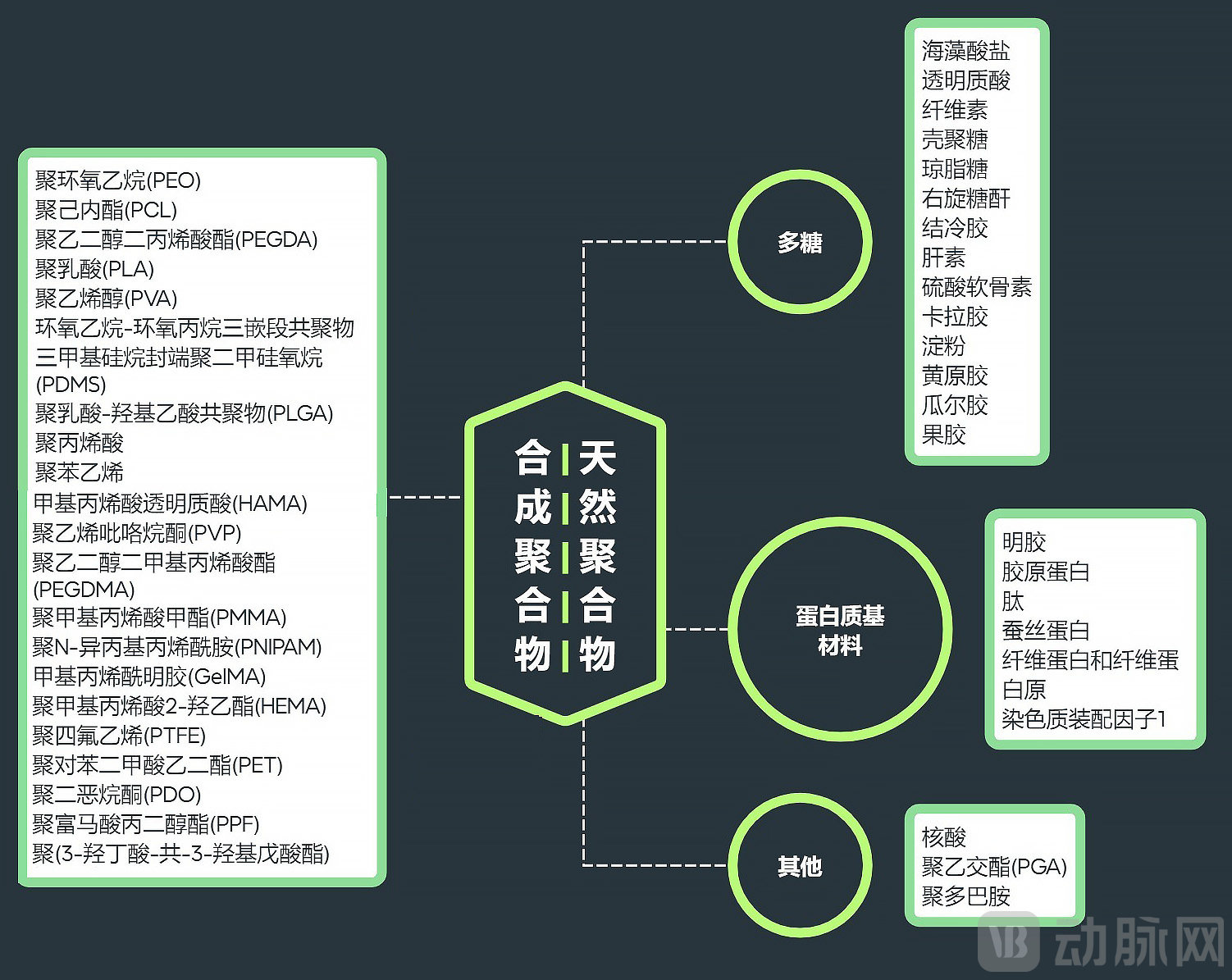 ▲ Classification of Natural and Synthetic Polymers | Graphic by VCBeat
Loading living cells onto polymers has also become a direction of exploration in the industry. According to the "2024 Future Health: Emerging Biomaterials Report" recently released by Westlake University and CAS, living cells can proliferate, differentiate, and interact with their surrounding environment, thereby mimicking the behavior of natural tissues. Therefore,Incorporating living cells into bioinks can construct functional tissues.
In terms of the origin of living cells, the current mainstream sources primarily include stem cells, endothelial cells, and tissue-specific cells. Among these, stem cells are the most widely utilized in the industry due to their multipotent differentiation capacity and potential for regenerating tissues and organs. This category encompasses mesenchymal stem cells, induced pluripotent stem cells, neural stem cells, and hematopoietic stem cells, among others.
However, having live cells alone is far from sufficient.Growth factors also need to be added to stimulate specific cellular behaviors.For example, when a piece of skin is bioprinted and applied to the surface of a patient’s wound, growth factors exert their chemotactic effects, recruiting more autologous cells to the defect site and ultimately enabling the bioprinted skin to integrate seamlessly with the host tissue. This illustrates the critical importance of growth factors.
In the industry, commonly used growth factors include transforming growth factor-β (TGF-β), vascular endothelial growth factor (VEGF), epidermal growth factor (EGF), platelet-derived growth factor (PDGF), and fibroblast growth factor (FGF).
Thanks to continuous in-depth development in materials, bioinks have achieved significant breakthroughs and reached commercialization. It is reported that gelatin-based hydrogel bioinks are already available on the market, such as Gel4Cell® (Amerigo Scientific) and BioInk® (RegenHU); methacryloyl-based bioinks, such as GelMA (SBP), BioGel (Biobot), and Tissue Fab (Aldrich); alginate-based CELLINK (CELLINK101); and calcium phosphate-based OsteoInk™ (RegenHu), among others.
However,Currently, the vast majority of bioinks and bioink-based products on the market are still used for research purposes or pilot-scale experimental design, while the clinical market remains in a blue-ocean stage.
Faced with a massive window of opportunity, bioink R&D companies are making a final push to gain a first-mover advantage in the industry.
In the bioink arena, research institutions across various countries are ramping up their efforts to gain a competitive edge.
Taking journal publications and patent applications, which to some extent represent the progress of various countries in the field of bioink research, as an example, according to the "2024 Future Health: Emerging Biomaterials" report, in terms of the geographical distribution of patent holders among commercial and non-commercial entities, the United States (USA) and South Korea (KOR) dominate both the commercial and non-commercial sectors. China (CHN) currently ranks among the top three globally in the non-commercial sector.
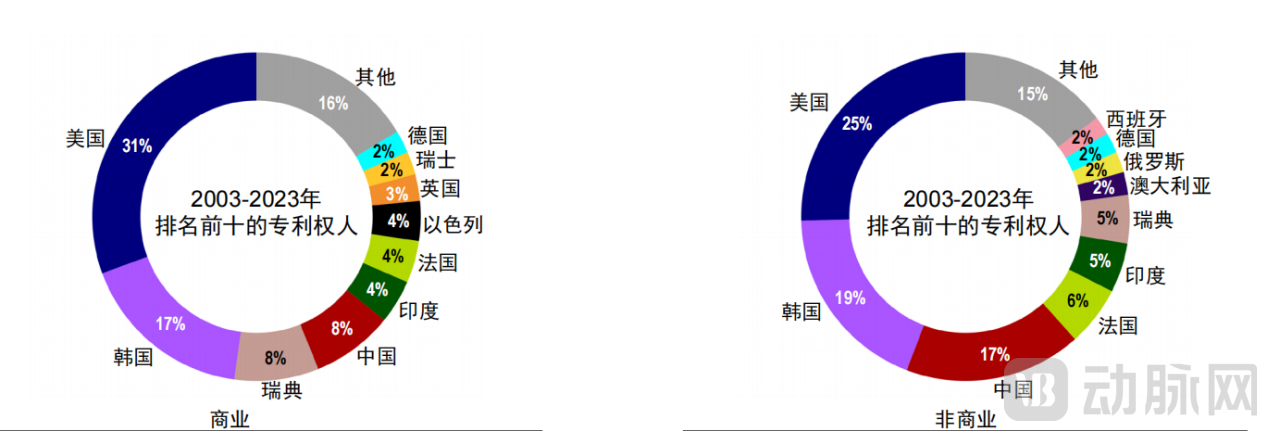 ▲Geographic Distribution of Bioink Patent Holders, 2003–2023
Image source: "Future Health 2024: Emerging Biomaterials" report
For instance, in 2021, a team from Tsinghua University announced the development of a cell-laden microgel biphasic bioink featuring a heterogeneous tissue microenvironment, which better mimics the structural complexity and heterogeneity of native tissues and organs. In 2022, Professor Yu Jiakuo’s team from the Institute of Sports Medicine at Peking University, in collaboration with Huaxia Siyin, published work on “Mold-Release Fabrication of Fine 3D-Printed Interpenetrating Hydrogel Scaffolds to Promote Chondrogenic Differentiation.”》articles; etc.
Furthermore, in 2023, the National Children’s Medical Center (Shanghai) and Shanghai Children’s Medical Center, in collaboration with a team from Donghua University, jointly developed a novel bioink. This bioink exhibits a range of properties, including antibacterial activity, shape fidelity, suitability for 3D bioprinting, and cryoprotective effects for cells, holding broad prospects for biomedical applications.
In addition to research institutions, the progress of related enterprises across various regions is also a top priority.For instance, Sweden, which ranks among the top three globally in the commercial sector for solid patent holders, has given rise to BICO, the industry’s first publicly traded company specializing in bioink research and development.
BICO, founded in 2016 and formerly known as Cellink, rose to prominence with the launch of the first ready-to-use bioink in the same year. This ready-to-use bioink is a nanocellulose-based hydrogel that provides structural properties similar to those of the extracellular matrix. Cells are mixed directly with the ink for printing, enabling the use of a single-nozzle printer; the printed structures are then crosslinked, resulting in enhanced handleability and impact resistance. By transforming how researchers utilize bioinks and reducing costs, this product has played a pivotal role in the field of 3D bioprinting.
Subsequently, BICO has continuously innovated throughout its development. According to the company’s official website, BICO’s bioink portfolio comprises four categories: standard bioinks in ready-to-use cartridges, medical-grade bioinks, tissue-specific formulations optimized for specific cell proliferation and differentiation, and light-based bioprinting bioinks. Furthermore, BICO offers a diverse range of products within each category to accommodate various bioprinting techniques.
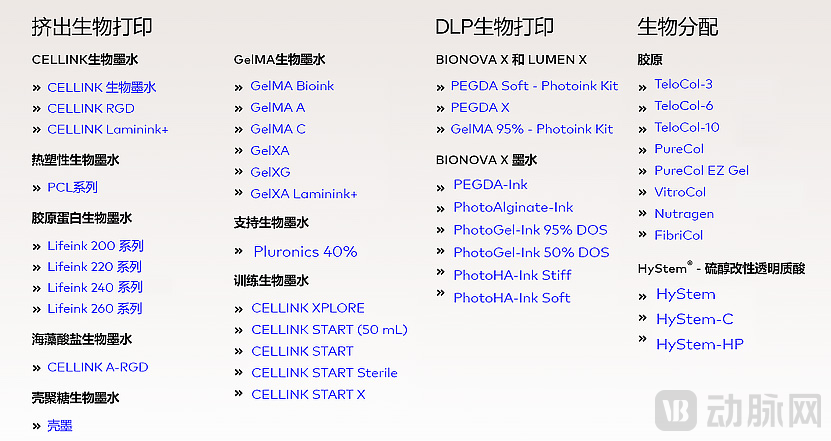 ▲Cellink’s range of ready-to-use bioinks. Image source: official company website
It is worth noting that BICO launched its first medical-grade bioink, CELLINK Vivoink, in 2023. This bioink is primarily based on natural polymers such as hyaluronic acid, nanocellulose, and alginate. According to the official website, alginate in CELLINK Vivoink is used in combination with CaCl2 crosslinker to ensure ionic crosslinking, thereby maintaining the mechanical stability of the printed structures throughout the bioprinting process.
Following continuous expansion since its public listing, BICO has acquired multiple companies, extending its business scope beyond bioprinting (which includes bioinks) to encompass two additional segments: life science tools and bioautomation. Financial reports indicate that revenue from the bioprinting segment reached SEK 660 million (approximately RMB 440 million) in 2023, reflecting sustained growth.
Looking at Humabiologics, a U.S.-based bioink R&D company, it launched the world’s first natural recombinant collagen bioink and gelatin bioink in 2021. In an interview with the media, Dr. Mohammad Albanna, founder and CEO of Humabiologics, stated that natural recombinant collagen and gelatin bioinks can address the shortcomings associated with the animal-derived bioinks currently used in the industry.
Domestic bioink R&D companies are also gradually emerging, roughly at the same starting stage as their global counterparts.For example, Huaxia Siyin, an innovative enterprise established in 2018, has independently developed and manufactured GMP-grade bioinks. To date, it has developed more than ten varieties, including gelatin methacryloyl (GelMA), hyaluronic acid methacryloyl (HAMA), type I collagen methacryloyl (Col1MA), and keratin methacryloyl (KerMA).
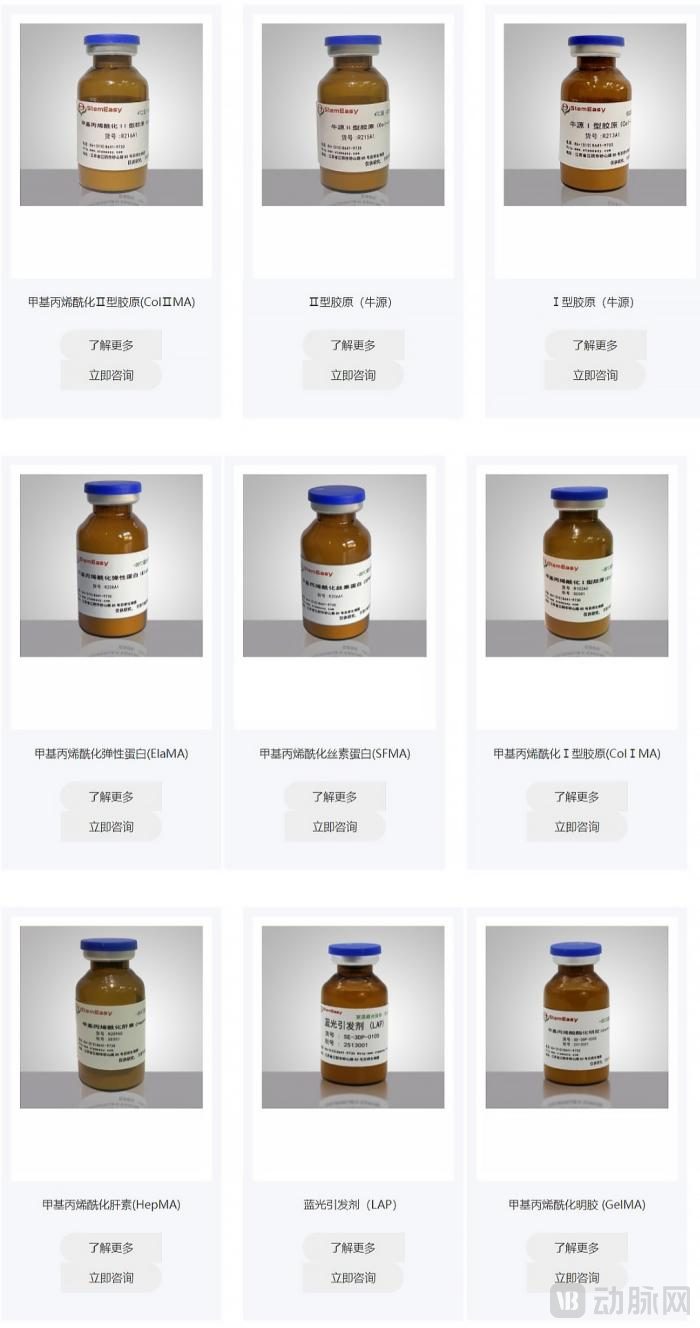
▲ Bioinks under Huaxia Siyin (partial) Image source: Company official website
“We focus on photosensitive natural biomaterials for 3D printing. Our currently developed and manufactured bioinks cover 90% of human tissues and organs, all produced in a standardized and scaled manner using cGMP-compliant production lines. We have also submitted the first master file for medical-grade bioink in China,” said Dr. Chen Huimin, Founder and CEO of Huaxia Siyin. The company participated in the formulation of industry standards for bioinks by the National Institutes for Food and Drug Control (NIFDC). Furthermore, Huaxia Siyin has signed an agreement with Sigma, a well-known life sciences brand under Merck, for the OEM (contract manufacturing) of research-grade bioinks, marking the beginning of its global expansion.
Another example is Regenovo, based in Hangzhou. The company has developed a series of bioinks with excellent printability and biocompatibility. The printed scaffolds facilitate cell survival, proliferation, migration, and differentiation, and are widely applicable to biomedical research in fields such as tissue engineering, stem cells, oncology, and drug screening.
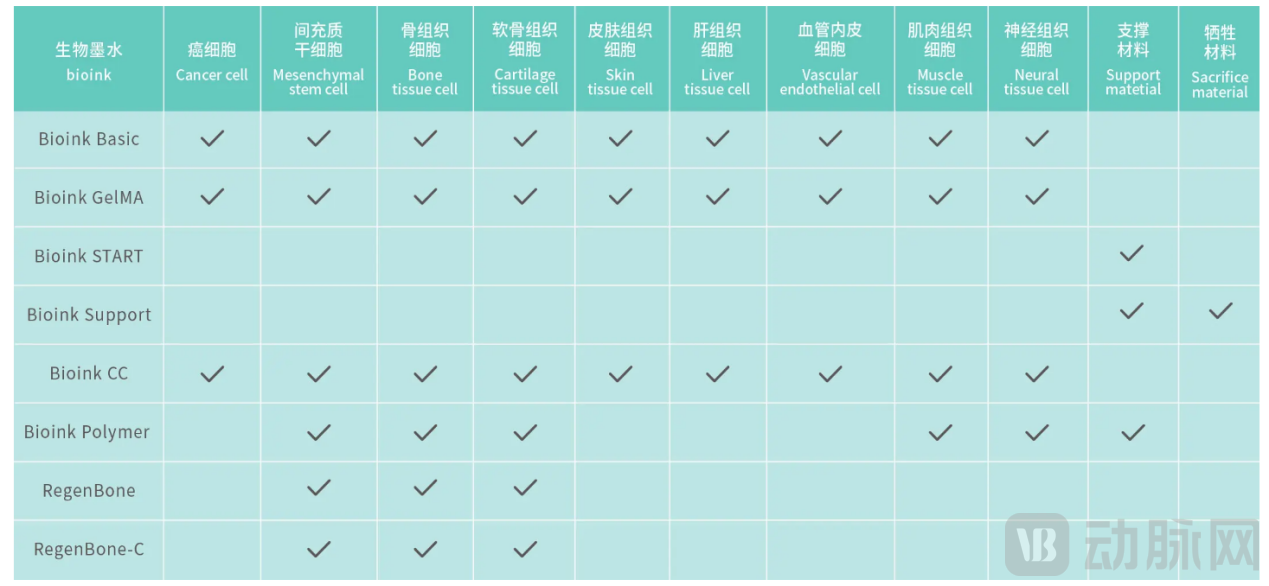
▲ Application Areas of Regenovo’s Bioinks | Image Source: Company Official Website
It is evident that innovative enterprises have continued to deepen their efforts and have now achieved significant breakthroughs. Going forward, driven by the entry of more companies and the emergence of new possibilities, the bioink sector is poised to make even greater progress.
Amid continuous innovation in the bioink sector, the industry still faces certain challenges.
The 2024 Future Health: Emerging Biomaterials Report mentionedIssues such as insufficient mechanical strength of materials, the impact on cell viability and interactions, control of the printing process, and cost.
For instance, certain synthetic polymers and additives used in the preparation of bioinks lack biocompatibility/cytocompatibility; therefore, designing unique bioinks presents significant challenges when considering their biological properties. For example, hydrogels made from synthetic polymers lacking extracellular matrix components can support cells but fail to promote cell growth and restrict cell-cell interactions, thereby creating an unnatural microenvironment.
To address these challenges, interdisciplinary collaboration and innovation are required to achieve greater breakthroughs in the clinical application of bioinks.
“With nearly a decade of rapid accumulation in the early stage,Bioinks Are Transitioning from Research Applications to Clinical Applications“Therefore, I believe the next three to five years will witness an explosive growth phase for the bioink industry.” According to Dr. Chen Huimin, Founder and CEO of Huaxia Siyin, the importance of bioinks, as a core material for bioprinting technology, is becoming increasingly prominent.
Meanwhile, Dr. Chen Huimin also believes that collective efforts yield greater results, and many technological breakthroughs depend on the development of the global market. Therefore, strengthening international cooperation is essential to enable large-scale clinical applications and truly drive the leap forward of the bio-3D printing industry.
Undoubtedly, with continuous breakthroughs in materials, accelerated R&D by research institutes and innovative enterprises, and strengthening international cooperation, the bioink market is accumulating significant momentum.
In this process, those pioneers who dare to explore and continuously improve will also reap substantial rewards.
(This article was written with the generous support of Dr. Chen Huimin, Founder and CEO of Huaxia Siyin. We extend our sincere gratitude.)