

NovoMore Bio Secures Over RMB 10 Million in Angel Funding to Build a Synthetic Biology 'Green Leaf Factory'

NOVOMORE
Plant-derived recombinant protein expression technology developer
Synthetic biology, hailed as the “third biotechnology revolution,” is driving industry transformation in next-generation biomanufacturing and the future bioeconomy with its disruptive innovative power.
According to McKinsey’s forecasts, the economic value of synthetic biology and biomanufacturing will reach $100 billion by 2025, with 60% of material products in future global economic activities being producible through biotechnology. Amid the current lack of new growth curves in the global economy, the immense potential of synthetic biology and biomanufacturing will become a significant force driving economic growth and sustainable development.
Hunan NOVOMORE New Biotechnology Co., Ltd. (hereinafter referred to as “NOVOMORE”) was established in August 2022 and is a synthetic biology company specializing in the research and product development of plant-derived recombinant protein expression technology.The company has developed its proprietary plant expression platform, pFolia. This platform features high-quality production and purification processes for plant-derived proteins, enabling the selection of optimal protein expression systems based on the characteristics of the target protein. It is capable of producing monoclonal antibodies, plant-derived industrial enzymes, cell growth factors, collagen, antigens, and other products. Additionally, the company provides personalized technical services to clients, including custom protein production and genetic transformation.
RecentNOVOMORE, Having Just Completed an Angel Financing Round of Over RMB 10 Million, Propels the R&D and Commercialization of Plant Synthetic Biology with Its Innovative Plant-Derived Recombinant Protein Expression Technology。
The core of biomanufacturing lies in the large-scale production of target products through industrial fermentation processes. Compared with traditional production models, biomanufacturing features cleanliness, high efficiency, and renewability. An analysis by the Organisation for Economic Co-operation and Development (OECD) of six developed countries shows that the application of biomanufacturing technologies can reduce industrial energy consumption by 15%–80%, raw material consumption by 35%–75%, air pollution by 50%–90%, water pollution by 33%–80%, and production costs by 9%–90%. It is predicted that by 2030, the scale of industries related to biomanufacturing technologies will account for 35% of global industrial output value.
As a key measure to enhance new-quality productive forces, China has designated biomanufacturing as a strategic emerging industry prioritized for development. In May 2022, the National Development and Reform Commission issued the 14th Five-Year Plan for Bioeconomy Development, which explicitly identifies biomanufacturing as a strategic direction for the bioeconomy’s emerging industries. The plan proposes “leveraging biomanufacturing technologies to achieve biotechnological substitution of chemical raw materials and processes, developing high-performance bio-based environmentally friendly materials and biological preparations, and promoting the deep integration of biotechnology with the manufacturing of key industrial products in the chemical, pharmaceutical, materials, and light industries, thereby transitioning toward a green, low-carbon, non-toxic or low-toxicity, and sustainable development model.”
That same year, Professor Wu Chuan and Associate Professor Pan Weisong decided to establish NOVOMORE. The two had been engaged in research on plant bioreactors since 2014.。
Plant bioreactors are an innovative technology that utilizes genetic engineering to transform common crops into “chemical factories” for the large-scale production of target products. This technology offers novel perspectives and viable solutions to address challenges such as insufficient protein supply and high costs associated with drug development.
Specifically, plant bioreactors utilize plant tissues such as leaves or seed endosperm as biological reactors. Leveraging their unique physiological structures and metabolic mechanisms, these systems can produce target products, such as proteins, requiring only greenhouse conditions like light, water, and soil. Compared with production systems based on bacteria, yeast, and animal cells, plant-derived proteins are free from or contain minimal contamination by pathogenic microorganisms and other pathogens, thereby offering higher biosafety.
For example, genetically modified tobacco leaves can synthesize specific medicinal proteins in large quantities. This not only improves production efficiency but also reduces reliance on traditional chemical synthesis methods, thereby minimizing potential environmental hazards.
“I aim to integrate biosciences with environmental protection, unlocking the potential of plant bioreactors to establish high-efficiency ‘green leaf factories’ for producing pharmaceutical and cosmetic ingredients. By synthesizing proteins in plant leaves, we can deliver greater innovation and application value to agriculture, biopharmaceuticals, medicine, and other fields,” said Professor Wu Chuan.
Under the joint leadership of Professor Wu Chuan and Associate Professor Pan Weisong, NOVOMORE officially commenced operations in August 2022. The company’s founding team comprises industry experts from prestigious institutions such as Central South University, Hunan Agricultural University, and the Hong Kong University of Science and Technology. It currently includes numerous professors and PhD holders, many of whom have been recognized as national- and provincial-level talents. Their expertise spans botany, biochemistry, environmental science, engineering management, and other disciplines. The core team members possess extensive experience in innovative R&D and nearly a decade of technological accumulation, having undertaken multiple national-level research projects and published over 100 papers in renowned domestic and international journals. Furthermore, NOVOMORE has attracted several distinguished domestic and international industry experts to join its advisory board, providing robust support for the development of its plant expression platform and innovative production processes.
The engine driving the smooth operation of the “Green Leaf Factory” stems from pFolia, a plant expression platform independently developed by NOVOMORE.
pFolia comprises two major sub-technology platforms—the transient plant expression platform and the stable plant expression platform—and covers three production lines: whole plants, plant cells, and cell-free systems. Currently,pFolia can express proteins or small-molecule peptides that are toxic, undergo post-translational modifications, have complex folding patterns, consist of multiple subunits, or possess excessively high molecular weights. Among these, the expression level of exogenous proteins accounts for 50%–80% of total soluble protein (TSP), with yields reaching gram levels per kilogram of fresh leaves.。
Meanwhile, NOVOMORE has also developed a proprietary downstream purification process and maintains an exclusive library of plant signal peptides. Based on the properties of the target protein, the company optimizes signal peptide selection to direct protein expression to various cellular compartments, including the cytosol, subcellular organelles, protein bodies, and the apoplast. Data indicate that this process increases the success rate of protein expression by 15%.
Thus far,NOVOMORE has established an integrated, end-to-end technical system encompassing pluripotent host plant engineering, development of a proprietary plant expression platform, scalable production processes for plant-based bioreactors, and high-efficiency purification of high-activity proteins.. According to Professor Wu Chuan, the technologies within this technical system are at a leading level in China, and 10 invention patents have been granted to date.
As of now,NOVOMORE has established four major product portfolios: antibodies, industrial enzymes, antibiotic alternatives and cosmetic ingredients, and scientific research services.。
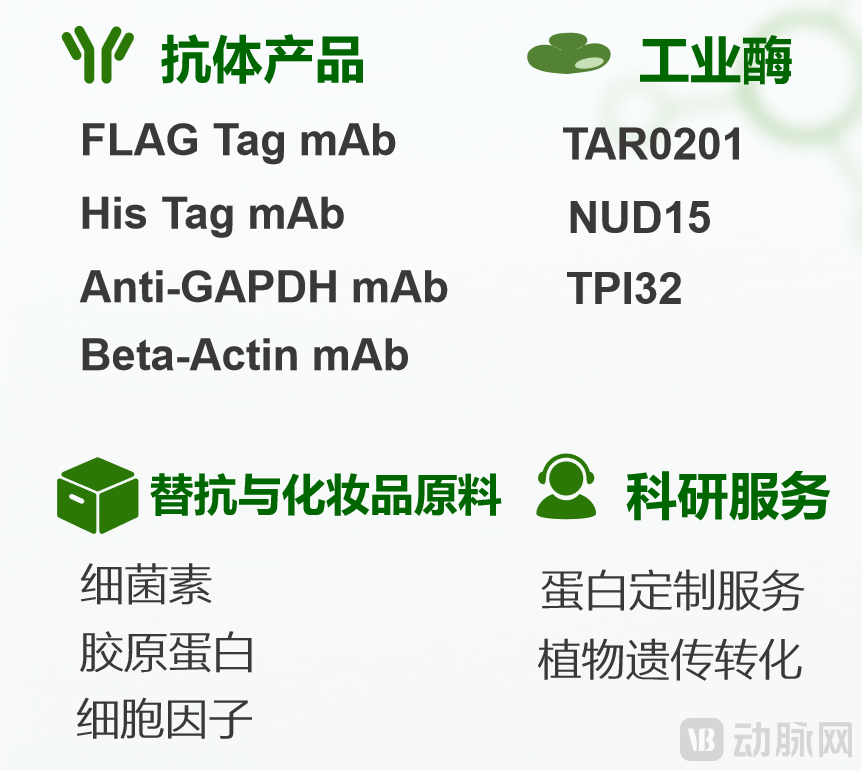
Image source: NOVOMORE
Notably, NOVOMORE has successfully delivered antibody and industrial enzyme products to multiple research institutions and industrial clients, with current sales of its products and technical services reaching several million yuan.
On July 4, 2024, NOVOMORE announced the completion of an angel funding round exceeding RMB 10 million. The round was led by Sanze Venture Capital, with participation from Hongfeng Plan and Ningle Group, among others. The proceeds will be used to expand the R&D pipeline and construct a new production facility of nearly 1,000 square meters, further accelerating the development of related products and customer deliveries.
Professor Wu stated: “NOVOMORE’s sales model is ‘B2B + B2C.’ The company currently focuses on providing independently developed products to enterprise clients. In addition, NOVOMORE is collaborating with companies in the beauty and agriculture sectors to jointly develop products and services directly for end consumers, leveraging its proprietary raw materials.”
Currently,NOVOMORE is actively seeking collaborations with industry-leading enterprises and distributors to expand its product distribution network. Meanwhile, the company is in discussions with cosmetics and agricultural firms to facilitate the research, development, and market launch of related products.。
Professor Wu Chuan pointed out that with the rapid R&D and expansion of production capacity, the annual revenue of NOVOMORE's products will soon exceed the ten-million-yuan mark, and product sales will continue to grow as production capacity expands. Therefore,NOVOMORE is expected to launch a new round of financing in 2025 to drive capacity expansion and the development of new products.。
Regarding future development, Professor Wu Chuan stated, “NOVOMORE will maintain its continuous investment in R&D, leverage the innovative technology of plant synthetic biology to continuously expand and enhance its plant-based bioreactor technology platform, product portfolio, and supply capabilities, ultimately delivering superior solutions to the market.”