

Sooma Medical Submits IPO Prospectus: Non-Pharmacological, At-Home tDCS Therapy for Depression Has Treated Over 20,000 Patients and Earned FDA Breakthrough Device Designation

Sooma
Developer of Non-Invasive Brain Stimulation Devices
According to the World Health Organization, depression is one of the leading causes of disability worldwide, affecting approximately 264 million people across all age groups, with a significant proportion being young adults aged 18–25. It is estimated that this condition results in annual losses of up to $1 trillion.
Currently, common treatment regimens for depression include antidepressant medications and psychotherapy; however, both approaches have certain limitations. Antidepressants typically have a delayed onset of action and may cause side effects such as dry mouth and gastrointestinal discomfort after administration. Long-term use of antidepressants can lead to dependence, and discontinuation may result in withdrawal symptoms, including headache, dizziness, and mood swings. Psychotherapy, on the other hand, faces challenges such as difficulties in ensuring patient adherence, inconsistent efficacy, limited effectiveness in severe cases, and high costs.
To address unmet clinical needs in the treatment of depression, Sooma has entered the field. Founded in 2013, this Finnish medical innovation company has developed a novel approach to treating depression, aiming to provide flexible, simple, convenient, and affordable therapeutic options for patients who have an inadequate response to pharmacotherapy or limited access to psychotherapy.
Our brain function relies on the transmission of electrical signals. When individuals experience depression, these signals become imbalanced in certain regions of the brain. These brain regions are located in the dorsolateral prefrontal cortex (DLPFC). Studies have shown that in patients with depression, activity in the left DLPFC is reduced, while activity in the right DLPFC is excessive.
Sooma Depression Therapy specifically targets these regions to alleviate depressive symptoms. The therapy employs transcranial direct current stimulation (tDCS) technology, utilizing the company’s Class II medical device, Sooma tDCS, for treatment. tDCS uses mild electrical currents to stimulate the brain and relieve depressive symptoms without the need for medication. By delivering weak electrical currents through two electrodes embedded in a headcap, the system stimulates activity near the left electrode while reducing activity near the right electrode. This process helps restore balance between these two brain regions, thereby reducing depressive symptoms.
This solution adheres to three key principles: the ability to control stimulation dosage, precise targeting of stimulation, and the capacity for patients to self-administer the stimulation.
The accessories used in this therapy include a headcap, electrodes, gel pads, and a conductive medium. The Sooma headcap ensures that the correct areas of the brain are stimulated during each treatment session. Each of the two electrodes consists of an electrode cup and a set of cables; a gel pad soaked in saline solution (the conductive medium) is placed inside each electrode cup and secured to the headcap. The cables are connected to the device.
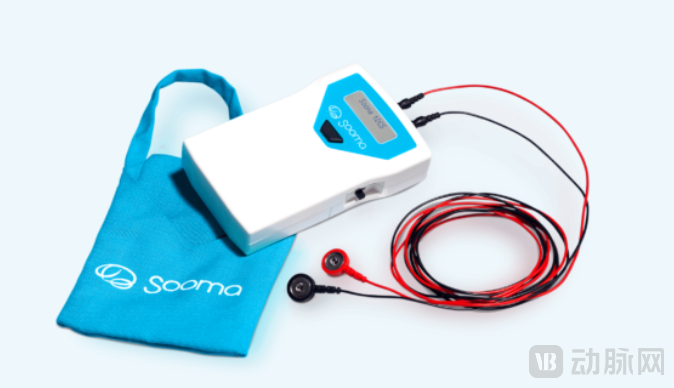
Sooma tDCS
The efficacy of tDCS is based on transcranial stimulation, which involves delivering electrical current to the patient’s brain. The current must pass through tissues such as hair and skin, which create resistance; therefore, the stimulator requires sufficient power to deliver the required current. To meet this requirement, Sooma tDCS is equipped with an automatic impedance monitoring function that ensures consistent current delivery.
Meanwhile, the correct placement of electrodes is critical for effective stimulation. tDCS is a diffuse stimulation method, meaning that the current spreads across the brain regions beneath the electrodes. To ensure stimulation accuracy, the traditional approach involves measuring electrode positions, which requires professional operation by technicians or trained nurses and is time-consuming. The Sooma headgear features pre-configured electrode placement positions. Furthermore, it is available in different sizes to accommodate various head circumferences, enabling patients to easily and accurately position the electrodes for home use.Sooma revealed that the European Patent Office (EPO) has indicated it will grant a patent for the company’s breakthrough electrode placement system used in its medical-grade brain stimulation devices for treating depression and chronic pain.
Furthermore, the size of the electrodes is crucial for enhancing the precision of the stimulation area. The Sooma Comfort stimulation accessories are designed to limit electrolyte diffusion and maintain the stimulation area beneath the electrodes. This ensures that the dose is delivered to the target brain region for optimal therapeutic effects.
Notably, the Sooma depression treatment device was designed from the outset for home-based therapy, with its equipment and accessories being compact and portable.The device is easy to operate, with a preparation time of only about five minutes; most patients can use it independently at home after just one instructional session.. This solution incorporates multiple automated safety measures to ensure proper use and provides robust shielding against electromagnetic interference that could compromise its functionality. For example, the device is equipped with a button for easy initiation of therapy and automatically powers off at the end of the treatment session, preventing accidental overuse. The device is powered by user-replaceable batteries, which helps extend its service life.
Prior to the initiation of treatment, Sooma’s professional staff will meet with the patient to collect relevant medical information, ensure eligibility for treatment, and determine the patient’s baseline depression score using depression rating scales (such as the BDI, HAMD, or MADRS). If the treatment is conducted 100% remotely, the initial consultation may be performed via video conference. Upon the patient’s confirmation of participation in the treatment, Sooma will lend the device and accessories to the patient for use.
Typically, the first treatment session is conducted at the clinic under the supervision of a nurse. During this process, the nurse also instructs the patient on how to perform self-administered treatment at home. If the patient is unable to visit the clinic in person, the nurse will guide and observe the patient’s preparation and self-management during the first treatment via video consultation to ensure proper administration.
Sooma Depression Treatment typically employs a three-week regimen during the acute treatment phase. Each session lasts 30 minutes, with five sessions per week. Subsequently, the maintenance phase begins, during which treatment is administered 1–2 times per week, depending on each patient’s response. The number of sessions and weeks in the acute treatment phase can also be adjusted to accommodate individual patient needs.
The treatment uses a 2 mA current, which remains stable throughout the session except for brief ramp-up and ramp-down periods at the beginning and end. The device automatically terminates the session after 30 minutes.
Sooma depression treatment can be used as a monotherapy or in combination with other concurrent treatments, such as psychotherapy or pharmacotherapy. It can also be used to maintain the therapeutic response achieved after electroconvulsive therapy (ECT) or repetitive transcranial magnetic stimulation (rTMS). Following the acute phase of ECT or rTMS, patients may undergo Sooma depression treatment for a period of time to sustain the therapeutic effects.
During the treatment period, Sooma’s professional staff will contact patients weekly via phone call or message to follow up on their treatment progress and adherence. After the treatment course is completed, patients typically return to the clinic for the physician to evaluate the treatment outcomes and determine whether to continue therapy.

Sooma tDCS Patients Undergoing Home-Based Treatment
Currently, Sooma’s depression therapy is available in over 35 countries and regions worldwide, with more than 20,000 patients globally having received Sooma tDCS treatment.A real-world study demonstrated that tDCS treatment using the Sooma device was well tolerated by patients with major depressive disorder (MDD) and led to a reduction in depressive symptoms. Among 410 patients who successfully completed the treatment, assessments using depression scales (HDRS, BDI-21, MADRS, and MDI) revealed that nearly 97% showed improvement in their depression scores post-treatment. The therapeutic outcomes helped most patients overcome significant work-related impairments and resume normal daily life. No serious adverse events were reported during the treatment period.
Currently, Sooma has launched Sooma Duo, a new system for the remote treatment of depression. The system comprises a medical device, a therapy management platform, and a patient application. It integrates Sooma’s portable neuromodulation system with a digital platform, enabling clinicians to remotely monitor patients’ treatment adherence and tailor therapeutic regimens to individual needs. Furthermore, the system allows clinicians to manage multiple patients simultaneously, thereby enhancing treatment outcomes and improving healthcare efficiency and scalability.
According to the company's official website,Sooma Duo is the first tDCS system to receive EU MDR certification.Sooma’s neuromodulation system delivers both the safety and control required for clinical treatment, as well as the flexibility and convenience of patient-led home self-management. Designed by Sooma’s team of leading engineers and manufactured in Finland to ensure the highest quality of components and craftsmanship, the system guarantees patient safety. The device complies with all technical and safety requirements set forth by the European Medical Device Regulation and ISO international standards.
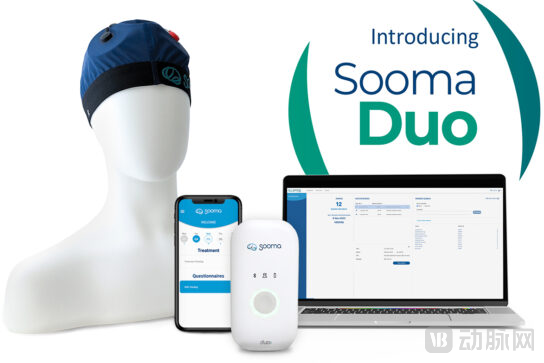
Sooma Duo System
Sooma features the Sooma Portal as a key window for clinicians to optimize patient care.Sooma Portal provides healthcare professionals with built-in compliance and efficacy monitoring features to enable data-driven treatment decisions. Clinicians can view, customize, and track patient protocols through patient treatment logs, patient-reported outcomes, and dosage reports, thereby enhancing the convenience and precision of the treatment process. Throughout the course of therapy, Sooma’s expert team accompanies patients every step of the way, providing necessary training and materials to seamlessly integrate the use of Sooma Portal and its therapies into daily clinical practice.
The Sooma App empowers patients through self-management therapy.This mobile application automatically transmits treatment plans prescribed by physicians to the Sooma Duo device, while providing therapeutic guidance to patients. After installing the application on their smartphone, patients simply need to log in and follow the on-screen instructions to undergo treatment. With customizable push notifications reminding patients of upcoming sessions, the application ensures that no treatments are missed.
Meanwhile, Sooma Duo provides healthcare organizations with cost-effective treatment solutions. Whether in large hospital systems or private clinics, it effectively meets the needs of varying patient volumes without requiring additional staffing.
According to statistics from the World Health Organization (WHO), over 300 million people worldwide are affected by depression. Furthermore, approximately 50% of patients with depression do not receive adequate treatment. Sooma’s innovative and breakthrough system aims to expand access to depression treatment by providing clinicians with a non-pharmacological therapeutic option. This enables neuromodulation therapy to be prescribed as conveniently as traditional antidepressants, making it more accessible and affordable.
Currently,Sooma’s Portable, Patient-Self-Administered Neuromodulation Device for the Treatment of Depression Has Received U.S. FDA Breakthrough Device DesignationThis device is poised to more rapidly become a new treatment option for patients with major depressive disorder (MDD) in the United States.
Building on this foundation, the company has launched a therapy for the treatment of chronic pain. Sooma Pain Therapy is an effective non-invasive brain stimulation therapy indicated for fibromyalgia and chronic neuropathic pain. In pain treatment, anodal current (excitatory stimulation) is delivered to the primary motor cortex, while cathodal current (inhibitory stimulation) is delivered to the contralateral supraorbital region. For unilateral peripheral pain, polarity is determined based on the location of the pain. The aim is to enhance communication between different brain regions responsible for pain processing and to support the function of descending inhibitory pain pathways.
On March 12, 2024, Sooma announced that it had secured a new round of financing amounting to €5 million, led by Nordic early-stage investor Voima Ventures. The funds will be used to continue improving global access to depression treatment and to provide effective care for individuals facing mental health challenges. Sooma Duo’s current commercial footprint covers all of Europe, with plans to expand into other regional markets next.