

HyRiSen Launches Clinical Trials for AI-Powered Acoustic Biomarker Technology to Detect Pulmonary Diseases Through Voice Analysis
This year marks the 29th World Tuberculosis Day, with the theme “Unite to End TB.” Although humanity has been battling tuberculosis for thousands of years, it remains the second deadliest infectious disease globally, after COVID-19. In China, in particular, there is still a gap between the current state and the ideal in terms of tuberculosis prevention, detection, and treatment.
Li Liang, Vice President of Beijing Chest Hospital, Capital Medical UniversitySpeaking to VCBeat, the expert stated, “Tuberculosis is one of the oldest infectious diseases on Earth. According to the WHO’s Global Tuberculosis Report 2023, China had an estimated 748,000 new TB cases in 2022, ranking third among the 30 high-burden countries. The World Health Organization has set a goal to ‘end the TB epidemic’ by 2035; however, without major breakthroughs in diagnostic technologies, therapeutic drugs, vaccines, and prevention and control strategies, there remains a significant gap in achieving this target.”
Fortunately, advances in artificial intelligence, information technology, and computer science have created new opportunities in the field of digital health. An “AI-powered intelligent targeting technology based on acoustic biomarkers” holds promise for enabling large-scale early screening and diagnosis of tuberculosis and other respiratory diseases by clinicians. This technology was jointly developed by Beijing Huanyu Ruisheng Technology Co., Ltd. (hereinafter referred to as “Huanyu Ruisheng”) and Beijing Chest Hospital, Capital Medical University (hereinafter referred to as “Beijing Chest Hospital”).
When it comes to the original intention of starting a business,Gao Zheng, Founder and CEO of Huanyu RuishengRecalling, “The establishment of Beijing Huanyu Ruisheng Technology Co., Ltd. stemmed from a rapid response to the demand for translating scientific research achievements into practical applications against the backdrop of the COVID-19 pandemic.”
In 2020, amid the outbreak of the COVID-19 pandemic, Huanyu Ruisheng engaged in in-depth cooperation and research with the Institute of Acoustics of the Chinese Academy of Sciences on the Beijing Municipal Science and Technology Commission project titled “Intelligent Diagnostic Method for Novel Coronavirus Pneumonia Based on Automatic Detection of Acoustic Features.”The team conducted meticulous and professional acoustic analyses of key voice samples collected from Tanzania, Beijing Ditan Hospital affiliated with Capital Medical University, and the Liaoning Provincial Center for COVID-19 Treatment, revealing significant differences in acoustic characteristics between COVID-19 patients and healthy individuals. Meanwhile, in collaboration with institutions such as Peking University Third Hospital, this technology was successfully applied to medical support services during the Beijing 2022 Winter Olympics and Paralympics.
After years of accumulation, Beijing Huanyu Ruisheng Technology Co., Ltd. is currently conducting clinical research on the application of this AI technology for the intelligent diagnosis of lung cancer and pulmonary tuberculosis. The project is carried out in collaboration with Beijing Chest Hospital, Capital Medical University. Vice President Li Liang serves as the Chief Advisor; Vice President Du Jian serves as the Chief Planner; Vice President Du Ye serves as the Senior Guide; and Chief Physician Yang Xinting serves as the Principal Investigator.
From the perspective of underlying technology, what is“Voice Biomarkers”?
Gao Zheng explained, “Tracing back to the origins, the ‘listening’ component of traditional Chinese medicine’s four diagnostic methods—inspection, listening and smelling, inquiry, and palpation—refers to auscultating sounds and breath. In modern medicine, the stethoscope was invented in 1819; before the advent of large-scale medical equipment, physicians primarily relied on auscultation for disease diagnosis. Thus, acoustic data has always been an essential form of medical data within the medical field. Today, advances in AI and computer technology have expanded the scope of sound analysis to include coughs, breathing, and speech. The physical structure of the human vocal apparatus changes with physiological and pathological conditions, leading to disease-specific alterations in patients’ voices. These acoustic features can serve as ‘voice biomarkers’ for diseases.”
Gao Zheng further illustrated with examples, “In lung cancer patients, compression of the bronchi by conditions such as aortic aneurysms or mediastinal tumors can lead to a metallic-sounding cough accompanied by hoarseness. In pneumonia patients, infection caused by inflammation of the alveoli in one or both lungs results in the alveoli filling with fluid or pus, producing a cough with rattling sounds.”"Acoustic biomarkers for different diseases exhibit uniqueness and variability. Through visual discriminative analysis of features using Mel-spectrograms, significant differences in voice characteristics can be identified among patients with lung cancer, patients with pulmonary tuberculosis, and healthy individuals, thereby providing a novel perspective and approach for disease diagnosis."
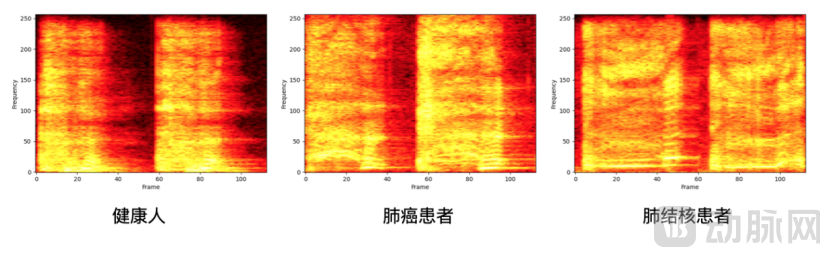 Mel Spectrograms of Healthy Individuals and Patients with Pulmonary Diseases
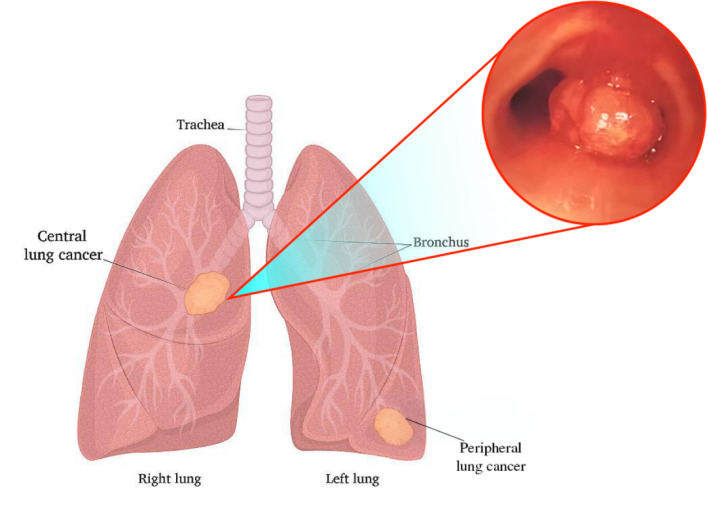
Bronchial Cross-Section of Central Lung Cancer
(Metallic cough in lung cancer patients is a high-frequency bronchial breath sound generated by the friction of high-velocity airflow impacting narrowed airways.)
Photo provided by the interviewee
As a specialist in respiratory diseases, Li Liang also expressed strong endorsement for the prospects of applying acoustic biomarker technology in the early screening and diagnosis of tuberculosis.He pointed out that the rapid detection of tuberculosis patients and the provision of timely treatment are the primary means of preventing the transmission of Mycobacterium tuberculosis. However, current mainstream clinical diagnostic techniques remain relatively “primitive,” with diagnostics predominantly conducted within hospital settings. There is a lack of universally applicable, non-invasive diagnostic products for the out-of-hospital market.For example, the most widely used sputum smear microscopy is a century-old technique with a positive detection rate of only about 30%. It often takes at least one month from sample collection to result reporting, resulting in low accuracy, efficiency, and speed. Although the latest molecular diagnostic technologies have significantly improved accuracy and efficiency, their widespread adoption in primary healthcare facilities remains challenging due to cost and technical constraints. In contrast, tuberculosis cases are predominantly identified at the primary care level.
Therefore, in the face of challenges such as the uneven distribution of medical resources, regional development disparities, and an imbalanced doctor-to-patient ratio in China, an innovative medical tool that integrates intelligence, portability, precision, and telemedicine capabilities, while enabling large-scale screening—namely, AI-based diagnostic technology leveraging acoustic biomarkers—will significantly enhance the accessibility and decentralization of medical resources, thereby improving the response speed of primary healthcare institutions.
The AI diagnostic technology based on acoustic biomarkers, developed by Huanyu Ruisheng, demonstrates significant potential in the screening, monitoring, and auxiliary diagnosis of respiratory and cardiovascular diseases by capturing and analyzing subtle variations in sounds associated with changes in human health status. This technology not only provides new technical support for ending the tuberculosis epidemic but also aligns with the national strategy for developing new quality productive forces, while offering possibilities for early screening and diagnosis of other diseases.
First, the advantages of Huanyu Ruisheng are reflected in the quantity and quality of its data. “The company has not only successfully developed and scaled the application of China’s first AI-based large diagnostic model using acoustic biomarkers,To date, the system platform has accumulated over 23.9 million users, facilitated more than 65 million uses, and generated over 200 million visits. Furthermore, the company has built a dataset comprising more than 60 million acoustic samples.“This volume of data will be difficult for other institutions and companies to surpass within the next 5–10 years, unless another global pandemic occurs,” said Gao Zheng.
This is followed by algorithmic advantages.According to reports, the core research and development team of Huanyu Ruisheng primarily originates from the Key Laboratory of Speech Acoustics and Content Understanding of the Chinese Academy of Sciences. This laboratory is a dual key laboratory at both the provincial and ministerial levels, representing the highest level of expertise in this field in China.
Leveraging over two decades of profound scientific research accumulation in its laboratory, Beijing Huanyu Ruisheng Technology Co., Ltd. has accomplished, without relying on external open-source tools,Acoustic Spectrogram Analysis and Detection, Multidimensional Robust Feature Extraction, Classification Modeling and Data Augmentation, Comprehensive Decision-Making and Diagnosisthe development of key algorithms, thereby establishing a robust technological barrier.
In this regard, Gao Zheng stated, “The large model of the AI system was completed in March 2024. Trained on 20 million acoustic data records and over 10,000 hours of training time, it has significantly improved the model’s stability and generalization capability in real-world scenarios.””
In terms of application scenarios, Huanyu Ruisheng has developed two products for both B-end and C-end users: an app for respiratory disease detection and a smart stethoscope for cardiovascular and cerebrovascular diseases.
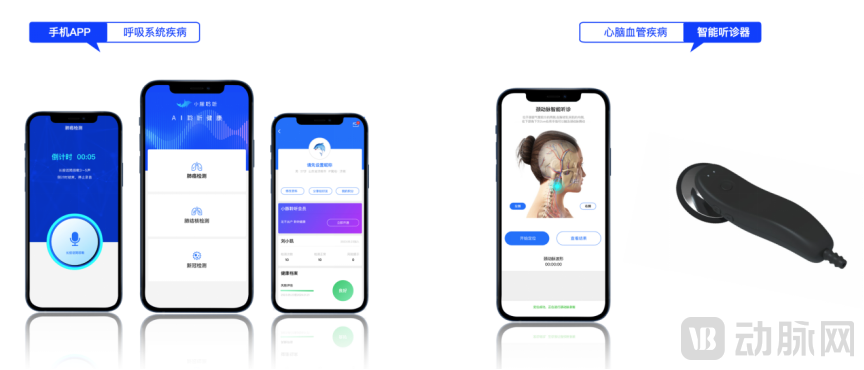 Huanyu Ruisheng Product Portfolio
Photo provided by the interviewee
Users can instantly detect and manage pulmonary and cardiocerebrovascular diseases solely through smartphones and IoT devices. This technology not only facilitates the entire medical process—from pre-hospital screening to in-hospital diagnosis and post-discharge follow-up—but also adapts to a variety of complex scenarios.
Non-invasive in vitro diagnostic technologies facilitate early disease detection and management. More importantly, artificial intelligence is promoting the dissemination of high-quality medical resources to primary care settings, which is expected to significantly reduce healthcare costs across society while improving the accessibility and efficiency of medical services.
Huanyu Ruisheng also participated in the nationwide free clinic campaign, “One Scan, Dual Screening,” hosted by Beijing Chest Hospital. By collecting acoustic data from populations in grassroots communities—particularly sound data associated with Lung-RADS category 4 nodules—these data were integrated into its acoustic algorithm models. When users undergo acoustic testing, the system issues alerts for these high-risk individuals, thereby further enabling early detection, diagnosis, and intervention for lung cancer.
As a team deeply rooted in the intersection of medicine and engineering,Gao Zheng, CEO of Huanyu RuishengSenior Engineer in AI Applications, with interdisciplinary and cross-functional experience spanning artificial intelligence, digital informatization, smart healthcare, and enterprise management, and has previously held core management positions at multiple technology companies.
The founding team possesses an interdisciplinary research background spanning diagnostic method database design, acoustic signal processing, natural language processing and big data computing, biology, clinical medicine, and bioinformatics, with a proven track record of successfully commercializing multiple biopharmaceutical and other high-tech projects.
Led by a team with multidisciplinary expertise and extensive backgrounds in R&D, management, and commercialization, the company has initiated collaborative research projects with multiple Grade 3A hospitals. For instance, in partnership with the First Affiliated Hospital of China Medical University, it is conducting research on intelligent diagnostic technologies for carotid artery stenosis based on acoustic biomarkers. Currently, the auxiliary diagnostic accuracy for carotid artery stenosis in this project has reached 97%.
At the conclusion of the interview, Gao Zheng referenced a research paper published by Google in Nature in early 2024, highlighting the company’s leading edge from an industry forefront perspective and sharing its competitive advantages in self-developed intelligent diagnostic technology based on acoustic biomarkers.
This research paper introduces HeAR, an AI-based large diagnostic model developed by Google. Its novelty lies in the massive dataset used for training. This artificial intelligence system extracted over 300 million short audio clips of coughs, breathing, throat clearing, and other human sounds from YouTube videos for self-supervised learning. Google researchers fine-tuned the HeAR model to detect features such as COVID-19, tuberculosis, and smoking status. HeAR achieved scores of 0.645 and 0.710 for COVID-19 detection, depending on the test dataset, and a score of 0.739 for tuberculosis detection. Given the high diversity of HeAR’s original training data, which encompasses varied audio qualities and human sources, the model demonstrates generalizability and reliability.
Gao Zheng stated, “Compared with the data published in this paper, Huanyu Ruisheng surpasses HeAR in terms of its proprietary training datasets and diagnostic accuracy. Currently, the detection score for distinguishing tuberculosis from healthy individuals is 0.91, while the score for differentiating tuberculosis from a mix of other pulmonary diseases and healthy individuals is 0.827. Driven by technological leadership, the company’s short-term goal is to deepen scientific research collaboration with Beijing Chest Hospital, launch intelligent diagnostic products for lung cancer and tuberculosis as its initial offerings, complete clinical studies, and rapidly advance to clinical application, thereby realizing the social value of its innovative technologies.”
Regarding long-term planning, Gao Zheng stated, “In the future, Huanyu Ruisheng will focus on interdisciplinary research at the intersection of pathology, clinical medicine, and artificial intelligence. We will expand our AI-powered diagnostic technology based on acoustic biomarkers to a broader range of serious medical fields, including other respiratory diseases, cardiovascular and cerebrovascular diseases, neurological disorders (such as Alzheimer’s disease, depression, and post-traumatic stress disorder), as well as fetal heart sound monitoring, thereby leveraging AI technology to provide users with convenient and efficient healthcare services.”
Finally, Li Liang emphasized, “The potential of acoustic biomarkers in computer-aided medical diagnosis still needs to be validated in clinical settings. However, I am confident that as our understanding of biology and artificial intelligence deepens, the application scope of AI-powered intelligent acoustic diagnostics in non-invasive point-of-care testing will continue to expand. We can optimistically anticipate broad prospects for this technology across numerous medical fields, including pulmonary and cardiovascular diseases.”
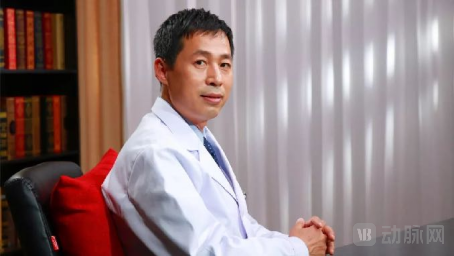
Li Liang
Vice President of Beijing Chest Hospital, Capital Medical University; Chief Physician; Doctoral Supervisor
Former Chairperson of the Tuberculosis Branch of the Chinese Medical Association; Deputy Director of the Clinical Center for Tuberculosis Control and Prevention, Chinese Center for Disease Control and Prevention; Deputy Director of the China Tuberculosis Clinical Trial Consortium; Deputy Director of the WHO Collaborating Centre for Research and Training on Tuberculosis; Member of the Expert Committee on Disease Control, National Health Commission; Member of the Science Popularization Committee for “Healthy China,” National Health Commission; Member of the National Expert Database on Drug Policy; Member of the National Expert Committee on Disease Prevention and Control; Member of the National “Healthy China” Science Popularization Committee; Deputy Editor-in-Chief of the Chinese Journal of Tuberculosis and Respiratory Diseases. He has undertaken or organized nearly 30 major research projects, including those under the National 11th Five-Year Major Special Project, the National 12th Five-Year Major Science and Technology Special Project, and the National 13th Five-Year Major Science and Technology Special Project, such as “Research on Shortening the Treatment Course for Drug-Resistant Tuberculosis” and “Bidirectional Screening for International Tuberculosis Complicated by Diabetes.” He has published nearly 100 academic papers and presided over the writing or translation of more than 30 books.