

2024 CPEO Highlights: Health Industry Enters a Transition Phase, Innovation Upgrade Urgently Needed
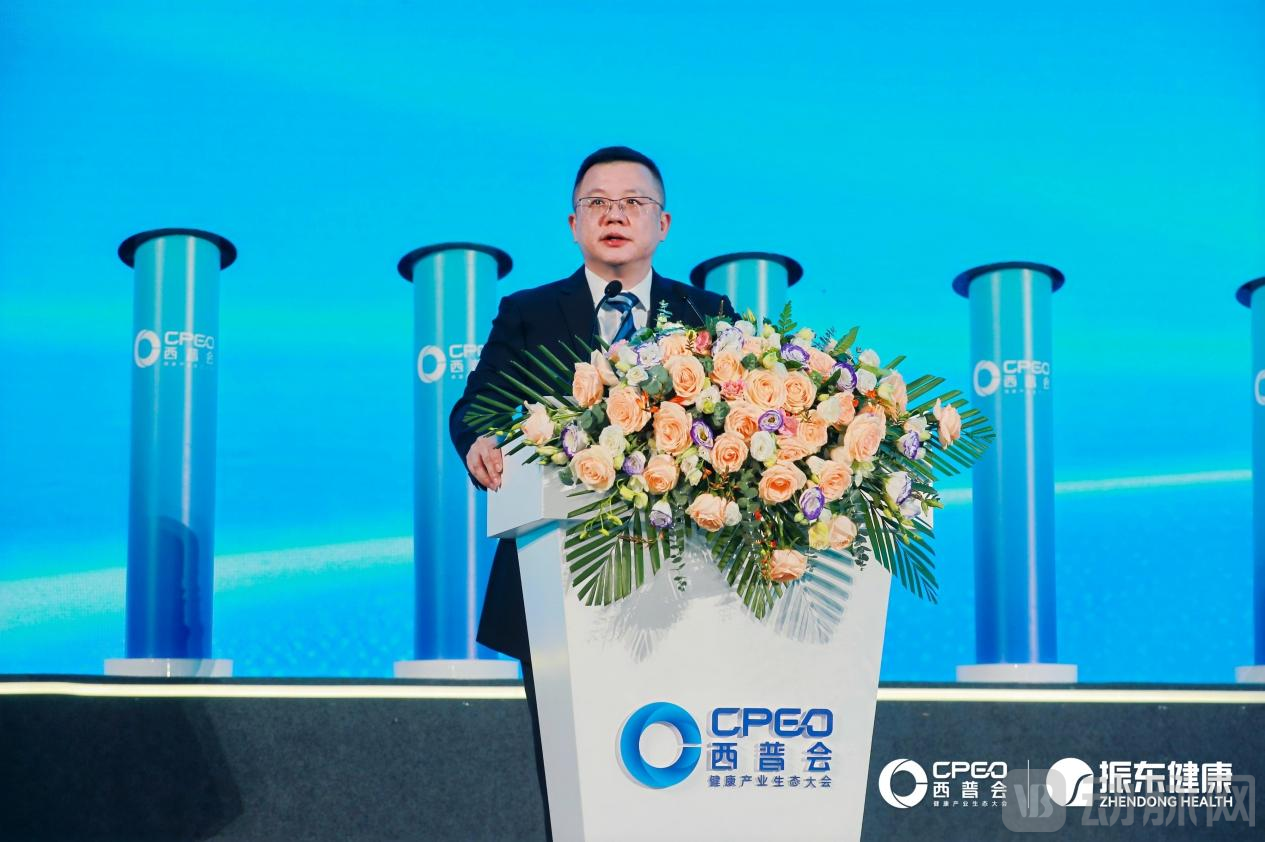
On August 10, 2024, the 17th Health Industry (International) Eco-Conference—2024 Xipu Conference grandly opened in Boao, Hainan. The theme of the conference was“Moving Forward Under Pressure: Breaking and Building the Path from Stock to Incremental Growth”At the opening ceremony, Wu Han, Chairman of Sinohealth Technology and President of the Xipu Conference, delivered a forward-looking presentation on the development trends of China’s health industry.
The ceiling of the existing market is clearly visible
Currently, China's pharmaceutical and health industry is facing unprecedented challenges.
According to forecasts by the Zhongkang Industry Research Institute, the annual growth rate across all pharmaceutical terminals is expected to decline to 4.9% in 2024. The operating environment for physical pharmacies has become increasingly challenging, with the annual growth rate of the pharmaceutical category projected at merely 2.9%. Growth in the B2C market has also narrowed to 6%, while overall sales across all categories, including non-pharmaceutical products, have essentially stagnated. In addition to the slowdown in terminal market growth, the overall performance of the pharmaceutical manufacturing and R&D services sectors has been lackluster. Data from the National Bureau of Statistics shows that the value-added industrial output of large-scale enterprises in the pharmaceutical manufacturing sector grew by only 2% in the first half of this year. Meanwhile, various CXO companies are grappling with significant declines in revenue, profits, and market capitalization.
A series of data points send a clear signal: the slowing growth of the pharmaceutical industry has become an indisputable fact. Wu Han stated that the ceiling for the existing market, which is primarily driven by medical insurance payments and aims to meet basic healthcare and medication needs, is now clearly visible. There is a pronounced trend of the market shifting toward lower price segments, with price competition becoming a fundamental strategy. As a result, intense internal competition continues to deepen, placing sustained pressure on corporate operations.
The Industry Enters a Transition Period, but the Upward Trend Will Remain Unchanged
Challenges often give rise to new opportunities.
With a massive population base of 1.4 billion, China generates substantial demand for health consumption. As population aging accelerates, the "silver economy" is rapidly emerging, creating new growth drivers for the health industry. Compared with developed countries, China’s total health expenditure as a percentage of GDP remains relatively low, at just 7.1%. Against the backdrop of technological innovation and national economic transformation, China’s health industry still holds immense potential and room for expansion.
Although the health industry is hitting a ceiling in its existing market, we must clearly recognize that behind the sluggish growth lies a vast amount of unmet health demand. The emergence of this stark contrast signals that the health industry is undergoing a profound transformation.
In the field of serious medical care, market demand for innovative drugs remains robust. In the broader health and wellness sector, deepening population aging has created a significant supply gap in elderly health and nursing care. Demand for anti-aging solutions is growing increasingly strong, trending toward younger demographics and personalization; however, current domestic supply is markedly insufficient, leading to an outflow of some demand to overseas markets. Furthermore, the professional services sector, including chronic disease management, lacks comprehensive solutions, and the ability of services to drive product adoption urgently needs enhancement.
Wu Han believes that the overall upward trend of China’s healthcare market will remain unchanged. Under the pressures of homogeneous competition and stringent regulation, the industry has entered a transitional period and a phase of elimination. It is now imperative for the industry to align with evolving health demands and enhance value creation through innovation.
Innovation Upgrading: An Urgent Imperative
As the industry enters the knockout stage, innovation has become the key force driving industrial transformation and upgrading in the face of pressures and challenges in the existing market.
“R&D innovation is undoubtedly the core driver of development in the pharmaceutical industry and commerce,” said Wu Han. As coverage for innovative drugs by the national medical insurance fund rapidly expands, market access and patient accessibility to these therapies have improved significantly, creating new growth opportunities for pharmaceutical companies. The retail market for innovative drugs has grown at a rate exceeding 20%, making it the largest category by market share. China’s innovative drug sector has entered a harvest phase, with numerous new drugs approved for launch. This trend not only propels the development of pharmaceutical manufacturers but also provides strong growth momentum for commercial distribution channels.
Technological innovation drives industrial upgrading, with AI-centric technological transformation serving as a critical pathway for the health industry to achieve “destruction and creation.” Across R&D, manufacturing, service delivery, and business model innovation, these advancements not only enhance industrial efficiency but also lay the infrastructure for a new consumer-centric (C-end) healthcare service model. This foundation enables services to drive product development and facilitates seamless integration between in-hospital and out-of-hospital care, thereby unlocking new growth opportunities for the industry.
Service innovation is equally indispensable. With the continuous rise in the incidence of chronic diseases and comorbidities, as well as the gradual transformation of cancer into a chronic condition, the demand for novel services has become increasingly urgent. Wu Han points out that patients currently receive primarily basic medical and pharmaceutical services within hospitals, while the supply of comprehensive solution-based services remains largely absent. As a critical component of out-of-hospital care, pharmacies hold significant potential to meet patient needs by integrating resources and innovating service models. This transition will serve as a new driving force for advancing healthcare services to a higher level and stimulating market growth.
Seize New Demands, Pioneer New Tracks
A Key Measure to Break Through the Ceiling of Existing Stock
Under pressure, the iteration of health demands has become a key driver for industry development.
Wu Han mentioned in the Qianzhan release that seizing new demands and pioneering new tracks are crucial measures for the industry to break through the ceiling of existing stock, especially by capturing new market opportunities generated by demands related to the silver economy, self-care, and immunity.
He revealed that, starting this year, Zhongkang Technology will continuously track and study consumer demands, technological innovations, and social trends. By leveraging big data, the company aims to forecast categories with high growth potential in the future out-of-hospital market and will release its findings at the Xipu Conference, thereby helping the industry identify new drivers of growth and pioneer new market segments.
A Call to Industry Peers: Offer Insights and Suggestions for Sector Development
As the industry enters a transitional phase, the policy environment is crucial for driving industrial development. Wu Han calls on industry peers to actively participate in the innovation of industrial policies and offer suggestions for the future development of the sector.
At a critical juncture in industrial development, it is even more essential to actively foster a favorable policy environment to promote the growth of new-quality productive forces. Against the dual backdrop of expanding domestic demand and advancing the Healthy China initiative, we should vigorously leverage national policies to stimulate health-related consumption, support the development of commercial health insurance, and increase the share of commercial insurance in healthcare payments.
Notably, pharmacies should serve not only as channels for drug distribution but also as key venues for disease prevention, health education, and health management.
Wu Han pointed out that, against the backdrop of the Healthy China strategy, the social value of pharmacies needs to be re-evaluated and repositioned. It is essential to clarify the primary channel role of pharmacies in ensuring the supply of pharmaceuticals and health products, promote the outflow of prescriptions from hospitals, facilitate the separation of prescribing and dispensing, and enable pharmacies to fulfill their due responsibilities within the Healthy China strategy. He revealed that the large-scale research project on “Repositioning the Social Value of Pharmacies,” launched this year by Sinohealth Technology, will also draw on collective insights at this year’s CHC Conference. The initiative aims to unlock the value of pharmacies through this far-reaching study and drive the sustainable development of the pharmaceutical retail industry.
As a prestigious health industry conference in China, the Xipu Conference has been successfully held for 16 consecutive sessions. It is organized by Zhongkang Technology, a well-known digital technology company in the industry. The organizer’s robust data resources, leading technological and AI capabilities, professional industrial research expertise, and strong ability to connect industrial resources serve as the core engine that has established the Xipu Conference as a bellwether for China’s health industry.
It is reported that attendance at this year’s XiPu Conference will reach a new high, with over 8,000 industry elites participating as official delegates and total attendees exceeding 60,000. This demonstrates that although the industry has entered a transitional phase, there remains strong hope for breaking through the current impasse.
Forging ahead under pressure, anticipating and strategizing for the future, we will ultimately rise like a phoenix from the ashes to jointly usher in a new chapter for the health industry!