

SenseCare Liver AI Solution Receives China's First NMPA Class III Certification for CT-Based Hepatic Focal Lesion Detection
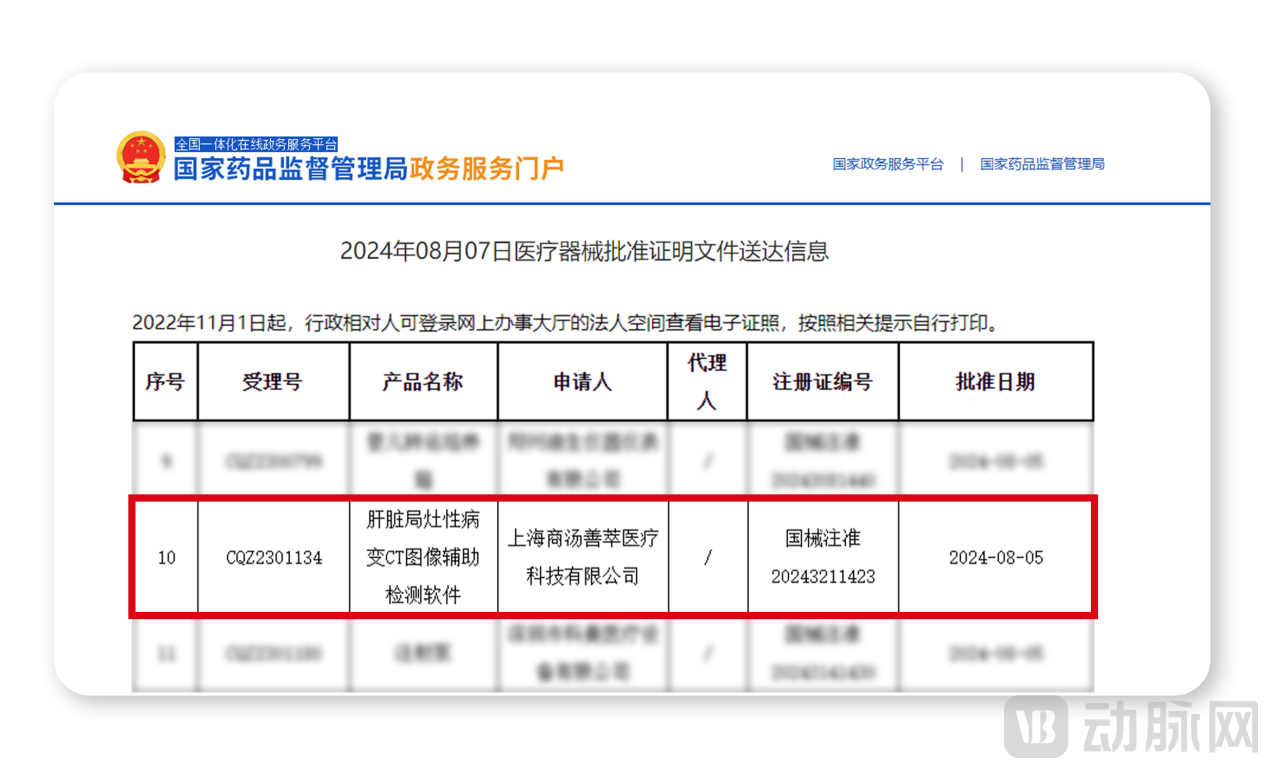
On August 7, the official website of the National Medical Products Administration (NMPA) announced that the CT image-assisted detection software for focal liver lesions, developed by Sensetime Medical, has officially received the NMPA Class III medical device registration certificate. Leveraging deep learning technology, this product enables physicians to perform precise detection and analysis of nearly ten types of focal liver lesions. Multi-center clinical trials conducted at Peking Union Medical College Hospital of the Chinese Academy of Medical Sciences, the First Affiliated Hospital of Dalian Medical University, and Shanghai Public Health Clinical Center have demonstrated that AI can effectively help physicians improve diagnostic accuracy and efficiency.
This is the first Class III medical device certification issued by China’s National Medical Products Administration (NMPA) for an AI-assisted diagnostic system targeting focal liver lesions on CT scans. It marks a significant breakthrough for SenseTime Medical in liver disease diagnosis and treatment, as well as another important milestone in the global regulatory approval strategy of its AI-assisted diagnostic and therapeutic products. Currently, SenseTime Medical’s AI products have obtained market access certifications in multiple countries and regions, including China, the European Union, Singapore, Saudi Arabia, the United Arab Emirates, and Thailand. By developing innovative solutions, the company addresses the urgent global demand among radiologists for precise and efficient medical services, contributing Chinese expertise to the worldwide healthcare industry.
Liver cancer is a major disease that seriously threatens the health of the Chinese population. According to statistics, China accounts for nearly 50% of the global annual new cases and deaths from liver cancer. In 2022, there were 367,700 new cases of liver cancer in China, ranking fourth among all malignant tumors, with 316,500 deaths, second only to lung cancer.
The liver is the most “silent” organ in the human body; pathological changes often go undetected, and by the time symptoms such as pain appear, the disease has frequently progressed to an advanced stage, significantly increasing the difficulty of treatment. Therefore, early screening, early diagnosis, and early treatment of liver cancer are key to improving patient survival and quality of life.
With advancements in diagnostic and therapeutic techniques as well as evolving health concepts, there are now higher demands for the precise detection of small hepatocellular carcinoma. Since hepatic imaging diagnosis requires comparison across multiple dynamic CT images, and the liver itself is a compliant organ that moves with bodily motion, accurate lesion detection and multi-phase image registration present significant challenges, thereby imposing a heavy burden on image interpretation.
In traditional imaging-based diagnosis of liver cancer, the results of manual image interpretation are highly dependent on the individual experience of radiologists, placing exceptionally high demands on their expertise. However, given the prolonged training cycle for radiologists in China and the significant shortage of highly skilled professionals, the introduction of AI technology to empower liver cancer prevention and treatment has become a key strategy to break this impasse.
SenseTime Medical has collaborated with multiple medical institutions and universities to conduct a series of cutting-edge research studies on the application of AI technologies in liver diagnosis and treatment, achieving precise lesion detection, disease classification, and organ segmentation. To date, more than 20 scientific papers have been published at top global conferences and in SCI-indexed journals, with numerous research findings featured in prestigious international AI journals such as IEEE Transactions on Medical Imaging (IF: 8.9) and Medical Image Analysis (IF: 10.7).
Based on the aforementioned research findings, SenseTime Medical has launched SenseCare.®An Intelligent Integrated Solution for Liver Diagnosis and Treatment Empowers Multi-Modal Imaging-Assisted Diagnosis (CT/MR) and Surgical Planning, Pioneering a Unified Workflow That Covers the Entire Pathway of Liver Cancer Screening, Diagnosis, and Treatment, Significantly Enhancing Physicians’ Diagnostic Accuracy and Efficiency to Safeguard Patients’ Liver Health.
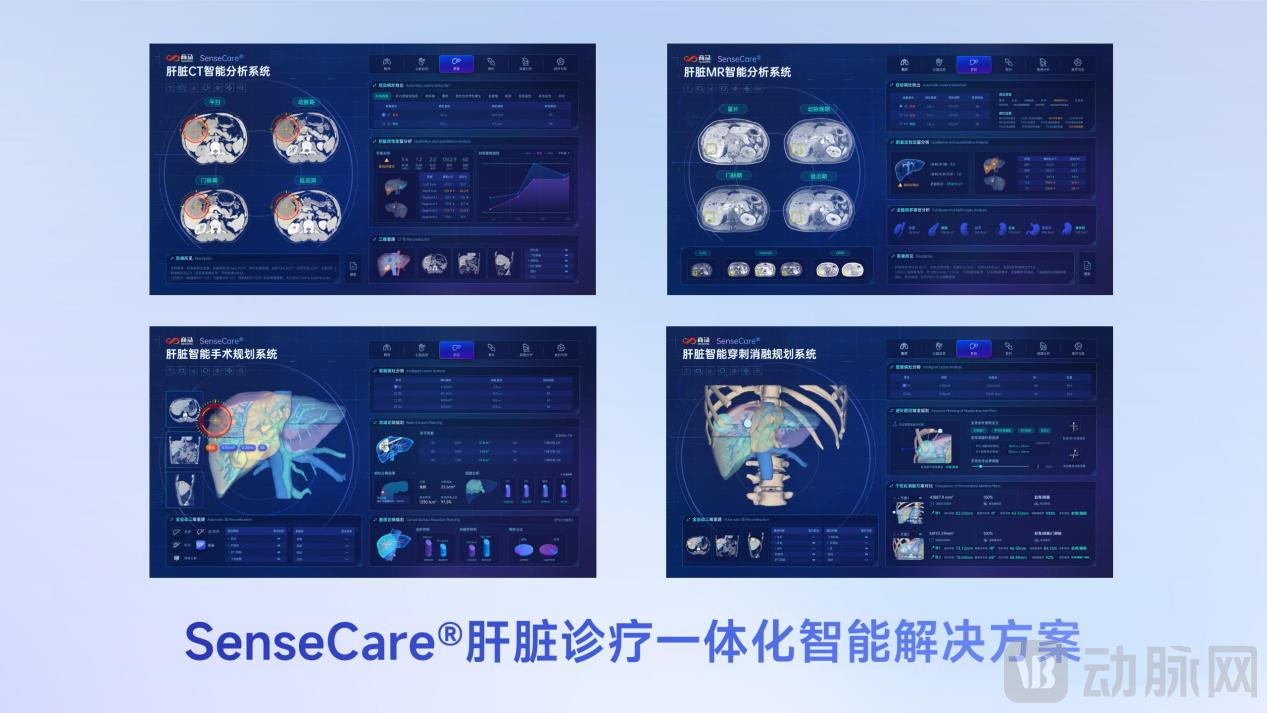
During the screening and diagnostic phases, AI can automatically register multi-phase imaging data and provide synchronized image review, assisting physicians in rapidly identifying various types of lesions, such as hepatocellular carcinoma, intrahepatic cholangiocarcinoma, and focal nodular hyperplasia. It also offers precise quantitative assessments to facilitate the rapid evaluation of basic lesion characteristics, including volume and location. Furthermore, the system supports intelligent analysis of the overall hepatic background, flagging diffuse pathologies such as fatty liver disease and cirrhosis, thereby providing robust support for clinical decision-making.
Following diagnosis, AI can rapidly perform 3D reconstruction of intrahepatic lesions, blood vessels, and multiple abdominal organs based on CT images. This helps physicians intuitively assess the spatial relationships between lesions, vessels, and organs, and leverages the 3D reconstruction model to assist in intelligent surgical planning. The system can simulate planning for two major categories of procedures—resection and percutaneous ablation—within minutes.
For resection surgeries, in addition to curved surface resection techniques, the system supports watershed-based precise hepatectomy planning, enabling physicians to develop more personalized surgical plans and significantly improving the accuracy of surgical planning. The resection preview and analysis features provided by the system assist physicians in identifying surgical risks and objectively evaluating surgical outcomes through quantitative analysis of the future liver remnant volume and its blood flow watersheds.
Currently, relevant AI-powered applications have been deployed at leading Grade 3A hospitals in China, including Ruijin Hospital Affiliated to Shanghai Jiao Tong University School of Medicine, West China Hospital of Sichuan University, and Sir Run Run Shaw Hospital Affiliated to Zhejiang University School of Medicine, to assist physicians in the diagnosis and treatment of liver cancer.
The approval of the first NMPA Class III medical device certificate for a liver CT-assisted diagnostic product marks a significant breakthrough in SenseTime Medical’s original artificial intelligence technology within the field of liver diagnosis and treatment. This milestone provides critical empowerment for precise screening, early diagnosis, and assisted therapy of liver cancer, while also helping young physicians rapidly enhance their diagnostic and therapeutic capabilities, thereby promoting the standardization and homogenization of liver disease management.
Beyond liver disease diagnosis and treatment, SenseTime Medical has independently developed nearly 40 AI-powered applications, building an intelligent diagnostic and therapeutic platform that provides physicians with one-stop smart image analysis. The platform covers the diagnosis and treatment of diseases in multiple body regions, including the chest, heart, head and neck, and brain, and supports various medical imaging modalities such as CT, MRI, X-ray, and pathology. It has been widely deployed in healthcare institutions at all levels both in China and abroad, cumulatively assisting in the disease screening, diagnosis, and treatment of tens of millions of patients.
In the future, SenseTime Medical will remain committed to innovation, continuing to explore industry-leading breakthroughs that maximize the clinical efficacy of AI technology, thereby enabling more patients worldwide to benefit from the convenience and accessibility of cutting-edge AI-powered medical services.