

ZEISS and Hong Kong Polytechnic University Deepen Global Partnership to Advance Myopia Control with DISC Technology
PolyU
Public Comprehensive Research University

Carl Zeiss Meditec
Ophthalmic Implant Developer
On July 30, the School of Optometry at The Hong Kong Polytechnic University further deepened its global partnership with Carl Zeiss, a global leader in optics, by announcing a new collaborative initiative.
Both parties will leverage The Hong Kong Polytechnic University’s patented Defocus Incorporated Soft Contact (DISC) technology for myopia management to optimize ZEISS’s proprietary MyoCare lenses for myopia control. By combining authoritative academic ophthalmic research with cutting-edge eye care technology, they aim to provide more effective and professional vision care solutions for children with myopia worldwide.
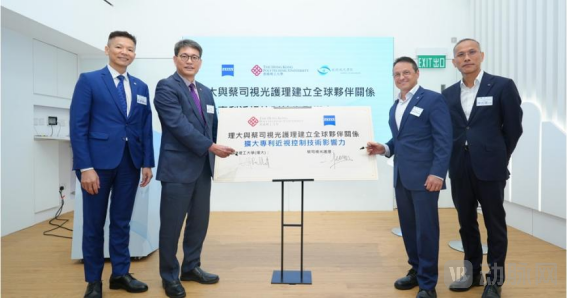
Image source: PolyU.com
The School of Optometry at The Hong Kong Polytechnic University, established in 1978, is the only institution in Hong Kong, China, that provides optometric education. It is also the sole institution in Hong Kong, China, authorized to award the Bachelor of Science (Honours) in Optometry and the Doctor of Philosophy in Medical Science (Optometry). Dedicated to safeguarding public eye health through basic research, prevention, diagnosis, control, and treatment, the School has achieved remarkable success, particularly in research on myopia and age-related eye diseases.
According to statistics from the National Health Commission, the myopia rate among adolescents in China was 53.6% in 2023. Specifically, the myopia rate was 14.5% for children under six years old, approximately 36% for primary school students, approximately 71% for junior high school students, approximately 81% for senior high school students, and approximately 90% for college students. Myopia is showing a clear trend toward affecting younger age groups and increasing in severity.
In August 2023, the National Administration of Disease Control and Prevention issued the Technical Guidelines for Comprehensive Public Health Interventions in Myopia Prevention and Control among Children and Adolescents, proposing technical interventions for myopia in this population. The guidelines advocate a three-tiered prevention strategy to implement comprehensive public health interventions aimed at preventing, reducing, and slowing the onset and progression of myopia among children and adolescents.
Scientific correction of myopia is a tertiary prevention measure and serves as the last line of defense in slowing its progression. MyoCare, the next-generation myopia control lens, is Zeiss’s first myopia management solution designed specifically for children, aiming to effectively control the progression of childhood myopia. It is currently available in multiple countries.
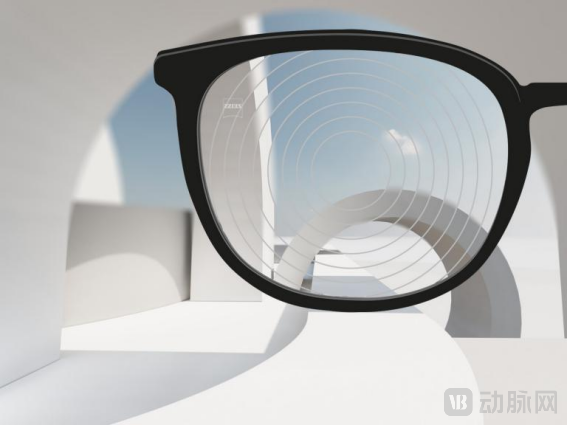
MyoCare Lenses
Image source: zeiss.com
DISC technology is an innovative myopia control technology developed by a research team at The Hong Kong Polytechnic University in 2000. The commercialization entity of this technology has developed a soft contact lens based on DISC technology to reduce the progression of high myopia and the risk of associated ocular diseases.
Based on the principles of myopia, the eyeball approximates an ellipsoid shape. In myopic eyes, imaging light rays focus in front of the retina, causing blurred vision for distant objects. Meanwhile, the peripheral regions of the eyeball wall may receive a portion of these imaging rays, which ultimately fall behind the eyeball wall, resulting in peripheral hyperopic defocus. This peripheral hyperopic defocus stimulates the continued posterior elongation of the eyeball wall, leading to progressive axial lengthening and an increase in myopic refractive error.
The DISC patented technology from The Hong Kong Polytechnic University primarily utilizes a physical defocus lens design to eliminate stimulatory signals that promote axial elongation, thereby achieving the goal of inhibiting myopia progression.
Specifically, the patented DISC technology incorporates a specialized optical microstructure into conventional refractive myopia correction optics, arranging these two optical structures alternately on the lens surface to form concentric rings. Lenses based on this multi-ring myopic defocus design feature a conventional correction zone that projects images onto the retina, enabling pediatric wearers to see clearly in their daily lives.
On the other hand, specialized optical microstructures shift the focal point, which would otherwise fall behind the retina, onto or in front of the retina, thereby generating a “myopic defocus” signal. With the assistance of multiple defocus rings, this creates myopic defocus in front of the retina, helping to slow axial elongation and further progression of myopia in patients.
Currently, the DISC technology, which leverages the natural axial growth feedback mechanism of the eye to guide ocular development and correct both central and peripheral retinal vision, has been validated through multiple preclinical studies and clinical trials. The results have consistently demonstrated that it is safe, effective, and free of significant side effects.
From a market segmentation perspective, MyoCare is a defocus spectacle lens. Compared to the orthokeratology (OK) lenses that are currently prevalent in the market, these myopia control glasses are more convenient to wear, more affordable, and have greater potential in terms of the eligible patient population. As costs continue to decline in the future, defocus spectacle lenses are likely to replace traditional optical glasses as the entry-level product for myopia prevention and control in children and adolescents.
According to the "White Paper on China's Eyeglass Lens Industry" released by Frost & Sullivan in 2024, the market size of defocus lenses for myopia management among Chinese adolescents reached approximately RMB 14.68 billion in retail sales value in 2023. In the future, with the continuous increase in demand for defocus lenses and improved consumer awareness of the defocus lens market, the retail sales value is projected to reach RMB 47.76 billion by 2028. The compound annual growth rate (CAGR) from 2023 to 2028 is expected to be approximately 26.6%.
Faced with a rapidly expanding market, numerous global ophthalmic giants have successively entered the myopia control segment featuring peripheral defocus technology. In addition to Carl Zeiss, these overseas brands include Hoya Optical, Essilor, Apollo Lenses, Nikon, and Savi Germany.
Essilor's Stellest Myopia Control Lenses with Multi-Segment Defocus TechnologyUtilizing “H.A.L.T. High Aspheric Lenslet Technology,” the 1,021 invisible microlenses on the lens surface adjust curvature and refractive index to focus light in front of the retina, thereby slowing myopia progression.
Hoya Optical's Newly Developed MiyoSmart Multi-Point Myopic Defocus LensesUtilizing "Defocus Incorporated Multiple Segments (D.I.M.S.)" technology. This design distributes 396 microlenses across a zone approximately 32 mm in diameter surrounding the optical center of the lens, with each microlens creating myopic defocus. Even during eye rotation, this design ensures the continuous provision of myopic defocus, thereby more effectively slowing axial elongation and mitigating the progression of myopia.
Nikon's Developed Myopia Control Lenses with Multi-Point Defocus TechnologyUtilizing DOT (Diffusion Optics Technology) point diffusion technology based on retinal contrast theory, thousands of wide-angle scattering microlenses on the lens surface simulate natural environmental conditions to reduce retinal contrast and control myopia progression. Two-year clinical trial data for this product demonstrate that full-time wear delays myopia progression by an average of 59%.
Savile's Multi-Point Defocus LensesUtilizing multi-dimensional CNC micro-engraving technology, the 690 optical microlenses in the control zone are arranged in six groups of honeycomb-like dot matrices. These microlenses focus light in front of the retina, modulating axial length and adjusting the eye’s focusing ability for objects at varying distances, thereby helping to slow the progression of myopia.
In recent years, the Chinese government and relevant departments have attached increasing importance to eye health among children and adolescents, continuously introducing favorable policies to promote the healthy development of China’s myopia management lens market. According to the “Thirty Questions and Answers on Myopia Prevention and Control in Children and Adolescents (2024 Edition)” released by the Key Laboratory of Vision Science Research under the Chinese Ministry of Health, “peripheral defocus spectacles can effectively control the progression of myopia, achieving approximately 20%–60% greater slowing effect compared with conventional optical spectacles.”“Peripheral defocus spectacles have become one of the primary clinical solutions for myopia control, owing to advantages such as ease of wear, minimal adverse effects, and no age restrictions.”
According to Sullivan’s research data, the market for myopia management defocus lenses for adolescents in China has entered a phase of rapid growth. In response to this substantial market opportunity, numerous domestic companies have successively established their presence, with multiple products launched by firms such as Mingyue Lens, Aimu Haorui, Aier Eye Hospital Group (Aibo Nuode), Wanxin Yi Bai Fen, Green Vision Optical, Aipu Optical, and Haohai Ophthalmology.
Easy Control Pro, developed by Mingyue LensIt is a multi-point myopic defocus lens designed to control axial elongation, developed based on the ocular physiological parameters of Chinese children. By incorporating 1,295 dense microlenses to increase the defocus area, it more effectively manages myopia. In May 2024, the company’s latest comparative study results showed that in the second year of wear, QingSongKong Pro demonstrated a 72% efficacy in slowing myopia progression and a 61% efficacy in retarding axial elongation.
Aimuhao Rui's Integrated Mesh Defocus LensBy employing integrated microlens array optimization technology, 540 hexagonal microlens units are embedded in the lens to form a tightly packed, seamless integrated array, enabling a more effective light stimulation design. Additionally, the lens incorporates unique boundary technology, utilizing a smaller central optical zone to create an extended defocus boundary, thereby generating more potent boundary stimulation and enhancing myopia control efficacy.
Aibonode's Pnuotong M-Zone Microstructure Defocus LensIncorporates a multi-layer defocus design to ensure stable myopia control efficacy for wearers with varying refractive errors. By utilizing ring-zone microstructures for real-time defocus stabilization and high-precision aspheric processing technology, it increases the defocus area and enhances defocus stability. This strengthens myopia control while providing clear, comfortable visual quality that is easy to adapt to.
Shanghai Hengtai Vision Technology Co., Ltd., a subsidiary of Haohai OphthalmologyMyopia control spectacle lenses incorporating "micro-movement non-equal defocus" technology. This product achieves sustained and effective myopia management through multi-focal defocus stimulation, addressing the issue of diminished efficacy associated with long-term use of conventional multi-point defocus lenses.
However, judging from the current landscape of the Chinese market, the top four industry players hold approximately 70% of the market share. Among these four, Mingyue Optical Lens, a domestic brand from Danyang, Jiangsu, is the only one capable of competing on par with overseas brands. It is foreseeable that, driven by the growing demand for functional lenses, Chinese lens brands represented by Mingyue Optical Lens will seize this opportunity to accelerate their development and catch up.
As a global optics giant, Carl Zeiss stumbled with its first-generation peripheral defocus lenses launched in 2010; at that time, both the 6-month and 12-month trials of the first-generation lenses showed an efficacy rate of approximately 30% in slowing myopia progression.
It was not until 2022, after twelve years of development, that the new generation of myopia control lenses, MyoCare, was successfully launched. Consequently, in today’s red-ocean landscape characterized by entrenched industry giants and a continuous influx of innovative startups, Zeiss has also turned part of its strategic focus outward.
In fact, as early as April 2024, Zeiss publicly announced the establishment of a global partnership with The Hong Kong Polytechnic University. Through models such as intellectual property (IP) licensing and joint research and development, the partnership aims to expand the influence of the university’s patented technologies and accelerate the market penetration of Zeiss-related products.
At the licensing agreement signing ceremony in April,Dr. Benjamin Viering, Chief Technology Officer and Chief Operating Officer of ZEISS Vision CareFurther research into the understanding and treatment of myopia is crucial, requiring close collaboration between academia and industry. Zeiss has maintained a strong partnership with The Hong Kong Polytechnic University for many years. This collaboration underscores their long-term joint commitment to research and development, with a focus on myopia control and other ophthalmic technologies.
Professor Zhao Ruheng, Vice President of The Hong Kong Polytechnic UniversityIt was also stated that The Hong Kong Polytechnic University is committed to promoting the transfer and commercialization of technology, and its School of Optometry has consistently been at the forefront of research on myopia. The application of DISC technology to myopia management represents a successful case of such translation, demonstrating how academic research can be transformed into effective industry solutions and offering new options for protecting and improving public vision.