

Zhenji Xinzhi Files IPO Prospectus for Its Ultra-Sensitive and Highly Multiplexed Proteomics Platform Powered by Proprietary ISAS Technology
From nature'sCentral Dogmafrom the perspective of, the gene sequencing determinedDNA information primarily represents genetic information, whereas the protein information determined by proteomics reflects the ultimate executors of biological activities. Proteins participate in various functions, including the formation of cellular structures, catalysis, transport, signal transduction, and immune defense, and are directly associated with disease states.
Genomics and proteomics are interconnected rather than separate, with proteomics being functionally more complex. Humans have approximately 25,000 individual genes, but more than one million distinct protein types. This disparity arises because DNA is composed of four nucleotide bases, whereas proteins are built from 20 different amino acids. Post-translational modifications, such as phosphorylation, acetylation, and ubiquitination, alter protein conformation and function. Consequently, while an individual’s genome remains largely stable, their proteome is dynamic and exhibits substantial inter-individual variability.
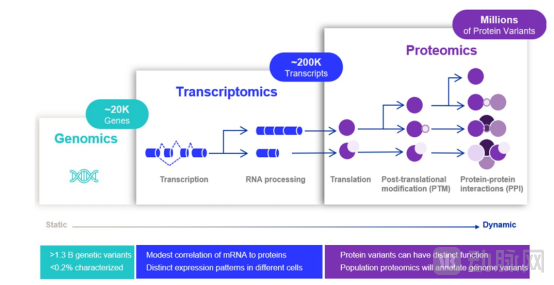
Image source: SEER Inc. 2023 Annual Report
In the post-genomic era, proteomics has garnered significant attention for its potential in disease prediction and personalized medicine. High-throughput proteomic analysis of body fluids, such as plasma, enables early prediction and precise treatment of various diseases. Proteomic testing also serves as a critical tool in biopharmaceutical R&D, playing key roles in the discovery and quantification of emerging biomarkers, identification of novel therapeutic targets, and assessment of drug efficacy.
There are over one million protein species, including those with post-translational modifications. Twenty-two high-abundance proteins account for 99% of the total plasma protein mass, primarily comprising albumin, IgG, fibronectin, IgA, transferrin, C3/C4 complement components, and lipoproteins. The remaining one million protein species collectively constitute only 1% of the total plasma protein mass, resulting in extremely low concentrations, typically at the pg/mL level.
These low-abundance proteins often include key players in biological processes, such as functional regulatory proteins, various types of cytokines, and immune peptides. Due to their vast numbers, complex composition, and susceptibility to masking and shielding effects by high-abundance proteins, current LC-MS/MS detection methods struggle to detect, isolate, and identify most low-abundance proteins, which has become one of the bottlenecks restricting proteomics research.
Therefore,How to improve the detection limit and sensitivity of proteomics research has become an urgent problem for researchers to solve.
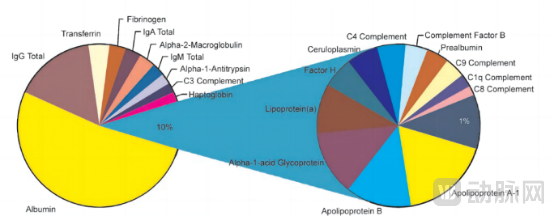
Image source: Molecular & Cellular Proteomics 2(10):1096-103
Changes in the proteome provide a snapshot of cellular and organismal life activities, as cells primarily respond to internal and external environmental changes by regulating the activity and levels of their proteins. However, the complexity of protein functions means that detecting a single protein cannot reveal the full picture of an organism’s biology. Instead, consistent changes across multiple proteins can more clearly elucidate disease-specific protein fingerprint profiles and the cascade pathways of protein targets involved in drug action. Therefore, the development of ultra-multiplexed proteomic detection tools holds significant importance for advancing drug development and clinical precision medicine, with broad application scenarios.
In the field of drug development, it is currently recognized that the majority of human diseases are also caused by protein alterations. Notably, 95% of drugs approved by the U.S. Food and Drug Administration (FDA) target proteins, and proteomics technologies can facilitate the development of new therapeutics or the optimization of existing ones.
For example, by analyzing changes in intracellular proteins following drug treatment, researchers can gain a better understanding of the drug’s mechanism of action and toxicology. In clinical drug trials, proteomic testing can assist in patient selection for enrollment and therapeutic monitoring, thereby effectively improving the success rate of clinical research. Currently, oncology drugs requiring biomarker monitoring are gradually becoming mainstream. According to Biodesix’s 2022 annual report, the proportion of cancer drug clinical trials utilizing biomarkers increased from 15% in 2000 to 55% in 2018.
In the field of clinical precision medicine, proteomics is employed to identify protein markers associated with specific diseases, such as cancer, heart disease, and neurodegenerative disorders. By analyzing differences in protein expression between diseased and normal states, researchers can discover potential biomarkers, which are subsequently developed into companion diagnostic products for precise disease subtyping, early screening, diagnosis, monitoring of therapeutic efficacy, adjustment of medication regimens, and prognostic analysis.
To accelerate the research, development, and commercialization of proteomics testing products, Shenzhen Grid Core Biotech Co., Ltd. has assembled an experienced interdisciplinary R&D team. The core team comprises experts with backgrounds in semiconductors, microfluidics, reagent development, and AI algorithms. The company boasts years of technical accumulation in biosensing and IVD microfluidics technologies, along with extensive product development experience in the screening, discovery, and clinical application of protein biomarkers.
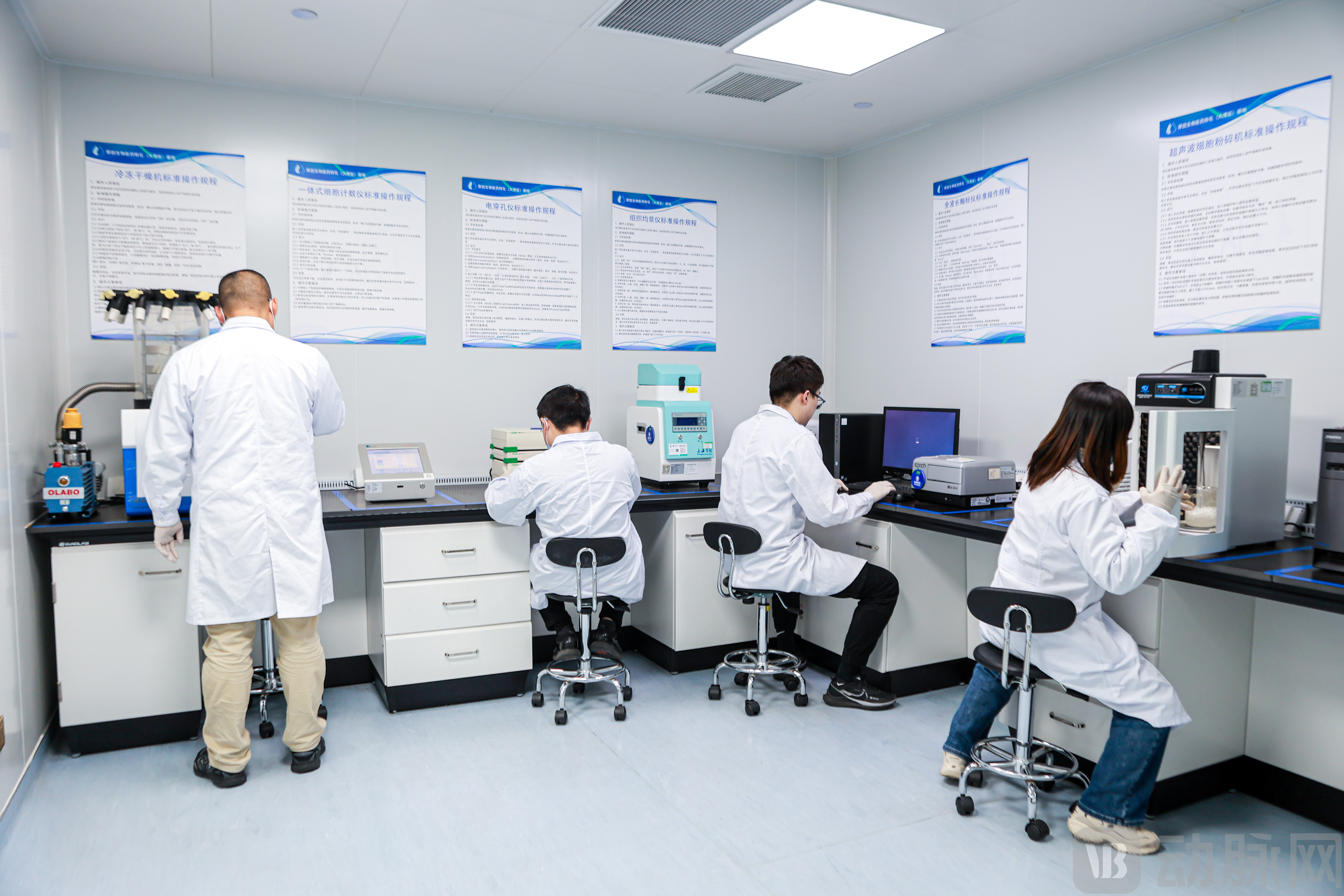
Among them, Dr. Zhang Qingyang, the CEO, graduated from the Department of Materials Science and Engineering at Johns Hopkins University. He possesses extensive experience in semiconductor micro- and nano-fabrication processes and has previously worked at companies such as CSOT. The CTO holds a professional background in semiconductors and microfluidics, with ten years of experience in the development of IVD (in vitro diagnostic) equipment and consumables. He has previously held positions at leading IVD enterprises, including MGI Tech and Wondfo Biotech.
In addition, the company’s R&D team includes senior research scientists with experience in developing pTau-217 Simoa assay kits, as well as reagent development experts with over 10 years of expertise in chemiluminescence, electrochemiluminescence, and antibody-nucleic acid conjugation.
Shenzhen Grid Core Biotech Co., Ltd. focuses on the research and development of applying advanced semiconductor technologies to ultra-sensitive and ultra-multiplexed protein detection in proteomics. Its core objective is to develop more efficient, rapid, low-cost, and portable proteomic detection instruments and reagents for upstream life sciences, new drug development, and clinical diagnostics.
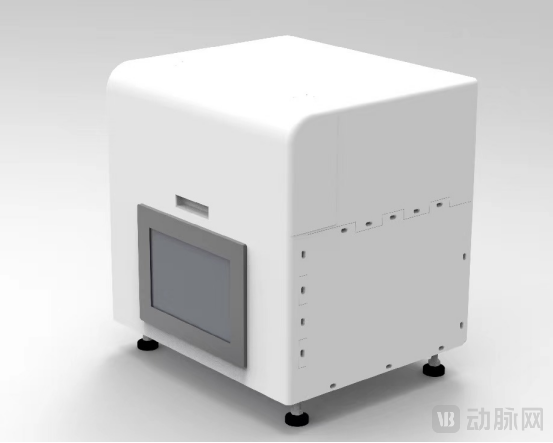
The team has developedThe world’s first Integrated Surface Array Sensing (ISAS) system enables on-chip 1:1 multi-channel fluorescence imaging by integrating a specialized packaging process onto the surface of transistor-based photodetectors. This system can replace currently used fluorescence microscopy imaging systems and achieve one-click automated imaging detection.It makes detection instruments convenient and easy to use; it offers an exponential cost advantage over precision optical systems; additionally, it features advantages such as a large field of view and ease of integration.
First Pipeline: Addressing the Issue of Low Sensitivity in Detecting Specific Disease Protein Targets in the Current Industry
Leveraging its proprietary microfluidic chips for high-speed droplet generation and ISAS detection chips, the Drip single-molecule immunoassay platform within Shenzhen Grid Core Biotech’s product matrix surpasses the lower limits of traditional protein detection, enabling femtogram-level protein analysis.
Compared with existing single-molecule immunoassay products based on microwell chips, this platform achieves a tenfold reduction in the costs of detection equipment and consumables. Meanwhile, its detection stability and accuracy are not affected by the bead loss rate associated with traditional microwell chip magnetic beads. This advancement is expected to accelerate the adoption of single-molecule immunoassay devices in both research and clinical settings, thereby facilitating early disease screening and therapeutic intervention.
Pipeline 2: Addressing the pain points of large-panel testing due to the excessive variety and number of current protein targets
Leveraging its proprietary PXA reagent technology and ISAS gene chips, the ultra-multiplex array chip detection platform within Shenzhen Grid Core Biotech’s product portfolio enables the multiplexed detection of thousands of targets on a single chip, offering a more flexible approach for proteomic differential analysis.
Leveraging its strengths in microfluidics and semiconductors, Shenzhen Grid Core Biotech Co., Ltd. focuses on driving technological innovation and breakthroughs in core modules. By optimizing one or more of these modules, the company achieves significant system-level improvements to its detection platforms, ultimately delivering substantial enhancements in performance and cost efficiency compared to international industry benchmarks.
It is reported that Grid Core’s first-generation proof-of-concept prototype has passed validation and will be rapidly launched to the market following further optimization.
To accelerate the market launch of its ultra-sensitive and highly multiplexed proteomics detection platform, Shenzhen Grid Core Biotech Co., Ltd. is poised to initiate a new round of financing. With the influx of this new capital, the company will continue to drive innovation in foundational technologies as part of its future R&D roadmap.
First, leveraging its years of deep expertise in the field of semiconductor optoelectronic sensing, Grid Core Biotech has rolled out version 2.0 of its globally pioneering Integrated Surface Array Sensing (ISAS) system.
Secondly, Grid Core will continue to intensify its R&D efforts in reagents, particularly in the development of core raw materials such as antigens and antibodies. Achieving self-sufficiency and control over these core materials provides stronger assurance for product development. Furthermore, multi-directional R&D activities—including stability validation of core raw materials like antigens and antibodies, as well as reagent formulation and optimization—will significantly enhance the performance of proteomics detection.
Furthermore, Grid Core will place greater emphasis on the application and development of proteomics in scientific research and clinical settings, actively participating in target discovery and validation during the drug development process.
Finally, Grid Core will gradually break through the limitations of current existing methodologies, making more attempts and innovations at the methodological level, with the aim of leading the development of proteomics through innovation in detection methodologies.