

Third SynBio Challenges Successfully Concludes with 147 Teams from Over 60 Universities Showcasing Innovations in Synthetic Biology
From August 8 to 9, 2024, the 3rd SynBio Challenges (hereinafter referred to as the “Innovation Competition”), hosted by the Synthetic Biology Branch of the Chinese Society for Biotechnology and co-organized by the School of Synthetic Biology at Shenzhen University of Advanced Technology, the Institute of Synthetic Biology at the Shenzhen Institutes of Advanced Technology of the Chinese Academy of Sciences, the Shenzhen Institute of Synthetic Biology Innovation, the Shenzhen Synthetic Biology Association, and the Shenzhen Engineering Biology Industry Innovation Center, was held at the Tian’an Cloud Valley International Conference Center in Guangming, Shenzhen.
This Innovation Competition received support from multiple organizations, including the Organization Department of the Guangming District Committee of the Communist Party of China (Shenzhen), the Shenzhen University of Advanced Technology Foundation, and the Mass Organizations Work Department of Guangming District, Shenzhen. Notably, Kweichow Moutai Group, as the exclusive partner, provided substantial support during the conference preparations, while the 72-Hour “Science+” Innovation Challenge for Young Talents in Guangming Science City created memorable highlights for the competition.
The Innovation Competition focuses on the field of synthetic biology, aiming to provide a platform for exchange and competition among young students enrolled in higher education institutions. The event attracted 147 teams from more than 60 universities both in China and abroad, with over 450 student participants onsite. Since its inception, the number of participating teams in the Innovation Competition has nearly doubled year after year, rapidly expanding the event’s influence.
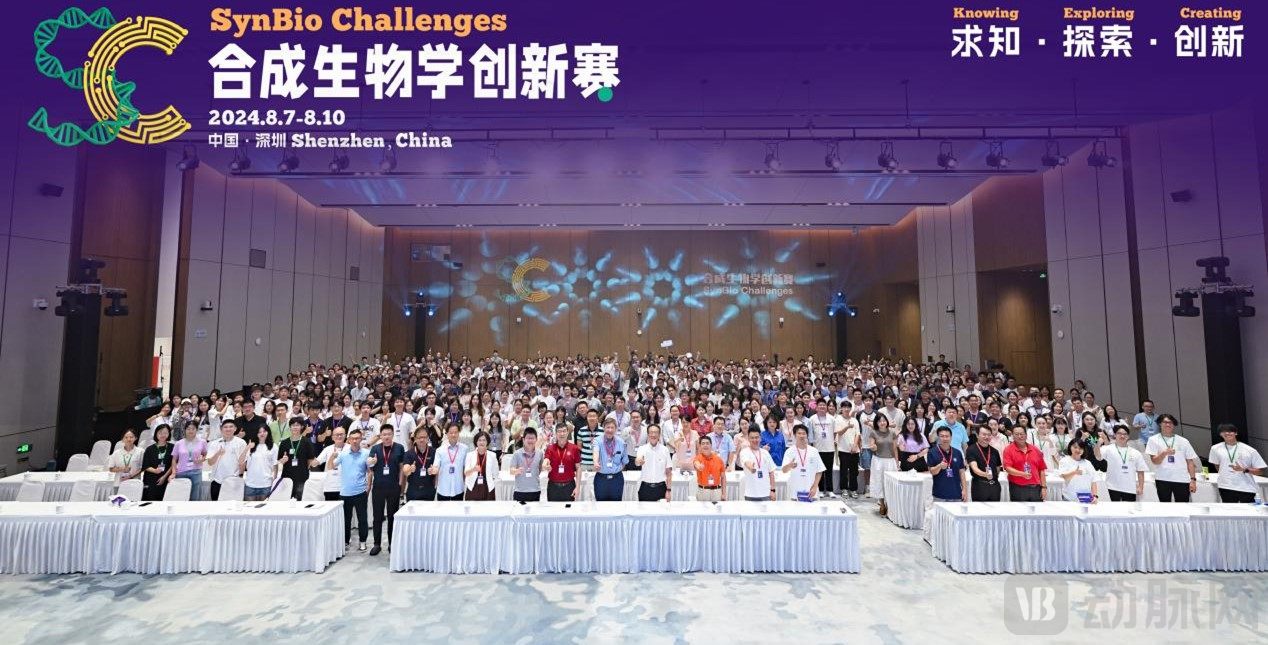
Group Photo of Innovation Competition Participants
Competition Format Fully Upgraded: Multiple Frontier Applications of Synthetic Biology Explore Deeper
At the opening ceremony, Zhang Xian’en, Chair of the Synthetic Biology Innovation Competition, Dean of the School of Synthetic Biology at Shenzhen University of Advanced Technology, Vice President of the Chinese Society of Biotechnology, and Director of the Synthetic Biology Branch, stated in his address: “The continuum of synthetic biology–biotechnology–biomanufacturing–bioeconomy is becoming the defining theme of innovation-driven development in our era. The Synthetic Biology Innovation Competition provides young students with a unique platform for learning and exchange, fostering their spirit of exploration, creativity, and teamwork, so that they may grow into highly qualified reserve talent. We also aspire to establish the Innovation Competition as the world’s second-largest international synthetic biology competition, following the International Genetically Engineered Machine (iGEM) Competition.”
He also noted that the biomanufacturing industry is currently attracting widespread attention, and the development of the bioeconomy represents an emerging trend. Against this backdrop, the Innovation Competition was established with several key objectives in mind: First, synthetic biology is a novel interdisciplinary field that requires greater engagement from young people; hosting such competitions serves to encourage more young students to participate, thereby expanding the pool of future talent. Second, most participating students possess a spirit of exploration into the unknown realms of life sciences, and the competition provides a mechanism or platform to unleash this innovative and exploratory drive. Furthermore, in terms of talent development, having students compete in teams fosters teamwork and collaborative skills.
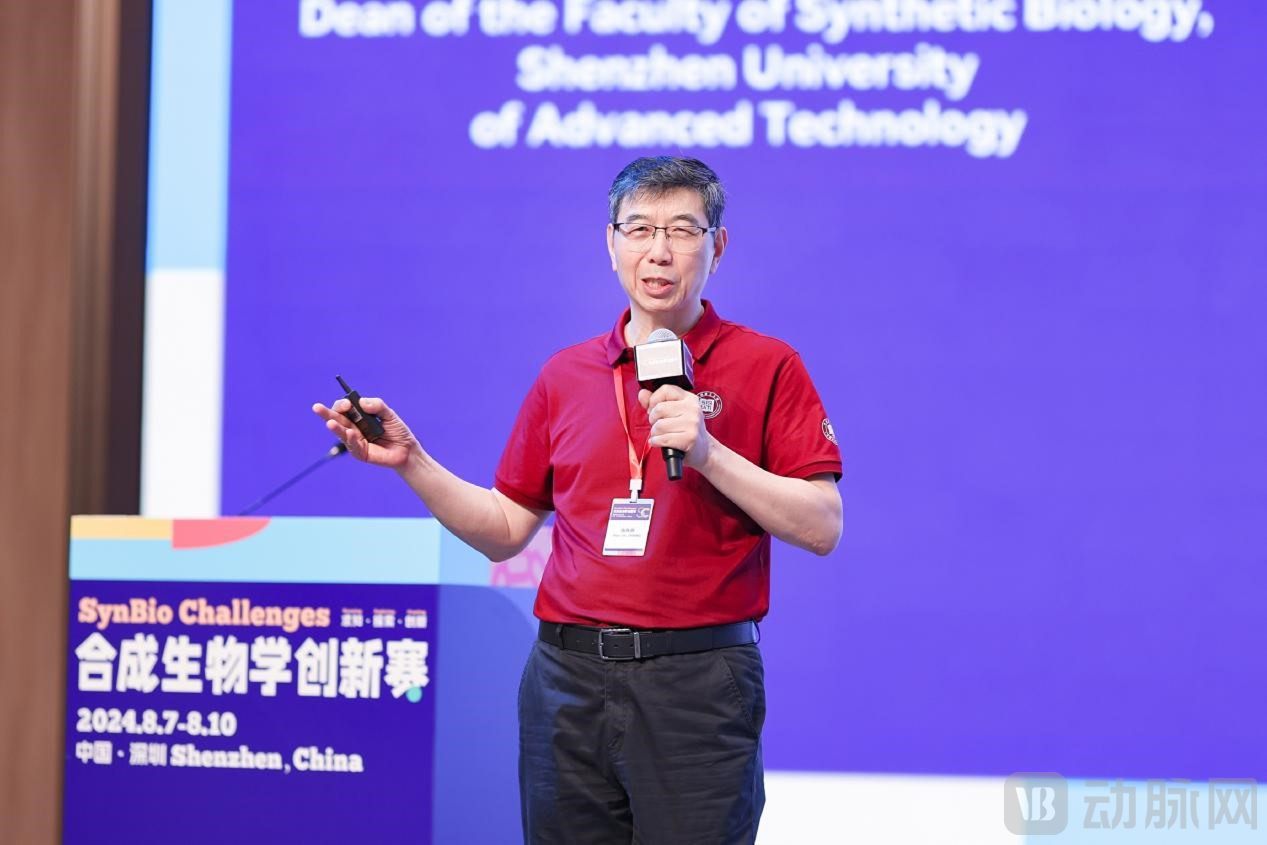
Zhang Xian’en, Chair of the Innovation Competition, Dean of the School of Synthetic Biology at Shenzhen University of Advanced Technology, Vice President of the Chinese Society of Biotechnology, and Director of the Synthetic Biology Branch
It is understood that this year’s Innovation Competition has undergone a comprehensive upgrade in its format compared to the previous two editions. The Regular Season features three newly designed thematic tracks, covering multiple frontier directions in synthetic biology. These include the Green Track, focusing on agriculture and environmental protection; the Red Track, centered on health and medicine; and the White Track, targeting bio-chemical engineering. These tracks encourage participating teams to leverage their original innovative capabilities and propose creative solutions addressing specific societal development needs. Meanwhile, the Bacterial Game Competition and the Protein Design Competition continue to employ an Olympic-style competitive mechanism, which not only tests participants’ precision and depth in understanding specific challenges but also challenges their professional expertise in strategy formulation and experimental execution.
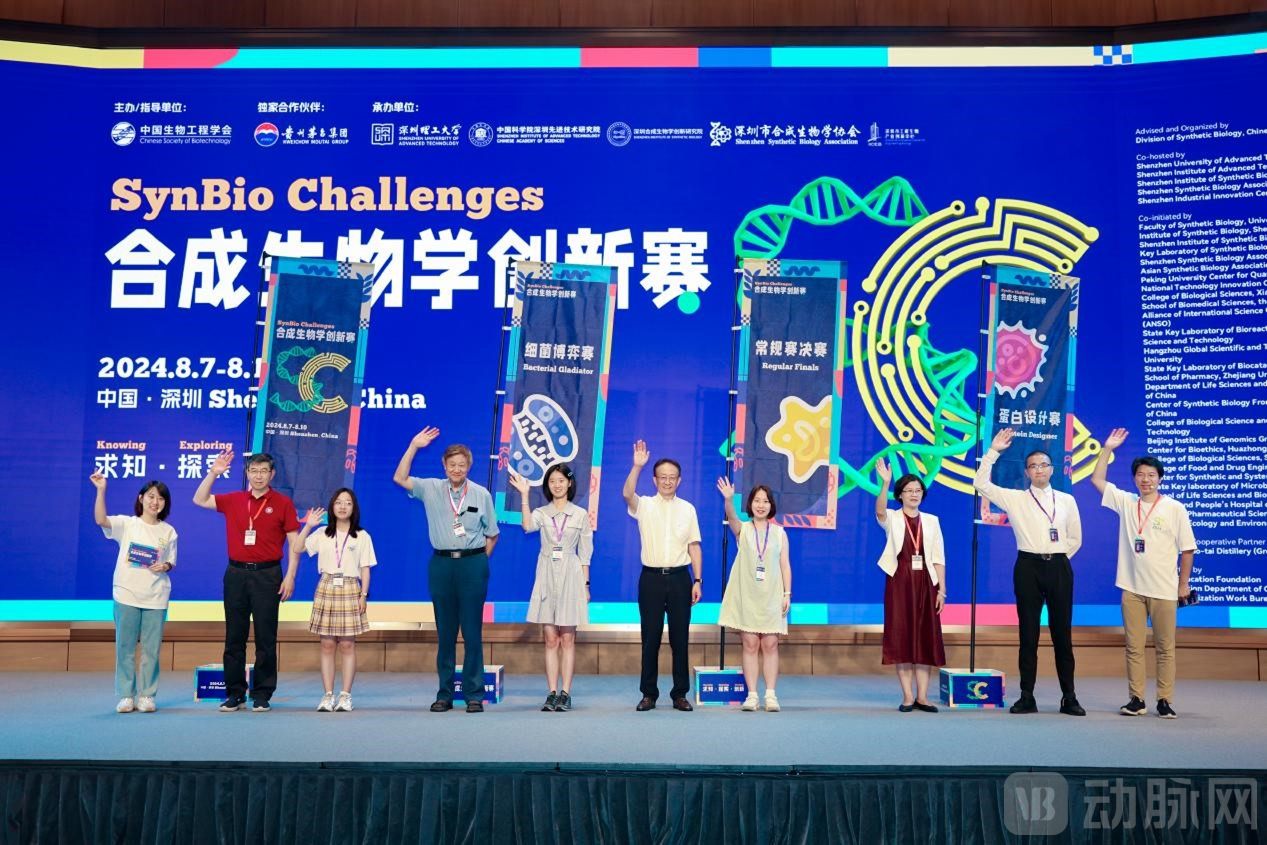
Academician Ouyang Qi of the Chinese Academy of Sciences, Fan Jianping, Director of the Preparatory Office of Shenzhen University of Advanced Technology, and Zhang Xian’en, Chairman of the Innovation Competition, presented flags to the students.
Lin Ying, a professor at the School of Biological Science and Engineering, South China University of Technology, and a judge for the Innovation Competition, pointed out that the competition evaluates students’ performance across multiple dimensions, including scientific rigor, design innovation, and market potential. It tests students’ knowledge accumulation and problem-solving abilities, while also emphasizing forward-looking industrial thinking in terms of project implementation and application.
In addition to bringing together numerous academic experts, this innovation competition specially invited artists from the Central Academy of Fine Arts to present a bioart exhibition and lectures, integrating synthetic biology with artistic aesthetics and adding a unique perspective to the event.
Three Major Competitions Collaborate to Cultivate Original Innovation; Chinese Synthetic Biology Teams Have Reached Cutting-Edge Technologies
The Innovation Competition aims to cultivate original innovation capabilities through three major challenges: “knowledge accumulation, problem analysis, and striving for excellence.” After three days of competition among 60 teams, the NEFU_China team from Northeast Forestry University, competing in the Biochemical Engineering track, won the Grand Prize of this year’s Innovation Competition. Their project focused on the de novo biosynthesis of p-hydroxymandelic acid using metabolic engineering and directed evolution strategies, addressing two key bottlenecks: insufficient precursor supply and low activity of key enzymes in the biosynthetic pathway.
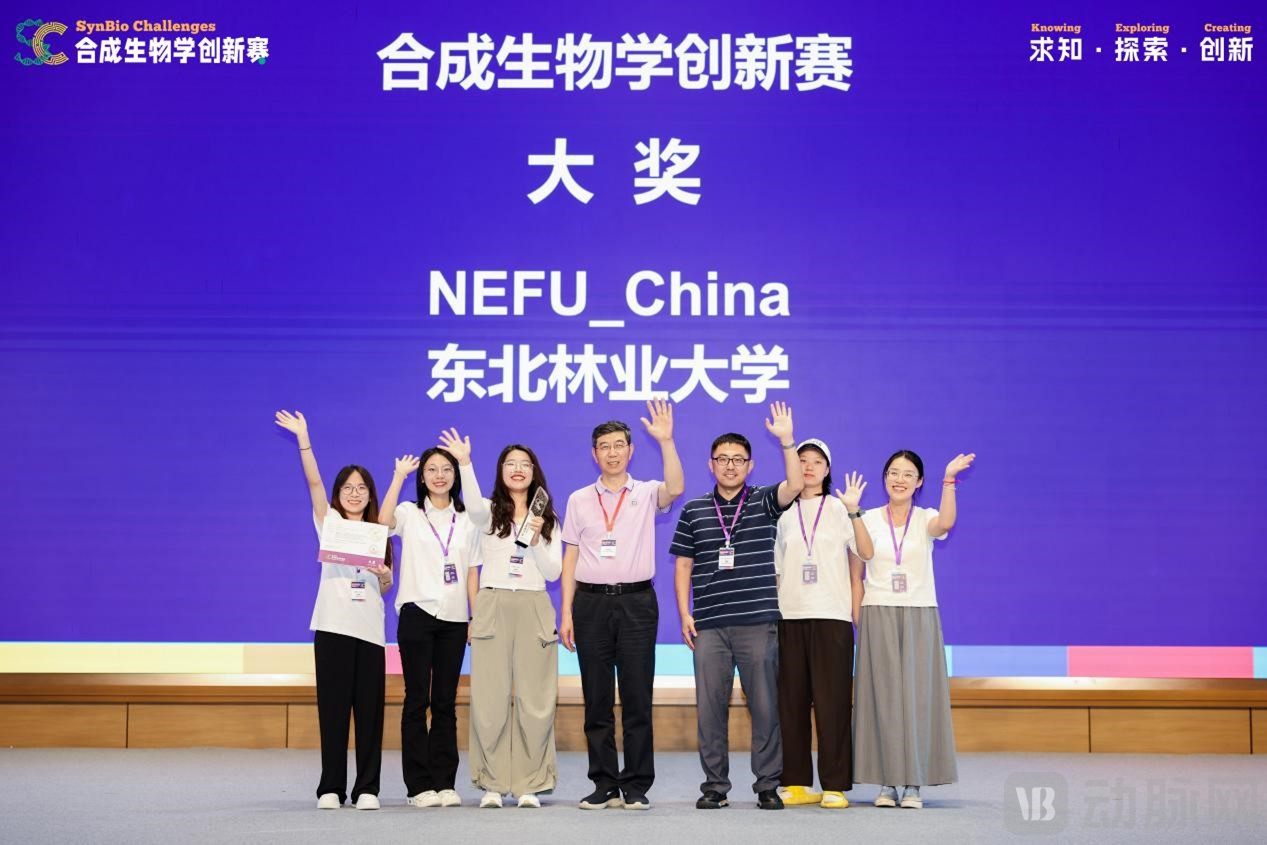
Grand Prize Winner of the Innovation Competition: Northeast Forestry University NEFU_China Team
The HELLO-ZJU team from Zhejiang University, the Shanghaitech-China team from ShanghaiTech University, and the NEFU_China team from Northeast Forestry University won the Best Award in Biomedicine, the Best Award in Environment and Agriculture, and the Best Award in Biochemical Engineering, respectively. In the two featured tracks, the Wild Growth team from Jilin Agricultural University won the Best Bacterial Game Theory Award; the Nankai Squad from Nankai University and the Helix Heroes team from Shanghai Jiao Tong University won the Best Protein Design Award.
Lin Ying noted that he was particularly impressed by the project from Zhejiang University’s HELLO-ZJU team, highlighting their systematic approach in linking the adsorption, extraction, and application of rare earth elements to life safety through a comprehensive workflow. Notably, the team consisted primarily of undergraduate students who completed the design and initiated practical implementation within just one year.
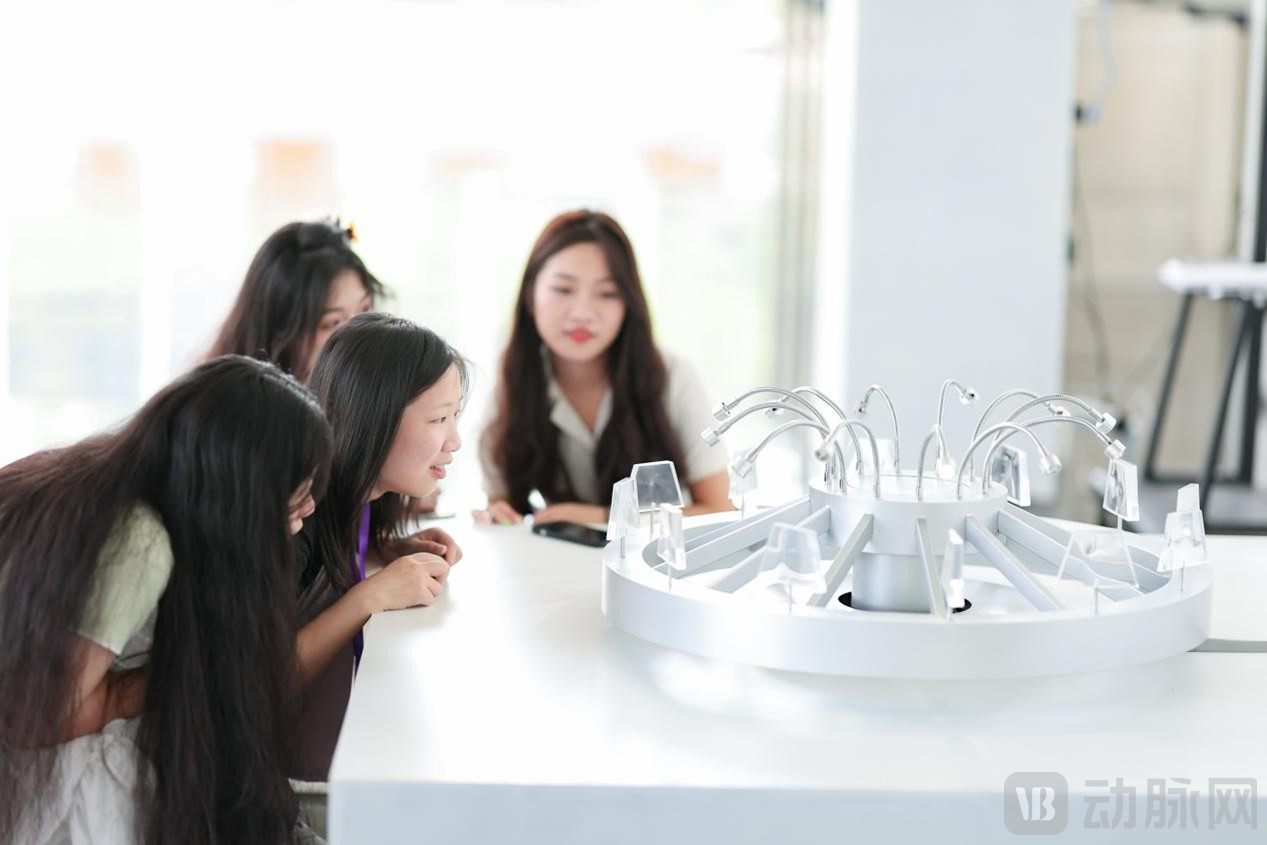
Participating Students Visit Science and Art Installations
Participating teams also shared their reflections. Mei Jian, a student from Waseda University in Japan, stated that by visiting the Shenzhen Major Scientific and Technological Infrastructure for Synthetic Biology Research and its laboratories, he gained an appreciation for China’s advanced capabilities in automation and cutting-edge technologies. As a member of the first overseas team to compete in the Innovation Competition, he also expressed his hope to extend the competition’s influence to more international teams.
Drawing on his observations both domestically and abroad, Mei Jian noted that China has made substantial investments in synthetic biology. During his team’s inaugural visit to Shenzhen for a publication event, they toured domestic laboratories and discovered that China’s automation resources hold significant potential. The country can rapidly access the most cutting-edge technologies and strive to surpass them through swift internal iteration, presenting highly promising prospects.
Li Boyang, a member of the Nankai University team, reviewed his team’s project. He noted that the protein design competition they entered did not include a Q&A session with judges; instead, team performance was determined solely by experimental results, providing a highly objective and quantitative assessment. The key metric was the intensity of the proteins designed by each team—a quantifiable value—with final rankings based on fluorescence intensity. When asked about practical applications, Li Boyang cited the development of a new drug as an example, pointing out that modifying protein design holds promise for enhancing drug efficacy.
Wang Li, Deputy Secretary of the Party Committee, Vice Chairman, and General Manager of Kweichow Moutai Group, a collaborating partner of the Innovation Competition, stated that the brewing science embodied in Moutai liquor belongs to the first generation of biotechnology. Synthetic biology will lead the fifth industrial revolution in biomanufacturing and serves as a key technological engine for China’s strategic layout in future industries, particularly future manufacturing. Moutai’s support for the Synthetic Biology Innovation Competition represents a cross-temporal exchange and collaboration between the first and fifth generations of biotechnology.
Yi Xiao, a member of the organizing committee and secretary-general of the Innovation Competition, as well as a researcher at the Shenzhen Institute of Advanced Technology, Chinese Academy of Sciences, stated that this competition is not only a platform for young students to showcase their talents and realize innovation but also an important opportunity to cultivate interdisciplinary talent in synthetic biology with a forward-looking technological vision. He expressed his hope that the Innovation Competition will promote educational innovation and industrial applications of synthetic biology on a global scale, injecting new vitality into its future development.
In his closing remarks, Liu Chenli, Deputy Director of the Shenzhen Institutes of Advanced Technology, Chinese Academy of Sciences; Director of the National Center for Innovation in Biomanufacturing Industry; and Dean of the Shenzhen Institute of Synthetic Biology, stated that the original intention behind organizing the China Synthetic Biology Competition was to provide a platform for innovation, intellectual creativity, and creation, thereby igniting students’ passion for synthetic biology. Acknowledging that the experimental journey is often accompanied by monotony and challenges, he encouraged participants to delve deeply into the scientific principles of this emerging discipline and its innovative applications across various fields.
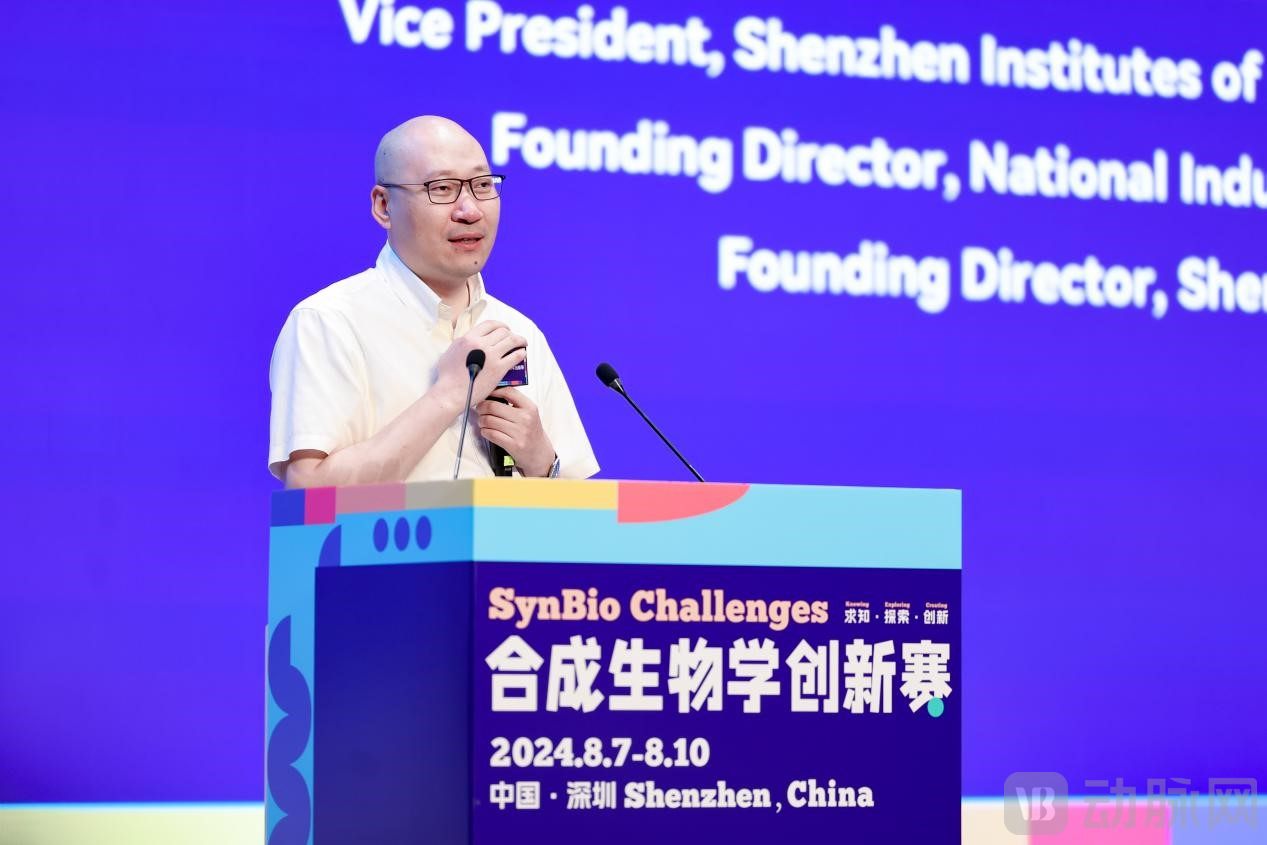
Liu Chenli, Deputy Director of the Shenzhen Institute of Advanced Technology, Chinese Academy of Sciences; Director of the National Center for Innovation in Bio-manufacturing Industry; and Dean of the Shenzhen Institute of Synthetic Biology
Synthetic Biology Becomes a Key Technological Engine for Future Manufacturing, Accelerating the Translation and Implementation of Scientific Research Achievements
At the closing ceremony, Zeng Wufei, Member of the Standing Committee of the Guangming District Committee of the Communist Party of China and Head of its Organization Department, stated that Guangming Science City is at a critical stage transitioning from infrastructure development to science-driven empowerment. There is an urgent need for the active participation of young scientific and technological talents. He expressed the hope that all participants would uphold the original aspiration of entrepreneurs, the passion of strivers, and the resilience of frontrunners in this innovation competition, where science and dreams converge.
This year’s Innovation Competition thoroughly implemented the core philosophy of synthetic biology—“creating to understand, creating to apply”—highlighting the powerful momentum of interdisciplinary integrated innovation. Participating teams also demonstrated diverse research directions and distinctive innovative approaches.
Lin Ying, who served as a judge for the Synthetic Biology Innovation Competition for the second time, observed that the number of participating teams in this year’s competition had doubled. Furthermore, with students hailing from across China, the trend signals the growing reach and influence of synthetic biology technologies nationwide. He also affirmed the capabilities of this year’s participants: “While reviewing the students’ projects, I noticed an improvement in their ability to design life science engineering solutions. As a result, this year’s entries demonstrated greater depth and innovation compared to last year.”
Zhang Xian’en, however, believes that the most significant takeaway for student teams in innovation competitions is the students’ personal growth. He also pointed out that outstanding team designs inevitably emerge from such competitions, gaining visibility within the industry and the market. These designs hold market potential and future commercial development value, while also driving the iterative advancement of biotechnology.
He then reviewed the projects from previous innovation competitions: “There have been some excellent designs that have attracted the attention of entrepreneurs and investors. Of course, we must also face the fact that in the life sciences, particularly in the field of synthetic biology, one cannot expect rapid translation of results. The translation of scientific achievements is not merely a matter of overcoming technological hurdles; it is also influenced by many market-driven evaluations and social factors. While the future market prospects are enormous, the translation cycle requires the test of time. Even iGEM, now a mature program, took 20 years of development and refinement to gradually incubate relatively successful technology transfer projects.”
The Innovation Competition embodies the synthetic biology philosophy of “creating to understand, creating to apply,” encouraging contemporary students to explore innovations and applications of synthetic biology across various fields based on their interests, while simultaneously cultivating a reserve force for synthetic biology, life sciences, and interdisciplinary disciplines. With synthetic biology as its core technological engine, the biomanufacturing industry is poised to foster innovative projects that address real-world application challenges in the future.
The 3rd Synthetic Biology Innovation Competition has successfully concluded, but the excitement is far from over. Participants will continue to press forward, further exploring synthetic biology technologies and the translation of research achievements into practical applications.