

DNA Script Files IPO Prospectus Following Breakthrough Enzymatic Benchtop DNA Printer and Over $1.1 Billion in Funding
DNA script
Enzyme-catalyzed DNA Synthesis Technology and Equipment Developer
Synthetic biology is hailed as the “third biotechnology revolution,” following the “discovery of the DNA double helix structure” and the “Human Genome Project.” It is a disruptive technology driving humanity’s leap from “understanding through construction” to “application through construction.”
Currently, synthetic biology has been applied to numerous specialized sectors, including healthcare, food and consumer goods, beauty and skincare, chemicals, energy, materials, and agriculture. According to McKinsey’s forecasts, over the next 10–20 years, synthetic biology is expected to generate an annual direct economic impact of $2–4 trillion globally, with the pharmaceutical and healthcare sector accounting for 35% (approximately $0.5–1.3 trillion).
As one of the key enabling technologies in synthetic biology, DNA synthesis technology provides the foundational raw materials for both basic research and applied fields in synthetic biology, and has become a major driver of innovative development in the synthetic biology industry.
DNA script, a biotechnology company founded in 2014 and headquartered in Paris, France, specializes in manufacturing synthetic DNA using its proprietary template-free enzymatic technology.. As a key player in the field of enzymatic de novo DNA synthesis, DNA Script has developed proprietary enzymatic DNA synthesis (EDS) technology and a nucleotide chemical synthesis platform, thereby making DNA synthesis faster and more cost-effective.
On this basis,In June 2021, DNA script announced the official commercial launch of its Syntax platform. The platform comprises the Syntax System, a novel benchtop enzymatic synthesis instrument, along with reagent kits and management software.. Among them, the Syntax System is a fully integrated automated DNA printer capable of simultaneously synthesizing 96 DNA oligonucleotides ready for direct use in genomics and molecular biology research. It is reported that the Syntax System is the world’s first benchtop DNA printer utilizing EDS technology.
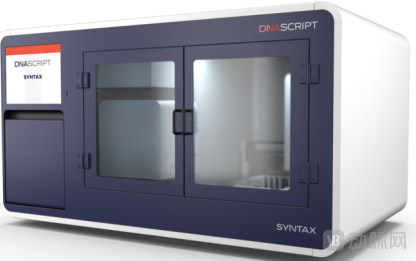
Syntax System Desktop DNA Printer Image Source: DNA Script
Four months after the launch of the Syntax platform,DNA script Announces $165 Million (Approx. RMB 1.18 Billion) Series C Financing. This round of financing was led by Coatue Management and Catalio Capital Management, with the proceeds to be used to accelerate the expansion and commercialization of the Syntax platform and to broaden the product portfolio powered by EDS technology.
In March 2014, DNA Script was co-founded by Thomas Ybert, Sylvain Gariel, and Xavier Godron. They are all senior experts with extensive research and industry experience in the field of bio-manufacturing.

DNA Script Founding Team. Image source: DNA Script official website
Among them, Thomas Ybert is the Co-founder and Chief Executive Officer of DNA Script. Prior to founding DNA Script, Thomas Ybert worked at Sanofi. He subsequently joined Amyris, a pioneer in the industrialization of synthetic biology, and Total, a French energy giant, to develop biofuels.
Sylvain Gariel and Xavier Godron serve as Co-Founder and Chief Operating Officer, and Co-Founder and Chief Technology Officer of DNA Script, respectively. Previously, both held analyst positions at Total, where they were responsible for conducting life cycle assessments (LCA) of biofuel production processes. Notably, Sylvain Gariel also conducted technical due diligence on the Amyris transaction.
Under the joint leadership of Thomas Ybert, Sylvain Gariel, and Xavier Godron, DNA Script was officially founded with the aim of revolutionizing enzymatic DNA synthesis technology, making synthetic DNA as simple and rapid to produce as it is to read.
To date, DNA Script has secured multiple rounds of funding thanks to its proprietary enzymatic DNA synthesis technology. Currently,DNA Script has completed 11 rounds of financing, totaling $479.8 million (approximately RMB 3.44 billion), with investors including Illumina Ventures, Agilent Technologies, Danaher Life Sciences, and 28 other prominent investment institutions and corporations.。
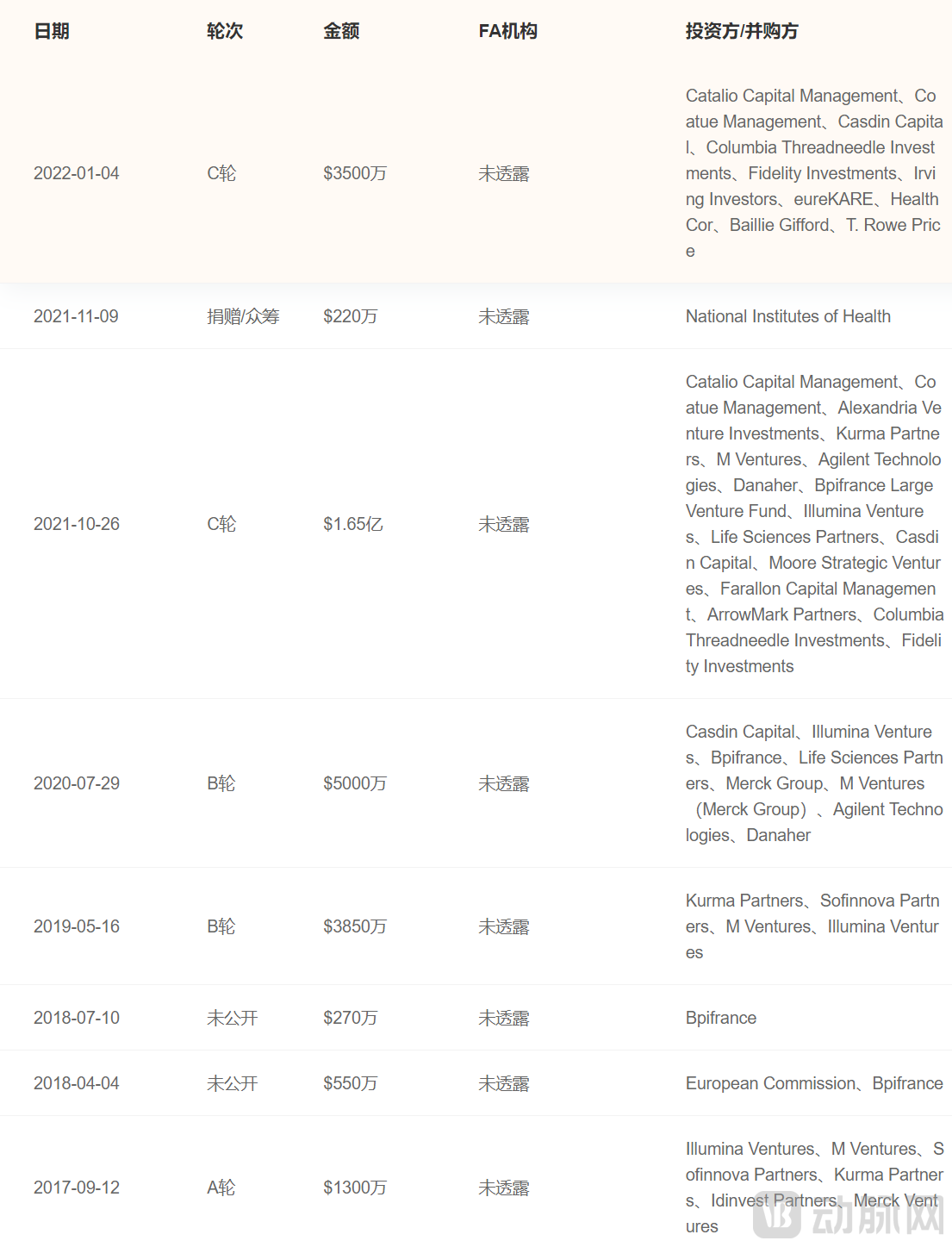
DNA Script’s Funding History | Image Source: VCBeat
Enzymatic DNA synthesis is a biotechnology that utilizes enzymatic catalysis to synthesize DNA molecules. Among these methods, terminal deoxynucleotidyl transferase (TdT)-mediated enzymatic DNA synthesis is currently a focal point of research in the field of biosynthetic DNA.
TdT is a specialized DNA polymerase with template-independent, rapid polymerization activity. Throughout the catalytic process, it does not require denaturation, annealing, or extension steps; instead, it can synthesize long-chain DNA using only single-stranded DNA as a primer. Furthermore, TdT exhibits low substrate selectivity and demonstrates rapid catalytic rates for all deoxyribonucleoside triphosphates (dNTPs). Any dNTP, ribonucleoside triphosphate (rNTP), or modified nucleoside triphosphate analog can serve as its substrate.
However, the application of TdT in enzymatic DNA synthesis technology still faces certain limitations. For instance, natural TdT can only randomly add new dNTPs to the end of a DNA strand, making it impossible to precisely control the process of strand synthesis. Secondly, due to the relatively conserved structure of TdT and its small catalytic active site, it is difficult for the enzyme to effectively recognize and catalyze modified nucleotides.
To address the inherent limitations of TdT,DNA Script has extensively engineered TdT to enable the enzyme to accept 3'-O-modified nucleotides, while enhancing its thermostability and catalytic activity.Building on this foundation, DNA Script developed its proprietary EDS technology platform and launched the Syntax System, the world’s first benchtop enzymatic DNA synthesis instrument.
Among them, DNA Script’s EDS technology consists of three core components:
1. Highly Engineered Terminal Deoxynucleotidyl Transferase (TdT): TdT is a key component of EDS technology. It does not require a template during the synthesis process and can add reversibly terminated nucleotides to the 3' end of any single-stranded DNA, thereby enabling de novo DNA synthesis.
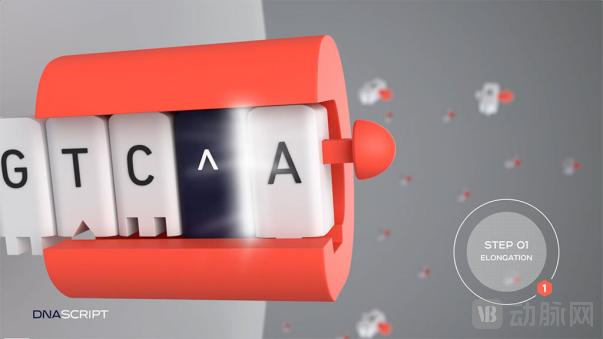
Image source: DNA Script official website
2. Reversible Terminator NucleotidesDNA Script utilizes reversible-terminating deoxynucleoside triphosphates (dNTPs) to pause synthesis by adding a single base, ultimately ensuring that the target base is incorporated into the growing oligonucleotide during each synthesis cycle. The dNTPs employed are relatively small and can be rapidly and efficiently restored under mildly acidic conditions. This means that no modification residues remain in the synthesized product, ultimately yielding DNA that is identical to natural DNA and fully compatible with molecular biology applications.
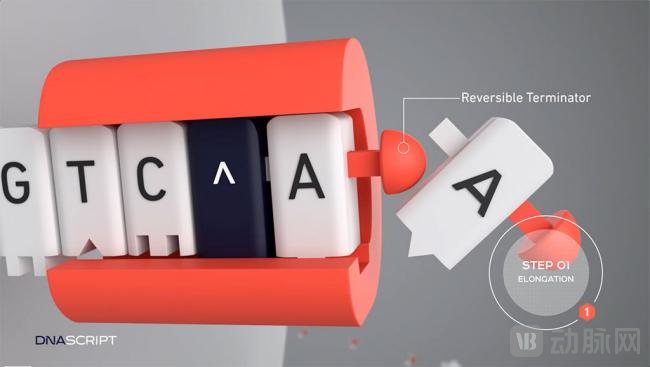
Image source: DNA Script official website
3. Solid Supports and iDNA: The solid support and iDNA for EDS technology are resin-based solid DNA support and cleavable linker DNA molecule, respectively. The solid support controls the scale of DNA synthesis and manipulates the growing oligonucleotide chains throughout the EDS process. It is understood that this solid support features optimized physical and chemical properties to enable nanomole-scale full-length DNA synthesis.
iDNA can provide footprints for initiating template-free DNA synthesis, cleavage sites, coating density, and other parameters. Furthermore, its length can be adjusted to optimize reaction conditions, thereby minimizing steric hindrance during enzymatic extension and maximizing synthesis yield.
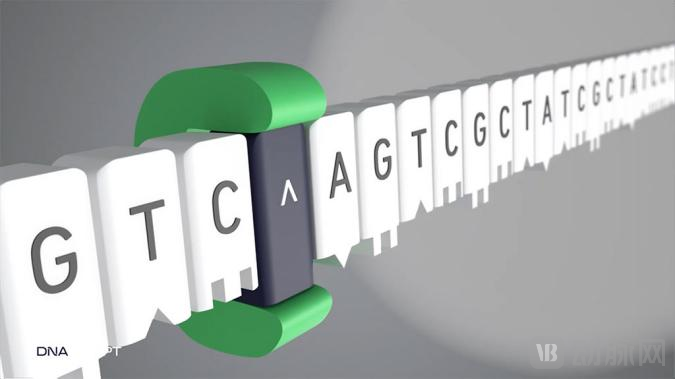
Image source: DNA Script official website
Based on EDS technical support,The Syntax System enables oligonucleotide synthesis in just two steps.:
Step 1, Extension: TdT enzyme adds individual nucleotides to iDNA;
Step 2: Deprotection: Remove the reversible terminator from the nucleotide by delivering a deprotection reagent, preparing the extended strand for the next elongation step;
Repeat steps 1 and 2 until the desired oligonucleotide length is achieved. After completing the final synthesis cycle, perform enzymatic cleavage to release the oligonucleotide sequence downstream of the cleavage site. Finally, desalt, quantify, and normalize the resulting oligonucleotides to meet the requirements and standards for direct use in subsequent molecular biology experiments and workflows.
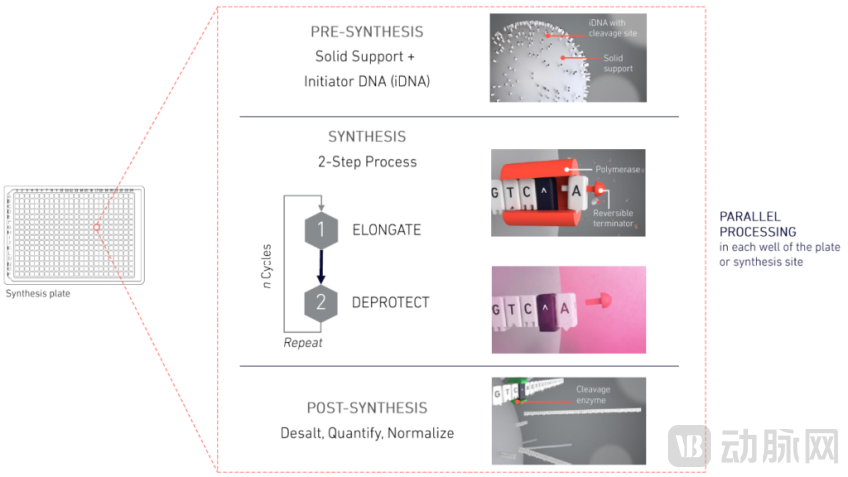
DNA Synthesis Process. Image source: DNA Script official website
According to the official website of DNA Script, the Syntax System is a fully integrated automated DNA printer capable of offline synthesis, providing in-house DNA printing for laboratories of all sizes. Furthermore,The Syntax System requires only 15–30 minutes of operation time and can process up to 96 ready-to-use oligonucleotides per run, suitable for molecular biology and genomics applications.. Once the run is initiated, the Syntax System will automatically complete all steps of oligonucleotide synthesis, post-processing, and concentration normalization.
Importantly, the DNA synthesis production process of the Syntax System is conducted entirely in an aqueous medium within an open laboratory environment, eliminating the need for harsh organic solvents. Consequently, the Syntax System offers greater environmental sustainability compared to traditional phosphoramidite synthesis methods.
Through continuous innovation and optimization,Currently, the Syntax platform employs the latest STX-200 DNA printing system, advanced enzymatic biochemistry technologies, and ready-to-use reagents to produce up to 96 oligonucleotides with lengths of up to 120 nt within a single day.。
Following the official launch of the Syntax platform, DNA Script announced in April 2022 the introduction of an Early Access Program for its Enzymatic DNA Synthesis (EDS) technology. Through this program, researchers can gain early access to upcoming next-generation DNA synthesis instruments and products, thereby enabling the development of longer and higher-yield oligonucleotides.
In addition, DNA Script has successively collaborated with organizations and enterprises such as the U.S. Defense Advanced Research Projects Agency (DARPA), the U.S. Intelligence Advanced Research Projects Activity (IARPA), Moderna Therapeutics, GE Research, the Broad Institute, Illumina, and the French Ministry of Armed Forces on technology and product development.
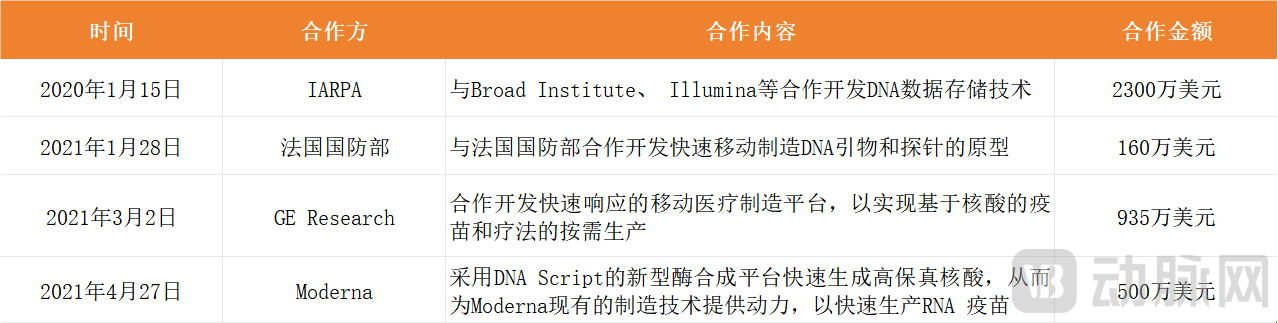
Source: DNA Script official website; graphic by VCBeat
Meanwhile, at the SynBioBeta 2023 conference held in 2023,DNA Script Announces Broad Commercial Deployment of SYNTAX™ DNA Printing Platform Featuring the STX-200 System。
Dr. Thomas Ybert, CEO and Co-Founder of DNA Script, stated at the time, “The new STX-200 system represents our next step toward achieving programmability in biology. Our R&D team will continue to enhance the speed, performance, accessibility, and control standards of DNA printing. The ability to rapidly synthesize longer and more accurate DNA oligonucleotides will help drive research and discovery in fields such as human health, diagnostics, and precision medicine.”
Amid the booming synthetic biology industry and the growing global demand for tools in this field, DNA Script is progressively building a global sales network for its Syntax platform. The company has already established partnerships with distributors in China, the United States, India, South Korea, Singapore, and other countries and regions to facilitate the global promotion of the Syntax platform.