

Xikang Cloud Hospital Unveils New Strategic Focus on Integrated 'Medical + Nursing + Wellness' Services Following Rebranding
Xikang Cloud Hospital
Cloud Hospital Platform Provider
In June 2024, Neusoft Xikang (Neusoft Xikang Holdings Limited), an internet healthcare enterprise, announced in a public filing that the company had been officially renamed to Xikang Cloud Hospital (Xikang Cloud Hospital Holdings Limited), with its stock short name correspondingly changed to “Xikang Cloud Hospital.”
In the past, Neusoft Xikang established China’s first urban cloud hospital platform—the Ningbo Cloud Hospital—which has been in continuous operation for 10 years. Over the past decade, the “urban cloud hospital” model has been replicated across provinces and cities in East, North, Northeast, and Southwest China. The cloud hospital platform connects various stakeholders, including local governments, medical institutions, healthcare professionals, patients, and insurance providers, to build a new healthcare service system. Leveraging technological and business model innovations, it has played a significant role in promoting the efficient and equitable distribution of medical resources.
Nowadays,The adoption of the new name “Xikang Cloud Hospital” not only demonstrates that the sustainability of the “Urban Cloud Hospital” model has been validated through long-term exploration, but also projects a brand image more closely aligned with its core business within the industry.
Seizing the opportunity of its corporate renaming, Xikang Cloud Hospital has simultaneously adjusted and upgraded its business structure. So, what is the new strategy for this established internet healthcare enterprise? VCBeat recently conducted an exclusive interview with Zong Wenhong, CEO of Xikang Cloud Hospital, and provides an analysis herein.
Looking back on the company’s development journey, since its establishment in 2011, Xikang Cloud Hospital has continuously enriched its service offerings around the “Urban Cloud Hospital” model.
Since 2013, XIKANG Cloud Hospital has successively established health management centers across China and launched health management services. In 2014, under the leadership of the Ningbo Municipal Government and relevant departments, construction began on China’s first urban cloud hospital platform—the Ningbo Cloud Hospital. This platform connected local medical institutions, integrated medical and pharmaceutical resources, and provided internet-based medical services combining online and offline care. It is widely recognized within the industry that the Ningbo Cloud Hospital served as one of the prototypes for internet hospitals under the subsequent national policy framework.
“During the operation of Ningbo Cloud Hospital, we found that patients in postoperative recovery, undergoing chemotherapy for tumors, or with limited mobility had a strong demand for home-based nursing services,” Zong Wenhong told VCBeat. “After surveying more than 2,000 nurses and over 2,000 patients and their family members to fully understand the demands and matching degree on both the supply and demand sides, we began piloting home care services in 2016, leveraging the platform of Ningbo Cloud Hospital.”
Subsequently, Xikang Cloud Hospital has continuously advanced the iteration of Ningbo Cloud Hospital, enriching service offerings and technical functionalities while strengthening the continuity of medical and health services. Meanwhile, it has expanded the “City Cloud Hospital” model to other regions across China, gradually forming four major business segments: cloud hospital platform services, internet-based medical services, health management services, and smart medical health products. Among these, home-based nursing services have achieved initial scale through sustained efforts, covering 950 medical institutions nationwide by the end of 2023 and undertaking the construction and operation of provincial-level internet nursing platforms in Zhejiang Province, Henan Province, and other regions.
Overall, by the end of 2023, the Urban Cloud Hospital Platform had connected 36,000 medical institutions, including 2,610 hospitals and 33,000 primary care facilities; certain home nursing services and internet-based medical services have been incorporated into local medical insurance reimbursement schemes.
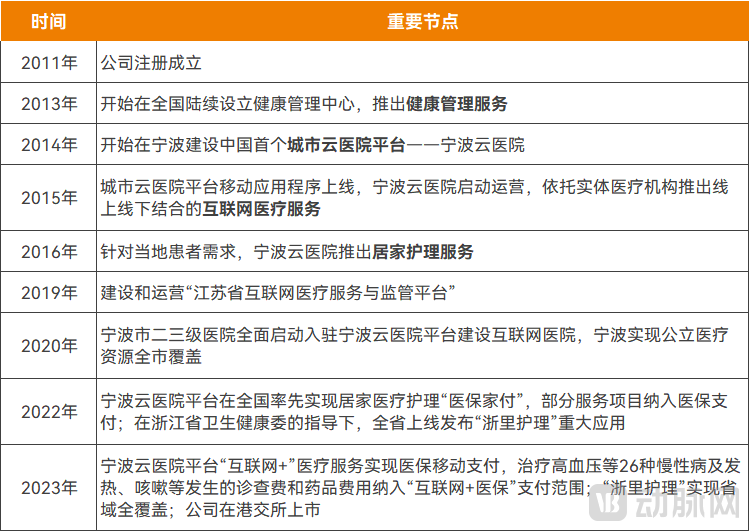
XIKANG Cloud Hospital: Development History. Source: Prospectus, financial reports, and interviews.
Upon finalizing the new name for Xikang Cloud Hospital, the company will leverage its cloud hospital platform as a digital foundation to continuously enrich and innovate “medical + nursing + health” service scenarios and content, centered around residents’ health needs.
In the medical sector, the Cloud Hospital platform provides services such as internet hospitals, family doctor services, and remote medical collaboration by onboarding partner medical institutions and operating its own facilities. In nursing care, the platform recruits nurses with over five years of clinical experience to deliver diversified home-based nursing and consultation services to target groups including the elderly, women and children, and postoperative patients, while gradually expanding into rehabilitation services. In health management, XIKANG Cloud Hospital leverages its network of medical institutions across East, North, and South China to provide integrated, innovative health management services for both corporate clients and individual users.
The Cloud Hospital Platform provides digital tools for medical services, home-based nursing, and health management, making it possible for patients to access efficient and convenient healthcare services. Meanwhile, its diverse range of healthcare service offerings accumulates user feedback data on the platform, further driving the optimization of functions and services.
Meanwhile, in the full-lifecycle health services for residents, medical care, nursing, and health management constitute three continuous and interconnected components that form a closed loop. For Xikang Cloud Hospital, medical services focus on the diagnosis and treatment of diseases; home-based nursing complements post-treatment rehabilitation and care outside the hospital setting; and health management involves routine health maintenance and risk screening. If diseases or health issues are identified, timely medical and nursing interventions are implemented. In other words, these three sectors work synergistically to provide users with continuous healthcare services.
“From the perspective of service recipients, we will shift from a primary focus on government clients (to-G) to a primary focus on business and consumer clients (to-B and to-C).“Zong Wenhong stated that despite adjustments to the company’s name and business operations, the fundamental positioning of the ‘Urban Cloud Hospital’ model has remained unchanged.”
Zong Wenhong is a Chief Physician in General Practice and holds a Master’s degree in Software Engineering. With over 17 years of management experience in the healthcare industry, she has previously served in local health technology and informatization management departments. Consequently, she possesses profound insights into the establishment of new digital-based healthcare service systems. “China’s healthcare service system has its own characteristics: most high-quality physicians are employed in public hospitals rather than in enterprises; and healthcare services carry a public-welfare attribute, particularly within public hospitals. Business model innovation must not undermine the existing system; instead, it should build upon the current framework to ensure sustainability. Therefore, we haveCity-based cloud hospital platforms in various regions will continue to adhere to the principles of government leadership, multi-stakeholder participation, and market-oriented operations. Their service offerings will be differentiated from those of local medical institutions, serving as a complement to enhance the quality and efficiency of the existing healthcare delivery system.”
In short, alongside the company’s name change, Xikang Cloud Hospital will further collaborate with government departments, leveraging its City Cloud Hospital Platform to help local medical institutions provide patients with a new model of healthcare services that integrate online and offline care and ensure continuity between in-hospital and out-of-hospital settings.
After more than a decade of industry evolution, the internet healthcare sector currently exhibits a “multipolar differentiation” pattern, with companies focusing on different segments such as medical services, pharmaceuticals, and insurance. XIKANG Cloud Hospital will focus on the “nursing care” segment.
Zong Wenhong introduced that, within the adjusted business structure, medical services and health management services have already achieved a certain revenue scale. The company’s next strategic focus will be on expanding home-based nursing services. “Disease management requires 30% treatment and 70% recuperation; the importance of nursing care is self-evident. Currently, there remains a significant gap in out-of-hospital nursing care, which has not yet been effectively integrated with in-hospital services.”
In February 2019, the “Notice of the General Office of the National Health Commission on Launching Pilot Programs for ‘Internet + Nursing Services’” designated Beijing, Tianjin, Shanghai, Jiangsu, Zhejiang, and Guangdong as pilot regions. These programs focused on providing nursing services—including chronic disease management, rehabilitative care, specialized nursing, health education, and palliative care—to individuals with limited mobility, such as the elderly aged 80 and above or those with disabilities, patients in rehabilitation, and patients in terminal stages. In December 2020, the General Office of the National Health Commission issued another document to expand the pilot regions.
In June 2023, the National Health Commission proposed in the “Action Plan for Further Improving Nursing Services (2023–2025)” to strengthen information technology support and extend in-hospital nursing care to out-of-hospital settings through approaches such as “Internet Plus”; it also called for expanding the coverage of “Internet Plus Nursing Services” to benefit a broader population.
Strong national policy support is one of the key drivers behind XIKANG Cloud Hospital’s focus on home-based nursing services. Meanwhile, the home-based nursing business has demonstrated robust growth.
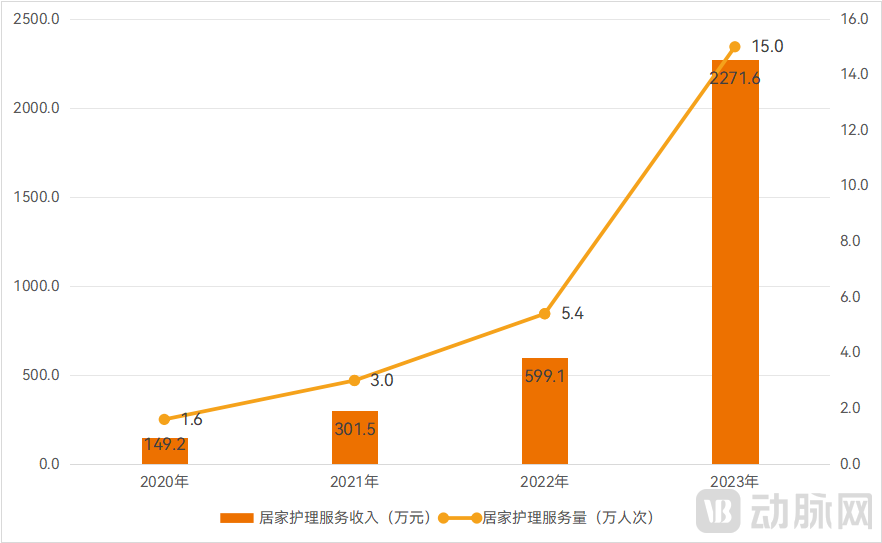 Revenue and Growth of XIKANG Cloud Hospital’s Home Nursing Services; Data Source: Prospectus, Financial Reports
The performance report shows that as of the end of 2023, XIKANG Cloud Hospital's platform offered over 90 nursing service products, with home-based nursing services exceeding 150,000 visits, representing a year-on-year increase of 185.9% compared to the same period in 2022. In 2023, revenue from home-based nursing services reached RMB 22.7 million, marking a significant year-on-year growth of 279.2%.
The aforementioned performance data is the result of XIKANG Cloud Hospital’s internal accumulation and external opportunities.
For many years, Xikang Cloud Hospital has fully ensured the safety and quality of home nursing services.Prior to the launch of home care services, Xikang Cloud Hospital collaborates with local nursing regulatory authorities to establish standards for home care services, including service protocols and procedures, training outlines for service items, and quality evaluation metrics. Furthermore, it continuously enhances the service capabilities and professional skills of visiting nurses through training, with a particular focus on strengthening their emergency treatment and response capabilities in critical situations.
Meanwhile, XIKANG Cloud Hospital has developed a viable pricing mechanism that balances user affordability with nurse motivation.In addition to conducting thorough research on users and nurses, Xikang Cloud Hospital engaged in extensive consultations with local health authorities, nursing associations, medical institutions, and other stakeholders to establish more scientifically grounded service pricing.
Zong Wenhong stated that, by taking into account local economic conditions and home-visit service fees in non-medical industries, the platform has set the home-visit service fee for routine nursing procedures such as injections and blood collection at approximately RMB 100–120. For services requiring higher technical expertise and more time, the fee is around RMB 160–180. For services with stronger consumer-oriented attributes, such as maternal and infant care and traditional Chinese medicine, more market-driven pricing has been adopted.
In home-based nursing care, the personal safety and fundamental rights of both nurses and patients must be protected. To this end, Xikang Cloud Hospital employs technologies such as real-time nurse location tracking, trajectory logging, and one-touch emergency alerts, along with measures like full-process audio recording and detailed nursing documentation, to ensure these safeguards.
These initiatives have built a strong reputation for XIKANG Cloud Hospital’s home nursing services, earning widespread recognition from users, nurses, medical institutions, and government authorities.
In recent years, Zhejiang Province has comprehensively advanced its digital reform and accelerated the development of "Digital Zhejiang." As a pilot province for "Internet + Nursing Services," the digitalization of nursing care is an integral component of this initiative. After years of operation, Ningbo Cloud Hospital and its home-based nursing services have become a benchmark for public welfare services. Against this backdrop, in 2022, the Health Commission of Zhejiang Province signed an agreement with XIKANG to establish a unified provincial platform for home-based nursing care—"Zheli Nursing."
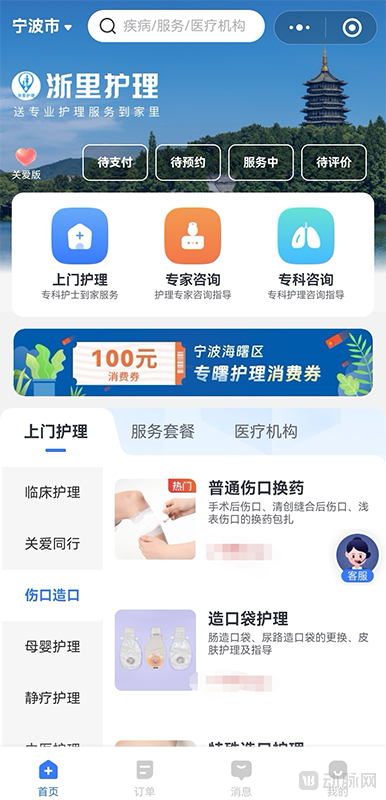
“Zhe Li Nursing"Platform
Subsequently, Xikang Cloud Hospital accelerated the development and operation of the “Zheli Nursing” platform. By the end of 2023, all public hospitals at Grade II and above in Zhejiang Province had joined the platform, which enrolled 45,000 nurses with more than five years of clinical nursing experience, accounting for 18.1% of the registered nurses in Zhejiang Province. The platform provided over 120,000 home-based nursing services throughout the year, representing a 295.6% increase compared to the same period in 2022.
Benefiting from the industry recognition of its experience in building and operating home care platforms, Xikang Cloud Hospital partnered with the Henan Provincial Government in the second half of 2023 to establish the “Yujian Home Care” service platform. By the end of 2023, the platform had onboarded 54 medical institutions, offering 71 home nursing services across nine major categories.
Overall, XIKANG Cloud Hospital’s home care services have achieved a leap from municipal-level to provincial-level platforms, enabling the rapid onboarding of a larger volume of medical institutions and nurses, reaching a broader user base, and ultimately driving high growth in nursing performance in 2023. In 2024, by enriching service scenarios and innovating content within the “medical + nursing + health” framework, XIKANG Cloud Hospital further increased the proportion of its medical and nursing service businesses. Particularly in the home care sector, it has established a mature and replicable business operation model with significant growth potential.
According to Zong Wenhong, although home-based nursing care is a key area for business expansion, medical treatment, nursing, and health management are closely interconnected and constitute indispensable components of the new healthcare service system. The coordinated development of these three pillars relies on the further replication and expansion of the “Urban Cloud Hospital.” Therefore, the company remains committed to building its unique business model centered on the “Urban Cloud Hospital Platform,” which uses cities as entry points and maintains close integration with regional healthcare systems. This approach assists governments in constructing, operating, and integrating urban medical service resources, thereby establishing a platform-based regional digital healthcare ecosystem.
However, in the process of replicating its “City Cloud Hospital” model, Xikang Cloud Hospital has had to confront several realities: variations in demographic structures and user needs across different regions, disparities in medical resources and service levels, and differing degrees of medical digitalization.
“Even within Zhejiang Province, the situation in Ningbo differs from that in other cities. In Ningbo, we have basically achieved close integration of medical services, home-based nursing and rehabilitation, and health management,” said Zong Wenhong. By contrast, operations in other regions are just getting started and need to be tailored to local conditions.
After years of practice, Xikang Cloud Hospital has established a mature operational system. By implementing a standardized operational pathway comprising the pilot phase, ice-breaking phase, breakthrough phase, stable growth phase, and innovation and expansion phase, it has facilitated the rapid deployment of its business model across various regions.
Meanwhile, professional operations and data-driven operations can also be rapidly replicated; the former involves promoting the establishment of industry standards and regulatory frameworks across regions, while the latter includes precise user profiling and in-depth analysis of user needs.
At the technical level, with the data middle platform as the foundation, it can efficiently interface with government departments, medical institutions, insurance agencies, and other stakeholders in expansion regions.
Zong Wenhong candidly stated that the company spent 10 years in Ningbo conducting an in-depth exploration of the cloud hospital model. “As the model matured, it took us only six months to expand from Ningbo to all 11 cities across Zhejiang Province.”
During business expansion, the most significant difference lies in the service offerings. Taking home care services as an example, Xikang Cloud Hospital typically extends from basic nursing to specialized nursing based on local demand analysis, and expands from single services to service combinations such as multiple continuous sessions and package deals. This operational model is gradually refined over time, rather than being established overnight.
In addition, XIKANG Cloud Hospital leverages channels such as its official WeChat account, live streams hosted by the hospital’s nursing department, and nurse influencer personas to share exemplary cases of home-based nursing care. By disseminating the value of home-based nursing services to both professionals and the general public, it aims to enhance recognition and acceptance of these services across various regions.
However, regardless of the magnitude of regional differences, XIKANG Cloud Hospital has only one overarching business direction: to explore how to organically integrate medical care, nursing, and health management, thereby creating a new healthcare service system that features online-offline integration and comprehensive lifecycle process management spanning pre-hospital, in-hospital, and post-hospital stages.
Driven by the cloud hospital business model, XIKANG Cloud Hospital has significantly accelerated its business expansion. In 2024, the company continued to deepen its presence in the East China, North China, and South China regional markets, further expanding its network of urban cloud hospital platforms.
Amid trends such as population aging and the increasing chronicity of major diseases, public demand for efficient access to high-quality medical, nursing, and health services will continue to grow.
According to data from the 2022 study “Projections of China’s Population Decline and Aging Trends” by the Center for Population and Development Studies at Renmin University of China, the number of people aged 60 and above in China is projected to reach 437 million by 2023, accounting for 31.48% of the total population.
As medical technology advances, the five-year survival rates for certain major diseases have improved, a trend that is expected to continue in the future. With increased survival rates among cancer patients, out-of-hospital care will play a crucial role.
Furthermore, with heightened public health awareness and a greater willingness to spend on healthcare, there is growing demand and higher expectations for professional and convenient home-based rehabilitation and nursing services.
Zong Wenhong stated that, by leveraging industry trends,The company aims to continuously build the “Urban Cloud Hospital” as its long-term goal, striving to become China’s largest Urban Cloud Hospital. “Under the Cloud Hospital model, users can select personalized and continuous medical and health services based on their individual needs; the platform leverages in-depth data mining and intelligent technologies to reduce operational costs and enhance operational efficiency. The Cloud Hospital model also plans to integrate commercial insurance into the new medical and health service system, actively aligning with public-benefit policies to help alleviate users’ financial burdens.”
Under Xikang Cloud Hospital’s business model, the company collaborates closely with local government agencies, professional societies, and medical institutions to aggregate medical resources and users at a relatively low cost. It also attracts and expands ecosystem resources from industries such as medical devices, pharmaceuticals and consumables, health products, and financial insurance, thereby creating richer application scenarios. In the future, as the cloud hospital platform is replicated across more regions and local operations become increasingly mature, service offerings will diversify and service volume will grow significantly. With the emergence of economies of scale and reduced marginal costs, the commercial value of “City Cloud Hospitals” will become even more pronounced.