

AtheBio Advances High-Barrier Soft Mist and Dry Powder Inhaler Platforms, Launches End-to-End Drug Delivery Device Solutions
According to data released by the World Health Organization (WHO), there are 600 million patients with chronic respiratory diseases worldwide, including 150 million in China, covering those with asthma and chronic obstructive pulmonary disease (COPD). The mortality rate of COPD in China is significantly higher than the global average, ranking as the fourth leading cause of death in the country. Each year, more than 1 million people die from COPD, and over 5 million suffer disability. Both COPD and asthma are controllable but incurable conditions that require symptomatic management; medications used for treatment are categorized into long-term control drugs and short-term relief drugs.
For patients with respiratory diseases, inhalation administration offers distinct advantages by strategically leveraging physiological and histological characteristics. It delivers medication directly to the airways and lungs for systemic circulation, ensuring rapid onset of action, ease of administration, low dosage requirements, avoidance of hepatic first-pass metabolism, and minimal toxic side effects. As the preferred formulation for respiratory conditions, inhalation products have long been widely adopted in clinical practice.
In 2021, global sales of inhalation formulations exceeded $50 billion, but were concentrated among the “Big Three” respiratory pharmaceutical companies: AstraZeneca (AZ), GlaxoSmithKline (GSK), and Boehringer Ingelheim (BI). In China, generic inhalation drugs that had passed consistency evaluation remained low in value for a prolonged period and were predominantly limited to nebulizer solutions (NEB).Inhaled formulations present extremely high barriers to generic development due to stringent R&D, manufacturing, and regulatory approval requirements, as well as a lack of engineering and industrialization expertise.Furthermore, the drug-device combination unique to inhalation products requires the combined use of pharmaceuticals and inhalation devices, presenting exceptionally high technical barriers that have long been monopolized by major delivery device manufacturers such as PARI and Aerogen.
AtSenbo (Suzhou) Pharmaceutical Technology Co., Ltd. (hereinafter referred to as “AtSenbo”), founded in late 2021, specializes in providing one-stop services for drug delivery devices, with end-to-end capabilities spanning device design and development, manufacturing, and distribution. It supports linked regulatory submissions for medical devices, drug packaging materials (DMF), and pharmaceutical products in China, the United States, and Europe.
Founded less than three years ago, AtSenbo has been deeply engaged in the development of various complex drug delivery devices, having filed more than 70 patent applications, predominantly for invention patents.In 2024, the AtSenbo team completed the formal bioequivalence study (abbreviated as PK-BE) for the Tiotropium Bromide and Olodaterol Soft Mist Inhalation formulation (brand name Spiolto Respimat, a soft mist inhaler originally developed and approved by Boehringer Ingelheim).。
Inhaled formulations are primarily categorized into four major types: metered-dose inhalers (MDIs), dry powder inhalers (DPIs), nebulizer solutions (NEBs), and soft mist inhalers (SMIs). In terms of research and development and technical complexity, soft mist inhalers (SMIs) and dry powder inhalers (DPIs), which require precise engineering design, pose the greatest challenges.
“Both categories of inhalation products involve multidisciplinary integration, with complex patents and designs, resulting in relative gaps in both R&D and industrialization,” said Ren Hongxian, General Manager of AtSenbo (Suzhou) Pharmaceutical Technology Co., Ltd., in an interview. “Taking the development of soft-mist chips as an example, it involves etching processes from the semiconductor industry, as well as aspects of aerodynamics, mechanics, chemistry, and precision measurement. The key lies in ensuring high yield at every step during industrialization to guarantee the overall final yield. Because the manufacturing process for soft-mist chips involves numerous steps, even if the yield at each step reaches 98%, the cumulative overall yield may only be 80%, which is still insufficient for industrial-scale production. The high defect rate would prevent costs from being reduced. Fortunately, our yield at each process stage is extremely high.”
Dry Powder Inhalers (DPIs) involve micronized solid active pharmaceutical ingredients, either alone or blended with suitable carriers, formulated in capsules, blisters, or multi-dose reservoirs. Patients inhale the medication into their lungs using a specialized dry powder inhalation device. These devices are portable and require patients to achieve a specific inspiratory flow rate. The development of dry powder aerosols presents significant challenges in particle engineering, process development, process scale-up, and delivery device design:
The mixing process is a critical step in the preparation of powder aerosols, involving energy input and interparticle interactions to ultimately form a homogeneous and stable powder aerosol system. This system is required to reproducibly undergo the same nebulization process multiple times over an extended period. Consequently, factors such as mixing intensity, duration, temperature, and humidity can influence the aerodynamic behavior of drug particles during inhalation, thereby affecting pulmonary drug distribution and ultimately clinical efficacy.
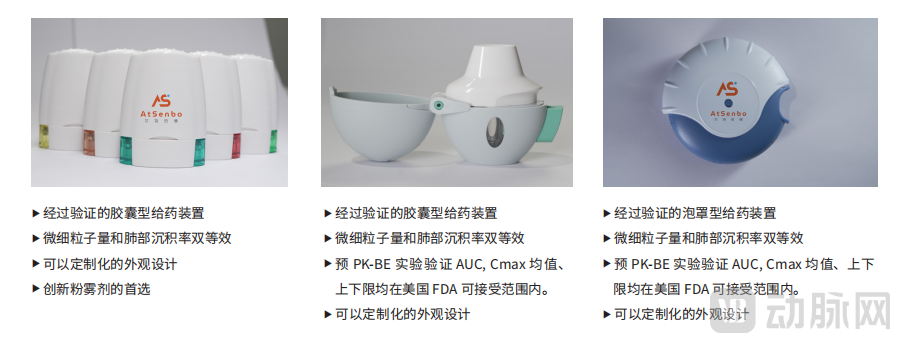 (AtSenbo Patented Dry Powder Drug Delivery Device)
AtSenbo has currently established a platform of standard off-the-shelf dry powder inhalation devices, including the Generic HandiHaler, Breezhaler, and Seretide Diskus, and also offers customized industrial design services.
Soft Mist Inhalers (SMIs) are passive, portable inhalation devices that feature self-powered active drug delivery, thereby reducing dependence on the patient’s inspiratory flow rate. On one hand, SMIs utilize mechanical energy generated by a compressed spring in the rotating base to power aerosolization of the medication. On the other hand, they employ capillaries and precision micro-injection molded check valves for accurate dosing, leveraging a unique principle where two streams of liquid medication collide at specific angles to form a distinctive “soft mist.” Furthermore, SMIs offer precise and stable dosing with an optimal administration duration (approximately 1.5 seconds) and low requirements for hand-breath coordination, making them suitable for populations with administration difficulties, such as children and the elderly. However, these sophisticated nebulization devices integrate various precision components, including semiconductor elements, dosing mechanisms, and fluid transmission systems, presenting significant barriers in design and precision manufacturing.
According to Ren Hongxian, in overcoming the challenges associated with soft mist inhalers, AtSenbo first mitigated patent risks. Its R&D engineers conducted extensive patent searches and comparisons, and also commissioned professional patent agencies to perform freedom-to-operate (FTO) searches in China, the United States, and Europe, resulting in a low level of patent risk.Secondly, to achieve a fine particle fraction of 70%–80% for soft mist delivery, the team at AtSenbo made numerous attempts. Compared with traditional metered-dose inhalers and dry powder inhalers, which typically achieve only 20%–30%, the fine particle fraction of soft mist inhalation is remarkable. Experimental data demonstrate that the therapeutic efficacy of a 2 × 2.5 μg dose delivered via soft mist inhaler is equivalent to that of an 18 μg dose delivered via dry powder inhaler. Moreover, the pulmonary deposition rate of soft mist inhalers can be more than three times higher than that of conventional dry powder and metered-dose inhalers.
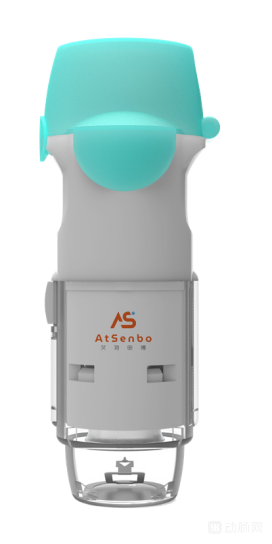
(AtSenbo Patent Soft Mist Delivery Device)
Analysis indicates that, compared with the 2018 sales data for inhaled pharmaceuticals in China and the United States, nebulizer solutions accounted for over 40% of the Chinese market, whereas dry powder inhalers and powdered aerosol inhalers—the mainstream dosage forms for portable controller medications in the U.S. market—held a market share exceeding 80%. This suggests that,Active, portable, and high-efficiency drug delivery has become a significant trend in the development of inhalation device formulations. With the rise of domestic substitution and upstream industries, the price disadvantage of dry powder inhalers, powder aerosols, and soft mist inhalers will be offset, further promoting their application in pharmaceuticals and clinical practice.
Since its establishment, AtSenbo has adopted a dual-center strategy comprising an R&D center and an industrial manufacturing center, building a globally leading full industry chain for soft mist drug delivery devices. The company has made in-depth layouts across precision high-cavity mold development, process development and validation, precision component injection molding, liquid silicone rubber (LSR) injection molding, precision capillary processing, chip packaging, dual-layer bottle production, and fully automated assembly and inspection.
Ren Hongxian emphasized, “The key to the ‘dual-center’ positioning lies in strengthening innovation, which entails not only enhancing new product R&D but also reinforcing industrial implementation. Inhalation devices have a significant impact on inhalation formulations; any change to the device constitutes a major change. Therefore, poor coordination between R&D and production implementation may lead to difficulties in achieving subsequent industrialization.”
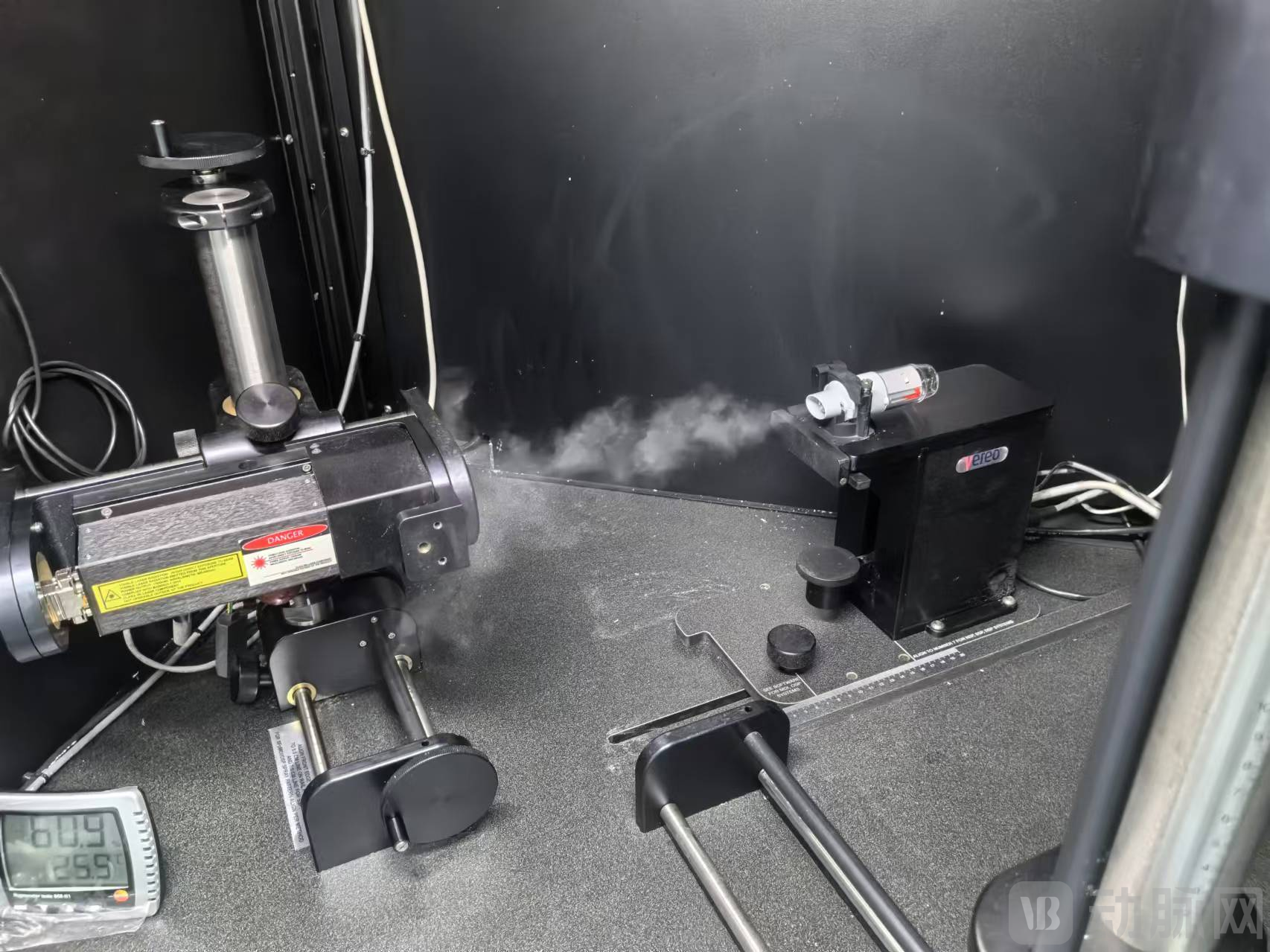 (Ongoing Soft Mist Spray Geometric Morphology Detection Experiment)
On the industrial front, AtSenbo has established a 4,000-square-meter ISO Class 8 cleanroom in Suzhou High-Tech Zone, equipped with world-class production and inspection facilities. It operates independent laboratories for microbiological testing (including positive and negative controls), optical inspection, material identification, and physicochemical characterization.
Based on this,AtSenbo provides one-stop services for drug delivery devices, including integrated solutions such as product design, structural design, tolerance analysis, material selection, multiphase flow simulation analysis, precision mold development, process validation, precision injection molding, product validation, assembly, and pre-bioequivalence (BE) simulation.Based on micro-aerosol drug delivery technology, AtSenbo is also developing more complex drug delivery devices, such as intranasal-to-brain delivery and ophthalmic micro-aerosol delivery.
Meanwhile, AtSenbo has set the goal of global development since its inception.Both R&D and production line construction are planned and designed in compliance with regulatory requirements in China, the United States, and Europe. The company has engaged TÜV SÜD Group, a globally renowned German technical inspection association, to conduct third-party certification for ISO 13485. Currently, products can be tested in accordance with the United States Pharmacopeia (USP), European Pharmacopoeia (Ph. Eur.), Chinese Pharmacopoeia, and China’s YBB standards for pharmaceutical packaging materials. The manufacturing process complies with both pharmaceutical packaging material and medical device standards.
Under its full-industry-chain and globalized layout, AtSenbo has established a vertically integrated team that seamlessly combines extensive expertise in device development, formulation development, and bioequivalence studies. The team has accumulated experience in developing 13 inhalation drug delivery devices, including four that have passed formal PK-BE assessments and eight that have passed pre-PK-BE assessments. “This vertically integrated team facilitates communication during the innovation process and accelerates product development. With a comprehensive understanding of product application, customer experience, critical manufacturing factors, feasibility, and Quality by Design (QbD), we can more rapidly advance products to mass production.”
To date, as competition intensifies around innovative drug targets and mechanisms, financing in both primary and secondary markets becomes more challenging, R&D costs for innovative pharmaceutical companies rise, while their risk resilience declines. Consequently, an increasing number of domestic pharmaceutical enterprises are turning their attention to complex generics and drug-device combination submissions. Developing inhalation formulations with higher efficacy and better accessibility, submitting drug-device combination products, or establishing formulation-based barriers have all become major trends for pharmaceutical companies to extend product life cycles and strengthen their competitiveness.
Furthermore, as patents for blockbuster drugs and their accompanying delivery devices from AZ, GSK, and BI gradually expire, the National Medical Products Administration (NMPA) has seen its regulatory framework and guidelines for inhalation preparations and combined drug-device applications mature. Meanwhile, advancements in upstream precision manufacturing have met the demands of mid- and downstream industries in areas such as component supply and precision processing techniques.Amid China’s national centralized volume-based procurement (VBP) environment, a large number of domestic pharmaceutical companies are filing applications for related generic drugs to achieve import substitution of inhaled drug formulations and delivery devices, thereby capturing the long-dominant market share held by originator drugs.
The demand for inhaled formulations in China continues to grow steadily, with the increased volume of generic drugs expected to sustain robust growth. According to Frost & Sullivan data, the market size of inhaled formulations for respiratory diseases in China grew from RMB 12.5 billion in 2017 to RMB 19.5 billion in 2021, representing a compound annual growth rate (CAGR) of 12%. The market is projected to reach RMB 23.9 billion by 2025 and RMB 27.6 billion by 2030.
Collaboration is undoubtedly a significant commercialization opportunity for innovative companies in the inhalation device sector.For large pharmaceutical companies, developing proprietary soft mist formulations and devices requires investments in the hundreds of millions for R&D, manufacturing, and supply chain development, along with a 2–3 year lead time that may cause them to miss critical windows for market breakthroughs. By partnering with development-focused enterprises such as AtSenbo, they can secure validated inhalation drug-device combinations through licensing fees in the tens of millions, while also gaining access to one-stop services and in-depth R&D collaboration.
Globally, innovation in inhalation formulations and the expansion of their potential applications remain a blue ocean, offering an alternative to injectable delivery for biologics and proteins.With the emergence of novel drug delivery carriers such as liposomes, exosomes, nanoparticles, and nanoemulsions, their pulmonary applications—characterized by sustained release, low toxicity, and local targeting—enhance drug stability to a certain extent. These carriers are gradually being utilized in the development of inhalation formulations, making inhalation administration of protein-based, peptide-based, DNA/RNA-based, and antibody-based drugs feasible.
Moreover, innovation in application scenarios remains a fertile ground yet to be fully explored for inhaled drug delivery formulations.Taking soft mist inhalers as an example, in addition to respiratory and oral administration, their applications can be extended to personal care fields such as skin care, eye and nasal care, as well as veterinary medical care. Due to the broad market prospects, many innovative drug delivery device companies in Europe and the United States are actively expanding their presence. For instance, China Biopharmaceutical acquired Softhale for $110 million; Merxin, an innovative company developing dry powder and soft mist inhalation devices, secured tens of millions of dollars in financing; and Medspray, a developer of nasal sprays and various care and medical drug delivery devices, formed a joint venture with the Recipharm Group called Resyca, specifically dedicated to the development of soft mist devices.
References:
Daotong Investment: "The High-Barrier Niche Hidden Behind the RMB 100 Billion Inhaled Drug Delivery Market—It Is the Right Time for Domestic Substitution" https://www.vbdata.cn/1518915210
Shanghai Bio-Medicine Fund: “The RMB 10 Billion Market for Inhalation Preparations: Domestic Substitution Is Gaining Momentum” https://www.chinaventure.com.cn/news/108-20230106-373045.html