

Dental AI Sector Hits Record Funding Highs in 2024 Amid Surge in Innovation and Investment

Pearl
Dental Artificial Intelligence Solutions Provider
AI Ignites the Dental Market This Year!
On the one hand, it isGroundbreaking News on AI Applications in Dentistry Emerges Frequently. For instance, just this month, Perceptive, a Boston-based innovator, announced that an AI-controlled, fully autonomous robot had performed a complete set of dental restorative procedures on a human patient for the first time. The procedure took 15 minutes, approximately eight times faster than a human dentist. This development has sparked widespread industry debate over whether AI-powered dental robots will replace dentists or become their essential assistants.
On the other hand,Capital interest in dental AI companies is on the rise, with record-breaking funding rounds being repeatedly surpassed.In July, Pearl announced the completion of a $58 million Series B financing round (approximately RMB 416 million), led by Left Lane Capital with participation from Smash Capital, Alpha Partners, and existing investors Craft Ventures and Neotribe Ventures. This funding amount set a new record in the dental AI sector, surpassing the previous high of $53.2 million raised by Overjet earlier this year.
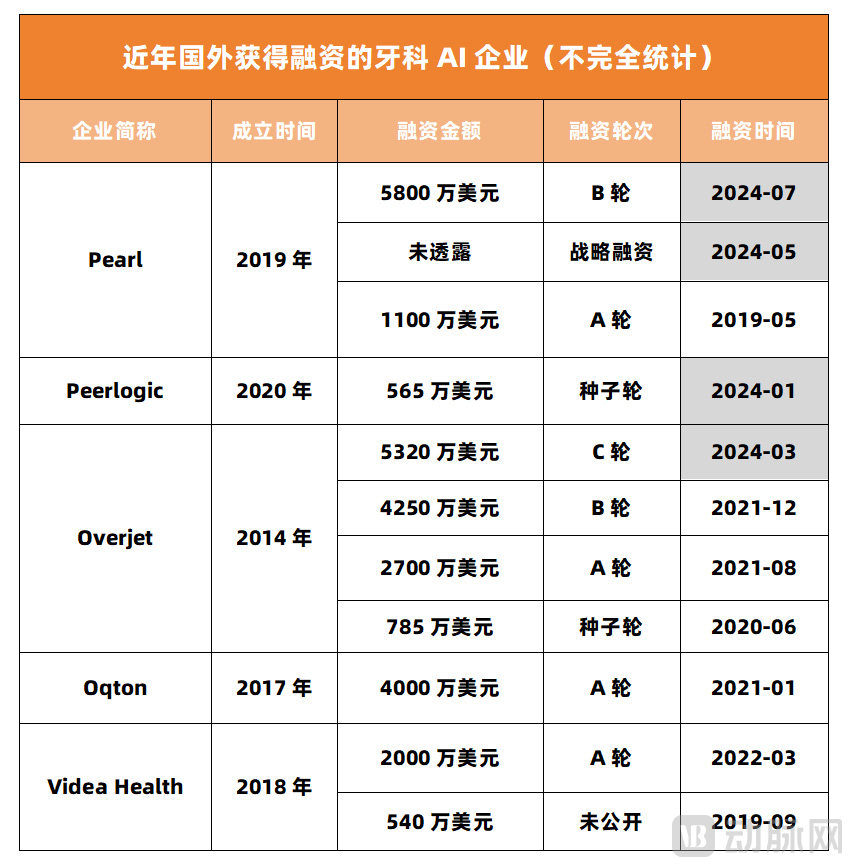
▲ Data source: VCBeat Orange Database. 2024 financing rounds are marked in gray.
It is important to note that the dental industry has always been a “small but beautiful” sector. According to multiple dental industry investors who previously spoke with VCBeat, single-round equity financings exceeding $40 million (or RMB 300 million) are relatively rare in the dental industry; only a few leading companies have secured such high levels of funding after achieving certain commercialization milestones.
The enthusiastic backing from capital markets is undoubtedly a recognition that the dental AI sector has reached an inflection point, with the industry poised for a phase of rapid growth.
Since the AI boom began around 2015, dentistry has become a key sector for many companies to enter. However, dental AI has remained lukewarm, as it previously failed to deliver substantial improvements to the industry.
“In recent years, the application of AI in dentistry has been highly fragmented, with upstream equipment or consumables manufacturers primarily adopting related technologies to enhance the intelligence of their own products.“Wu Guang (a pseudonym, used at the interviewee’s request), Investment Director at a RMB-denominated fund, told VCBeat, ‘For instance, Align Technology, the parent company of Invisalign®, a leading brand in clear aligners, began leveraging AI early on. Its Invisalign® product offers physicians a remote monitoring solution that integrates AI technology to help them manage patients’ treatment progress.’”
Meanwhile, AI-driven customer acquisition software led by information technology companies has also emerged. By leveraging historical user data accumulated in the back-end systems of dental institutions or traffic data diverted from social media platforms, these tools perform persona analysis on potential customers, thereby providing operational guidance to dental institutions and facilitating customer acquisition.
“The emergence of these AI systems has indeed brought some changes to the industry, but it is far from meeting expectations.” In Wu Guang’s view, unlike the previous applications of AI in the financial sector or the significant transformations currently driven by large language models in areas such as text-to-image generation, AI has not yet penetrated deeply into the field of dentistry, and its applications remain overly fragmented.The industry expects AI to be involved throughout the entire process—from prevention, screening, and assisted diagnosis of oral diseases to treatment plan design and patient follow-up—thereby enhancing efficiency.”
In other words, AI serves either as a vital assistant to dentists or reengineers the entire workflow of dental clinics, namely by creating an AI dental assistant or building an AI-powered smart dental clinic.
Nothing can be achieved overnight. In this regard, Wu Guang and his team have roughly divided the development of dental AI into three major phases, establishing standard classifications for each stage.
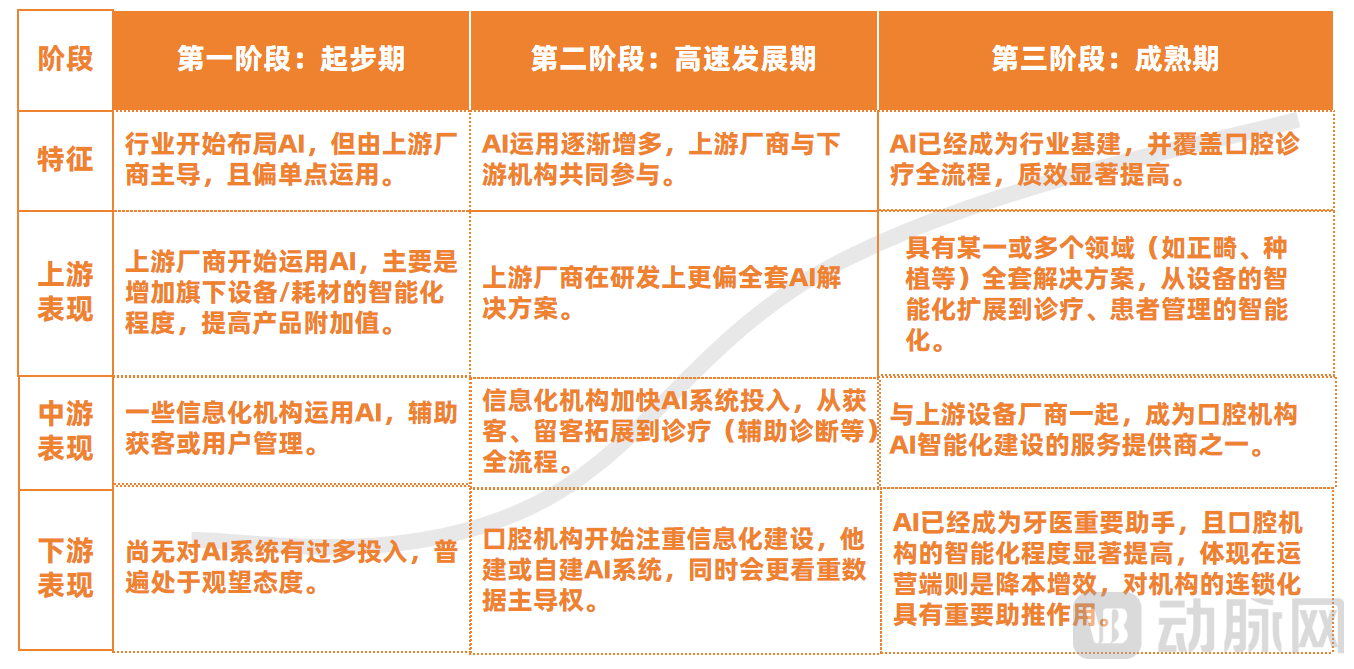
▲ Three Stages of Dental AI | Charted by VCBeat Based on Interviews
“The key to determining whether large-scale commercialization of dental AI can take off lies in whether it can deliver tangible benefits to downstream dental institutions.“Wu Guang believes that in the first stage, while upstream manufacturers’ application of AI can indeed enhance product quality and benefit patients, downstream institutions struggle to see its contribution to short-term revenue growth. As a result, only some large equipment manufacturers are betting on AI, while other dental AI companies in the industry are experiencing slow commercial progress due to the lack of paying customers.”
Change is underway. Several AI-driven dental companies have already introduced AI products with more tangible benefits, indicating that the dental AI sector is gradually moving beyond its initial phase and evolving into the second stage.
“Judging from the dental AI companies (Overjet, Pearl) that secured two large rounds of financing this year,”By leveraging AI-assisted diagnostic services for dentists, they have tangibly increased the revenues of dental institutions, thereby providing downstream payers with greater incentive to invest more capital in the development of AI systems.“Wu Guang stated.
According to a recent study by VideaAI involving 100 dental clinics and 470,000 dental patients in the United States, AI-assisted early disease identification and second-opinion provision for patients have significantly increased the average annual net productivity of dental clinics by 13%.
Meanwhile,This dental AI robot performed a full set of dental procedures at approximately eight times the speed of human dentists, further signaling to the oral healthcare industry that an efficiency revolution is underway.It is important to recognize that dentists require extensive training, making them a consistently scarce medical resource. Breakthroughs in dental AI robots will serve as valuable assistants to dentists, helping to bridge this gap.
This appears to indicate that the dental AI sector has reached a turning point.
As dental AI enters a new phase, leading companies in the field are exploring directions such as assisted diagnosis and treatment (e.g., AI-assisted dental consultations and AI surgical robots), precise customer acquisition (e.g., conversational analysis systems), and enhanced intelligent production (e.g., automation in dental manufacturing).
Among them,Assisted diagnosis and treatment is the hottest area for capital investment, including AI-driven intelligent analysis and diagnosis of multimodal data, applied to medical imaging analysis, clinical decision support, and intelligent diagnostic reporting.Currently, innovative companies such as Pearl, Overjet, Videa Health, Lingjian, and DeepCare have established their presence in this sector.
For instance, Pearl, which recently secured the largest financing round in the history of dental AI, aims to leverage AI technology to assist dentists in interpreting patients’ X-rays, thereby providing more accurate, consistent, and easily understandable diagnostic reports.
Specifically, Pearl has developed a real-time dental AI platform called Second Opinion, which can automatically detect various conditions in X-rays, including but not limited to common dental issues such as cavities, tartar, and periapical abscesses. It provides dentists with a second diagnostic opinion to improve the accuracy of radiological diagnoses.
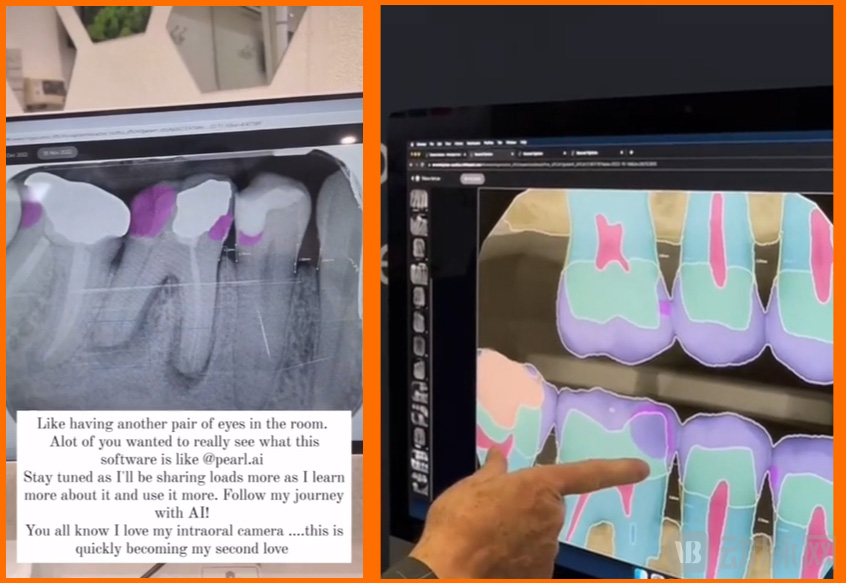
▲Screenshot of the Second Opinion demo page. Source: Company’s official website
From the patient’s perspective, unlike traditional dental care processes, if a dentist determines that X-rays are necessary after a basic examination at a dental clinic, the Second Opinion platform will participate in the analysis—Within seconds of the X-ray being taken, Second Opinion’s diagnostic analysis results are generated, capable of detecting subtle signs of periodontal disease that were previously difficult to identify.This not only significantly reduces examination time but also yields more detailed and nuanced results. Currently, Second Opinion has become the first chairside artificial intelligence software to receive FDA clearance in the industry, was named a Best Invention by TIME magazine, and has obtained regulatory approvals in 120 countries and regions.
In terms of commercial implementation, Pearl’s technology is used by dental clinics across six continents, covering more than 500,000 dental clinics and millions of dental professionals worldwide. Meanwhile, its global footprint has significantly boosted Pearl’s continuous revenue growth, according to foreign media reports,In 2023, Pearl's revenue increased by 458%.
which secured $53.2 million in financing early this yearOverjet is similar to Pearl in its business direction, as both apply AI to the clinical side to assist dentists in diagnosis and treatment. However, the key difference is that Overjet integrates more precise diagnostic insights into the payment process., helping patients save time and costs in claims processing, as well as assisting insurance companies in cost control.
In detail, different experts often provide varying interpretations of the same dental X-ray, which can lead to miscommunication among dentists, insurers, and patients. This undermines patient trust in dentists and creates uncertainty for insurers regarding coverage decisions, ultimately resulting in patients declining treatment. With Overjet’s intervention, diagnostic accuracy has been improved through its AI platform trained on millions of cases and supported by extensive involvement from clinical experts.
According to FDA studies, nearly every general dentist using Overjet can detect cavities and tartar more accurately, yielding highly consistent results. This consistency fosters greater patient confidence in dental treatments and ensures reimbursement from insurance providers.
Domestic innovative enterprises are also making strides in this direction. For instance, Linker has launched “AI Dental Imaging,” an application that leverages AI algorithms to display, record, and analyze results based on patients’ imaging data within five seconds. According to Linker’s official website, “AI Dental Imaging” has been integrated with imaging equipment from more than 50 brands, supporting the automatic transmission of imaging data captured at outpatient clinics into the company’s other product, the e-Dental system.
In the clinical setting, the emergence of AI-powered surgical robots has opened up new possibilities. “In the dental industry, numerous surgical robots have already been introduced, particularly for dental implant procedures; however, robots capable of delivering scalable, fully automated treatment remain exceptionally rare,” said Wu Guang. He noted that currently, only a few innovative companies such as Perceptive are leveraging AI to enable surgical robots to perform end-to-end operations for certain dental procedures, significantly reducing surgery time—a development of revolutionary significance for the dental industry.
Specifically, Perceptive’s AI surgical robot employs a handheld 3D volumetric scanner to construct detailed three-dimensional oral models via optical coherence tomography (OCT), capturing teeth, gums, and even the nerves beneath the tooth surface. OCT relies solely on light beams to generate high-resolution volumetric models, enabling automatic detection of cavities with an accuracy of approximately 90% while avoiding harmful X-ray radiation. However, Perceptive’s AI surgical robot has not yet received FDA approval, and significant time remains before it can achieve full commercialization.
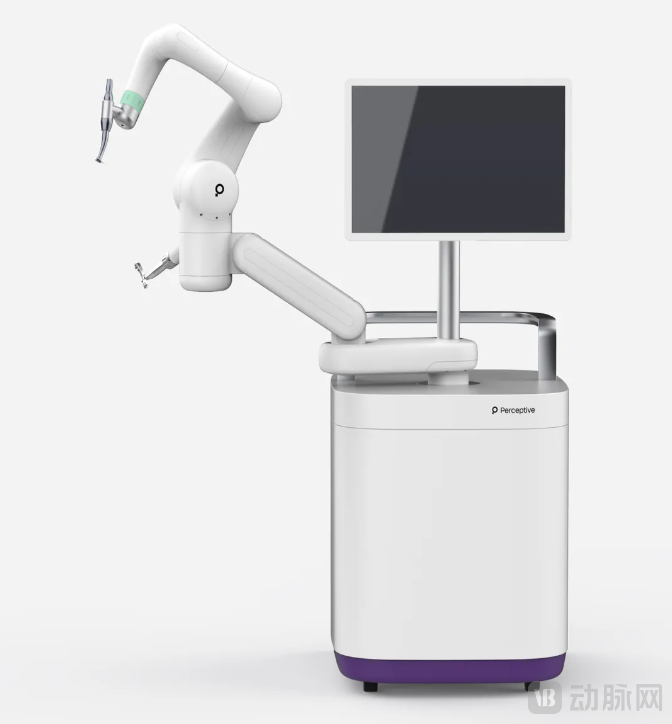
▲Perceptive's AI Surgical Robot. Image source: Official company website
As is well known, patient acquisition has always been one of the key business activities in the dental industry. In recent years, a major focus for the industry has been leveraging AI to make patient acquisition more precise.Among these, the conversational analytics system is an emerging AI-driven customer acquisition method. Publicly available information reveals few market entrants, primarily including Peerlogic, which recently secured seed funding this year.
According to Peerlogic’s official website, the company’s AI-powered conversation analytics system integrates with dental practices’ management or telephone systems. By identifying conversations between patients and front-desk staff, it captures and analyzes key information in real time, provides scientifically optimized communication scripts, improves operational efficiency for dental practices, and thereby boosts patient acquisition and revenue. Since its establishment in 2020, Peerlogic has served more than 1,000 dental clinics across the United States.
The wide variety of product types in the dental industry (with hundreds of thousands of SKUs in the upstream market) has long led to a high degree of fragmentation among upstream suppliers. Enhancing the intelligence level of the upstream sector, and enabling factories to automatically manufacture the full range of dental products with minimal human intervention, will bring significant improvements in quality and efficiency to the entire industry.According to VCBeat, innovative companies such as Oqton and MicroCloud AI have entered the field of leveraging AI to drive automation in dental manufacturing.
Taking Oqton as an example, the company primarily provides AI solutions for the dental 3D printing sector. Specifically, in the past, dental technicians at many dental laboratories often spent hours preparing data for 3D printing removable partial denture (RPD) frameworks, such as manually adjusting supports generated by software. To address this, Oqton developed an automated segmentation feature for RPD frameworks, which significantly saves dental technicians’ time and streamlines the 3D printing workflow.
Another example is the Chinese innovative enterprise Weiyun Artificial Intelligence, which has built a smart factory based on AI. Leveraging its proprietary core technologies and a dental medical service model characterized by “full digitalization, full intelligence, and full informatization,” the company can automatically manufacture a comprehensive range of dental products with minimal human intervention across the entire production process, covering medical scenarios such as dental implants, cosmetic dentistry, orthodontics, and prosthodontics.
Of course, dental AI innovators are not confined to a single niche; after achieving depth and excellence in their initial focus areas, they expand into broader business domains.
For instance, Pearl, which has broken financing records, started with diagnostics and has continuously expanded its product line. It now offers a comprehensive suite of dental clinic solutions, encompassing insurance claims adjudication, dental education, and more. Among its offerings is Practice Intelligence, a product that leverages deep learning algorithms to analyze patient data from dental clinics, helping dentists and administrators identify potentially overlooked diagnostic and treatment opportunities. The intelligence of this tool lies in its ability to recognize patterns and trends in patients’ treatment histories, predict future treatment needs, and thereby provide data-driven decision support for clinics.
It is evident that dental AI has already borne fruit in multiple directions. However, the industry still faces certain bottlenecks and pain points; thus, in previous interviews conducted by VCBeat, many investors stated thatThe growth of dental AI urgently requires action from every participant across the entire industry chain to achieve greater success.
As the dental AI industry continues to write new chapters, many insiders have also highlighted the need to proactively mitigate and confront emerging risks.
First, since AI models are data-driven, their performance is closely tied to the quality and quantity of data. To address this, AI development companies should focus on expanding sample sizes and enhancing data diversity, thereby improving the generalization capability of AI models to a certain extent.
Furthermore, determining liability in the event of an AI-induced dental treatment accident is also a critical issue. In this regard, an executive from a dental digitalization company told VCBeat that, generally speaking, AI developers must provide complete raw data to demonstrate that there were no flaws in the development and production processes. On this basis, users are responsible for the accuracy of the results. From this perspective, AI can only serve as an auxiliary tool, and dentists will always remain the final decision-makers in clinical practice. Therefore, the value of dentists is irreplaceable.
Finally, ensuring the privacy and security of user data is paramount. The collection and analysis of high-quality oral health data—including imaging, medical records, and treatment outcomes—are central to enhancing the precision of AI models. Establishing robust firewalls for data security and preventing misuse are critical questions that every dental AI company must address.
Balancing Risk and Innovation: Dental AI Will Continue to Drive Quality and Efficiency Gains in the Oral Health Industry: On one hand, it improves and enhances the quality of supply; on the other hand, it provides dental patients on the demand side with superior dental care and treatment technologies, thereby safeguarding the oral health of the entire population.
Just as AI is currently driving profound transformations across multiple sectors, a new era of digital and intelligent dentistry is rapidly emerging amidst continuous technological leaps.