

Former Max Planck Institute Scientist Dr. Lü Yuxuan Returns to China, Launches High-Throughput Drug Screening Platform to Advance Anti-Aging Industry
When Lü Yuxuan and his wife arrived at the gates of the Max Planck Institute for Biology of Ageing in Germany, dragging their luggage ten years ago, they could not have foreseen that he would become closely associated with a well-known drug currently at the forefront of anti-aging research, nor could they have imagined that a decade later he would return to China to take up a position at Southern University of Science and Technology in Shenzhen, contributing to the advancement of anti-aging research and industry development in the country.
Looking back on Lü Yuxuan’s scientific research journey, his research focus underwent a significant shift. During his studies at Sun Yat-sen University, he transitioned his field from chemistry to biology and firmly committed to researching intestinal aging and sex differences.
Given the multitude of research directions in aging, why did Lü Yuxuan choose to focus on intestinal aging? In the interview, Lü Yuxuan revealed two primary reasons: First, the gut plays a critical role in human health and aging. One of the more traditional and widely accepted anti-aging concepts is dietary restriction, which is closely linked to nutrient absorption and gut function. Second, during his early research, Lü Yuxuan observed in several established animal models that gut function plays a vital role in aging studies. Therefore, Lü Yuxuan has designated intestinal aging as the main direction for his future research.
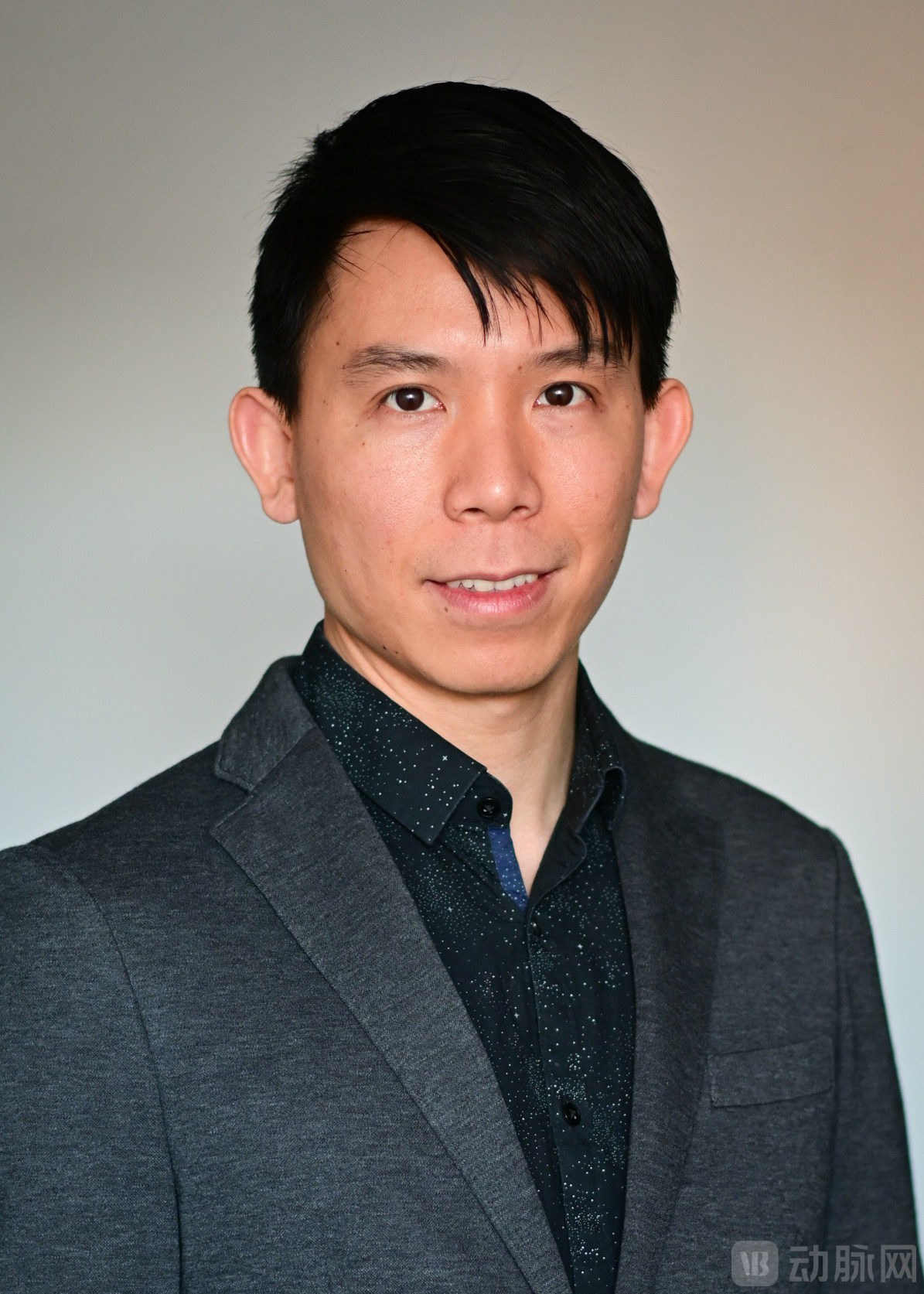
Dr. Lü Yuxuan
Subsequently, Lü Yuxuan joined the team of Professor Linda Partridge, a Fellow of the National Academies of Sciences in the UK, US, and Germany and a global leader in aging research, at the renowned Max Planck Institute for Biology of Ageing in Germany. As a dual EMBO and Marie Skłodowska-Curie Fellow, he embarked on long-term research into the molecular mechanisms of aging and the mechanisms underlying drug-induced longevity, with the aim of developing next-generation precision-targeted anti-aging therapies.
It was also during this period that Lu Yuxuan participated in research on the anti-aging applications of a drug, publishing three papers as the first and corresponding author. The drug in question is rapamycin.
As a drug widely used in cancer treatment and to combat organ transplant rejection, rapamycin is also well-known in the anti-aging community.
Multiple studies have demonstrated that rapamycin can extend lifespan and reduce the incidence of age-related diseases in various animal models, including mice. Consequently, numerous anti-aging biohackers both in China and abroad have begun personally experimenting with rapamycin for its anti-aging effects. Among these anecdotes, an overseas post documenting the anti-aging experiences of a “family of three” taking rapamycin has circulated widely on the internet. Although the post claims significant anti-aging benefits from rapamycin use, it has also sparked a steady stream of skeptical comments.
Within the academic community, there remains considerable debate regarding the clinical anti-aging efficacy and safety of rapamycin, which has further motivated researchers to elucidate its underlying mechanisms. The “rapamycin anti-aging trilogy” published by Dr. Yuxuan Lü’s team, led by Linda Partridge, has, to some extent, revealed the mechanisms of rapamycin’s anti-aging effects, the relationship between dosage and anti-aging outcomes, and the manifestation of sex differences in rapamycin-based anti-aging interventions.
Specifically, in 2021, Linda Partridge’s team, in collaboration with the team led by Professor Richard Miller, director of the Interventions Testing Program (ITP) under the University of Michigan and the U.S. National Institute on Aging—a program hailed as the “gold standard” for evaluating anti-aging drugs—jointly published an article titled “A TORC1-histone axis regulates chromatin organisation and non-canonical induction of autophagy to ameliorate ageing.” (Yuxuan Lv was the sole first author.) This study utilized the classic biological model Drosophila melanogaster to screen for the effects of rapamycin on aging-related biomarkers and discovered that rapamycin specifically increases histone expression in the fly gut, thereby elevating research on the link between rapamycin and in vivo histone expression levels to a new height. Previously, no studies had revealed a connection between the two.
Through further research, the project team also discovered that, in addition to their traditionally recognized structural functions, histones serve as regulatory nodes for epigenetic information in vivo and act as key linkers between cellular metabolism and autophagy, thereby playing a role in regulating physiological metabolism and gene expression in organisms.
Accordingly, by investigating the specific effects of rapamycin on intestinal absorptive cells and further elucidating histone function, this research team has not only broadened our understanding of the biological processes of aging but also provided a reference for the future design of novel anti-aging targets.
In August 2022, Yu-Xuan Lü, together with other members of Linda Partridge’s team, published another paper demonstrating that the anti-aging effects of rapamycin can be achieved through short-term treatment in early adulthood, thereby substantially avoiding the adverse side effects associated with long-term administration.
This finding also overturns the industry’s previous understanding of the anti-aging dosage of rapamycin. Some believe that lifelong administration of rapamycin is typically required to maximize its anti-aging effects. However, long-term use, even at low doses, can lead to adverse reactions, and for most people, sustained anti-aging treatment imposes a certain financial burden.
In this study by Linda Partridge’s team, Yuxuan Lv (co-first author) and two other colleagues jointly developed a short-term rapamycin regimen, demonstrating in both fruit flies and mice that it yields anti-aging and life-extending effects equivalent to those of lifelong rapamycin administration.
Subsequently, Linda Partridge’s team built on this momentum and published their findings on sex differences in the gut and aging at the end of the same year (Yuxuan Lv served as co-first author and co-corresponding author). The study revealed that when male fruit flies were transplanted with female guts, rapamycin, which was previously ineffective, extended their lifespan by 10%; similarly, female fruit flies transplanted with male guts also experienced lifespan extension.
In other words, this study elucidates the reasons for sex-based differences in lifespan and the key biological mechanisms underlying differential responses to anti-aging drugs, which is of critical importance to drug development.
From mechanism of action to dosage studies and then to sex differences—this constitutes the rapamycin anti-aging trilogy published by Linda Partridge’s team, which also represents the primary research achievements of Lü Yuxuan during his tenure at the Max Planck Institute in Germany. These accomplishments have earned him numerous prestigious European awards and honors, including the EU’s “Future Science Leaders” and the German Federal Foreign Office’s official portal feature “Talent in Germany,” and have led to exclusive interviews with several international official media outlets, such as Germany’s Das Erste.
In early 2024, Lü Yuxuan returned to China for his career development. He is currently affiliated with the newly established Institute of Advanced Biotechnology at Southern University of Science and Technology, while also serving as a Guest Independent Researcher at the Max Planck Institute for Biology of Ageing in Germany and as a Lecturer at the Geneva College of Longevity Science (GCLS) in Switzerland.
Regarding his reasons for returning to China for career development, Lv Yuxuan stated that the primary factor was the immense growth potential of the aging research and anti-aging industries in the country. On one hand, China offers a favorable environment for the development of the biomedical industry, with substantial policy support for research in areas such as basic science and clinical applications. Moreover, the greater acceptance of innovation within China’s industry, academia, and research sectors has further fostered a fertile ground for the advancement and application of innovative scientific technologies.
On the other hand, in recent years, there has been a significant return of top-tier talent to China in high-tech and advanced fields, which has laid a solid foundation of human resources for the development of the domestic anti-aging sector.
Consequently, driven by a confluence of factors, China’s anti-aging industry is entering a period of rapid growth. Earlier this year, the State Council’s No. 1 Document explicitly expressed support for the development of the “anti-aging” industry for the first time. Furthermore, relevant reports indicate that, with advancements in life science technologies, the output value of China’s anti-aging sector is growing rapidly and is projected to surpass RMB 100 billion by 2024.
However, Lü Yuxuan also recognized that alongside the rapid expansion of market size, numerous issues have emerged within the industry, such as a mixed bag of products and uneven product quality. At the same time, Lü Yuxuan stated, “The current market indeed requires time for cultivation, along with intensified science popularization efforts targeting both industry practitioners and consumers, to rectify these chaotic conditions. It is encouraging to note that an increasing number of relevant enterprises are beginning to prioritize evidence-based medicine, which represents one of the significant trends toward the industry’s healthy development.”
Leveraging his extensive scientific research background and passion for science communication, Lv Yuxuan was invited to join the Geneva College of Longevity Science (GCLS) in Switzerland—the world’s first institution dedicated to higher education in aging and longevity. He has also established collaborative partnerships with several renowned domestic and international life sciences organizations and science communication platforms focused on aging. “I hope that through exchanges and collaboration with experts both in China and abroad in the field of science communication, more people will gain access to high-quality educational content on aging, enabling them to make more confident and informed choices when selecting appropriate anti-aging products available on the market,” he stated.
As the industry increasingly prioritizes evidence-based practices, robust collaboration among academia, industry, research institutions, and medical practitioners has become imperative, particularly in the frontier field of anti-aging within life sciences. Upon returning to China, Lv Yuxuan dedicated himself to accelerating the translation of anti-aging research achievements into practical applications. Meanwhile, he co-founded the Asian Longevity Professional Association (ALPA) alongside anti-aging experts from Hong Kong, Singapore, Japan, and other regions, jointly promoting the industrialization of anti-aging scientific advancements across the Asia-Pacific region.
According to Lu Yuxuan, building on the animal models established in the “Rapamycin Anti-Aging Trilogy,” Southern University of Science and Technology has also developed a high-throughput drug screening model applicable to anti-aging interventions and age-related disease management, thereby supporting biopharmaceutical and general health companies in their drug and product development. “Our preliminary estimates suggest that this high-throughput drug screening model can reduce the development time for drugs targeting aging mechanisms by 30%–50%,” Lu Yuxuan revealed.
In addition, Lü Yuxuan revealed that by the end of 2023, his German team had established a partnership with a well-known large European pharmaceutical CRO company and was in discussions with several leading domestic enterprises regarding potential collaborations. Meanwhile, they welcome academic exchanges and collaborations with like-minded parties, including science communication media and enterprise technology transfer organizations, to jointly explore new opportunities in the anti-aging industry.