

Aoda Zhisheng Launches Jupiter: A Global First Ultrasound-Navigated, Millimeter-Precision Soft Tissue Biopsy and Ablation Robotic System for Liver Cancer

AMIT
Integrated Intelligent Healthcare Solutions Provider
In early 2024, the World Health Organization’s International Agency for Research on Cancer (IARC) released the latest global cancer burden data for 2022, analyzing the incidence and mortality rates of 36 types of cancer and all cancers combined across 185 countries worldwide.
IARC research data show that in 2022, China ranked first globally in both the number of new cancer cases and cancer-related deaths. Among these, liver cancer incidence rose to the fourth highest in China, while its mortality rate ranked second.
Faced with the heavy burden of liver cancer, Beijing AMIT Medical Science and Technology Co., Ltd. (hereinafter referred to as “AMIT”), a global leading provider of intelligent medical robot systems, devices, and comprehensive smart healthcare solutions, has developed an intelligent soft-tissue puncture intervention surgical navigation robot by integrating AI with robotics. This system offers a full-process solution for liver cancer puncture and ablation therapy, spanning from preoperative planning to intraoperative navigation.

Jupiter - Intelligent Soft Tissue Puncture Interventional Navigation Surgical Robot
Photo provided by the interviewee
Although AMIT, founded in 2021, is still a young company in the competitive landscape of the surgical robotics sector, its team’s core technological expertise can actually be traced back more than two decades.
Zhang Bo, Founder and Chairman of AMITHe is an Associate Professor at Waseda University and has been engaged in research on software systems and artificial intelligence technologies in the field of medical surgical robots for many years.Fan Peihua, Co-founder and CEO of AMITA graduate of Tongji University with a major in Clinical Medicine, he has many years of experience as a surgeon. After transitioning to the medical device industry, Fan Peihua successively held senior executive positions for Asia at several well-known international companies in the sector.Zhang Zheming, Co-founder and CTO of AMITHe also graduated from Waseda University in Japan with a major in Robotics, and holds a Master’s degree in Mechanical Engineering from the University of Michigan in the United States. He has many years of professional experience in the fields of robotics, smart hardware products, medical devices, and manufacturing.
Driven by the vision to “create a Chinese-made surgical robot,” a founding team with multidisciplinary and cross-sector expertise jointly established AMIT in Yizhuang, Beijing, after four years of planning and preparation.In 2023, the team stood out among 5,705 startup projects from 114 countries and regions worldwide to claim the championship at the HICOOL 2023 Global Entrepreneurship Competition.
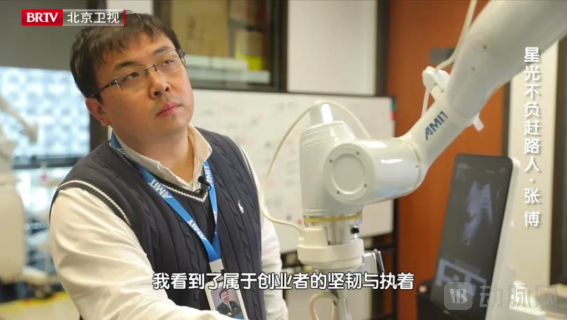
Zhang Bo, Founder and Chairman of AMIT, Featured in Beijing Satellite TV Report
Following the competition, Zhang Bo stated in an exclusive interview with Beijing Satellite TV:“The technology we are currently developing is not only unavailable in China but also nonexistent worldwide. We aim to leverage this technology to address pressing clinical challenges in China and elevate the nation’s overall healthcare standards.”
From the perspective of its clinical application scenarios, the Jupiter Intelligent Soft Tissue Puncture Intervention Navigation Surgical Robot is primarily used forMinimally Invasive Percutaneous Interventional Ablation for Liver Cancer, which can help physicians deliver precise treatment and improve patient prognosis, holding particular significance for patients with early-stage cancer.
The "Guidelines for Image-Guided Ablation of Primary Liver Cancer (2023 Edition)," released in 2024, state that image-guided ablation therapy for primary liver cancer offers advantages such as proven efficacy, minimal invasiveness, procedural simplicity, good patient tolerance, short hospital stays, rapid recovery, and few complications. Among these techniques, percutaneous radiofrequency and microwave ablation are the most mature and have been recognized by multiple domestic and international guidelines as one of the first-line treatment options for small hepatocellular carcinoma.
As an advanced modality for tumor treatment, ablation therapy indeed faces numerous challenges in its development and widespread adoption. For instance, the difficulty of needle insertion in ablation therapy is influenced by tumor size, location, number, and individual patient variations. Particularly when tumors are adjacent to critical structures such as the diaphragm or major blood vessels, the procedure must ensure complete tumor ablation while avoiding damage to these vital structures, which undoubtedly increases the complexity and difficulty of the operation. Furthermore, the ablation process relies heavily on the operator’s subjective experience and tactile feedback, making it difficult to establish standardized operational protocols. This lack of standardization also hinders the dissemination of medical resources to primary healthcare institutions.
AMIT’s Jupiter Intelligent Soft Tissue Puncture Intervention Navigation Surgical Robot is a high-performance robot focused on providing systematic solutions for minimally invasive cancer therapies, dedicated to addressing multiple clinical pain points in percutaneous interventions.
The system integratesClinical Medicine, Medical Imaging, Navigation, AI, Robotics, Advanced Manufacturing, and Medical Materialstechnologies to address the challenges of tumor identification and the difficulty in precisely designing and controlling needle trajectories during clinical ultrasound-guided interventional tumor ablation procedures. By achieving automatic integration of preoperative planning with intraoperative navigation, it provides a comprehensive end-to-end solution for needle insertion and ablation therapy, assisting physicians in accurately locating lesions and performing precise punctures. Specifically, the advantages can be primarily categorized into the following two aspects:
· World’s First “Real-Time Ultrasound and CT Image Fusion Navigation Technology Without an External Spatial Positioning System”
Jupiter - Intelligent Soft Tissue Puncture Interventional Navigation Surgical Robot willPreoperative Planning and Intraoperative Navigationautomatic integration, providing a full-process solution for puncture and ablation therapies. “In the field of surgical navigation robots for soft tissue puncture, we have adopted an approach that does not rely on optical or electromagnetic sensors. By leveraging only a 7-degree-of-freedom robotic arm and an ultrasound probe fixed at its end-effector, we have achieved 3D reconstruction of ultrasound images, automated scanning, autonomous positioning, and automatic adjustment of puncture depth and angle, while enabling real-time monitoring of the target tissue during the puncture procedure,” said Dr. Zhang.
Path planning can be completed before the needle penetrates the skin, enabling physicians to anticipate the needle’s trajectory prior to insertion and thereby effectively avoid critical tissues and organs during path selection. Furthermore, the puncture path planning system provides simulated path planning for the needle within tissue, empowering primary healthcare institutions that previously lacked the capability and conditions to perform liver tumor puncture ablation procedures with the corresponding competencies.
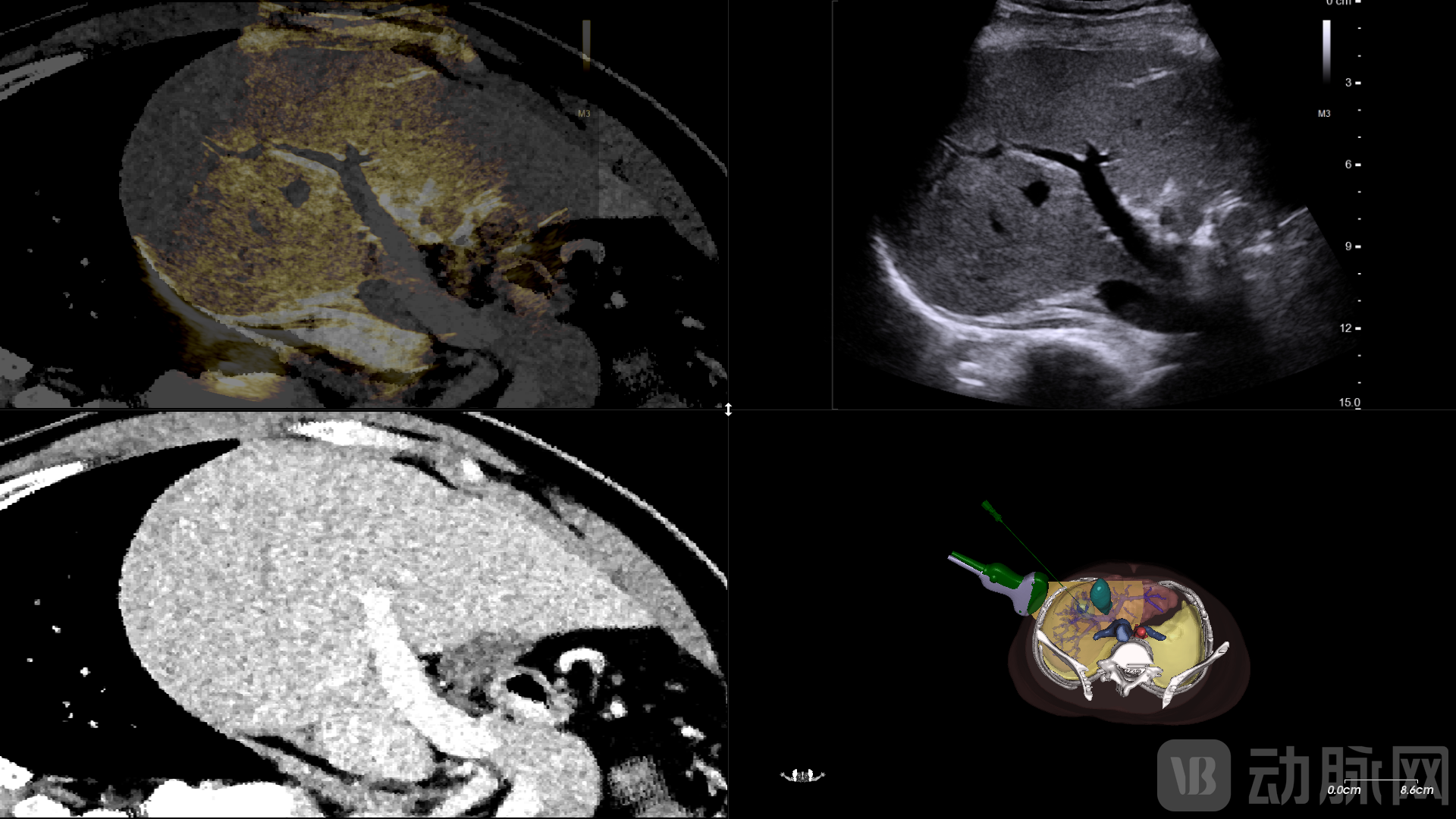
Multimodal Image Fusion
Image provided by the interviewee
· High-precision force-position control technology achieves millimeter-level puncture accuracy, enabling standardized and quantitative puncture procedures
Due to the deep location of tumor tissue beneath the body surface, repeated punctures would increase the risk of infection and even cause cancer cell dissemination along the needle tract. To address this, the Jupiter Surgical Robot System is equipped with a force-controlled robotic arm featuring 7 degrees of freedom,The spatial resolution accuracy of each robotic arm joint can reach 0.01 mm, and the force sensing sensitivity reaches 0.1 N.. This design not only provides more flexible puncture angles but also reduces human error through highly automated operations, lowers reliance on physicians' experience, and enhances the precision, safety, and standardization of surgical procedures.
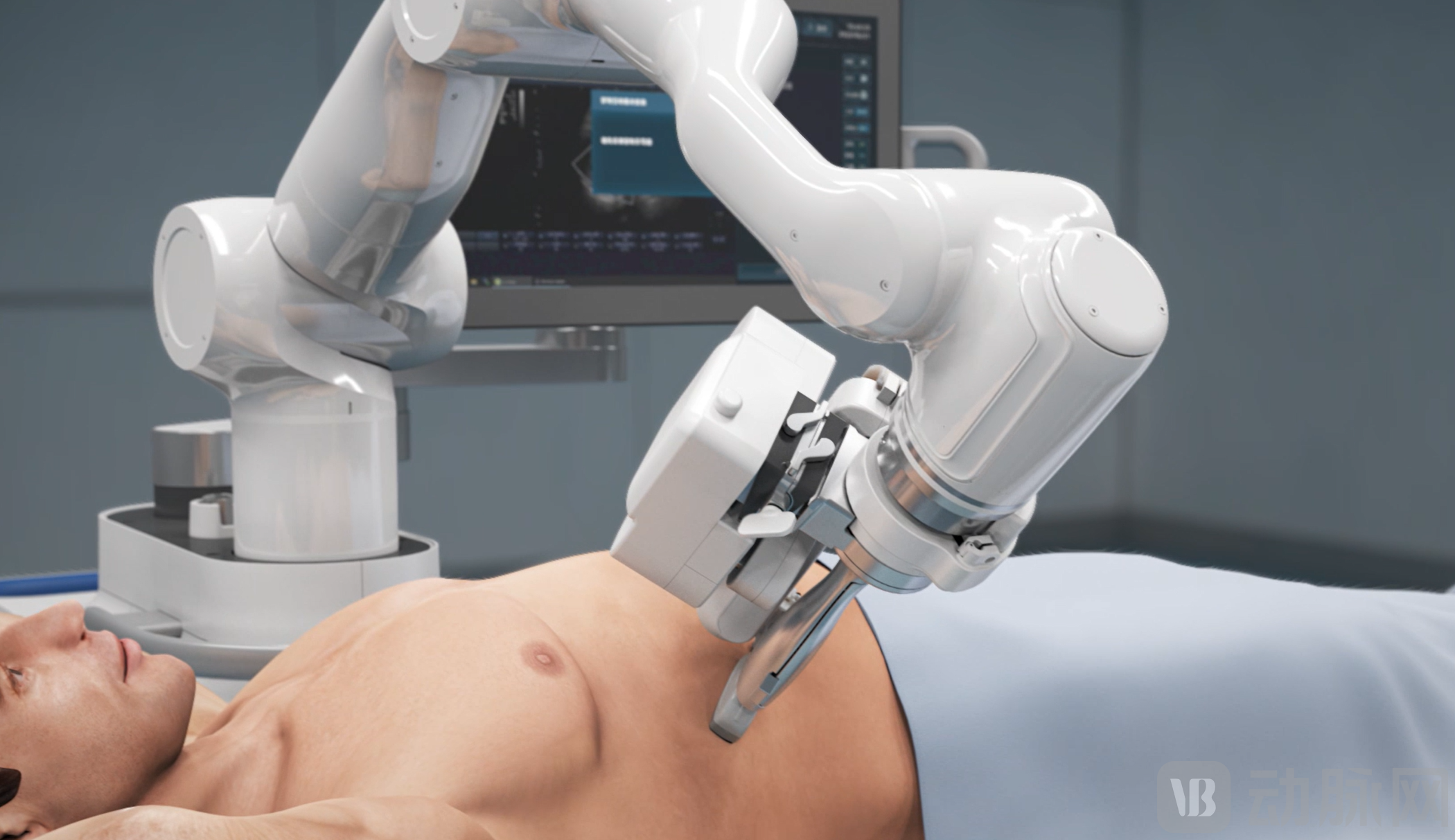
7-DOF Force-Controlled Robotic Arm
Photo provided by the interviewee
More importantly, as a robotic system solution for minimally invasive cancer therapies, the Jupiter Surgical Robotic SystemIt not only assists physicians in performing percutaneous needle biopsy screening for early-stage cancer and microwave ablation therapy, but also enables interventional treatments such as radioactive seed implantation and intratumoral injection of antineoplastic agents., helping physicians accurately locate lesions and perform precise punctures, thereby reducing the incidence of intraoperative and postoperative complications.
“The Jupiter intelligent surgical robot for navigation-assisted, minimally invasive soft-tissue needle interventions has also achieved significant cost-control results, with over 90% of its components now domestically sourced in China, reducing the cost of the surgical robot from the previous tens of millions and nearly ten million yuan,”“The price has been reduced to a level comparable to that of flagship ultrasound systems, thereby facilitating wider adoption and benefiting more patients,” said Zhang Bo in the program.
As an emerging force in China’s surgical robotics industry, AMIT is committed to continuously advancing its ultrasound-guided puncture navigation robotic technology, adhering to the mission of serving patients, empowering physicians, and contributing to society. We are dedicated to developing surgical robots that are user-friendly, highly efficient, practical, and cost-effective, and to promoting these innovative products in grassroots regions with limited medical resources, thereby bringing hope and healing to a broad patient population.
According to reports, AMIT will expand its intelligent soft-tissue surgical robot technology to organs such as the lungs, thyroid, breasts, kidneys, and prostate, providing more patients with more precise, minimally invasive, and intelligent treatment solutions. Currently, the Jupiter Intelligent Soft-Tissue Puncture and Interventional Navigation Surgical Robot System, designed for percutaneous interventional procedures on the liver, has submitted a registration application to the National Medical Products Administration (NMPA). It is expected to obtain the Class III medical device registration certificate and officially launch by the end of 2024.
Meanwhile, AMIT will unveil its Jupiter Intelligent Soft Tissue Puncture Intervention Navigation Surgical Robot at the World Robot Conference, to be held from August 22 at the Yichuang Exhibition Center in Beijing Economic-Technological Development Area. The company will also host a product launch event to comprehensively showcase and demonstrate its new-generation soft tissue puncture navigation robot, highlighting the growing strength of China’s medical surgical robotics industry.