

LongRiver Capital Completes Nearly $400 Million Fundraise and Pursues 'Underwater' Investment Opportunities in Healthcare and Tech

LongRiver Investments
Investment Institutions in the Healthcare and Technology Sectors
LongRiver Jiangyuan Investment Keeps Moving Forward.
In the past July, the entire industry was undoubtedly abuzz with a major fundraising event—LongRiver Capital Announces Completion of Nearly $400 Million Raise for Its First USD Fund, with a 10+2-Year Term; It Is One of the Largest First-Close USD Funds in Recent Years
This has undoubtedly injected a measure of confidence into the somewhat pessimistic capital markets.
The completion of fundraising is merely the beginning. Immediately thereafter, Darui Bio, a nucleic acid-based innovative drug platform company focused on the treatment of metabolic diseases and central neurodegenerative disorders, announced the closure of its $35 million Series A+ financing round, led by LongRiver Jiangyuan Investment. Recently, the LongRiver team also led an investment in a U.S.-based brain-computer interface innovator and, together with the U.S. fund Orbimed, completed an investment in Belenos Biosciences, a Newco project in the autoimmune disease sector.
After completing the fundraising for its inaugural USD-denominated fund and making investments in several healthcare technology companies, how can it leverage the advantages of the USD fund to build on this momentum? We interviewed Li Jiaan, Partner at LongRiver Capital and Head of Healthcare and Wellness Investments.
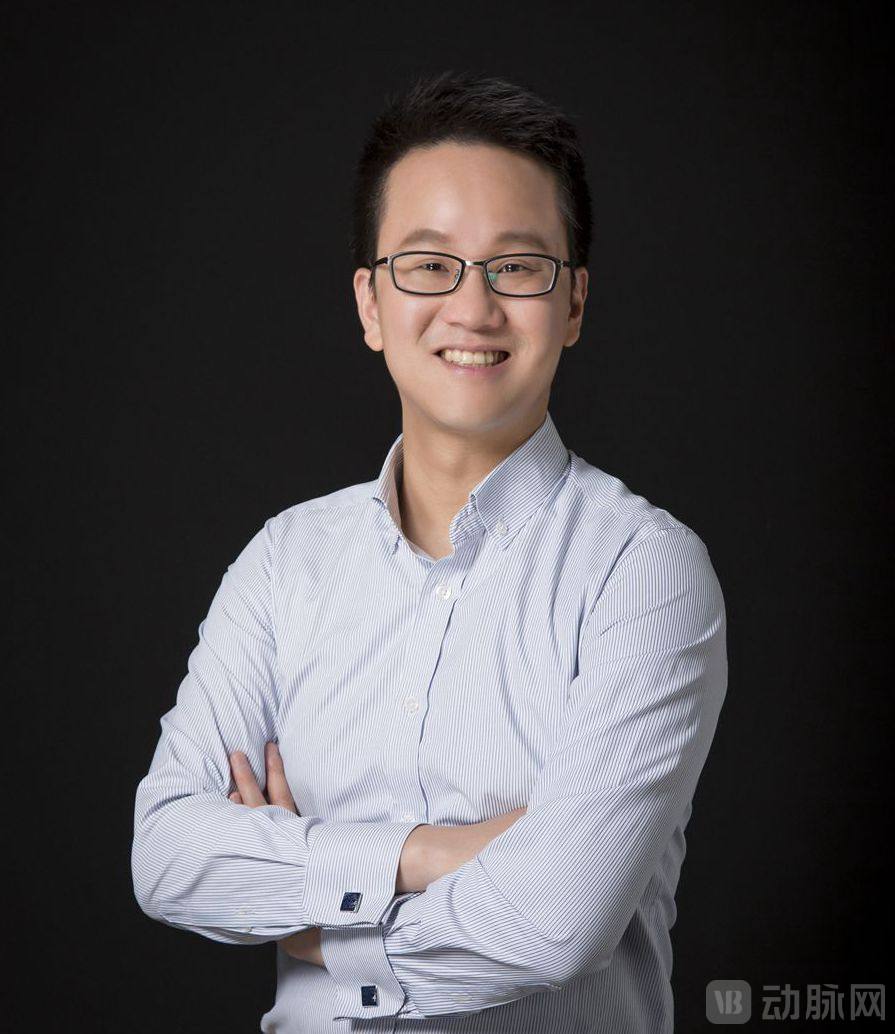
Li Jiaan, Partner at LongRiver Capital and Head of Healthcare and Life Sciences Investment
Currently, it is not easy to complete a large-scale fundraising of nearly $400 million.
According to Zero2IPO Research’s “H1 2024 China Private Equity Market Research Report,” the overall downward trend in China’s private equity market continued in the first half of 2024. In terms of fundraising, foreign-currency funds remained sluggish, with only 17 such funds completing new rounds of fundraising in H1, raising approximately RMB 13.087 billion. In contrast, LongRiver’s nearly USD 400 million fundraising effort undoubtedly made a strong start for the second half of 2024.
According to reports, LongRiver Jiangyuan Investment completed the first closing of its inaugural U.S. dollar fund shortly after its establishment in 2022. At that time, due to impediments to offline communication, Zhang Jiang, Founder and CEO of LongRiver Jiangyuan Investment, engaged in more than 30 online discussions with potential investors during the preparatory phase for offering materials.
Nowadays,With the completion of fundraising, the 10+2-year fund investment and exit period also allows Jiangyuan to make longer-term investments as “patient capital.”
As the overall beta declines, fundraising for diversified funds has become increasingly challenging. In contrast, vertical GPs with years of deep expertise in essential or emerging industries continue to attract attention. “We have been deeply engaged in technological innovation fields such as healthcare for over a decade. Our investment focus addresses long-term needs and spans market cycles, supported by a strong track record. As a mature team operating on an emerging platform, we still see significant opportunities.”
As mentioned by Li Jiaan,The successful fundraising is, in fact, attributable to LPs’ optimistic outlook on the market and the team advantages of LongRiver Jiangyuan Investment—
From a macro perspective, significant opportunities in scientific and technological innovation remain globally and within China. With its vast market size, coupled with global technological advancements and the transformation and upgrading of China’s industrial sectors, the Chinese market continues to offer alpha return opportunities. The limited partners (LPs) of LongRiver Jiangyuan Investment include top-tier institutional investors such as large insurance institutions and internationally renowned fund-of-funds managers. While focusing on long-term investments, these LPs are also optimistic about the future development of the industry.
From a micro perspective, successful fundraising is closely tied to the team’s background. On one hand, LongRiver’s investment team has invested in over 40 companies globally, covering stages from early to late growth, with 40% of these projects located overseas. Nearly 20 of these portfolio companies have completed listings both domestically and internationally, delivering solid returns. On the other hand, the founding team members possess backgrounds in insurance capital investment, equipping them with a payer-side perspective. Furthermore, the long-term nature of insurance capital aligns well with the extended investment cycles typical of the healthcare sector. Additionally, as insurance capital inherently emphasizes risk control, LongRiver has upheld this approach by establishing a rigorous risk management and compliance system since its inception. Years of team collaboration have also enabled the firm to demonstrate a transparent and efficient investment style.
For LongRiver Jiangyuan Investment, there are undoubtedly industry opportunities in both hard technology and healthcare. “The challenge lies in the fact that low-hanging fruit is scarce; we need to identify underwater opportunities through focus and deep cultivation,” mentioned Li Jiaan, who entered the investment sector as early as 2009 and has experience covering investments in technological innovation fields ranging from semiconductor hard tech to healthcare.
Investment, on the other hand, is about finding certainty amidst uncertainty.In Li Jiaan’s view, there are three certainties in the healthcare sector: first, the aging population trend; second, the definitive trend of cost containment within medical insurance; and third, the trend toward differentiated development. Currently, a particularly prominent trend is global expansion—
From the perspective of the pharmaceutical sector, markets in Europe and the United States are relatively mature, while demand in emerging markets continues to rise. In the realm of innovative drugs, Chinese enterprises are strengthening their international competitiveness, with a sustained growth in overseas expansion projects. Locally developed innovative therapies, including antibody-drug conjugates (ADCs), bispecific antibodies, and cell and gene therapies (CGT), have sequentially gained recognition from overseas multinational corporations (MNCs), with transaction values repeatedly reaching new highs.
In the medical device sector, domestic brands are beginning to “blossom across multiple fronts.” Driven by technological advancements, cost-performance advantages, and improved service levels, Chinese-made equipment is accelerating both import substitution and overseas expansion. In international markets, domestic manufacturers are gradually penetrating the high-end segment from their traditional base in low- and mid-tier devices.
“Although some of the companies in the niche sectors we invest in primarily target the domestic market, we hope that the majority of enterprises invested by the Jiangyuan team will possess the capability to expand and establish operations overseas.Whether companies possess the capability to achieve “substantive global expansion” is a critical focus of our healthcare investment strategy. In the pharmaceutical sector, we require entrepreneurs to align with global medical development trends from the outset of pipeline product planning. In the medical device sector, as domestic precision manufacturing matures, we expect manufacturers to proactively plan for overseas regulatory approvals and ensure their implementation.“mentioned Li Jiaan.
Guided by this certainty, Jiang Yuan’s team invested in globally leading modular surgical robotics company Ruilong Surgery, novel vaccine developer Maikokang Biologics, conductive powder materials supplier for photovoltaic applications Ruiheng New Materials, and the aforementioned nucleic acid-based innovative drug platform company Darui Biopharma, which focuses on treating metabolic diseases and central neurodegenerative disorders.
“Our investment strategy is also a focused, industry-specific “sniper” approach. For instance, we conduct meticulous project sourcing: in the two major sectors of healthcare and technology, we employ a top-down framework to break down hundreds of sub-sectors, selecting only 15% of these niche areas for investment. Meanwhile, our execution is closely aligned with this precision-oriented methodology.Currently, beta opportunities have largely vanished; capital has become more expensive, return ceilings have lowered, and the risk of investment failure has risen. Alpha returns must now be sought within niche sectors.We seek out companies that are either the sole player or the market leader, enter early, and make consecutive follow-on investments once our thesis is validated. The fund also reserves 30% of its capital for follow-on investments in subsequent rounds.”
Taking Ruilong Surgical as an example, Jiang Yuan has adopted a top-down strategy. In the industry, the da Vinci Surgical System by Intuitive Surgical was launched in 2000, with its market capitalization climbing to around $100 billion by 2021, and reaching $160 billion in 2024, making it the world’s most valuable medical device company. However, the high cost of surgical robots has limited their widespread adoption. Some entrepreneurs have chosen reverse engineering to achieve “domestic substitution”; yet only more innovative solutions can significantly reduce costs for healthcare institutions and fundamentally meet clinical needs. Ruilong Surgical’s differentiated modular surgical robot has prompted multiple investments from LongRiver Capital’s Jiang Yuan. “This feature enables it to meet the demands not only of markets with strong payment capabilities, such as the United States, but also of markets with relatively lower payment capabilities.”
The investment thesis for Micobio differs from this. As a vaccine company, Micobio targets healthy populations, addressing a vast market within China alone. Its key differentiator lies in its vaccine adjuvant system. Since 1920, the U.S. Food and Drug Administration (FDA) has approved only six adjuvant systems, while China has, to date, approved only aluminum-based adjuvants. In recent years, the development and application of novel adjuvants have accelerated further. A cohort of domestic companies is entering this field, aiming to overcome critical technological bottlenecks. Micobio’s competitive advantage stems from its founder, who was already engaged in the research and development of cutting-edge adjuvant systems and vaccines while in the United States. Given that the vaccine sector requires substantial capital investment and involves high innovation challenges and risks, LongRiver Capital chose to invest at the relatively mature Series B stage of the company’s development.
The investment in Darui Bio reflects confidence in the company’s capability to develop best-in-class siRNA therapeutics. The application areas of small nucleic acid drugs are continuously expanding, offering immense growth potential. Darui Bio has successfully advanced two best-in-class siRNA metabolic disease programs into global development. The founding team has demonstrated the company’s advantages, including high execution efficiency, differentiated targets, and an international perspective, while making rapid progress in expanding into CNS and other extrahepatic delivery platforms. LongRiver Capital led the company’s Series A+ financing round.
Since its establishment two years ago, Jiangyuan Investment has invested in a total of 16 projects. In addition to Ruilong Surgery, Maikekang Biotechnology, and Ruiheng New Materials, the portfolio includes Jingqin Intelligent Manufacturing (novel laparoscopic “hand-controlled robotic arm”), Tuge Medical (medical endoscopes), Huiyeyan (biomaterials), Anrui Biotechnology (targeted drugs), and Hanchen Xingtai (R&D of novel peptide drugs), among others. Notably, companies such as Ruilong Surgery and Ruiheng New Materials have received multiple rounds of investment from LongRiver Jiangyuan Investment. Many of these portfolio companies have advanced to subsequent financing rounds or achieved significant new developments; for instance, Maikekang Biotechnology secured cumulative financing exceeding RMB 600 million in a very short period, while Anrui Biotechnology successfully completed a license-out deal, generating revenue in the tens of millions of US dollars.
LongRiver Jiangyuan Investment’s value-add to portfolio companies extends beyond mere capital injection. Leveraging its international background, the team assists investee companies in introducing investors and better supports their global expansion. Drawing on its insights into globalization trends, Jiangyuan further helps enterprises grasp industry development trends and adjust their strategic plans accordingly.
“At a time when most investors are generally pessimistic about the current market situation, Li Jiaan pointed out, ‘Cycles are inevitable. They test, to a certain extent, the resilience of investors and enterprises: how they respond to crises in order to better identify opportunities for growth.’ He added,”“Now is actually a good time to invest, as project valuations have returned to a reasonable pricing range.”
In the face of the current wave of domestic innovation, Li Jiaan also highlighted two points that warrant attention—
First, from the perspective of the medical device sector, the overall trend of healthcare cost containment is quite evident, and domestic substitution still has room for development to some extent. However, it should be noted that within this certainty, particularly in the upstream material supply chain, the necessity of domestic substitution needs to be repeatedly scrutinized and falsified.“Unlike the consumer electronics sector, in the medical field, moving further upstream may lead to a decrease in output value. Upstream materials account for a relatively small proportion of the cost of end products, and the demand for substitution in certain areas is not particularly significant. In the absence of constraints such as supply chain security, careful consideration should be given to domestic substitution.”
Second, from the perspective of the pharmaceutical and medical sector, a favorable industrial ecosystem is currently taking shape.In the 1.0 era, companies primarily mimicked overseas enterprises to achieve pharmaceutical production and sales. With the advent of the 2.0 era, more innovative enterprises began developing original products and gradually focusing on their areas of expertise. In the 3.0 era, domestic pharmaceutical companies need to engage in deeper collaboration with overseas counterparts—for instance, domestic firms may handle early-stage pipeline R&D, while overseas partners manage translation and commercialization. This shift demands higher capabilities from both sides. Currently, a large number of startups are pursuing overseas business development (BD), gradually establishing a robust industrial ecosystem. “The previous model of covering the entire value chain from zero to one hundred—encompassing R&D, production, and sales—is now difficult and outdated.”
From an overall perspective, amid the current wave of global expansion, both medical device and pharmaceutical companies need to carefully assess local market demands. “Medical device companies may face greater commercialization risks, while pharmaceutical companies must move beyond the traditional ‘Me-too’ and ‘Me-better’ models and accelerate their global expansion through truly innovative, globally competitive products.”
LongRiver Capital also invested in and exited from these opportunities in a professional manner. Li Jia’an pointed out that there are currently three mainstream exit strategies: “First, ‘long-term capital,’ targeting disruptive innovation opportunities with attractive valuations and access to both domestic and overseas listing venues; second, ‘stable capital,’ focusing on companies that already have or are about to achieve stable positive cash flows, complemented by dividend provisions; and third, ‘quick returns,’ involving clear M&A or IPO pathways with an exit horizon of no more than three years.” He added, “As a USD-denominated fund, LongRiver Capital possesses a global market perspective as well as sufficient patience to identify optimal exit routes and timing. Our historical performance demonstrates diversified exit pathways and a wide range of choices for corporate listing locations.”
As a team with over 10 years of investment experience in the field of technological innovation both domestically and internationally, having managed multiple QFLP, RMB, and USD funds,Jiangyuan’s team also stated that it would initiate work related to QFLP and RMB-denominated funds at the appropriate time. “Our unique advantage lies in our comprehensive capabilities, combining a global perspective with local experience. This enables us to identify emerging opportunities worldwide and leverage global momentum to support the next generation of industry leaders.”Li Jia’an emphasized.