

Pulsecare Completes Nearly RMB 100 Million Series A Funding Round to Advance Innovative Cardiovascular Therapies

Delian Capital
Investment Institution Specializing in Technology and Innovative Healthcare Sectors

PULSECARE
Minimally Invasive Treatment Product Developer
Recently, Pulsecare Medical Technology Co., Ltd. (hereinafter referred to as "Pulsecare") has completed its Series A financing round of nearly RMB 100 million, led by Tasly Capital, with participation from Delian Capital and Tianfeng Capital. The proceeds from this round will be used for regulatory clinical trials of core products, commercialization, and the development of new product pipelines.
PULSECARE, established in July 2021, is a national high-tech enterprise possessing industry-leading multimodal energy platforms and core technologies in pulsed electric fields, ultrasound, radiofrequency, and plasma. Currently, PULSECARE has deployed a portfolio of innovative cardiovascular medical devices and solutions targeting indications such as cardiac electrophysiology (atrial fibrillation) and resistant hypertension. Leveraging the team’s over 20 years of research accumulation, the company has overcome multiple critical technological bottlenecks in the industry, achieving superior clinical efficacy and safety.
PULSECARE is dedicated to innovation in medical devices for cardiac and pan-vascular therapy, having efficiently developed two world-first therapeutic medical device products. Among them, the world’s first third-generation nanosecond pulsed field ablation (nsPFA) system for atrial fibrillation treatment has successfully completed its registration clinical trials, yielding outstanding clinical data. The other flagship innovative product, the world’s first modifiable ultrasound-based renal denervation system (muRDN), is currently in the clinical trial phase.
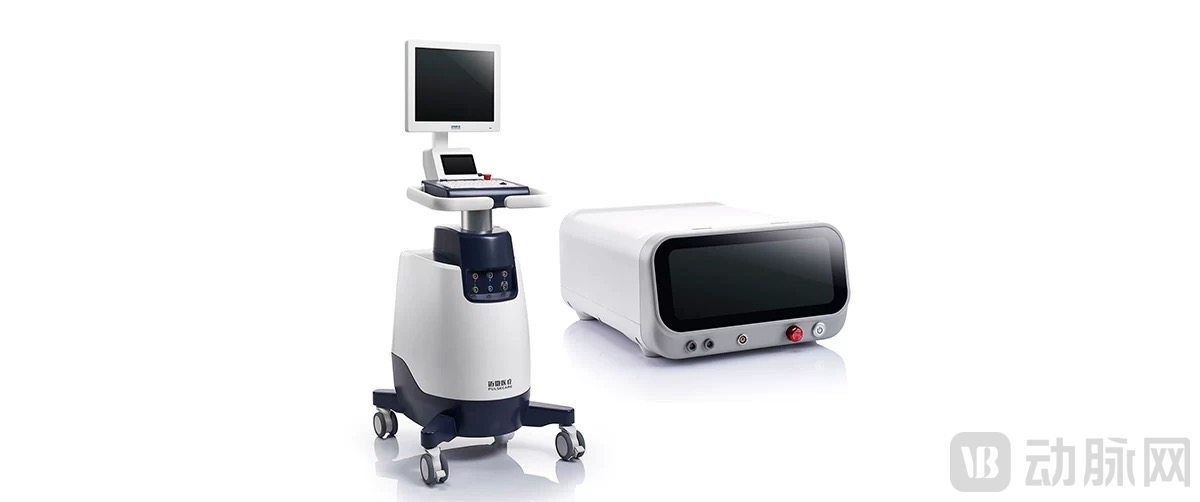
In recent years, the emergence of pulsed field ablation (PFA) technology has undoubtedly sparked a wave of innovation in the cardiac electrophysiology industry. Although humans began exploring the application of irreversible electroporation (IRE) technology in tumor ablation therapy at the end of the last century, it was not until around 2010 that people discovered the advantages of IRE in myocardial tissue ablation, such as high efficiency and high tissue selectivity, and gradually began to explore its potential clinical applications in the field of cardiac electrophysiological ablation. In 2018, Professor Reddy from Mount Sinai Hospital in the United States conducted the world's first clinical study on PFA for atrial fibrillation (using products from Farapulse, Inc., which was later acquired by Boston Scientific). This study ushered in a new era of ultra-fast, tissue-specific ablation for atrial fibrillation and marked the beginning of global enthusiasm for PFA-based atrial fibrillation ablation therapy.
Despite the rapid global advancement in clinical research and application of Pulsed Field Ablation (PFA) technology, with related products successively approved for market launch both domestically and internationally, innovation in PFA technology is still in its early stages. Based on existing literature, current PFA technology faces the following clinical challenges: 1. Significant neuromuscular stimulation, necessitating stringent anesthesia requirements; 2. Risk of hemolysis due to red blood cell damage; 3. Risk of microvascular embolism and stroke caused by gas formation from electrical discharge in the blood.
The root cause of the aforementioned issues lies in the widespread adoption of second-generation microsecond pulsed field ablation (μsPFA) technology. The high-voltage electrical pulses with microsecond-level pulse widths generate intense neuromuscular stimulation when discharged within the cardiac chambers. Furthermore, the high energy of individual microsecond pulses causes certain damage to red blood cells at the same location. Meanwhile, due to the stronger Joule heating and electrolytic effects associated with individual microsecond pulses, a greater volume of gas bubbles is released during discharge. Currently, both academic and clinical communities have gradually recognized that, in addition to improving catheter electrode contact and maneuverability through innovations in catheter design, third-generation nsPFA technology utilizing nanosecond pulses represents the future of PFA. By leveraging the extremely low neuromuscular stimulation, reduced bubble formation, and protective effects on red blood cells afforded by its nanosecond-level high-voltage pulses, nsPFA can effectively address the aforementioned clinical pain points associated with second-generation μsPFA technology.
Leveraging its keen ability to analyze and grasp clinical needs, outstanding engineering R&D capabilities and efficiency, as well as profound technical accumulation and advantages, PULSECARE has pioneered the global development of the first nanosecond Pulsed Field Ablation (nsPFA) system for atrial fibrillation and rapidly completed clinical trials. One-year follow-up data demonstrate excellent treatment success rates. The entire procedure can be independently performed by the cardiology team, and 100% of nsPFA procedures for atrial fibrillation can be conducted under an analgesia plus sedation anesthesia regimen (with patients remaining conscious). PULSECARE’s nsPFA product is gradually becoming a premium offering within the PFA industry. It is believed that in the upcoming commercialization phase, it will achieve satisfactory market performance, driven by its superior product strength and the efforts of its sales and marketing team.
Cardiac electrophysiology procedures primarily consist of two key components: 3D mapping and ablation. These procedures have always relied heavily on comprehensive solutions, and this holds true for Pulsed Field Ablation (PFA) products as well. The combination of a 3D mapping system and PFA will become the standard configuration for future electrophysiology solutions, functioning much like the "jab" and "cross" punches of a boxer. Pulsecare recognized the significance of 3D mapping systems early on and has already initiated in-house development of its own system. The self-developed system is expected to obtain regulatory approval by the end of 2025, at which point it will be rapidly commercialized in conjunction with Pulsecare’s highly competitive nsPFA technology, forming a powerful "combination punch" in comprehensive cardiac electrophysiology solutions. Furthermore, leveraging its founding team’s nearly 20 years of expertise in ultrasound research, Pulsecare is rapidly developing Intracardiac Echocardiography (ICE) products. This positions Pulsecare as one of the few companies in the industry capable of offering a complete cardiac electrophysiology solution that integrates nsPFA, 3D mapping, and ICE.
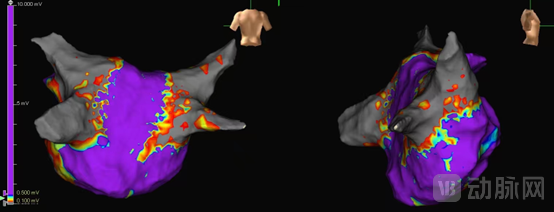
3D Mapping Results After nsPFA Pulmonary Vein Isolation
Hypertension is the most prevalent chronic disease and the primary risk factor for cardiovascular and cerebrovascular disorders. Given the large number of affected individuals (data from the National Center for Cardiovascular Diseases indicates approximately 245 million hypertension patients in China) and its potential to trigger various cardiovascular and cerebrovascular conditions, hypertension has become a major public health concern worldwide. Currently, the gold standard for hypertension treatment involves pharmacological therapy with various antihypertensive medications; however, patients often encounter issues related to drug resistance and adherence. Consequently, many patients fail to achieve effective blood pressure control through medication alone, leaving them at heightened risk for severe cardiovascular and cerebrovascular complications associated with hypertension.
The Emergence of RDN Technology Offers Patients with Resistant Hypertension an Opportunity for Blood Pressure ControlRenal Denervation (RDN) is a novel non-pharmacological technology for the treatment of resistant hypertension. In late April 2024, Medtronic’s Symplicity Spyral RDN System officially received marketing approval from the National Medical Products Administration (NMPA), making it the first minimally invasive medical device system for hypertension to be commercially launched in all three major markets: the United States, the European Union, and China. On August 6, 2024, the NMPA simultaneously approved the registration applications for renal artery radiofrequency ablation systems submitted by Suzhou Xinmai and Shanghai Meili Weiye. To date, three renal artery radiofrequency ablation systems have been launched in the Chinese market this year. In addition to products under review, numerous other RDN devices are currently in clinical trials or research and development stages within China. The RDN sector has thus become highly dynamic, ushering in a surge of intense competition as the industry enters its “spring” period.
RDN technology can be based on various ablation approaches, including radiofrequency, ultrasound, cryoablation, and chemical methods. Radiofrequency and ultrasound energy represent the mainstream technical pathways for RDN. Currently, all three RDN products approved in China are based on radiofrequency ablation. The debate between ultrasound and radiofrequency energy reached a peak last year. In August 2023, an FDA independent expert panel voted against approving Medtronic’s Symplicity Spyral RDN System, while recommending approval for Recor Medical’s ultrasound-based RDN system. However, in November 2023, both Recor’s Paradise Ultrasound RDN System and Medtronic’s Symplicity Spyral RF RDN System subsequently received FDA approval for market launch. Nevertheless, determining which technical pathway—radiofrequency or ultrasound—is superior, and which truly represents the future of RDN, will require further real-world data before a definitive judgment can be made.
Beyond the challenge of precise patient selection, another major clinical hurdle facing current renal denervation (RDN) technology is its cost-effectiveness compared with pharmacological therapy—a key barrier to future clinical adoption and commercialization. This issue fundamentally depends on the absolute blood pressure–lowering efficacy of RDN. Based on analyses of technical principles and limited data from the RADIOSOUND-HTN study, ultrasound-based RDN appears to offer superior antihypertensive effects. However, nearly all ultrasound RDN systems currently available in the industry lack the ability to modulate acoustic field distribution and rely on balloon cooling to protect the renal arterial wall, necessitating catheter exchange during the procedure, which prolongs operative time and increases procedural risk.
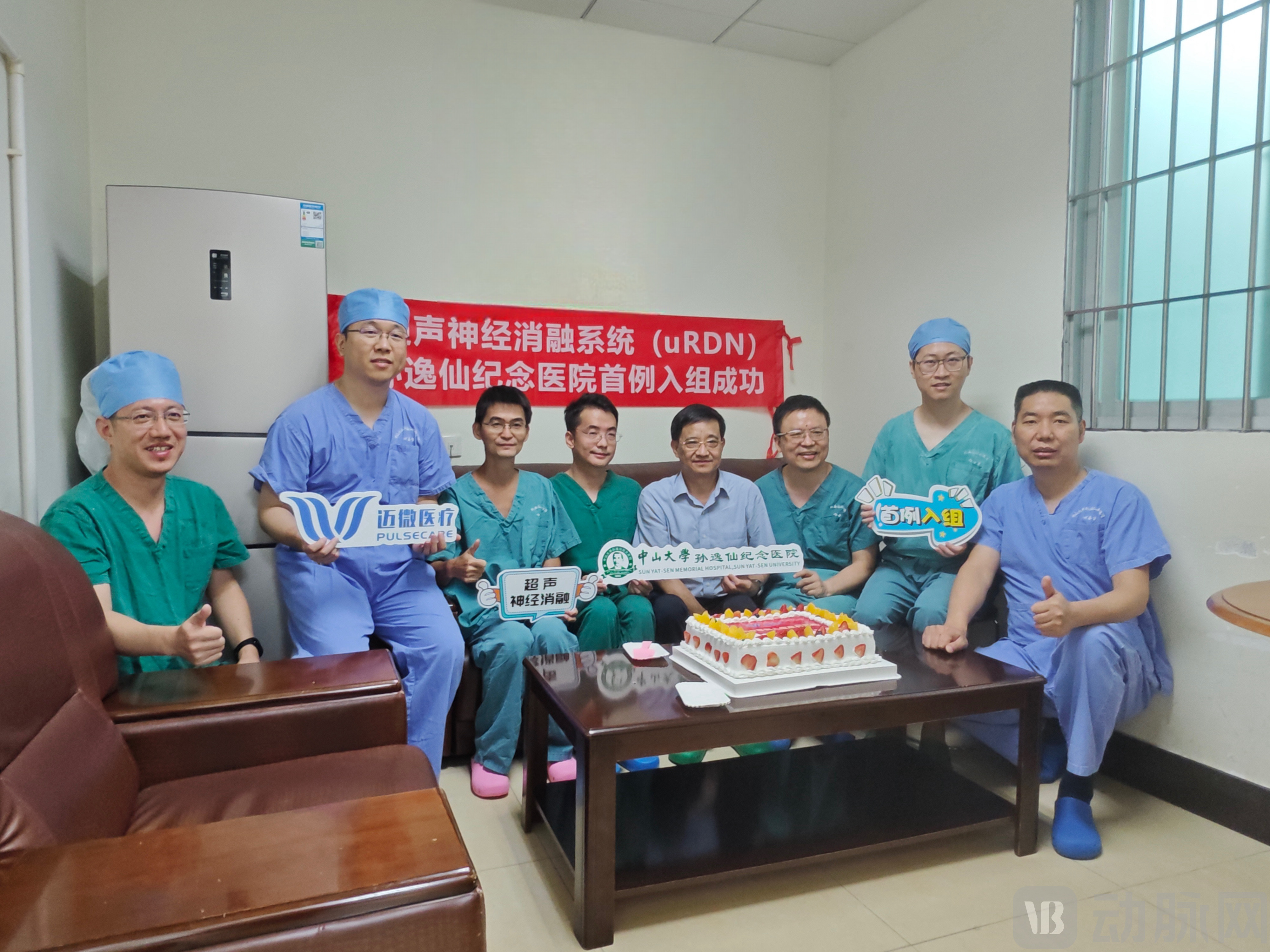
PULSECARE’s next-generation muRDN is the industry’s first ultrasound renal denervation (RDN) system capable of acoustic field modulation. Leveraging advanced ultrasound energy field modulation technology, the system enables completion of the entire procedure with a single catheter. Bilateral renal artery nerve ablation can be achieved within 10 minutes, effectively protecting the renal artery vessel wall while enhancing ablation efficiency and therapeutic outcomes. The product is currently in clinical trials and has demonstrated excellent clinical performance and data during procedures.The muRDN system is built upon nearly two decades of in-depth research by PULSECARE’s founding team in the field of ultrasound therapy. Closely addressing clinical needs for RDN and pain points associated with existing products, the system was successfully developed through a series of breakthrough engineering innovations—including energy control and monitoring, acoustic field modulation, transducer design, and catheter manufacturing processes—alongside extensive biomedical engineering studies. Through continuous iteration and evolution during clinical exploration, the muRDN holds promise for delivering superior clinical efficacy, reshaping the competitive landscape of RDN, and benefiting a broad population of patients with refractory hypertension.
Prior to this funding round, Pulsecare received exclusive angel investment from Tianfeng Capital in October 2021, which provided crucial support for the company’s product R&D and the initiation of clinical studies. Subsequently, in March 2023, it secured Pre-A round financing from Kangju Ventures and Shuimu Ventures, accelerating the regulatory clinical trials for its core products and advancing the development of other key offerings. This latest infusion of nearly RMB 100 million will further expedite the regulatory clinical trials for core products, lay the groundwork for their commercialization, and drive the development of other innovative products and associated high-value consumables. Pulsecare’s fundraising trajectory also underscores the exceptional efficiency and execution capabilities of its team.
Dr. Tan Jianwen, Founder of PULSECAREStatement: Pulsecare is deeply honored to have received the recognition and support of Tasly Capital and Delian Capital in this financing round. We extend our sincere gratitude to Tianfeng Capital, our angel investor, for its continued support and assistance, as well as for its additional investment in this round. Over the past three years since its establishment, Pulsecare has worked tirelessly while staying true to its original aspirations. Upholding the mission of “honoring the dedication of strivers and earning the trust of doctors and patients,” the company has adhered to technology-driven innovation as the core engine of its development, achieving multiple milestone accomplishments with remarkable efficiency. Both of the company’s core innovative therapeutic products have received high acclaim from clinical experts. These achievements would not have been possible without the strong support of our investors, the relentless efforts of our team, and the trust and recognition bestowed by numerous clinical experts. Following this round of financing, Pulsecare will accelerate the regulatory registration process for its core products, striving to obtain marketing authorization and commence commercialization at the earliest opportunity. Meanwhile, the company will advance clinical trials for other core products, ensuring that innovative technologies benefit patient health as soon as possible.
Wang Chen, Partner at Tasly CapitalStatement: We are delighted to invest in Shenzhen Pulsecare Medical Technology Co., Ltd. We highly appreciate the company’s R&D-driven model and the team’s rigorous work ethic. Minimally invasive interventional procedures are currently undergoing rapid development, and energy ablation, as one of the most fundamental technologies in this field, has long been a key area of focus for our team. Pulsecare is a leading enterprise in China that possesses two innovative energy ablation technologies: irreversible electroporation (IRE) and ultrasound.The nanosecond pulsed field ablation (nsPFA) system developed by Pulsecare utilizes multiple high-voltage, nanosecond-duration electric fields to disrupt tissue cell membranes through the mechanism of irreversible electroporation, causing leakage of intracellular contents and ultimately leading to apoptosis. Due to its differential sensitivity across tissue types, this technology enables full-thickness ablation of atrial myocardium, offering enhanced safety and efficacy. Meanwhile, the ultrasound renal denervation (RDN) system employs ultrasound energy for thermal ablation of renal sympathetic nerves. The ultrasound catheter, positioned within the renal artery, allows for both circumferential and focal ablation, holding promise for safer and more effective treatment compared to traditional radiofrequency energy. We will fully support the team led by Mr. Tan at Pulsecare in bringing benefits to patients suffering from atrial fibrillation and hypertension.
Li Zhongbao, Investment Director at Delian CapitalStatement: China’s innovative medical devices are built upon the core endowments of Chinese manufacturing, fully integrating the latest achievements from domestic multidisciplinary and cross-industry convergence, and continuously iterating to develop new products with global competitiveness. In the active medical device sector, the tracks of Pulsed Field Ablation (PFA) and Renal Denervation (RDN) have attracted numerous leading companies to actively establish their presence, driven by strong clinical demand and significant commercial value. In such competitive landscapes, only enterprises that combine differentiated technological strategies, leading product performance, and a global perspective can secure a foothold. Under these rigorous standards, we are delighted to have encountered Pulsecare Medical Technology Co., Ltd. (PULSECARE) and Dr. Tan’s team. Leveraging over two decades of profound expertise in the intersection of medicine and engineering, the company rapidly achieved engineering scale-up and product commercialization with limited resources, setting a benchmark for high efficiency in the current era of stock-based economy. Clinical data for the company’s related products have already demonstrated favorable efficacy and procedural accessibility, while its novel patent portfolio provides robust support for global market expansion. We look forward to the early market launch of Pulsecare’s products, bringing superior treatment options to patients with atrial fibrillation and hypertension worldwide.
Guan Jifeng, Founding Partner of Tianfeng CapitalStatement: As angel investors, we are delighted to continue participating in Pulsecare’s current round of financing. Over the past three years since its inception, Dr. Tan’s team has demonstrated the ability of a R&D-focused team to acquire and master core technologies, as well as outstanding capabilities in integrating engineering with medicine [Eng-Med Integration]. The successful closing of this financing round heralds the commercialization of Pulsecare’s nsPFA product for atrial fibrillation treatment and advances the clinical trials of its blockbuster RDN product. Pulsecare is now entering the 2.0 phase of [Eng-Med Integration], transitioning from clinical practice to commercial implementation, which is highly anticipated.
About PULSECARE
Pulsecare Medical Technology Co., Ltd. was established in July 2021, with its headquarters located in Shenzhen. The company’s team comprises senior experts from national-level platforms. Leveraging profound technical expertise accumulated over 22 years in the field of high-voltage pulsed technology and 18 years in ultrasound therapy, combined with exceptional execution capabilities and superior R&D efficiency, Pulsecare has rapidly developed four industry-leading multimodal energy platforms: pulsed field ablation (PFA), radiofrequency (RF), ultrasound, and plasma. Building upon these advanced multimodal energy platform technologies, the company has deployed a product portfolio that includes nanosecond Pulsed Field Ablation (nsPFA), ultrasound Renal Denervation (RDN), and multimodal tumor ablation systems. Capitalizing on its current technological leadership, Pulsecare is further advancing its overseas registration strategy and global patent layout, striving to become a world-class enterprise specializing in multimodal minimally invasive therapeutic devices.