

Santam Medical's IPO Prospectus: Pioneering an All-in-One Orthopedic Surgical Robot Platform with Over 20% Procedure Penetration

SanTan Medical
Developer of Surgical Positioning Devices and Surgical Robots
In recent years, continuous innovation in surgical robot technology has garnered unprecedented attention and emphasis from both the industry and policy sectors. Among these, orthopedic surgical robots have become a focal point of interest due to their clinical acceptance and commercial success in the global market.
China is facing an increasingly severe challenge of population aging, and the incidence of orthopedic diseases continues to rise.However, regional disparities in medical resources and the limited awareness of orthopedic surgery among the general population at the primary care level have resulted in a significantly lower rate of orthopedic surgical procedures in China compared to developed countries.. Taking joint replacement surgery as an example, authoritative data from PubMed shows that the rate of joint replacement surgeries in the United States is nine times that of China, a gap that underscores the urgency of improving orthopedic surgical techniques and promoting their adoption at the primary care level in our country.
In this context, orthopedic surgical robots have emerged as a critical tool for resolving this dilemma, leveraging their unique advantages. These systems not only optimize surgical plans through rational preoperative planning but also significantly enhance procedural precision and efficiency, thereby improving patient outcomes. More importantly, their advent has driven technological innovation in primary healthcare settings, paving the way for more equitable and accessible medical services.
Professor He Bin, The Second Affiliated Hospital of Zhejiang Chinese Medical University, withProfessor Xu Shuogui, Director of the Department of Emergency Medicine at Changhai Hospital Affiliated to the Second Military Medical UniversityGrounded in a deep understanding of clinical needs, we have jointly facilitated the translation of a research project into practical applications.SanTan MediclaThus, it was born. Through the deep optimization of medical image algorithms, precise breakthroughs in surgical navigation and positioning technology, and continuous exploration in the field of medical artificial intelligence,SanTan Medical has cumulatively obtained 92 invention patents, including 5 U.S. patents,Ranked among the leaders in the orthopedic surgical robotics industry.
Coverage of Application Scenarios for All Orthopedic Surgeries
Orthopedic surgeries can be subdivided into three categories, namelyJoints, Spine, and Trauma. The approaches to addressing these three categories of disorders vary in their respective focuses.
Trauma-related cases refer to injuries such as fractures caused by external forces. This category constitutes the largest proportion of orthopedic procedures. Open reduction and internal fixation (ORIF) for fractures requires direct visualization of the bone anatomy. However, most such surgeries are performed “through tissue” without direct visual access, relying instead on non-visual information provided by fluoroscopy. This approach reduces overall surgical efficiency, exposes surgeons to substantial radiation from repeated fluoroscopic imaging, and subjects patients to multiple needle punctures and procedural attempts. Surgical robots address these challenges by enabling precise, one-step procedure completion, thereby minimizing trauma and radiation exposure while improving surgical efficiency.
Given the proximity of critical nerves, the spinal cord, and blood vessels to the spine, surgical procedures in this region are more complex. Surgical robots for these procedures are primarily designed to enhance safety and precision. Joint surgeries often involve joint replacement procedures, such as knee and hip arthroplasty. Since joint mobility is closely linked to patients’ quality of life, robotic systems for joint surgeries focus on designing personalized surgical plans and providing surgeons with a user-friendly collaborative experience through their robotic arms.
Certainly, these three types of subspecialty surgeries also share commonalities in their demand for surgical robots:Safety, minimally invasive nature, improved surgical outcomes, and reduced surgical difficulty.
The complexity and specificity of orthopedic surgeries make it difficult for a single surgical robot to meet all requirements. Therefore, many companies choose to develop specialized robots for specific subspecialty procedures. SanTan Medical, however, has chosen a more challenging path—developing a comprehensive orthopedic surgical robot.
Xu Ziang, Director of Product and R&D Center, stated:SanTan Medical already possesses a comprehensive product line of orthopedic surgical robots capable of addressing procedures across all subspecialties.
In product design and planning, SanTan Medical has taken into account multiple dimensions.First is the physician user experience.As a capable assistant in the hands of surgeons, the core value of surgical robots lies not only in aiding patient treatment but also in providing busy orthopedic surgeons with operational convenience and efficiency, thereby reducing their burden during procedures—a key focus throughout the research and development process.
Secondly, from the perspective of hospital procurement.When evaluating surgical robots, hospitals prioritize not only product usability and intelligence but also return on investment. Therefore, designing a general-purpose surgical robot capable of meeting the needs of all orthopedic subspecialties can not only stand out in terms of cost-effectiveness but also effectively reduce hospital costs associated with training medical staff on multiple systems, thereby achieving optimal resource allocation.
Certainly, as a serious surgical treatment product, itsThe core remains meeting clinical needs.This is also the original aspiration behind physicians’ entrepreneurial ventures. With this goal in mind, SanTan Medical has developed the Zhiwei Tianyan product suite, centered on universality and ease of use, to benefit a broader population of patients and healthcare providers.
A Clinically Oriented Product System, Forging Three Core Technical Modules: “Eye, Hand, and Brain”
When it comes to Zhiwei Tianyan, one cannot help but mention the three major technical modules of SanTan Medical:“Tianyan,” “Zhishou,” and “Chaonao.”
First, “Tianyan” is a laser navigation product.In orthopedic surgery, the “eyes” refer to fluoroscopic visualization of internal anatomical information. Identifying and localizing lesions constitutes the critical first step in any surgical procedure. To minimize patient suffering and reduce the risk of complications, orthopedic surgeries must ensure precise localization of the affected area and be performed through the smallest possible incision. The underlying technology of the “Sky Eye” system is based on the “Bone Map” algorithm, which enables surgical guidance using a single fluoroscopic image.
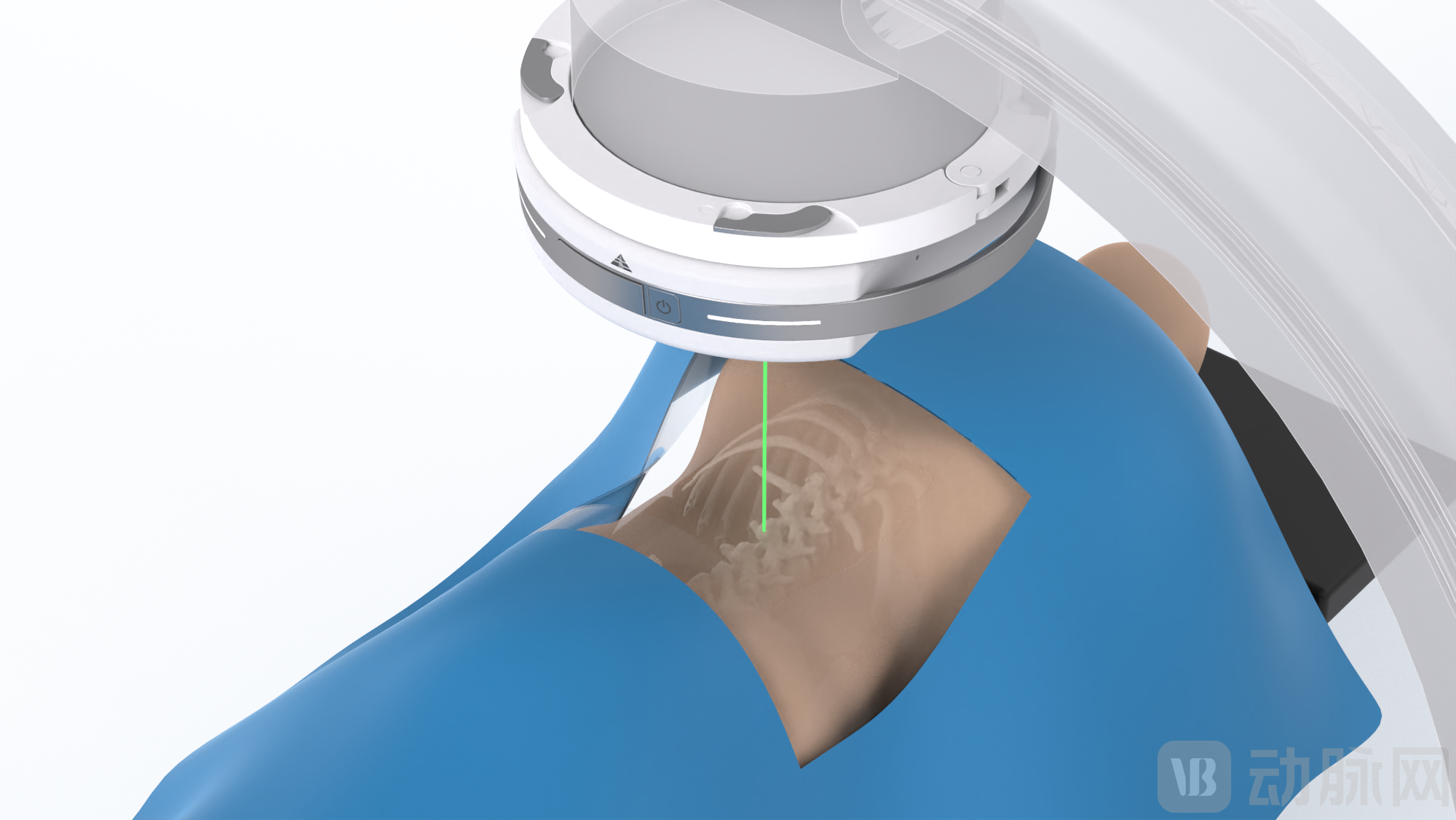
“Sky Eye Module” Diagram (Photo Provided by Interviewee)
Next is ZhiShou.Unlike the robotic arms of laparoscopic surgical robots, those of orthopedic surgical robots do not need to penetrate the human abdominal cavity. Consequently, their design often allows for more flexible application scenarios and greater potential for automation. ZhiShou employs collaborative robotic arms featuring optimized motion control strategies and joint force control technologies, enabling a smooth, human-hand-like tactile manipulation experience. Furthermore, these robotic arms offer exceptional stability and precision, thereby enhancing surgical success rates.
"Super Brain Module" is a collective term for image-based and AI-based algorithms.In addition to Tianyan’s single-image skeletal mapping mode, SanTan Medical has also developed a 2D stereoscopic algorithm that enables spatial computation and localization and guidance of the surgical target without preoperative CT, requiring only two C-arm fluoroscopy scans.
SanTan Medical’s core 2D-3D multimodal dimensionality-enhancement technology enables the establishment of a five-dimensional reference framework using one preoperative CT scan and two intraoperative fluoroscopy images, allowing physicians to perform surgical planning and visualize minimally invasive procedures within any desired surgical reference frame.
Furthermore, in surgical robots, AI algorithms serve as the "brain," evaluating surgical plans. This includes assessing the rationality of the proposed plan and determining whether superior alternatives exist.
In the future, the integration of three technologies will enable truly automated decision-making and execution in surgery, achieving genuine “fully automated surgery.”
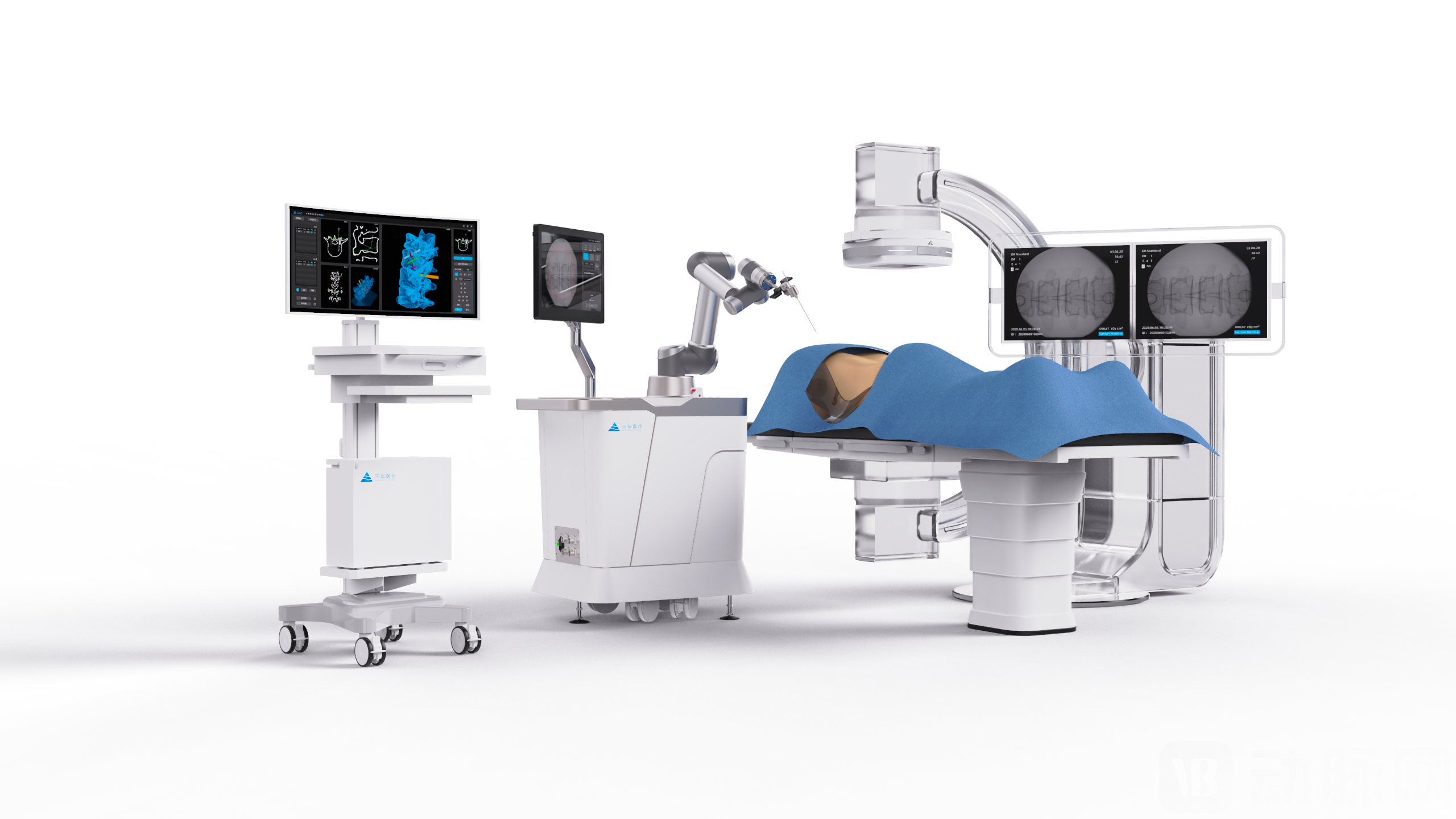
SanTan Medical’s Zhiwei Tianyan Surgical Guidance and Feedback System (Image provided by the interviewee)
Trauma surgery is characterized by its dissemination across various body regions, with flexible and diverse application scenarios. To enable primary care physicians to better utilize the product,The team has developed dozens of surgical procedures based on the product and established a standard operating procedure (SOP) and a clinical case library.Use the product through a combination of equipment and specialized education.
In the field of spinal surgery, since laser positioning technology and multimodal registration technology can both reduce the number of fluoroscopy procedures, the use of Zhiwei Tianyan eliminates the need to purchase expensive ancillary equipment such as intraoperative 3D C-arms and full carbon fiber tables.Ready to use out of the box, meeting maximized usage scenarios。
In the field of joints,The AI Brain module enables more personalized joint surgery planning, allowing patients to truly experience "seamless surgery."Meanwhile, introduce the concept of personalized surgery to primary healthcare institutions, moving away from “assembly-line” artificial joint implantation, so that more patients can benefit from advances in medical care.
Currently, Zhiwei Tianyan has gained market recognition due to its product pipeline suitable for widespread clinical application, strong cost-effectiveness, reasonable surgical fees, and a comprehensive service system. According to statistics,The surgical penetration rate of Zhiwei Tianyan has exceeded 20%,Specifically, within hospitals equipped with Zhiwei Tianyan systems, 20 out of every 100 orthopedic surgeries are performed using Zhiwei Tianyan, securing its leading position among domestic orthopedic surgical robots.
Challenges as Opportunities: Advancing Toward Fully Automated Surgical Robots
Since the debut of China’s first orthopedic navigation robot with independent intellectual property rights in 2010, the development of orthopedic surgical robots in China has entered a phase of rapid growth. In just over a decade, the number of registration certificates for orthopedic surgical robots in China has surged to more than 20, and leading enterprises with substantial scale have already emerged. Domestically produced orthopedic surgical robots have significantly surpassed imported products in terms of market share in China.
Not only in terms of quantity, but also in technology, domestically produced surgical robots have achieved numerous breakthroughs, particularly inGeneral-purpose robots, trauma reduction, and other niche sectors have taken the lead.. Having worked in the field of orthopedic surgical robots for over a decade, Xu Zi’ang has witnessed nearly the entire journey of the domestic orthopedic surgical robot market from its inception to its prosperity. In his view,Domestically produced orthopedic surgical robots are evolving toward greater ease of use and higher levels of intelligence, and internationally leading products are certain to emerge in the future.
However, he also clearly recognized that factors such as unclear industry policies, insufficient rigid demand from doctors and patients, and even a contraction in the capital market have posed significant challenges to the market. In response, SanTan Medical will continue to “strengthen its core competencies,” optimizing internal management and processes while leveraging the clinical application advantages of its products to actively expand its market presence.Achieve the industry’s first profitable operational level as soon as possible., accumulate strength steadily to await the arrival of a turning point.
In the future, SanTan Medical will continue to focus on the field of surgical robots, actively lay out AI and perioperative-related ecosystems, and continuously translate the latest medical academic hotspots into products. Through reasonable product and technology layouts, it strives to launch fully automatic orthopedic surgical robots as soon as possible, leading orthopedic surgery into an intelligent era.