

Yixin Life Sciences Files IPO Prospectus: Pioneering China's First Novel Organoid Culture Matrix and Launching Over 10 Universal Organ-on-a-Chip Platforms
Tumor organoids are a novel class of in vitro disease models. Compared with traditional 2D cell lines used in experimental settings, tumor organoids possess an unparalleled 3D heterogeneous structure and can recapitulate the patient’s tumor phenotype. Meanwhile, they circumvent the species differences inherent in animal models, significantly reducing experimental costs and timelines while improving clinical relevance. As such, they offer significant advantages in various applications, including drug development and personalized medication guidance.
Organ-on-a-Chip (Organoid-on-a-Chip) is an emerging technology resulting from the convergence of microfluidics and organoid technologies. Building upon traditional organoid culture methods, it leverages chip-based platforms to achieve precise control over the culture environment, enabling high-throughput cultivation and accurate simulation of complex physiological environments, such as the tumor microenvironment and respiratory barriers.
Specifically, organ-on-a-chip microfluidic devices enable three-dimensional culture of organoids by designing well-defined culture chambers and precisely controlling continuous flow. This approach effectively improves the success rate of organoid model construction and the accuracy of drug screening, offering enhanced controllability and biomimicry. Consequently, it facilitates dynamic continuous monitoring, integration of multiple biological functions within a single system, and high-throughput drug screening.
Guangzhou Yixin Life Science Co., Ltd. (hereinafter referred to as “Yixin Life Science”), established in July 2023, is a company dedicated to the development of full-process technologies for in vitro engineered organ-on-a-chip systems, providing more scientific and effective in vitro disease models for drug discovery in complex diseases such as rare diseases and cancer.Under the leadership of Professor Liu Jie, Founder and Chief Scientist, Yixin Life Science has achieved multiple innovations in culture materials, chip functionality, and microfluidic culture systems, launching organ-on-a-chip products based on microfluidics for exploring disease mechanisms and developing innovative drugs.
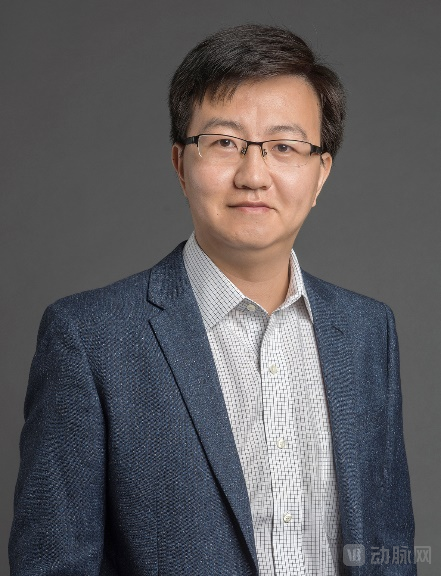
Liu Jie, Professor and Doctoral Supervisor at Sun Yat-sen University; Assistant Dean of the School of Biomedical Engineering; Ph.D. from Yale University (USA); Committee Member of the Regenerative Medicine Materials Branch, Chinese Society for Biomaterials; Committee Member of the Advanced Manufacturing of Biomaterials Branch, Chinese Society for Biomaterials; Founder and Chief Scientist of Yixin Life Science. He has presided over more than 20 research projects, including key R&D programs of the Ministry of Science and Technology of China, grants from the National Natural Science Foundation of China, and international cooperation projects funded by the Department of Science and Technology of Guangdong Province. He has published more than 80 research papers in prestigious international journals such as Nature Materials, Advanced Science, Biomaterials, and ACS Nano; he holds more than 10 authorized patents, with two successfully commercialized. His research interests include organoids and organ-on-a-chip technologies; nanomaterials for drug delivery and gene therapy; and stem cell-based regenerative medicine.
The key to drug development and precision therapy lies in the high-throughput construction of appropriate in vitro physiological models; however, traditional drug development and evaluation processes have certain limitations. For instance, 2D cell cultures struggle to simulate the tissue microenvironment and lack the dynamic conditions found in vivo. Animal tumor models make it difficult to monitor drug-cell interactions in real time and fail to meet the efficacy evaluation needs for novel cellular therapies, immunotherapies, and gene therapies. There is also a notable scarcity of models for drug development targeting neurological disorders.
Human tissues and organs are often composed of functional units with specialized structures, and interactions exist between these different functional units. Conventional three-dimensional (3D) models often struggle to simulate such complex microenvironments characterized by multi-structural, multi-scale, and multi-component features. By utilizing 3D scaffold materials, organoids enable stem cells to proliferate, undergo induced differentiation, and interact with neighboring cells within a biomimetic 3D environment, thereby forming in vitro models that closely resemble the structural and functional properties of native tissues.
Therefore,Yixin Life Sciences is dedicated to developing a new paradigm for drug discovery—the organ-on-a-chip microphysiological system—and building the world’s first end-to-end organ-on-a-chip platform. By leveraging organ-on-a-chip technology, we enable high-throughput, rapid, precise, and intelligent drug development, achieving an upgraded closed-loop integration of dry and wet lab experiments to disrupt traditional drug R&D processes.
In the organ-on-a-chip platforms developed by Yixin Life Science, microfluidic technology enables precise control over fluid dynamics, mechanical forces, structural architecture, and compositional elements in vitro. Cells can be cultured within customized microenvironments, where synergistic interactions among multiple components facilitate the simulation of tissue and organ functions, thereby enabling the construction of organ chips. Furthermore, through the design of microfluidic devices, biomimetic mechanical stimuli—such as fluid shear stress, cyclic strain, and mechanical compression—can be applied within the system, significantly expanding the range of regulatable in vitro biomimetic pathophysiological microenvironments.
However, the cross-disciplinary and interdisciplinary integration of microfluidics and organoid technologies places high demands on R&D teams—requiring not only expertise in biology and experience in medical-engineering convergence, but also proficiency in preclinical and clinical drug development tailored to organ-on-a-chip applications. Under the leadership of Professor Liu Jie, Guangzhou Yixin Life Science Co., Ltd. has assembled a team of scientists with strong backgrounds in medical-engineering convergence:The R&D team hails from prestigious universities such as Yale University, Sun Yat-sen University, and The Hong Kong University of Science and Technology. With interdisciplinary expertise in microfabrication, tissue engineering, materials science, and biology, the team is fully aligned with the organ-on-a-chip development framework.
Under the overarching goal of creating the world’s first end-to-end organ-on-a-chip platform, Guangzhou Yixin Life Science Co., Ltd. has made progressive breakthroughs in three key areas—organoid matrix materials, personalized multifunctional chips, and dynamic microfluidic culture systems—thereby gradually establishing a standardized and automated organ-on-a-chip microphysiological system.
In terms of matrix materials, the team at Guangzhou Yixin Life Science Co., Ltd. has innovatively launchedThe world’s first multifunctional novel organoid culture matrix material engineered for practical application is now commercially available.As the first novel organoid culture matrix gel in China, this product completely abandons the mouse tumor extraction-based manufacturing process. Developed using a new decellularization process derived from normal tissues, it features broad sourcing, low cost, controllable origins, high organoid culture efficiency, and high gel strength. Experimental results have demonstrated its favorable safety and stability, offering the potential to break the monopoly held by overseas matrix gel suppliers.
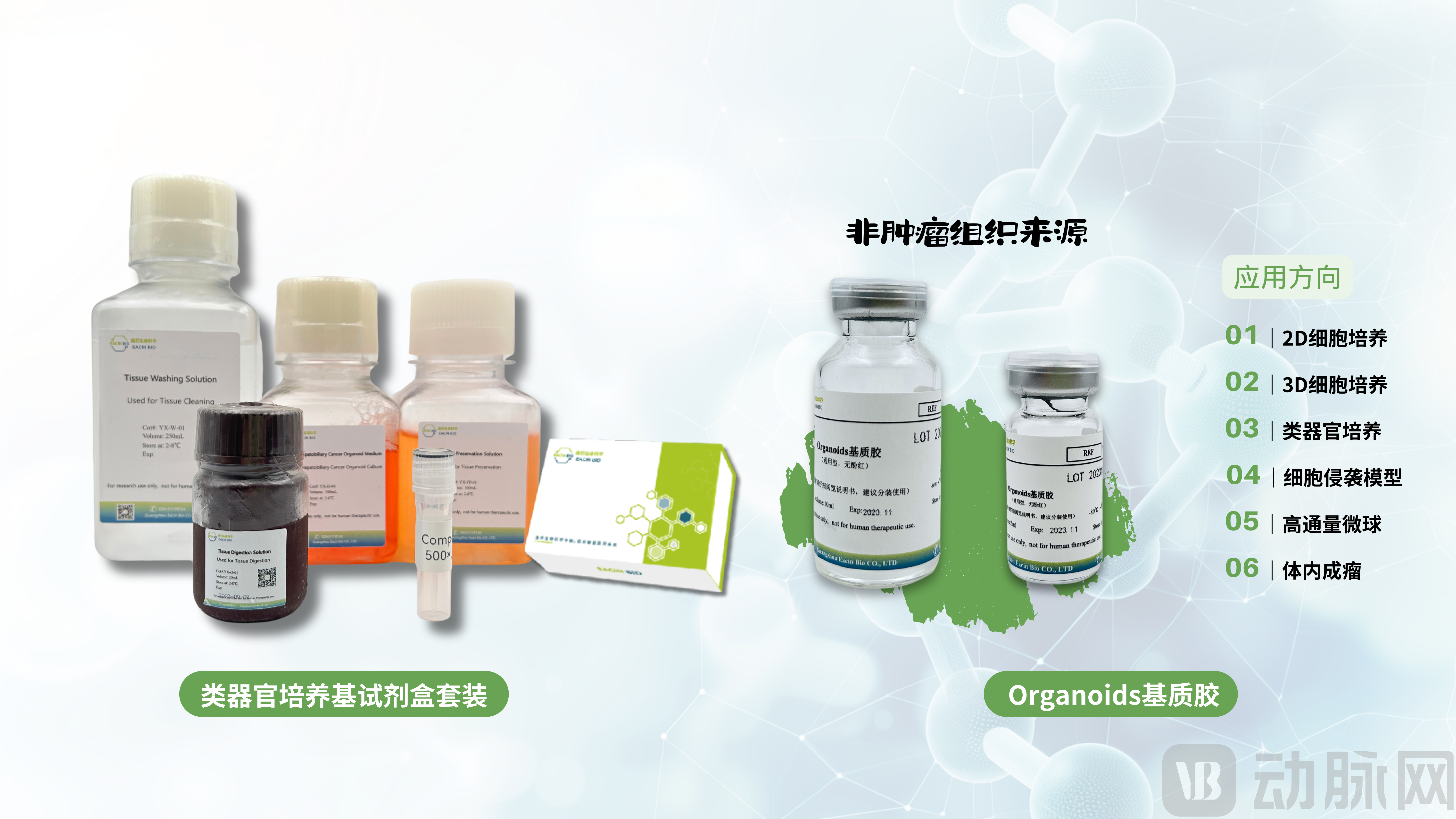
Yixin Life Science: China's First Novel Organoid Culture Matrix Gel
Meanwhile, Yixin Life Science has launched more than 20 proprietary organoid culture media kits capable of stable passaging and efficient expansion. These kits cover common tumor organoids as well as normal tissue models such as nasal mucosa, endometrium, and skin. Offering advantages including high ease of use, efficient organoid establishment, and strong stability, they provide standardized solutions for organoid culture.
In terms of the commercialization of organ-on-a-chip products, Guangzhou Yixin Life Science Co., Ltd. has developed, based on its end-to-end platform,More than 10 high-throughput, functionalized biomimetic universal chips are available, supporting both dynamic and static culture. Based on customers’ specific application scenarios and requirements, specialized chips can be efficiently developed within 2–3 months.In addition, Yixin Life Science is also focusing on disease areas involving in vitro models such as nasal mucosa-on-a-chip, vascularized organ-on-a-chip, skin-on-a-chip, and gut-on-a-chip, and is currently developing dedicated chips.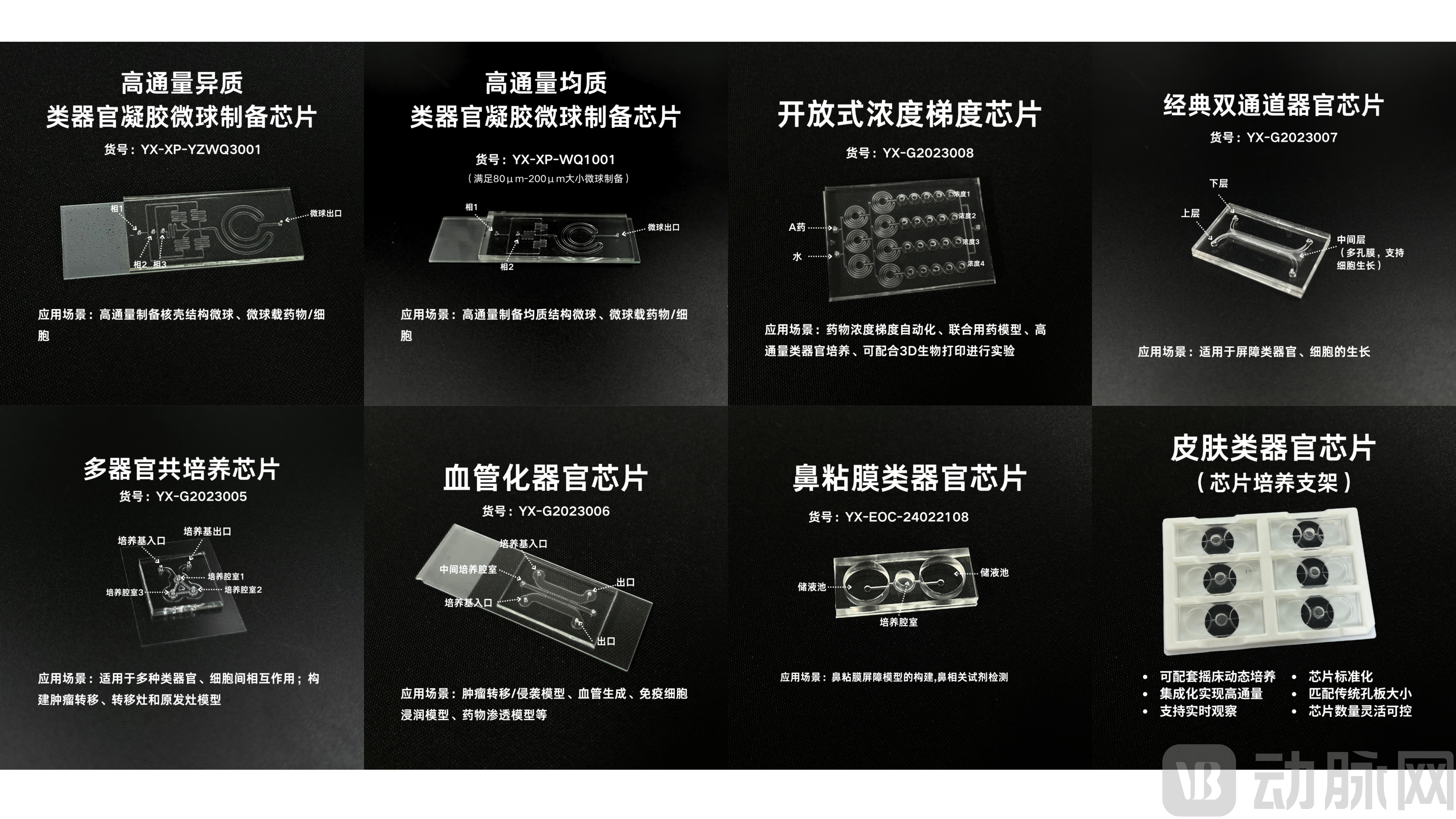
Yixin Life Sciences: Organ-on-a-Chip Solutions
Furthermore, Yixin Life Science is developing AI-empowered organ-on-a-chip platforms, including a drug delivery development platform based on the world’s first nasal mucosa organ-on-a-chip and an AI-driven drug screening platform based on high-throughput immune co-culture organ-on-a-chip technology.Professor Liu Jie stated, “By leveraging high-throughput organ-on-a-chip technology for R&D and commercialization, we will gradually build a drug development and screening platform. In this regard, organ-on-a-chip technology will not only integrate AI to empower wet-and-dry lab validation of new molecules using organoids but also support the future needs of AI-driven drug discovery for rapid pipeline screening. In the current landscape of AI-driven drug discovery, the overall data infrastructure is predominantly derived from 2D cell cultures, resulting in imprecise and incomplete input data that hinders the formation of a closed data loop. In contrast, the high-throughput 3D data generated by organ-on-a-chip systems, combined with effective wet-and-dry experimental data, can serve as iterative training material for AI-based drug screening platforms. Looking ahead, as organ-on-a-chip technology advances, significant breakthroughs are expected in pathological research areas such as 3D data-based cellular morphological analysis, dynamic data monitoring, and intercellular correlation studies.”
Leveraging innovations in organoid culture media and universal organ-on-a-chip technology, Guangzhou Yixin Life Science Co., Ltd. can reduce development cycles by more than fivefold and cut costs by 90% in fields such as drug development and clinical precision medicine.Overall, Yixin Life Science will build a comprehensive end-to-end organ-on-a-chip solution by focusing on three core offerings: ancillary products for organ-on-a-chip systems (such as culture media and personalized culture kits), technical services for organ-on-a-chip platforms, and AI-enabled organ-on-a-chip solutions for new drug discovery.Guangzhou Yixin Life Science Co., Ltd. has begun to commercialize its products and established collaborations with research institutions, pharmaceutical companies, and CROs within less than a year of its establishment.
Regarding standardization, Professor Liu Jie believes that both clinical expert consensus and engineering standardization are crucial: “In layman’s terms, engineering standardization refers to the lessons we bioengineering R&D professionals have distilled from experience—namely, how to minimize the number of personnel involved in the culture and fabrication of organoids. The individualized experiences and operational habits of each R&D staff member around me during model cultivation can affect the final outcomes, thereby hindering the achievement of standardization and accessibility. If we were to develop standardized, automated equipment or platforms covering the entire workflow of in vitro organoid production, this could well become the next industry-wide standard.”
Since its inception, Yixin Life Science has adhered to the principles of engineering and standardization, and the development of an automated organ-on-a-chip workstation (an integrated system for preparing 3D organ-culture microspheres) has been included in its R&D agenda.
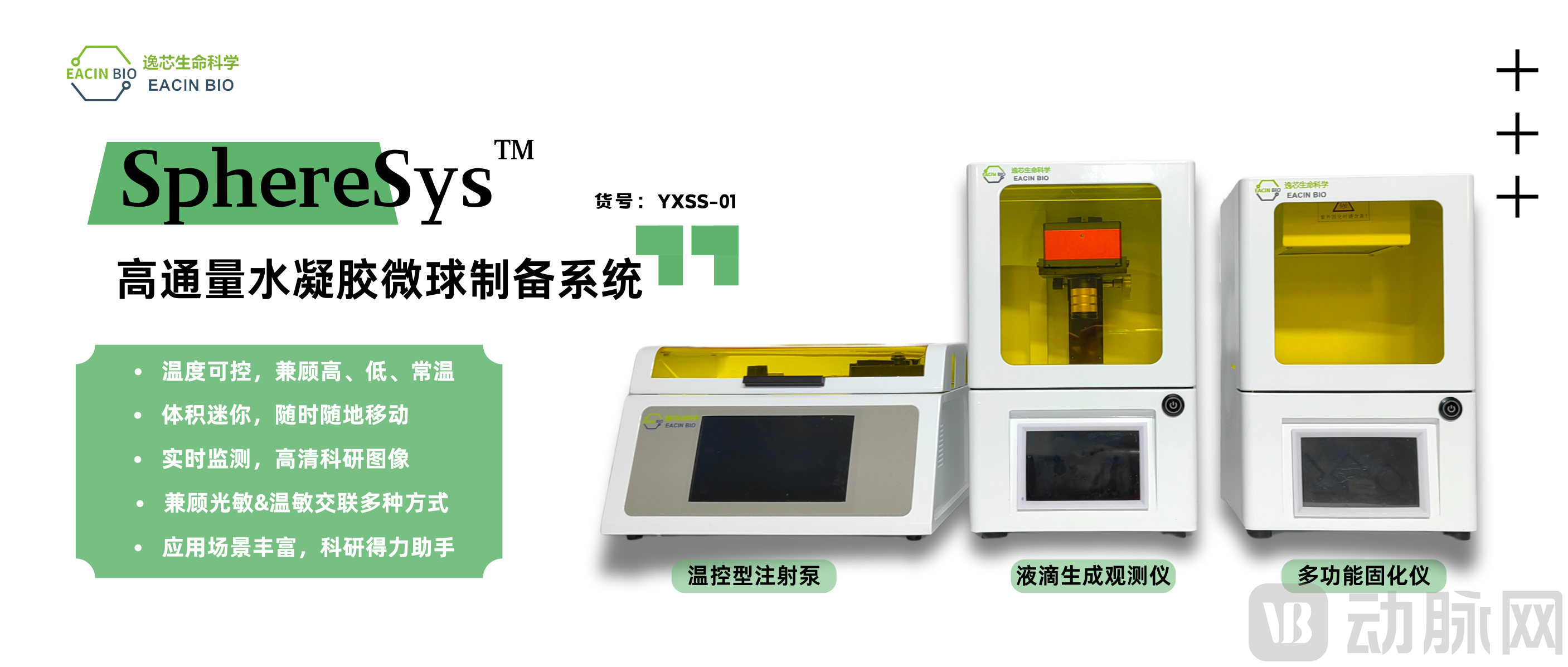
Yixin Life Science High-Throughput Hydrogel Microsphere Preparation System
Further exploration is ongoing. Previously, Professor Liu Jie’s team was the first to propose using a novel organoid culture matrix gel (modified decellularized extracellular matrix material) as a bioink for 3D bioprinting of tumor organoids and developed a high-throughput drug evaluation platform for tumor organoids.
The construction of tumor organoid models has historically been constrained by manual operations, posing challenges in experimental scale, result reliability, and other aspects. 3D bioprinting technology holds promise for replacing manual processes to enable the large-scale, standardized, and highly consistent fabrication of tumor organoid models. However, existing organoid culture materials (such as Matrigel) exhibit insufficient mechanical properties to meet the requirements of 3D bioprinting, while traditional bioinks (such as alginate) fail to provide an optimal growth environment for organoids.
In the experiments, the hydrogel formed by the novel organoid culture matrix gel demonstrated significantly superior performance in rheological and mechanical properties compared to Matrigel, with stability sufficient to meet the requirements for long-term organoid culture. Leveraging the reversible gelation property of the bioink at low temperatures, high-throughput, high-precision, and highly controllable 3D bioprinting can be achieved on a low-temperature platform, yielding a large quantity of uniformly sized and structurally intact gel spheres.
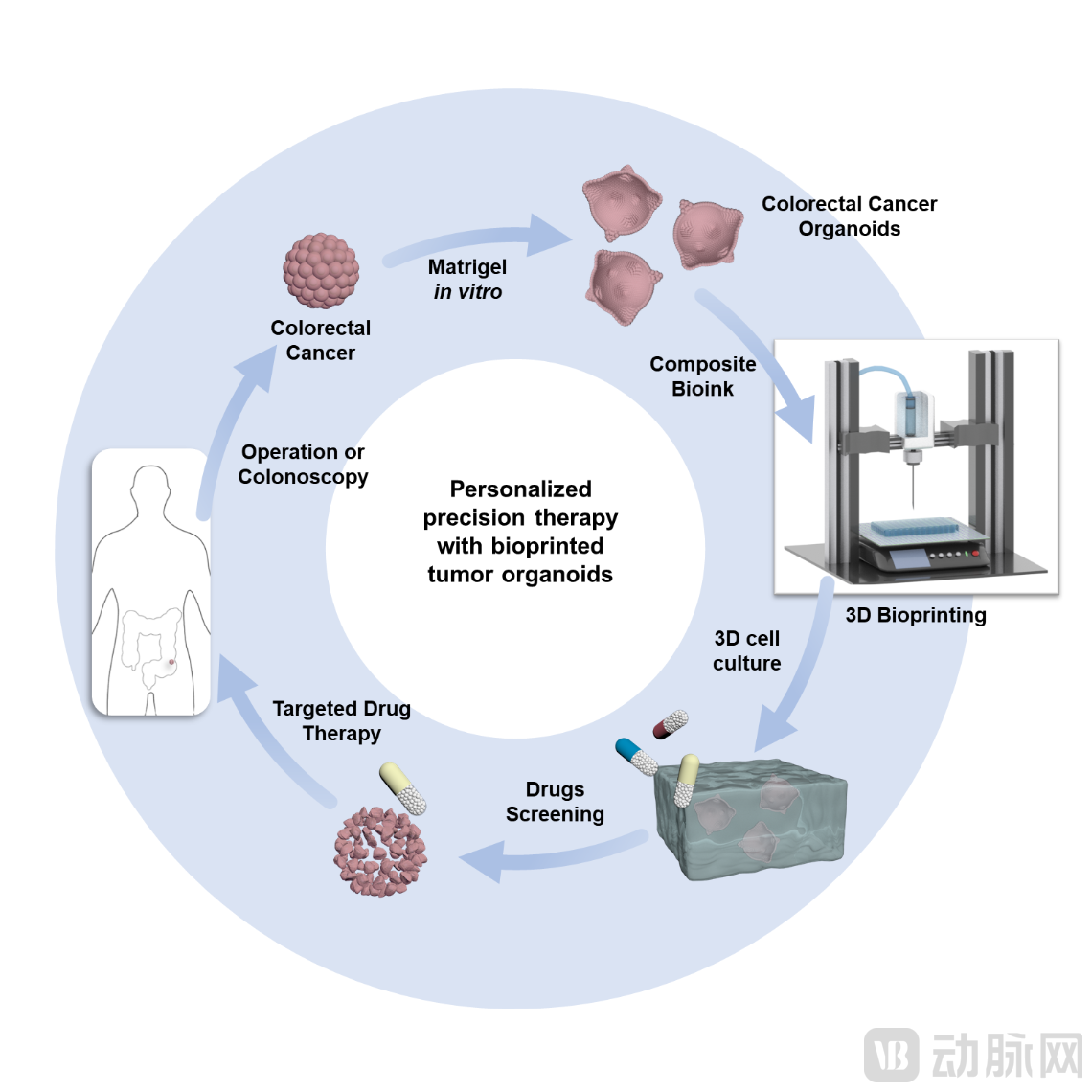
Schematic Diagram of the Construction of a High-Throughput Drug Evaluation Model Using Colorectal Cancer Organoids
In addition to its excellent 3D bioprinting performance, this bioink also demonstrates superior efficacy in culturing colorectal cancer organoids.Professor Liu Jie’s team combined tumor organoid models with high-throughput 3D bioprinting to construct a high-throughput drug evaluation model for colorectal cancer organoids. Even after undergoing the 3D bioprinting process, the organoids were still able to form multicellular structures with spatial heterogeneity.This structure resembles organoids cultured in Matrigel and primary tumor tissues, thereby effectively reflecting the spatial characteristics of patient tumor tissues. Meanwhile, the colorectal cancer organoids express multiple hallmark proteins of colorectal cancer, and their detailed recapitulation of disease features facilitates accurate simulation of patient responses to various therapeutic agents, including broad-spectrum drugs and targeted therapies.
As Professor Liu Jie stated, by integrating biomaterials, culture mechanisms, and innovations in chip design, Guangzhou Yixin Life Science Co., Ltd. can provide customers and future disease research with more differentiated organ-on-a-chip models. This will be a long and continuous journey of exploration, as well as a collaborative path to discovering new opportunities through partnership.