

Zhejiang's Medical Innovation Powerhouse Hits Milestone with 80th Healthcare IPO
In Less Than 4 Days, Zhejiang Welcomes Another Medical IPO!
Following the listing of small-molecule drug developer Tongyuankang Pharmaceutical on the Hong Kong Stock Exchange on August 20, WORK Medical Technology Group LTD (stock ticker: WOK; hereinafter referred to as “WORK Medical”), headquartered in Hangzhou, made its debut on the Nasdaq on the evening of August 23, with a market capitalization exceeding $50 million.
This is not only the second healthcare IPO in Zhejiang this month, but also the fourth such listing in the province this year (the other two being Lian Technology and Haisheng Pharmaceutical), bringing the total number of healthcare IPOs to 80.(Only enterprises with healthcare as their core business are included; detailed charts and explanations follow below)。According to data from the Artery Orange database, as of August 24, Zhejiang Province has led the nation in the number of healthcare IPOs this year.
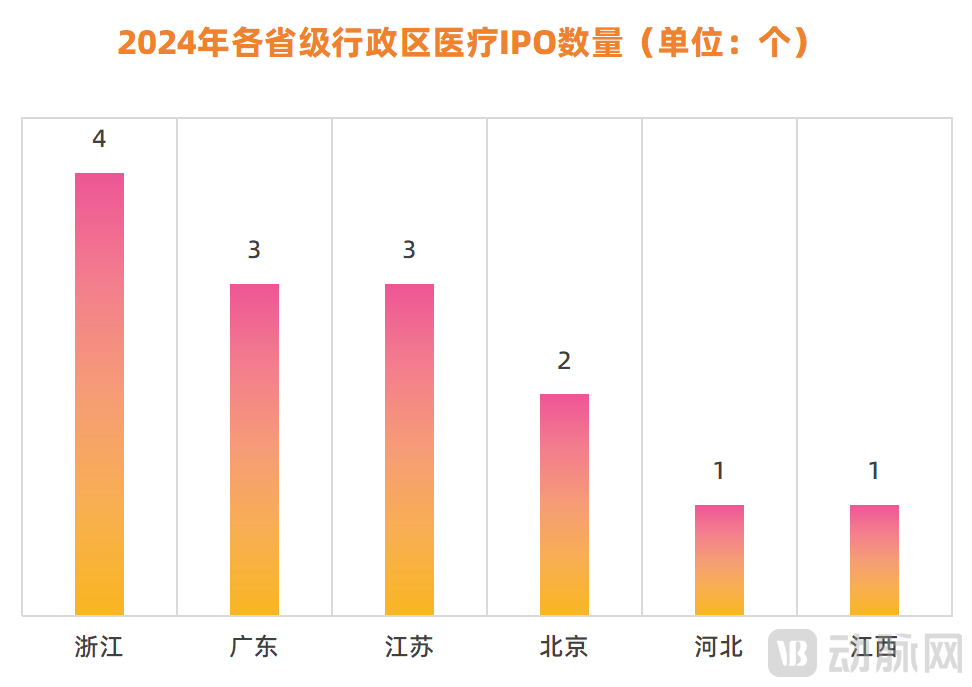
▲Data source: VCBeat Orange Database. The chart only displays regions with IPOs in the current year.
Data as of: August 24, 2024
It is worth noting that, contrary to common stereotypes,The four IPO-bound companies are not all from the provincial capital of Hangzhou; rather, they span four cities: Hangzhou, Huzhou, Quzhou, and Ningbo., and in the specialized segments of the healthcare sector, it encompasses four major pillars: innovative drugs, medical devices, precision medical equipment, and veterinary medicines, presenting a landscape of diversified growth.
Notably, even as the venture capital market remains in a downturn, Zhejiang Province ranked among the top nationwide in primary healthcare market financing activities this year (data as of August 24), with a total of 63 deals. Among these, innovative medical devices accounted for approximately 30%, biopharmaceuticals for about 35%, digital health for roughly 10%, and other sectors for around 25%, indicating a relatively balanced distribution across sub-sectors.
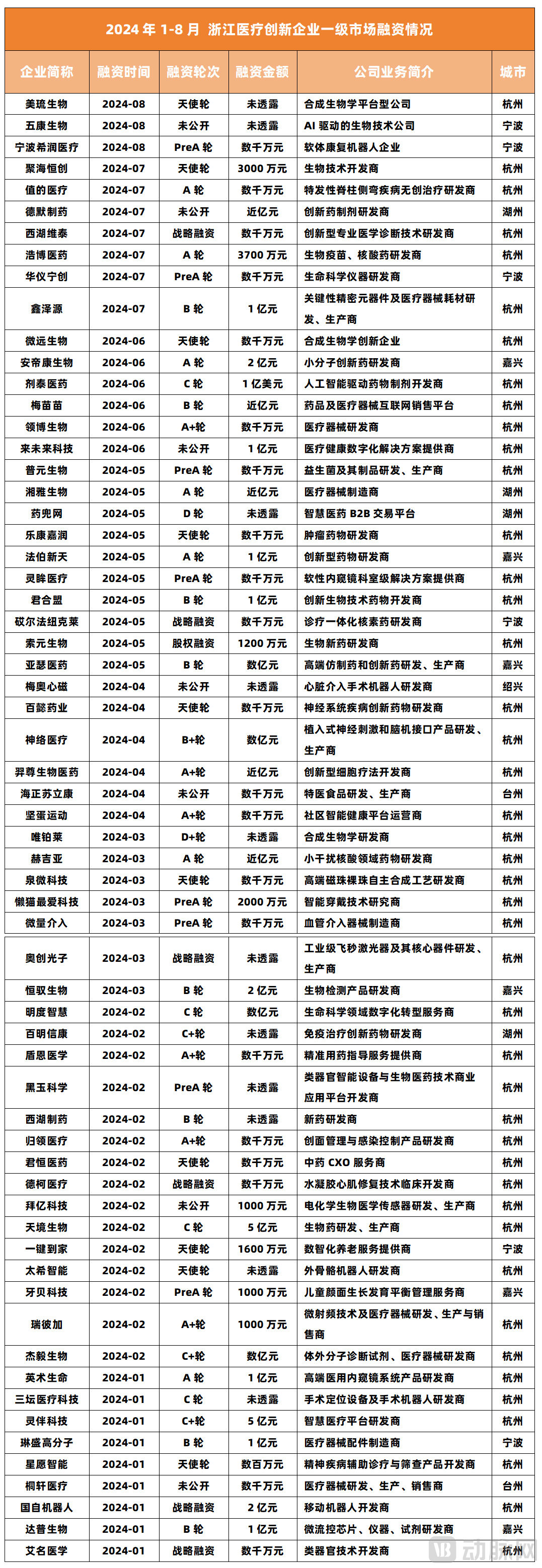
▲Data source: Artery Orange Database
Medical innovation achievements have also been highly fruitful. In 2023, Zhejiang Province saw a total of 26 newly approved innovative drugs (Class 1), improved new drugs (Class 2), and innovative medical devices, ranking first nationwide in terms of quantity. In the 2023 Top 100 Chinese Pharmaceutical Industries list, 15 companies from Zhejiang were included, marking the first time that the province has led the country in the number of listed enterprises, demonstrating strong development resilience.
Underpinning this is Zhejiang Province’s strong emphasis on the development of the medical innovation industry. For instance, in the biopharmaceutical sector, according to the official website of the Zhejiang Provincial People’s Government, as part of the strategic decisions and deployments to build a globally advanced manufacturing base,Zhejiang has explicitly included biopharmaceuticals in its landmark industrial chains., aiming to build a national biopharmaceutical manufacturing hub.
It is evident that the curtain has risen on the innovative development of Zhejiang’s healthcare industry, which is now advancing steadily into deeper waters.
Since the turn of the millennium, Zhejiang has been perceived as a major hub for the digital economy and one of China’s most developed regions for the private sector—home to numerous new-economy companies, as well as a large cohort of market-oriented venture capital (VC) firms and corporate venture capital (CVC) arms.
Taking the digital economy as an example, Zhejiang Province first proposed the “Digital Zhejiang” initiative in 2003 and has steadily advanced its digital economy construction for 21 years, achieving remarkable results and giving rise to global technology companies such as Alibaba. As a segment of the digital economy, the digital healthcare sector has seen the emergence of well-known enterprises including DXY, Jianhai Technology, Weimai, WeDoctor, and Zhuojian Technology.
What few have noticed is that Zhejiang has long been exerting efforts not only in digital health but also across the broader landscape of medical innovation—including innovative medical devices, biopharmaceuticals, pharmaceutical distribution, and healthcare services—and is now entering an acceleration phase as well as a period of harvesting phased achievements.
For instance, Zhejiang Province has made rapid progress in the medical device sector. “Over the five years from 2019 to the present, Zhejiang’s output value of medical devices has doubled, rising to fourth place nationwide,” stated Zhang Haijun, a member of the Party Leadership Group and Director of Drug Safety at the Zhejiang Provincial Medical Products Administration, at this year’s “Annual Enterprise Symposium hosted by the Zhejiang Institute for Medical Device Testing.” Medical devices are one of the key 500-billion-yuan industrial clusters in Zhejiang Province, characterized by “high growth potential and strong radiating effects.”
WORK Medical, which successfully completed its IPO on the Nasdaq on the evening of August 23, is a typical medical device company. According to its prospectus, the products of WORK Medical’s Chinese subsidiary include medical masks, arterial compression tourniquets, disposable breathing circuits, laryngeal mask airways, and endotracheal tubes, comprising a total of 21 product portfolios.
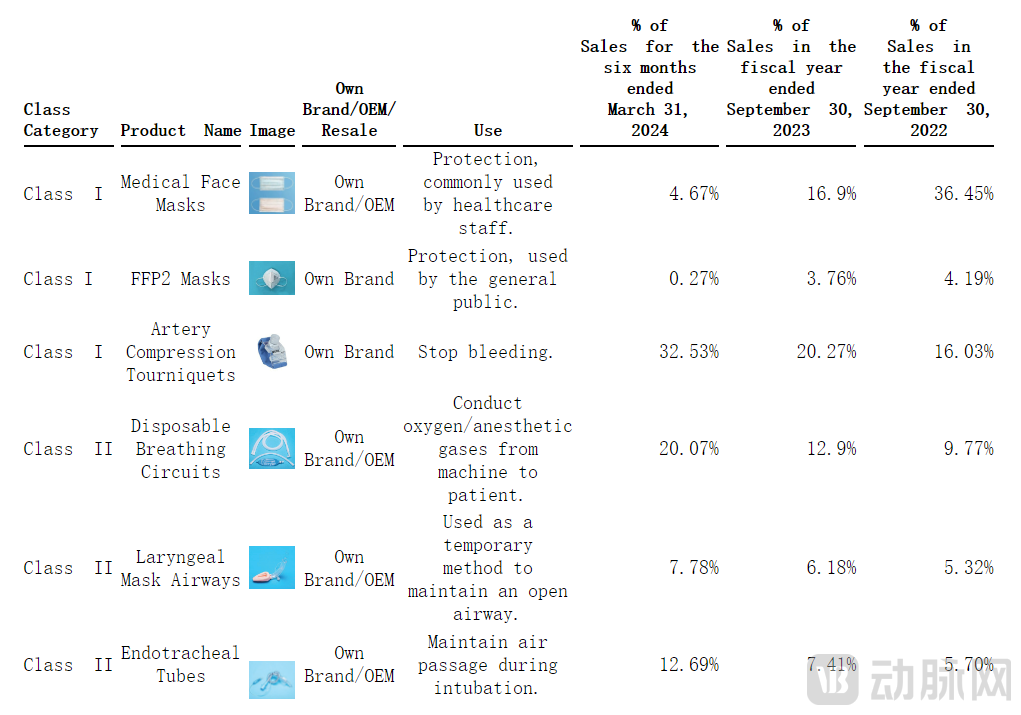
▲ Share of Sales for Selected Products Sold by WORK Medical | Source: Company Prospectus
It is worth noting that amid the current surge in overseas expansion, WORK Medical Technology Group LTD has made smooth progress in its global business. Currently, the company’s products have reached more than 30 countries across Asia, Africa, Europe, North America, South America, and Oceania, serving a broad global customer base. According to its prospectus, as of March 31, 2024, WORK Medical had 913 customers, including 42 direct end-user customers, 849 domestic distributors, and 22 export distributors.
In terms of revenue, WORK Medical Technology Group LTD reported revenues of US$19.7112 million and US$13.5659 million in fiscal years 2022 and 2023, respectively, and US$5.3090 million in the first half of fiscal year 2024.
The biomedical sector is a key focus area for Zhejiang Province, with frequent policy releases. For instance, at the end of 2023, the Office of the Leading Group for High-Quality Development of Manufacturing in Zhejiang Province issued the “Several Measures to Support Innovative Development of the Biopharmaceutical Industry.” The document outlines ten major measures, including “establishing high-level innovation platforms,” “concentrating efforts on breakthroughs in core key technologies,” “promoting clinical research and achievement translation,” and “facilitating the clinical use and broader application of innovative products.” These measures provide multidimensional support to the industry across areas such as translation of scientific achievements, clinical promotion, breakthroughs in key technologies, and enterprise cultivation.
For example, Tongyuankang Pharma, which listed on the Hong Kong Stock Exchange on August 20, focuses primarily on the discovery, development, and commercialization of differentiated targeted therapies, with a core mission to address unmet clinical needs in oncology, particularly in lung cancer.
According to the prospectus, Tongyuan Kang Medicine has established a pipeline comprising 11 drug candidates, including TY-9591 (its core product), which is scheduled for imminent market launch, six products in clinical stages, and four products in preclinical stages. Among these, TY-9591, a third-generation EGFR-TKI, is a deuterated version of osimertinib. It not only retains the advantages of osimertinib but also blocks its metabolic sites, significantly reducing the formation of the metabolite TY-9591-D1 (AZ5104) and potentially widening the therapeutic window.
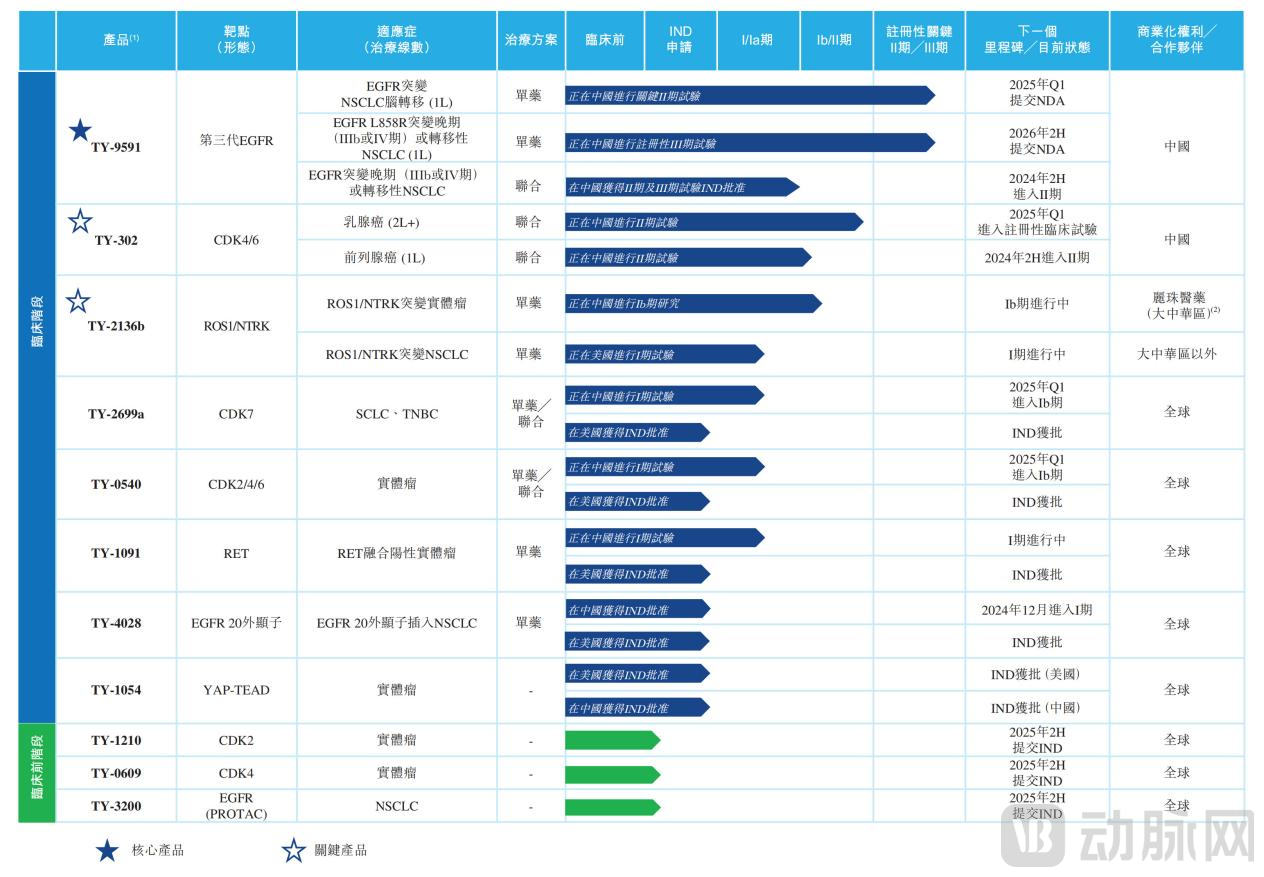
▲ Tongyuan Kang Pharmaceutical’s Drug Pipeline. Screenshot source: Corporate Prospectus
Currently, multiple first-line treatment trials of TY-9591 are underway, including a pivotal Phase II clinical trial of TY-9591 monotherapy for the first-line treatment of brain metastases in EGFR-mutant NSCLC; a registrational Phase III clinical trial of TY-9591 monotherapy for the first-line treatment of locally advanced or metastatic NSCLC with EGFR L858R mutation, with the New Drug Application (NDA) expected to be submitted in the second half of 2026; and Phase II and Phase III clinical trials of TY-9591 in combination with pemetrexed and cisplatin or carboplatin for the first-line treatment of advanced or metastatic EGFR-mutant NSCLC, all of which have received Investigational New Drug (IND) approval.
It is evident that the two healthcare companies, which went public in close succession, have both achieved notable success in their respective fields. Additionally, Haisheng Pharmaceutical, which listed in February this year, has emerged as an industry leader in the veterinary drug sector. The company has established a business framework centered on veterinary active pharmaceutical ingredients (APIs) with a focus on antimicrobial and antiparasitic agents, alongside human pharmaceutical APIs specializing in antipyretic analgesics and antibacterials.
One detail to note is that Zhejiang has always attached great importance to the listing of outstanding innovative enterprises.According to the notice issued in December 2023 by the General Office of the Zhejiang Provincial Committee of the Communist Party of China and the General Office of the Zhejiang Provincial People’s Government on the “Opinions on Strengthening the Principal Role of Enterprises in Innovation and Enhancing the Construction of an Industrial Technological Innovation System,” Zhejiang is providing diversified, relay-style financial services throughout the entire corporate life cycle. To support more technology-based enterprises in listing on capital markets such as the Main Board and the STAR Market, the province has adopted comprehensive financial service models, including industrial funds, specific bonds, and the “investment + loan + IPO sponsorship” approach.
With strong government support and sustained in-depth engagement by enterprises,To date, 80 medical enterprises in Zhejiang Province (with healthcare as their core business) have successfully completed initial public offerings (IPOs), while the number of IPOs by healthcare-related companies (including those for which healthcare is a significant business segment) has reached 93.The expansion of the “Listed Company Corps” will undoubtedly provide support for Zhejiang’s continued efforts to build a larger medical innovation ecosystem.
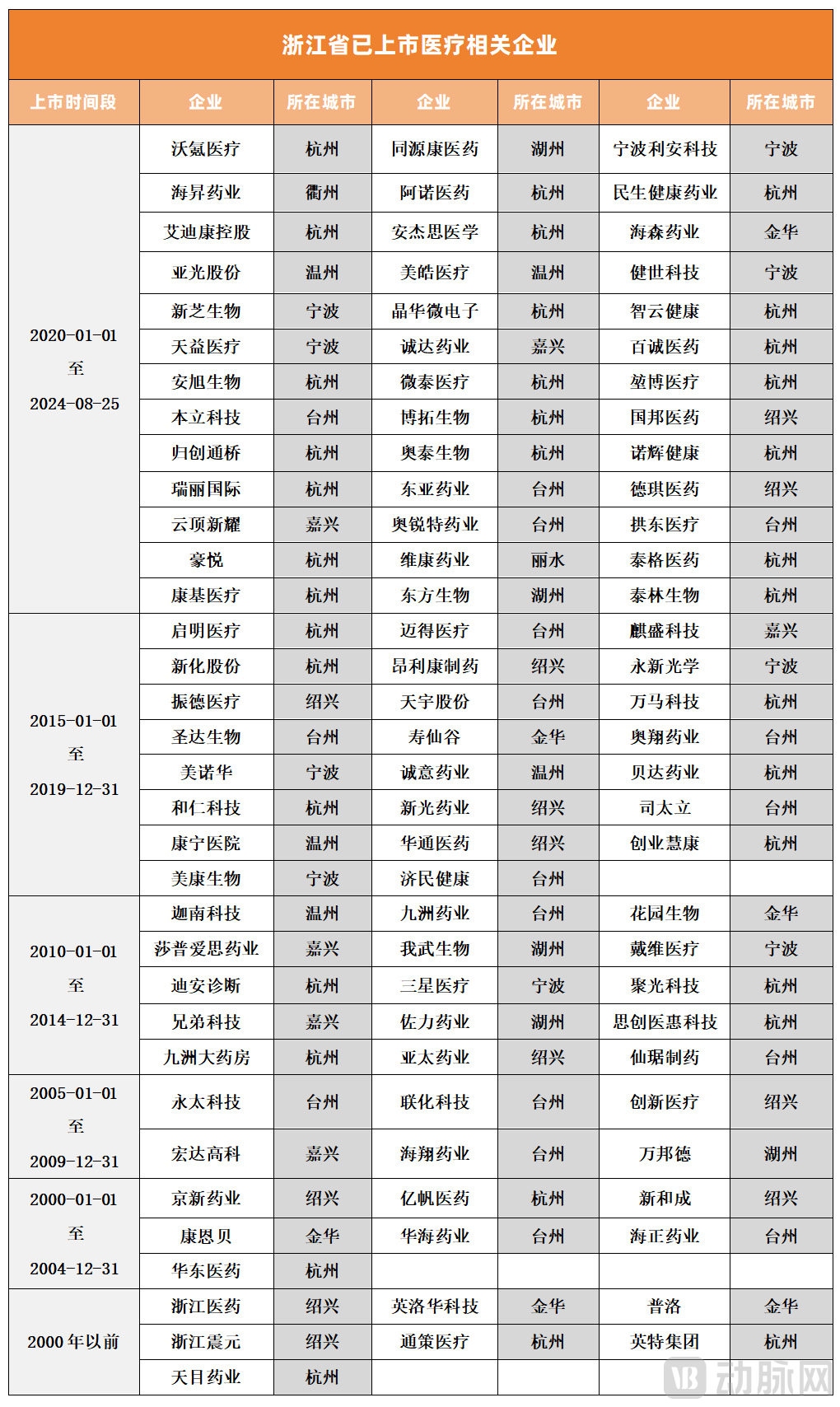
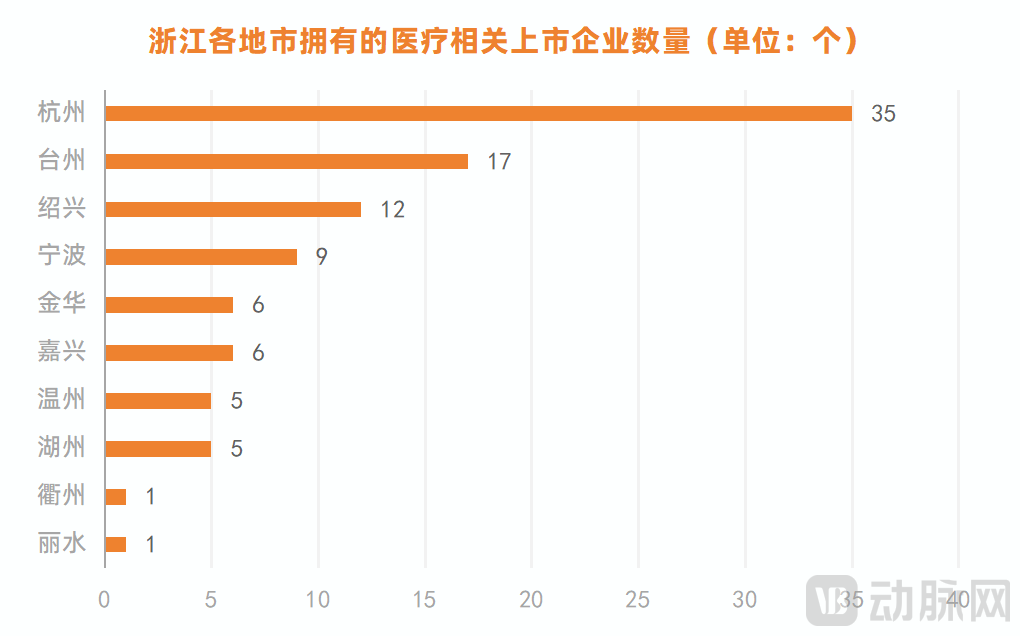
▲ Data source: VCBeat Orange Database; cities with a count of zero are excluded from the statistics.
Frequent IPOs and diversified successes across the healthcare sector clearly demonstrate that Zhejiang has carved out its own unique path in the long journey of medical innovation.
As previously mentioned, Zhejiang is continuously accelerating its pace in the field of medical innovation, bringing to the forefront a powerhouse of medical innovators and attracting numerous investment institutions to conduct due diligence and place their bets.
According to the VCBeat database, Zhejiang has been one of the provincial-level administrative regions with the highest number of financing events for medical innovation enterprises in China for five consecutive years, alongside Beijing, Shanghai, Jiangsu, and Guangdong.
This year, more than 30 investment institutions have made actual investments., including Alibaba Cloud, OrbiMed, Boyuan Capital, Hankang Capital, Hangzhou West Lake Science and Technology Innovation Investment, Mifang Health Fund, Ningbo Angel Guidance Fund, Qiming Venture Partners, Sichuan Rongle Investment, Tasly Capital, Cowin Capital, Ginkgo Valley Capital, Yuhang State-owned Investment, YuanSheng Venture Capital, and CMB International.
Following the announcement of financing news, emerging medical companies such as Andikang Biotech, Faber New Sky, DTI Pharma, Juhai Hengchuang, Junhemeng, Lekang Jiarun, Lingmou Medical, Lingbo Biotech, Meiliu Biotech, Puyuan Biotech, Weiyuan Biotech, Xihu Weitai, Xiangya Biotech, Xinze Yuan, and Zhide Medical have drawn industry attention.They are generally in the early stages of financing (among companies that raised funds this year, approximately 50% were at Series A or earlier)., but have achieved significant breakthroughs in their respective niche fields.
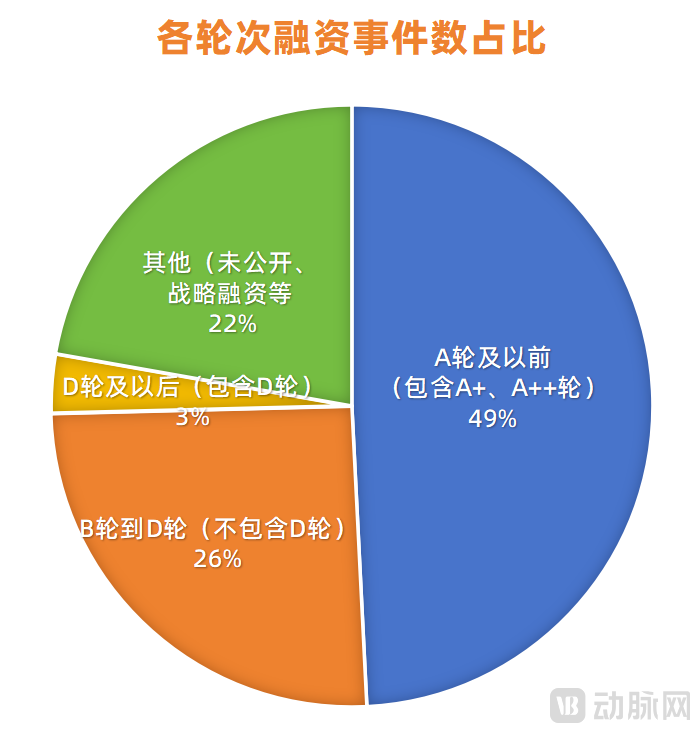
▲ Data source: VCBeat Orange Database
Having secured Series A fundingValue-Based HealthcareAs an example, the company has pioneered an innovative therapy for idiopathic scoliosis based on neuroscience and kinesiology—the “Brain Learning Training Scoliosis Correction System.” This approach centers on the central nervous system, reorganizing the “sensory input–central integration–functional output” process in the brains of patients with scoliosis. It correctly adjusts how the cerebral cortex processes sensory input information, thereby reducing or even eliminating the brain’s positional errors in spatial localization, ultimately achieving precise and effective rehabilitation of spinal curvature.
For example, having completed tens of millions of yuan in strategic financingWestlake Vitae, with innovative testing categories as its entry point, it provides mass spectrometry- and sequencing-based diagnostic and intervention solutions for maternal and child reproductive health and chronic disease populations. By establishing comprehensive medical solution pathways, it offers holistic solutions to clinical disciplines. Currently, Westlake Weita has established collaborations with nearly 1,000 hospitals, universities, and national-level research institutions, building a red blood cell folate metabolism database encompassing hundreds of thousands of individuals.
Looking again at those that have secured tens of millions of yuan in angel financingWeiyuan Bio, the company leverages intelligent enzyme evolution and high-throughput strain screening as its technological engines, and employs precise analysis and intelligent prediction as its technical means. By scientifically planning, simulating, and rationally designing hundreds of millions of natural and artificial enzyme components, it has established a leading domestic platform for enzyme library design and construction, as well as a cell factory engineering platform.
which completed a Pre-A financing round worth tens of millions of yuan this yearLingmou Medicalis accelerating the provision of more comprehensive, department-level solutions for flexible endoscopy. It is reported that the company’s self-developed and self-manufactured VC-1600 series full-high-definition electronic endoscopy system, along with its electronic upper and lower gastrointestinal endoscopes, officially received regulatory approval in April this year.
Beyond capital, the “source of fresh water” represented by scientific research achievements is also particularly important., it determines the depth and supply volume of future innovations.In response, Zhejiang Province has been continuously encouraging medical scientists in the field of medical technological innovation to leverage their research achievements to launch startups, thereby enabling more research outcomes to move out of laboratories and be transformed into innovative products.
Taking universities as an example, Zhejiang University, a prestigious 985 institution in Zhejiang Province, has taken the lead in establishing the Liangzhu Laboratory (Zhejiang Provincial Laboratory for Systems Medicine and Precision Diagnosis and Treatment). The laboratory focuses on four major research areas: “Major Neuropsychiatric Disorders,” “Genetic and Systemic Diseases,” “Hematologic and Immune Diseases,” and “Regenerative Medicine and Aging Intervention,” with the goal of becoming an innovation hub in the life and health industry.
On the government side,Various regions are also organizing the establishment of a new batch of research platforms related to medical innovation.For example, Jiaxing City has established a new type of research institution, the Nanhu Laboratory, which is led by six academicians and hosts multiple research platforms in the fields of life health and information technology. The laboratory explores joint breakthroughs in key technologies and promotes interdisciplinary integration and collaborative innovation in frontier disciplines. Similarly, Wenzhou City has built public service platforms such as the Oujiang Laboratory, which offers large-capacity biobanks and pharmaceutical and medical device translation platforms, providing scientific research services open to the entire province.
And this is precisely becoming the fertile ground for the growth of Shandong’s elite teams in medical entrepreneurship and innovation.
Since the concept of “new quality productive forces” was introduced in 2023, building a technologically advanced industrial sector with greater global competitiveness has become a national priority. Medical innovation is a key component in fostering these new quality productive forces, intensifying competition within the industry.
"Amid the surging wave of innovation, it is by no means easy to advance in depth into the industry."The reason lies in the fact that original medical innovation is characterized by its knowledge-intensive, talent-intensive, and capital-intensive nature, making it highly dependent on innovation resources and the innovation ecosystem.
Therefore, to break through in this round of fierce industrial competition, local governments must not only prioritize multifaceted support elements such as technology, talent, capital, and policy, but also demonstrate the patience to accompany the industry’s long-term growth and maintain an open mindset for collaborative progress with other regions.
Zhejiang is currently striving in this direction,Actively Build an Open and Shared Regional Collaborative SystemSpecifically, by developing industrial cooperation parks, “industrial enclaves,” and collaborative manufacturing bases for active pharmaceutical ingredients (APIs), the province guides orderly, tiered industrial coordination within its borders. It also leverages the integrated development of the Yangtze River Delta region to explore cross-regional collaborative regulatory frameworks and innovation cooperation mechanisms. Meanwhile, in terms of incubation ecosystems, various cities have established a series of industrial parks tailored to their local characteristics.
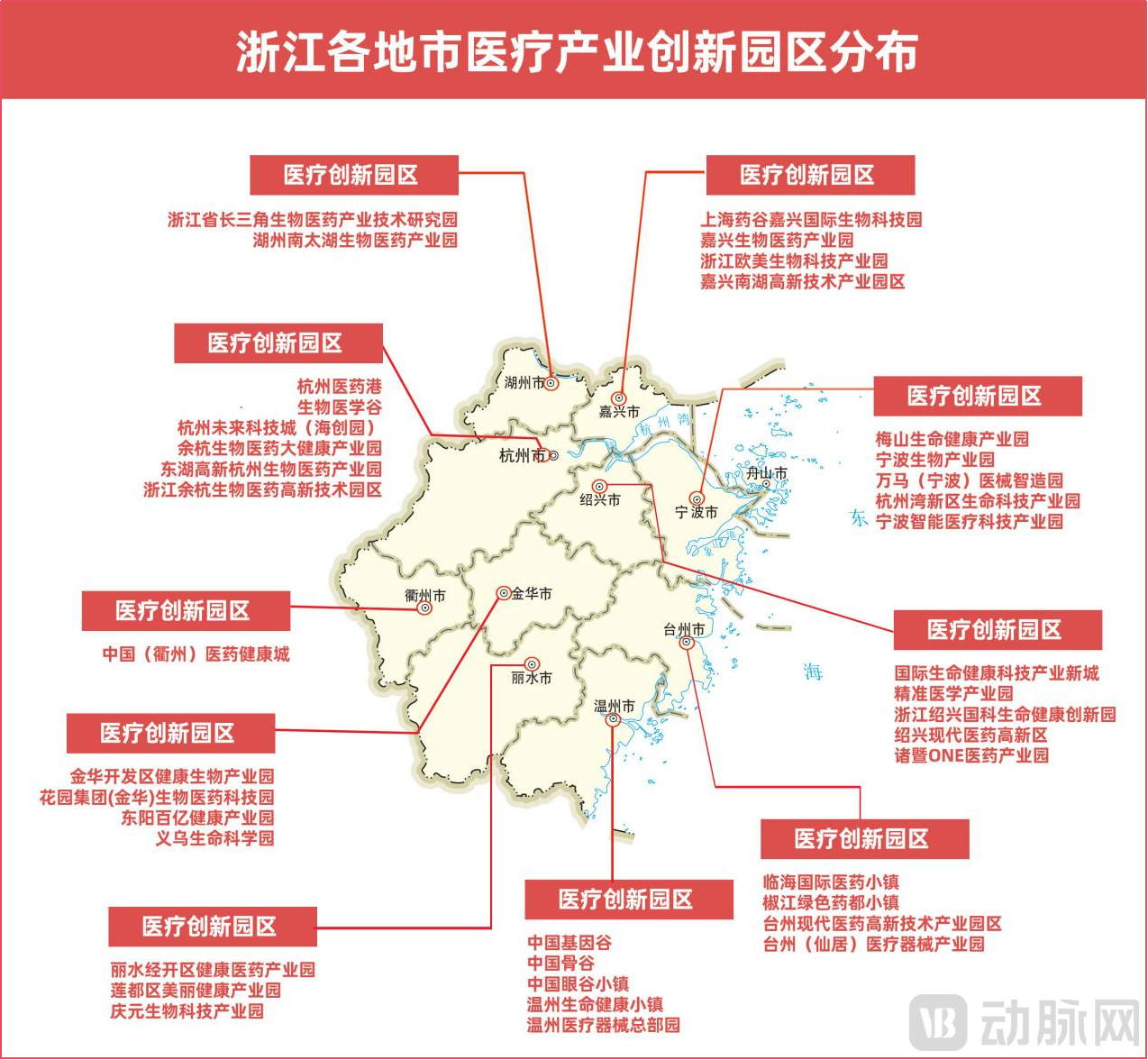
▲ Map source: National Geographic Information Public Service Platform
Park count is not comprehensive; graphic by VCBeat
Meanwhile, Zhejiang is also acceleratingEstablish a Tiered Growth Enterprise Incubation SystemAccording to the "14th Five-Year Plan for the Development of the Pharmaceutical Industry in Zhejiang Province," Zhejiang aims to build a group of "chain leader" enterprises with ecological dominance in industrial chains, and cultivate a number of world-class enterprises, "Single Champion" enterprises, "Hidden Champions" in niche sectors, and specialized, refined, distinctive, and innovative "Little Giant" enterprises, as well as foster innovative small and medium-sized enterprises by leveraging mass innovation spaces and incubators in the pharmaceutical field.
Of course,Building a More Competitive Product PortfolioThis is an inherent aspect of medical innovation. In this regard, Zhejiang Province has proposed to strengthen the brands of “Zhejiang-made Quality Drugs” and “Zhejiang-manufactured Devices,” and to promote the “Made in Zhejiang” brand within the pharmaceutical industry, thereby expanding into both domestic and international pharmaceutical markets. To this end, Zhejiang is accelerating the promotion and application of innovative pharmaceutical products by focusing on procurement of innovative drugs and medical devices, inclusion in the scope of medical insurance reimbursement, support for the first set (batch) of major technical equipment, and endorsement as “Zhejiang Crafted Premium Products.”
It is precisely under the strategy of promoting regional synergy, implementing tiered enterprise cultivation, and building comprehensive product systems that an increasing number of medical innovation and entrepreneurship ventures have emerged.
Going forward, as the wave of innovation grows even more turbulent, Zhejiang—already enjoying a first-mover advantage—is poised to see a surge in healthcare IPOs and give rise to a cohort of globally influential healthcare innovation giants on par with Alibaba.
Note:Unless otherwise specified, when multiple companies are mentioned together in a single sentence, they are listed in alphabetical order by the initial letters of their abbreviated names.
References:
1. “Zhejiang Government and Enterprises Discuss the Development Prospects of the Medical Device Industry” — China News Service
2. “How Was the ‘Zhejiang Ecosystem’ for Medical Technological Innovation Cultivated?” — Health News