

Neurent Medical Files for IPO Following FDA Approval of NeuroMark System for Chronic Rhinitis
Neurent Medical
Medical Device Developer
Chronic Rhinitis (CR) affects millions of patients in the United States and is a condition known to adversely impact quality of life and overall productivity. With its high prevalence, chronic rhinitis exerts varying degrees of negative effects on sleep, cognitive function, mood, quality of life, and academic or occupational performance, thereby emerging as a global public health concern.
Individuals with rhinitis are 1.5 to 4.5 times more likely than the general population to develop complications such as asthma, eczema, migraine, and depression. Relevant data indicate that one in four adults suffers from chronic rhinitis, and 80% of patients with moderate-to-severe rhinitis report that their daily activities are affected.
Currently, therapeutic approaches for chronic rhinitis primarily fall into three categories: pharmacological treatment, surgical intervention, and physical therapy, each of which has varying degrees of limitations. For instance, intranasal corticosteroids may cause local adverse reactions such as nasal dryness and epistaxis. Partial turbinectomy involves significant surgical trauma and may lead to complications like nasal dryness and epistaxis. Excessive resection of the inferior turbinates can result in empty nose syndrome, characterized by symptoms such as excessive nasal airflow, nasal dryness, and headache. Nasal irrigation may cause ear discomfort and aspiration of water, and its efficacy is limited in patients with severe disease.
To address the inherent limitations of traditional therapies, Neurent Medical has entered the field. Founded in 2014, the company is dedicated to developing innovative treatments for chronic inflammatory sinus diseases. Headquartered in Galway, Ireland, it also maintains an office in Boston, Massachusetts, USA. Its flagship product, the NeuroMark System, offers advantages including precise treatment, minimal invasiveness, and high levels of safety and patient comfort.
Neurent Medical’s team possesses extensive experience in medical technology, capital markets, and corporate management, ensuring both technological innovation and market adaptability. Most of its core members have years of industry experience at international giants such as Johnson & Johnson, Medtronic, and Abbott, along with expertise in entrepreneurship and project mergers and acquisitions.
Mark Fletcher, Chairman of the Board, possesses extensive industry experience in the treatment of nasal diseases. Mr. Fletcher previously served as President of Medtronic’s Surgical Technologies sector. During his seven-year tenure, he drove a significant $2 billion growth in the sector through disruptive innovation, aggressive expansion, and strategic acquisitions. Additionally, Mr. Fletcher served as President of Medtronic’s Ear, Nose, and Throat (ENT) division, where he focused on developing innovative ENT therapies. He also held the positions of Vice President/General Manager and Founder at Solan Ophthalmology, and Vice President at Xomed Surgical Products. Both companies were leaders in sinus surgical instrumentation and were acquired by Medtronic in 1999 for over $800 million. Furthermore, he serves on the boards of directors of multiple global startup medical technology companies and is the co-founder of Shruthi, an organization dedicated to providing ear health services to underserved populations in India.
Chief Executive Officer Eamon Brady has over 25 years of experience in the medical technology sector and holds more than 200 U.S. patents, either granted or pending. Eamon founded and served as CEO of Neuravi, a company specializing in interventional stroke care, which was acquired by Johnson & Johnson (JNJ) in April 2017. Additionally, Eamon previously held the positions of Global R&D Director and New Business Director at Abbott Vascular, where he led international teams. He was also a founding team member of MedNova Ltd., a pioneer in embolic protection for carotid artery stenting, and played a key role in facilitating its acquisition by Abbott Vascular.
Chief Financial Officer Declan Daly brings extensive senior management experience in the medical device, biotechnology, and healthcare sectors in the United States and Ireland. Previously, he served as Chief Financial Officer of INAMED Corporation (NASDAQ: IMDC) and Fibrocell Science, Inc. (NYSE: FCSC), during which time he raised over $250 million in capital and managed a $3.2 billion merger and acquisition transaction.
John Peterson, Vice President of Sales and Marketing, has over 10 years of experience in the medical device industry, spanning sales management, strategic and product marketing, business development, and finance. John has extensive experience in the ear, nose, and throat (ENT) field. During his tenure as Vice President of Business Development at Entellus Medical, he was involved in the company’s acquisition of Spirox and its subsequent sale to Stryker. Additionally, he served as Director of Business Development and Portfolio Strategy for Stryker ENT, where he participated in the acquisition of Arrinex.
Empowered by a robust core team, Neurent Medical is dedicated to innovating therapies for chronic inflammatory nasal diseases. The company has developed the NeuroMark system, which gently delivers controlled low-power radiofrequency energy to target the nasal cavity, disrupting parasympathetic nerve signals to reduce inflammatory responses and alleviate core symptoms such as congestion and rhinorrhea. With its unique design and advanced algorithmic control, the system enables physicians to precisely target and safely ablate overactive autonomic nerves that drive underlying inflammation, thereby relieving symptoms of chronic rhinitis and improving patients’ quality of life.
Currently available treatment methods have been proven effective in interrupting the posterior nasal nerve (PNN). However, not all patients experience adequate symptom relief. A significant potential factor contributing to this phenomenon is the failure of current devices to adequately accommodate natural anatomical variations, resulting in insufficient neural ablation.
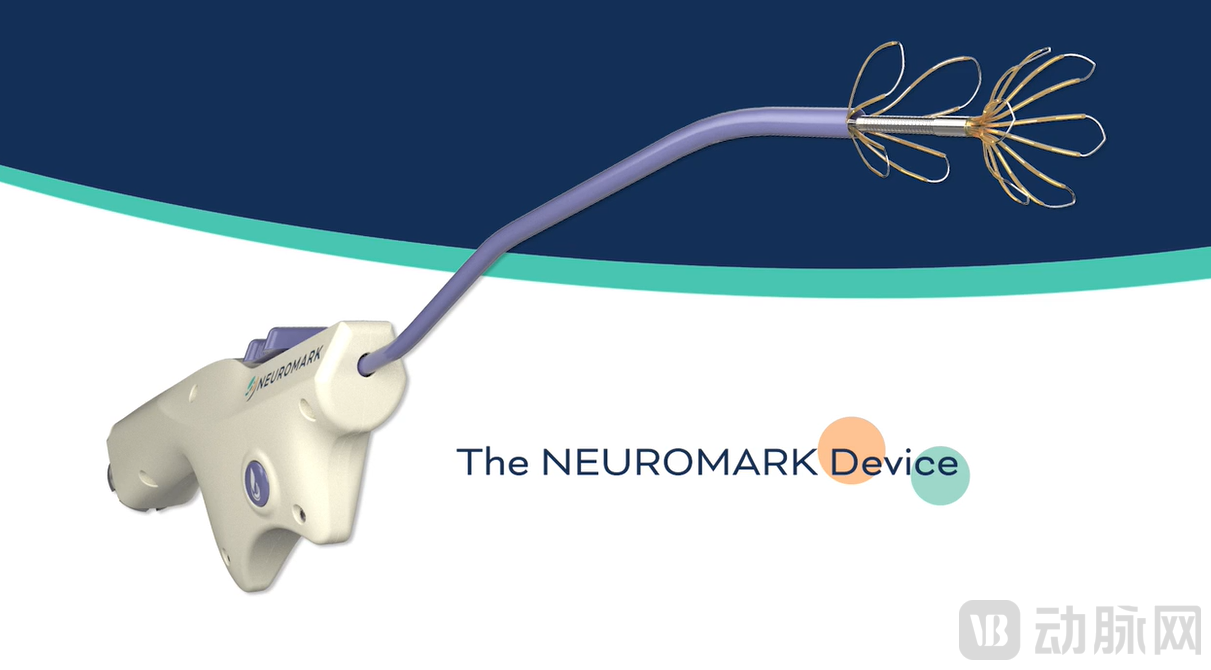
The NeuroMark system features a unique flexible electrode array geometry, enabling clinicians to achieve precise targeting of the posterior nasal nerve (PNN) and accessory pathways while adapting to diverse anatomical structures for enhanced patient comfort. This design allows the NeuroMark system to maximize therapeutic coverage.
NeuroMark System
Its proximal and distal flexible blades conform to the patient’s nasal anatomy, enabling maximal contact with the nerve-rich areas of the lateral nasal wall and allowing for more posterior positioning than other existing devices, thereby facilitating more effective access to the target neural regions.Its slender, flexible shaft allows physicians to adjust the device’s shape, enabling access even within complex anatomical structures.
In addition, the device distributes numerous micro-ablation points across a broad treatment area to ensure comprehensive therapy. These ablation points effectively disrupt the posterior nasal nerve pathways without damaging the mucosa or blood vessels, thereby preserving tissue integrity and function.
NeuroMark surgery is a minimally invasive procedure that serves as an effective treatment option for both patients with long-standing chronic rhinitis and those newly diagnosed with the condition. The procedure can be performed under local anesthesia in an outpatient setting and completed within a relatively short period of time.Due to the minimally invasive nature of the procedure, patients can typically resume their daily activities immediately after treatment, without the need for a prolonged recovery period.
The system’s unique design, biofeedback monitoring capabilities, and advanced algorithmic control enable physicians to simultaneously ablate multiple nerve branches with high anatomical precision, safety, and patient comfort, thereby delivering treatment tailored to each individual patient., thereby preventing both overtreatment and undertreatment. The system can precisely deliver radiofrequency energy to the target treatment area, creating micro-lesions without causing excessive damage to surrounding healthy tissue. The impedance threshold of each leaflet is monitored individually to ensure that the treatment adequately affects the target tissue and stops at the optimal time. Clinical studies conducted by the company have demonstrated a 100% procedural success rate.
On January 20, 2021, Neurent Medical completed a $25 million Series B financing round. According to Crunchbase, the company’s total funding reached $36 million after three rounds of financing.
On June 6, 2024, Neurent Medical announced the publication of positive 12-month results from the CLARITY clinical trial in *Laryngoscope Investigative Otolaryngology*. The study demonstrated that treatment with Neurent Medical’s NeuroMark System, a radiofrequency (RF) ablation device, was safe and significantly improved patients’ rhinitis symptoms and quality of life over the 12-month follow-up period.
The trial demonstrated that all five items of the Visual Analog Scale for Nasal Symptoms (VAS NSS) showed significant improvement from baseline at 6, 9, and 12 months (p<.0001). The reflective Total Nasal Symptom Score (rTNSS) also improved from baseline at all three time points (p<.0001). At 12 months, 91% of participants achieved the minimum clinically important difference (MCID), defined as a reduction in rTNSS of ≥1 point from baseline.
In terms of safety, the procedure demonstrated a consistent safety profile, with no serious adverse events related to the radiofrequency ablation device observed. Furthermore, patients’ total mean scores on the Mini Rhinoconjunctivitis Quality of Life Questionnaire (mini RQLQ) showed significant improvement from baseline at all three time points (p<.0001). At 12 months, 86% of participants achieved the minimal clinically important difference (MCID), defined as a reduction of ≥0.4 points from baseline in mini RQLQ scores.
As early as October 2021, the NeuroMark system received FDA 510(k) clearance. In February 2023, Neurent Medical announced that the system was planned for a limited market release. On November 13, 2023, Neurent Medical announced that the U.S. Centers for Medicare & Medicaid Services (CMS) had assigned a Category I Current Procedural Terminology (CPT®) reimbursement code to this breakthrough minimally invasive procedure designed to treat chronic rhinitis. Reimbursement under CPT code 31242 for Neurent Medical’s NeuroMark system became effective on January 1, 2024. Currently, specific procedures performed using the NeuroMark system are eligible for insurance reimbursement. As a significant milestone for the company in the chronic rhinitis treatment market, this development will further accelerate the market penetration of the NeuroMark system.