As applications in both clinical healthcare and consumer healthcare have encountered phased setbacks, the growth of the gene sequencing market appears to have peaked prematurely.Based on the published financial report data, major gene sequencer manufacturers have either experienced negative growth or lowered their full-year expectations.On August 23, MGI released its financial report for the first half of 2024.As the last earnings report to draw significant attention during this reporting period, MGI did not see its inflection point toward profitability amid a slowing market pace.。
Data shows that in the first half of 2024,In the first half of the year, the company achieved RMB 1.209 billion in revenue from its core business, including RMB 1.005 billion from its gene sequencer business, representing a year-on-year decrease of 8.4%. Among these figures, revenue from instruments and equipment declined by 12.26% year on year, while revenue from reagents and consumables decreased by 3.82% year on year. Operating profit remained negative.
Nevertheless, against this backdrop, MGI’s operational performance has not been without highlights. One figure in the semi-annual report deserves attention,“During the reporting period, the company installed 454 newly sold sequencers, setting a new record for sales installations in the same period historically.”Behind these figures, MGI’s self-developed portfolio of gene sequencers has seen strong market performance from its flagship new high-throughput and ultra-high-throughput models, including the DNBSEQ-T7 and DNBSEQ-T20×2. Driven by the migration of dual-platform customers from competing sequencing service providers to MGI’s platform, as well as significant improvements in product stability resulting from optimized sequencing reagents, revenue related to the DNBSEQ-T7 sequencing platform increased by 14.96% year-over-year, with a quarter-on-quarter growth of 29.02% in the second quarter. In addition, the DNBSEQ-G99, a low-to-medium throughput sequencer characterized by ultra-fast speed and flexible, user-friendly operation, has met the needs of most small-scale sequencing laboratories and demonstrated strong competitive advantages in clinical applications. Revenue associated with the DNBSEQ-G99 sequencing platform rose by 82.94% year-over-year, with a quarter-on-quarter increase of 45.55% in the second quarter.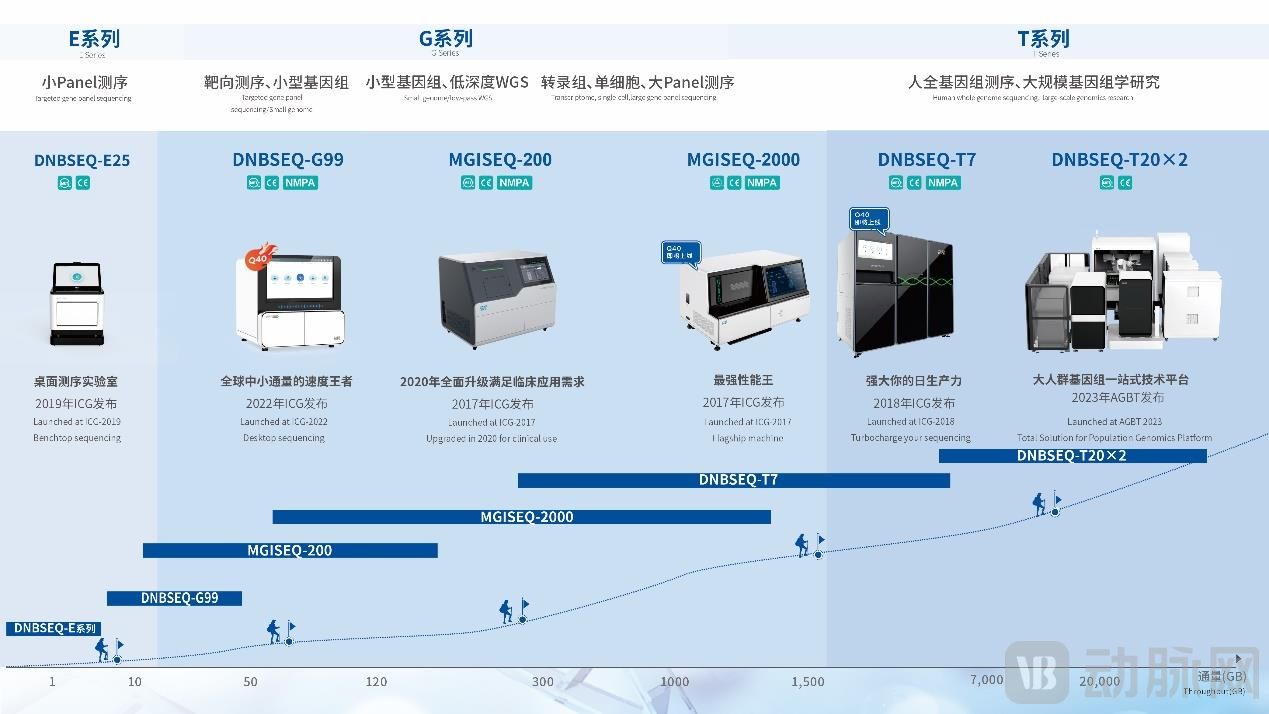 MGI’s Gene Sequencer Product Portfolio | Image Source: MGI 2024 Semi-Annual Report At least in terms of core commercialization metrics, MGI has basically stabilized its situation amid adversity in the third year after its IPO. More importantly, we should note thatThe industry ecosystem of gene sequencers has changed, with players and products rapidly diversifying, and a new order being reestablished.. In a changed market order, cognitive frameworks need to be redefined.
Continuously Deepening the Core Business
Let us first examine market competition under the old order. Gene sequencing entered the public eye only after high-throughput sequencing began to address clinical challenges such as newborn screening and precision oncology diagnostics. Prior to that, high-throughput sequencing had already brought genomics to the laboratory benches of more researchers. In a sense, high-throughput sequencing constitutes the core business for gene sequencer manufacturers. Whoever dominates high-throughput sequencing wins the market. Downstream applications of high-throughput sequencing are primarily divided into two sectors: scientific research and clinical practice, each reaching end users through specialized technical service providers.Another notable figure is that MGI’s gene sequencer business revenue increased by 23.61% quarter-on-quarter in the second quarter. MGI’s steady growth in installed base still largely stems from its core foundation, with research and clinical operations constituting the resilience of its business in a challenging environment.MGI originated as the gene sequencer development division of BGI Group, while its sibling company, BGI Genomics, is one of China’s leading professional providers of research and clinical gene sequencing services. Compared with manufacturers that started out by directly producing gene sequencers, MGI is closer to end users. MGI undoubtedly performs better in terms of grasping changes in user needs and maintaining a collaborative approach to development. This subtle difference has become MGI’s advantage in establishing a solid foothold in the core market for high-throughput sequencing.In the research application market for high-throughput sequencing, competition is most intense, and the pursuit of cutting-edge technology is perpetual. Genomics technologies alone have long been insufficient to meet researchers’ demands for excellence.MGI Pioneers the Launch of the DCS Lab Omics Frontier Laboratory Initiative.The DCS Lab initiative is designed to be rapid and reproducible, representing an exploration aimed at promoting the widespread application of life science instruments in large-scale population genomics, cytomics, and spatial-temporal omics. Specifically, by integrating three advanced technologies—genomics, cytomics, and spatial-temporal omics—the DCS Lab initiative empowers emerging technologies to accelerate scientific research. By the first half of 2024, MGI had implemented and deployed the DCS Lab initiative at leading global research institutions, including the Shanghai Center for Brain Science and Brain-Inspired Technology, Tianjin Haihe Laboratory of Cell Ecosystem, National Cancer Centre Singapore, and Fujian Medical University, as well as among professional gene sequencing service providers such as Annoroad Gene Technology, Majorbio Bio-Pharm Technology, and Kangsheng Xuyuan Genomics. While more effectively meeting the sequencing needs of scientific research, the DCS Lab initiative has also helped MGI establish a certain brand influence in the research sequencing services market.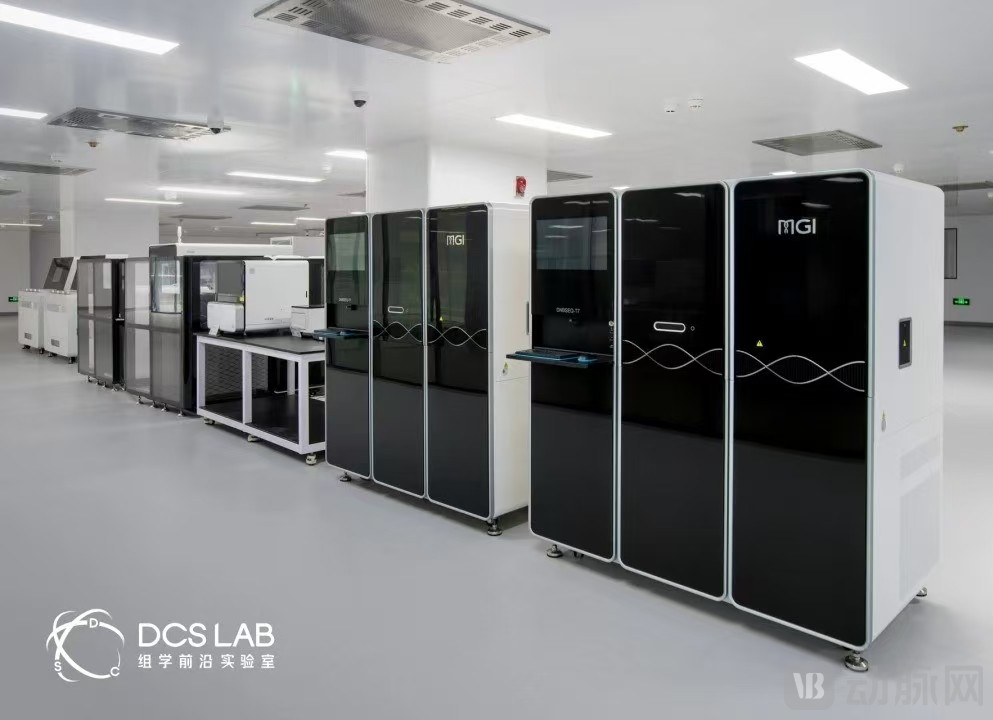
Furthermore, MGI continues to establish application advantages in emerging research fields such as genomics, cytomics, technological archaeology, and biodiversity. Specifically, leveraging sequencing platforms like the DNBSEQ-G99, MGI has supported users and partners—including Fudan University, Xiamen University, and the Shaanxi Provincial Institute of Archaeology—in producing more research outcomes. MGI has partnered with the South African Medical Research Council to strengthen South Africa’s research capabilities in genetic science through advanced equipment, thereby driving exploration and innovation in new areas for both parties. Additionally, MGI has collaborated with the Tianjin Fisheries Research Institute to continuously empower the high-quality development of Tianjin’s aquatic industry, utilizing the company’s core technologies and new products from its “Storage” platform, such as the customized small-scale ultra-low temperature sample repository MGICLab-FZ series. MGI has also signed a memorandum of understanding with the Centre for Stem Cell and Regenerative Medicine at The University of Hong Kong. Both parties will jointly explore the application of single-cell sequencing technology in stem cell research, based on MGI’s one-stop tools and platforms, including the ultra-high-throughput sequencer DNBSEQ-T7 and the single-cell droplet generator DNBelab C-TaiM X.Clinical high-throughput gene sequencing has always been a core strength of MGI.MGI has established stable collaborations with numerous professional service providers specializing in gene sequencing technologies, both domestically and internationally. By fostering a diversified industrial ecosystem through partnerships across the upstream and downstream segments of the industry chain, MGI jointly promotes the application and commercialization of genomics in multiple fields. In the first half of 2024, MGI further expanded its competitive advantages by focusing on application scenarios such as “Life Staining,” providing leading core life science instruments for precise genetic testing in areas including reproductive health, precision oncology diagnosis and treatment, infectious diseases, and chronic diseases.To date, gene sequencers based on MGI’s core sequencing technologies have become the primary technical platforms adopted for clinical gene sequencing projects. Data shows that, in addition to its self-developed sequencers, MGI has collaborated with prominent mid- and downstream industry players—including Geneseeq, Jinshi Medical, Burning Rock Biotech, Annoroad, Berry Genomics, Weiyuan Medicine, and MiRXES—through industrial ecosystem partnerships. By integrating resources across departments and providing specialized team services, MGI fully leverages its channel, expertise, and cost-effectiveness advantages to deliver corresponding commercial services and technical support to these clients.Among these, as of the end of the first half of 2024, statistics based on publicly available information from the National Medical Products Administration (NMPA) medical device database show that a total of 32 gene sequencers have been approved by the NMPA for clinical testing in China. Of these, 19 are based on the Company’s DNBSEQ core sequencing technology. Only eight models are capable of simultaneous DNA and RNA detection, all of which are based on MGI’s DNBSEQ core sequencing technology. This indicates that only the DNBSEQ platform can be used for comprehensive pathogen detection, establishing the Company’s first-mover advantage in the field of infectious diseases.Notably, as the capabilities of gene sequencers continue to be refined, high-throughput sequencing is increasingly being applied in broader scenarios, including public health, agriculture, forestry, animal husbandry and fisheries, food safety, customs inspection and quarantine, and environmental and ecological monitoring.MGI has moved quickly in these emerging application scenarios.In the field of disease control and prevention, MGI provides tool support to CDCs in multiple regions of Anhui Province, facilitating the surveillance and research of influenza and significantly enhancing their capacity to respond to seasonal flu and potential influenza virus variants. In the microbiology sector, MGI has partnered with the French MetaGenoPolis Research Foundation to support sequencing work for samples related to the Le French Gut microbiome research project in France. Based on collaborative objectives, both parties will leverage cutting-edge technologies in microbiology and metagenomics to jointly develop new applications, thereby enabling scientific collaboration and research within the MMHP Alliance. Furthermore, MGI has established a strategic partnership with Magigene, a company specializing in microbiomics and synthetic biology, to jointly promote application expansion and technological innovation in the field of microbiology. In the area of environmental monitoring, MGI collaborates with Egenomix to advance innovation and standard-setting in environmental DNA (eDNA) biomonitoring. Together, they develop specialized solutions for biodiversity conservation and ecological governance across diverse scenarios, driving the innovative validation and early-stage application of core life science tools, such as gene sequencers, in ecological and environmental monitoring.Stepping Out of the Comfort Zone
Next, let’s examine the industry logic under the new order.In the global gene sequencer market, MGI stands as a lone warrior. The company’s original mission was to break the monopoly held by overseas enterprises on high-throughput sequencing instruments and consumables.As high-performance gene sequencers entered mass production, downstream players in the gene sequencing industry began to have choices.Market expectations for MGI also hinge on when it can challenge Illumina’s leading position and become the top brand in its niche segment. As a shining example of domestically produced high-end scientific instruments, import substitution has long been the central narrative through which outsiders understand MGI. In the domestic market, bolstered by favorable market access policies, MGI has made significant strides in replacing imported products. However, the ceiling for such import substitution is inherently limited. Especially at a time when global growth in high-throughput sequencing is showing signs of fatigue, any strategy of replication, or even surpassing after replication, risks becoming mere numbers that fail to resonate with the market.In recent years, nearly all gene sequencer manufacturers have begun to explore comprehensive gene sequencing capabilities, aiming to establish competitive advantages based on full-length reads and multi-omics. However, there is a significant gap between aspiration and execution. This time, MGI has emerged as a pioneering trailblazer. In June 2024, MGI announced that it had obtained intellectual property licenses for products related to spatial-temporal integrated systems, microscopes, and spatial-temporal visualization reagent kits. Simultaneously, it secured global distribution rights for spatial transcriptomics reagent kits, chips, single-molecule nanopore sequencers, and related reagents and consumables.By expanding its spatial omics and nanopore sequencing product lines through distribution, MGI will become the world’s first high-end life science tools provider capable of simultaneously offering high-throughput sequencing, nanopore sequencing, single-cell sequencing, and spatial omics, thereby delivering a more comprehensive and robust portfolio of life science products and solutions to users worldwide.Among these, Stereo-seq is a spatial omics technology independently developed by BGI, which has elevated the resolution of life space mapping to the subcellular level. Notably, Stereo-seq offers exceptionally high clarity combined with an ultra-large field of view, earning it the nickname “ultra-wide-angle 10-billion-pixel ‘life camera’.” Stereo-seq has been applied in research fields such as development, disease, and regeneration. Due to its leading technological advantages, related scientific achievements have been successively published since 2024 in the three top-tier academic journals Cell, Nature, and Science, establishing it as a cornerstone for high-impact publications and gaining recognition from global research teams.Single-molecule long-read sequencing is an emerging technology that has followed massively parallel short-read sequencing (commonly known as high-throughput sequencing). It offers several unique advantages, including long read lengths, high speed, direct detection of modifications, real-time data output, and integrated portability. As such, it represents a technological frontier and an emerging strategic industry direction in the field of sequencing. Among these technologies, nanopore sequencing is considered to have the strongest overall performance as a single-molecule long-read sequencing approach. As an important complement to high-throughput sequencing, single-molecule long-read sequencing has been widely applied in combination with high-throughput methods across various domains, including large-scale population genomics, biodiversity research, microbial genomics, single-cell transcriptomics, and pathogen detection and source tracing.Admittedly, newer gene sequencing technologies such as spatial-temporal sequencing and nanopore sequencing do not fall within MGI’s comfort zone. Nevertheless, it is evident that MGI is striving to establish comprehensive gene sequencing service capabilities across multiple technologies. It is understood that MGI’s DNBSEQ sequencing platform forms the foundation of its spatial-temporal omics technology, Stereo-seq. The related spatial-temporal omics products maintain an upstream-downstream relationship within the application workflow, demonstrating a high degree of synergy. Furthermore, nanopore sequencing technology complements the read lengths of MGI’s high-throughput sequencing technologies, creating a one-stop, “long-and-short read combined” full-process sequencing toolkit that facilitates the expansion of downstream gene sequencing application scenarios.Currently, the growth of the high-throughput gene sequencing industry is frequently hindered, forcing gene sequencer manufacturers to step out of their comfort zones and deploy broader sequencing capabilities. The competition in the new gene sequencer market is no longer a vertical contest based on specific sequencing technologies, but rather a race to provide more comprehensive, faster, and multi-dimensional gene sequencing capabilities centered around downstream user needs.The Next Chapter in Gene Sequencing
Looking back from a longer historical perspective, 2023 emerges as the turning point for the global gene sequencing industry.Prior to this, the upstream segment of gene sequencing was dominated by a relatively homogeneous ecosystem of companies and products, representing a market with an extremely high degree of monopoly. However, with the expiration of core patents for high-throughput sequencing—particularly following the conclusion of the highly publicized patent litigation between MGI and Illumina in the second half of 2022—the gene sequencer market has flourished. The competitive landscape has become increasingly uncertain, and the fundamental logic underpinning the industry has undergone a significant shift.On the one hand, no single vertical gene sequencing technology can fully meet the demands of gene sequencing.In the short term, high-throughput sequencing technology will remain the primary driver for the widespread commercial adoption of gene sequencing, given its greater maturity in databases, biobanks, and hardware and software tools. However, in recent years, emerging technologies such as single-molecule sequencing, single-cell sequencing, and spatial-temporal sequencing have seen continuous expansion in their application scale.Specifically, single-molecule sequencing technology has overcome technical bottlenecks in accuracy and throughput, demonstrating complementary application characteristics to high-throughput sequencing technologies. Its market penetration is increasing in scientific research fields such as whole-genome sequencing, assembly and structural variation analysis, and microbiology and public health research. Further segmentation of the scientific research, translational application, and clinical markets reveals a trend of substantial growth in single-cell and spatial transcriptomics sequencing volumes within the scientific research sequencing market, which is beginning to gain recognition from translational medicine researchers and pharmaceutical companies. Data shows that multiple registered clinical trials in oncology, hematology, and immunology in the United States have already included spatial omics as an application test in their regulatory submissions.On the other hand, the number of sequencer manufacturers capable of competing in the global gene sequencing market is growing rapidly.Historically, Illumina held a dominant position in the upstream segment of the gene sequencing industry, serving as a key benchmark for sector analysis. The valuation of new entrants in the gene sequencer market was often determined by comparing them with Illumina. At present, although the gene sequencer industry remains highly concentrated, leading companies such as Illumina, MGI, Thermo Fisher, Oxford Nanopore, and Pacific Biosciences have captured the majority of the market share, leveraging their robust technical capabilities and rapidly iterating product portfolios. However, with the increasing maturity of the technological ecosystem and the continuous expansion of downstream application scenarios, a large number of emerging enterprises have sprung up in the global gene sequencer industry, including Ultima, Element Biosciences, Genetron Biology (Zhenmai Bio), Qitan Technology, and Quantum-Si. These companies offer broader technological pathways and application scenarios for gene sequencing, thereby continuously expanding the boundaries of the industry.As the upstream products and services ecosystem for gene sequencing diversifies, industry leaders such as Illumina can no longer cover all business segments related to gene sequencing. Emerging gene sequencer manufacturers are also beginning to adopt new models that do not simply replicate Illumina’s approach.Previously, research institutions predicted that the global market for gene sequencers and consumables would grow from approximately $4.8 billion in 2022 to around $24.2 billion by 2032, with a compound annual growth rate (CAGR) of about 17.5%, indicating a market with significant potential. In this sector, MGI has taken the lead in making new strides, raising the intriguing question of who will ultimately emerge as the winner.In the next phase of gene sequencing, analyzing corporate value may require a more complex frame of reference. And it is not only MGI that needs to reconstruct its growth curve.