

Hepo Biosciences Secures Multi-Million RMB Angel Funding to Accelerate 3D Organ Model Development and Transform Drug Discovery

HepaBio
Developer of 3D Organ Models and Organ-on-a-Chip Technologies
Recently,3D Organ Model Technology Developer—Shanghai Heper Biotechnology Co., Ltd. (hereinafter referred to as “Heper Biotech”) Announces Completion of Angel Financing Round Worth Several Million YuanThis round of financing was led by the Zhangjiang Life and Health Industry Incubation Angel Fund (Zhangke Hemiao Fund), with follow-on investments from Qingdao Zhenze Medical Industry Investment Fund and others. The proceeds will be used to advance the industrial application and market promotion of Heper Bio’s 3D organ model products, helping to revolutionize the drug development process.
Heper Bio was established in December 2022,Dedicated to the innovative R&D of 3D organ models and organ-on-a-chip technologies, aiming to provide more reliable safety and efficacy evaluations for non-clinical drug studies.。
Currently, Heper Bio has developed multiple mature products, including numerous 3D in vitro models such as liver, intestine, blood-brain barrier, neural, and tumor models, which have been successfully applied to non-clinical drug studies. The company has established collaborations with Merck, Eli Lilly, Gilead Sciences, and Hengrui Medicine.
2022 was regarded as a “milestone” year for the organoid and organ-on-a-chip industry. In that year, the FDA Modernization Act 2.0 was enacted, eliminating the mandatory requirement for animal testing in drug development and promoting the use of diverse preclinical testing models, including 3D organ models; furthermore, the first new drug whose preclinical efficacy data were derived entirely from organ-on-a-chip studies was approved to enter clinical trials.
This year witnessed rapid advancements in the organoid and organ-on-a-chip industry. Notably, several domestic companies have expanded beyond academic research to engage in market competition.
Heper Bio is one of them. In December 2022, Heper Bio was jointly founded by the Karolinska Institutet in Sweden, professors from China Pharmaceutical University, and their alumni. Among them,Co-founder Zhou Tingting holds a Master’s degree in Medical Informatics from the Karolinska Institutet in Sweden and has over ten years of experience in incubation and investment within the biopharmaceutical sector.。
Professor Volker Lauschke, Co-founder and CSO of Heper BioProfessor at the Karolinska Institute, Deputy Director of the Dr. Margarete Fischer-Bosch Institute for Clinical Pharmacology, and Member of the International Union of Basic and Clinical Pharmacology (IUPHAR).
In terms of academic research, Professor Volker Lauschke has published more than 100 papers in international peer-reviewed journals, with over 1,000 citations. Building on his existing research achievements, he has received multiple awards in the fields of genetics, pharmacology, and drug discovery, such as the Malin and Lennart Philipson Prize and the AAPS (American Association of Pharmaceutical Scientists) High Impact Award.
Driven by its core team, Heper Bio has successfully achieved the innovative translation of its core technologies after two years of continuous R&D and strategic layout, and is steadily advancing the commercialization of its products.
Leveraging the decades of research accumulation and technical expertise of Professor Volker Lauschke and his R&D team, Heper Bio has built an industry-leading 3D organ model platform in less than two years.
Leveraging its self-established bank of human primary cells and proprietary 3D organoid culture technology, Heper Bio has developed a core 3D organ culture system. Notably,HeperBio employs a chemically defined culture medium formulation, which is free of components such as Matrigel and growth factors.This means that the 3D organ models developed using this culture medium formulation exhibit no batch-to-batch variability and demonstrate high experimental reproducibility. Current 3D cell culture techniques still rely heavily on animal-derived sera and scaffold materials, which not only create culture conditions that differ from the human physiological environment but also introduce batch-to-batch variations in drug testing. Heper Bio employs chemically defined culture conditions to enhance the stability and reproducibility of drug testing.
Furthermore, by adopting spheroid co-culture technology, Hepu Bio can co-culture 3D organ models with immune cells, cholangiocytes, hepatic stellate cells, and endothelial cells, thereby recapitulating their functions.
Leveraging this core technology platform, Hepo Biotech has developed one of its flagship products—the 3D liver organoid model. It is reported thatThe model was constructed in just five days, with a 100% success rate. Comprehensive multi-omics data, including transcriptomics, proteomics, and metabolomics, demonstrated its high concordance with human liver phenotypes. Furthermore, its stability and reproducibility were validated through large-scale, multicenter studies involving both academic and industrial sectors.According to the experimental data released by Heper Bio,This model can stably maintain hepatic phenotype and function for over 35 days.. At lower exposure concentrations,Hepatotoxicity TestingofThe specificity is 100%, and it enables high-throughput screening.
Furthermore, building upon its 3D liver organoid models, Hepu Biotech has established a hepatotoxicity evaluation platform, an in vitro ADME platform, and a high-throughput efficacy screening platform for liver diseases (including MASH and liver fibrosis), thereby providing a range of innovative tools and methodologies for drug development and safety assessment.
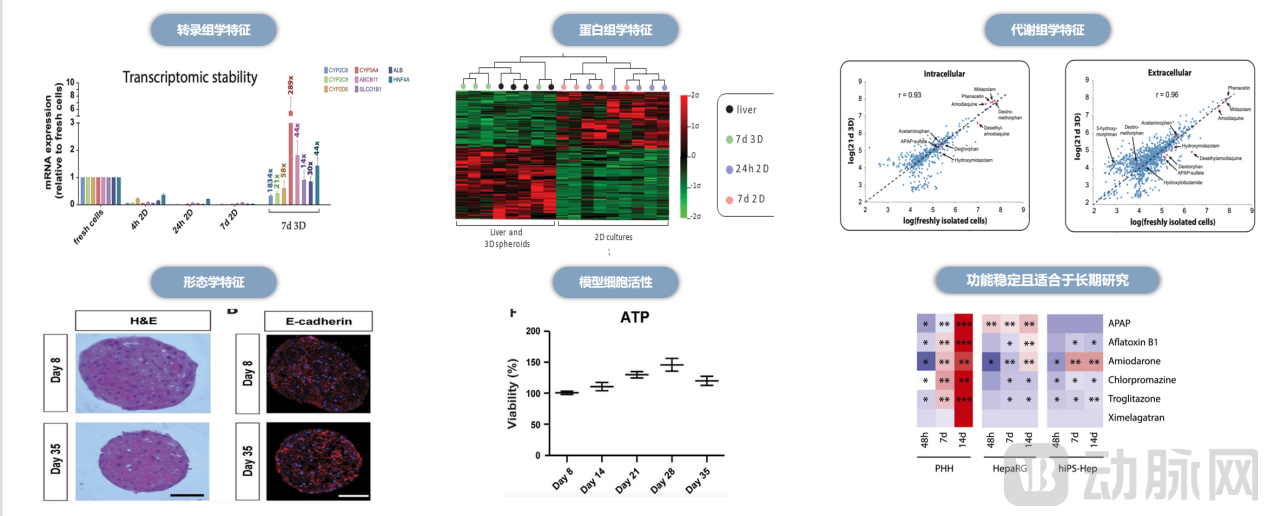
3D Liver Organoid Omics Data. Image source: Hepu Bio
Currently,HeperBio has developed a wide range of 3D organ model products, including not only liver models but also intestine, blood-brain barrier, tumor organoids, skin, and kidney models, thereby diversifying its portfolio for non-clinical drug research across multiple product lines.。
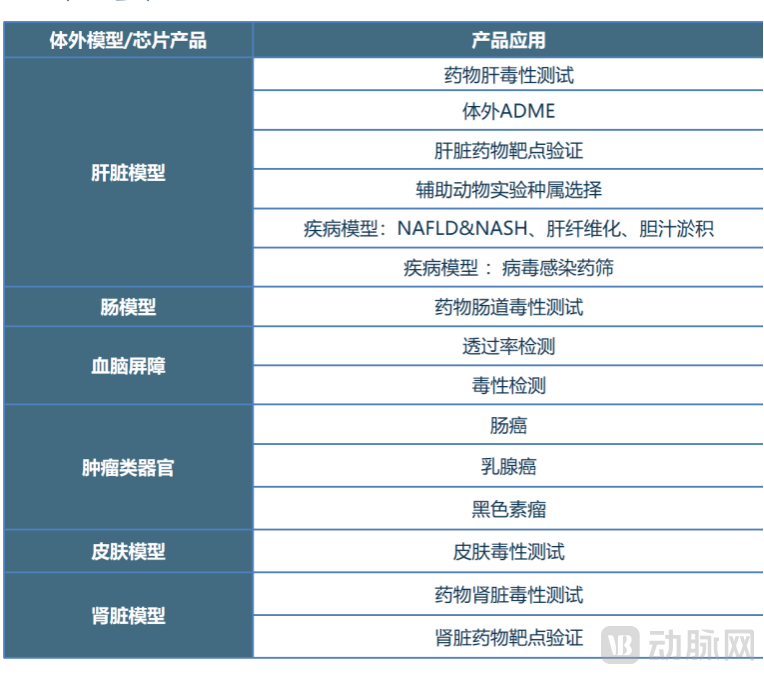
Hepo Bio Product Categories. Image source: Hepo Bio
High-throughput in vitro physiological models provide a relatively reliable platform for drug development, continuously improving the efficiency and accuracy of drug screening, efficacy and safety assessment, and disease research, while significantly reducing R&D costs and time.
However, in vitro tissue engineering technologies, including organoids, microfluidic chips, and 3D bioprinting, still have certain limitations. For instance, most current 3D organ model technologies fail to accurately simulate the functions and responses of the human tissues they are intended to represent. Meanwhile, the majority of existing in vitro models lack appropriate characterization and benchmarking, failing to fully reflect the status of tissues and organs, which compromises the reliability of results. Furthermore, most current 3D cell culture systems cannot eliminate interference from animal-derived materials, resulting in culture conditions that differ from the human physiological environment and causing batch-to-batch variations in drug testing.
In the face of these challenges, Hepo Bio has gradually overcome them through more than a decade of research and development. Professor Volker Lauschke, Co-founder and Chief Scientific Officer (CSO) of Hepo Bio, stated: “The technology that Hepo uses has overcome these issues by investing a decade of research and development in the technology. This includes academic and as well as pharmaceutical development and careful standardization and benchmarking to other technologies not only by us, but in unbiased multi-centre trials that involved both industrial and university partners. It was the unambiguous finding that our technology outperforms other culture systems.”
According to the introduction,Hebo Bio’s 3D liver models have established collaborations with multiple renowned pharmaceutical companies, including Merck, Eli Lilly, Gilead, and Hengrui Medicine.For example, its 3D liver spheroid model was utilized during the development of new indications for Eli Lilly’s baricitinib. Research data demonstrated that infection of the 3D liver spheroid model with SARS-CoV-2 elicited an inflammatory response that mimicked the host cellular inflammatory response to the virus. Based on these findings, baricitinib was shown to inhibit interferon (IFN)-mediated inflammation. Ultimately, these results were validated in Phase III clinical trials and accepted by the U.S. Food and Drug Administration (FDA), leading to the FDA’s issuance of an Emergency Use Authorization for baricitinib.
Currently, Hepu Biologics is continuously expanding the boundaries of product development on the basis of its existing commercialized products, promoting the development and construction of organoid models for skin, tumors, and other applications.
In the future,Heper Bio will consistently align with the demands of drug R&D. On one hand, it will continuously expand its 3D organ pipeline; for organs with significant interspecies differences, human-derived 3D in vitro models can provide safety and efficacy evaluations that more closely mimic the human physiological environment. On the other hand, it will establish an AI-driven platform for predicting in vivo outcomes from in vitro data.。
Furthermore,Hebo will also leverage 3D liver modeling technology to advance research on the hepatotoxicity of traditional Chinese medicine.. As a traditional Chinese medicine, traditional Chinese medicine (TCM) not only has a long history and widespread use in China but is also gradually gaining attention and recognition worldwide. However, due to its complex composition and mechanisms of action, special attention must be paid to hepatotoxicity in the safety evaluation of TCM. The Hepo 3D liver model can provide a reliable in vitro model for studying TCM-induced hepatotoxicity, thereby enabling safer use of TCM.
Currently, the processes and methods that combine 3D organ models with animal studies to assess and validate drug safety and efficacy are increasingly becoming mainstream. However, although animal experiments remain irreplaceable in certain aspects due to their systemic advantages, they can lead to increased uncertainty in test results for organs with significant interspecies differences and a high propensity for adverse reactions, such as the liver and intestine. Therefore, incorporating 3D organ models into non-clinical evaluations during the early stages of drug development can help avoid substantial losses caused by late-stage discovery of drug-induced liver injury or drug-drug interactions during Phase II or III clinical trials, thereby enhancing the overall efficiency of the R&D process.
In response, Zhou Tingting, Co-founder of Heper Bio, also stated, “Interspecies differences have long posed a major challenge for animal models in drug development, resulting in substantial losses during the R&D process. We believe that combining 3D organ models with animal studies will become the standard workflow in drug development. Heper Bio is committed to leveraging 3D organ models to provide more human-relevant assessments of safety and efficacy in the early stages of drug development. Looking ahead, Heper Bio will continue to advance this technology, helping more pharmaceutical companies and research institutions accelerate drug development and ultimately benefit patients worldwide.”
About the Zhangke Hemiao Fund
The Zhang Ke He Miao Fund, with Zhangjiang Sci-Tech Investment as its cornerstone investor, represents a significant exploration by Zhangjiang Sci-Tech Investment in promoting the deep integration of “incubation + investment.” By adopting a strategy of “investing early, investing in small enterprises, and investing in innovation,” the fund guides and anchors industrial development directions, assists Zhangjiang Sci-Tech Investment in building a full-chain accelerated sci-tech innovation service system, addresses capital gaps in the stage of achievement transformation, forms a closed-loop synergy between incubation and investment, and drives “patient capital” into seed-stage and start-up technology enterprises.