

WeDoctor Accelerates AI Healthcare Strategy with Launch of China's First AI-Powered Hospital, Advancing Intelligent Oncology Services
New quality productive forces, represented by artificial intelligence technologies, are driving innovation and upgrading in the healthcare industry with unprecedented speed and depth. On August 24, at the “2024 Summit on New Advances in Precision Oncology Treatment and Intelligent Management,” hosted by the Health Committee of the Shanghai Yangtze River Delta Business Innovation Institute and organized by the WeDoctor AI Research Institute and Shanghai WeDoctor Internet Hospital, two major initiatives were prominently launched: the “Intelligent Triage Center for Complex Diseases – Oncology Specialty” project and the “WeDoctor Shanghai AI Hospital and Intelligent Platform for Full-Lifecycle Cancer Management.” These initiatives will provide patients across China with intelligent, precise triage, referral, and whole-course disease management services.
This marks the first AI-driven application for full-lifecycle management of a single disease to be implemented since the Shanghai Digital Medical Innovation Center and WeDoctor jointly promoted the establishment of the National Intelligent Triage Center for Complex and Refractory Diseases last December. Meanwhile, WeDoctor has comprehensively upgraded to its 3.0 Artificial Intelligence Hospital model, pioneering the creation of an AI-powered hospital in Shanghai. Leveraging a systematic suite of medical AI products, the Shanghai WeDoctor Internet Hospital has been upgraded into China’s first artificial intelligence hospital. The implementation of these achievements will represent a significant step forward in promoting the integrated application of artificial intelligence technologies in China’s healthcare sector.
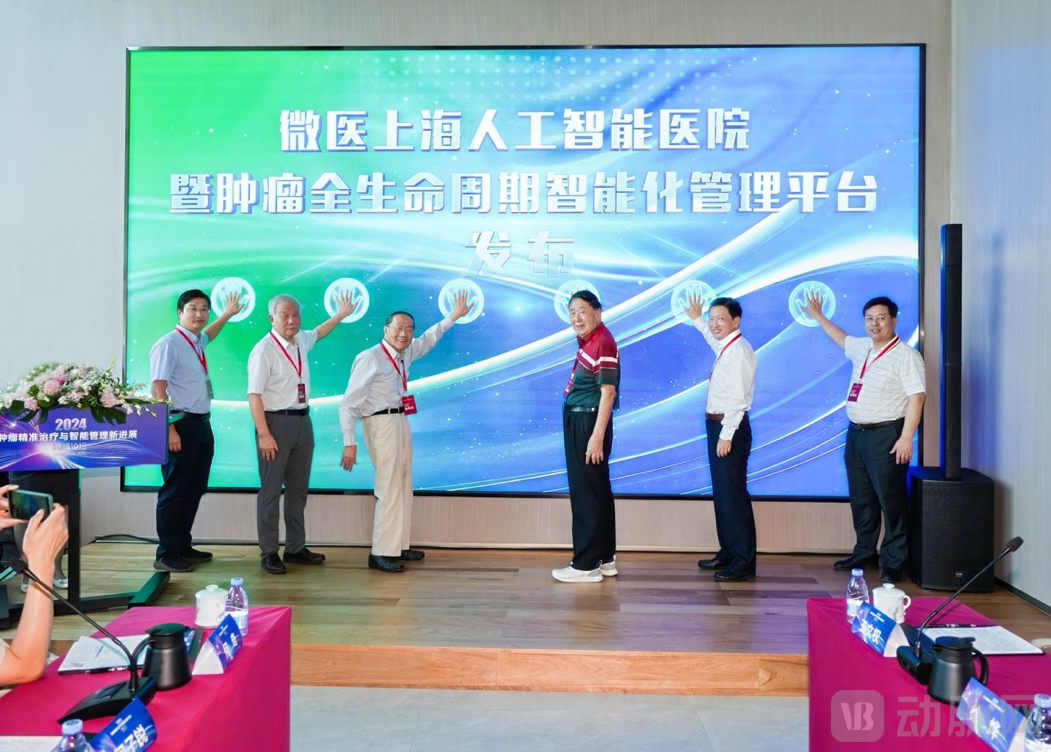
Figure | China’s First AI Hospital Launched in Shanghai
Distinguished medical authorities and top-tier experts from the fields of oncology and artificial intelligence in China witnessed the launch of the platform and project. Professor Peng Shuyou, Academician of the Surgical Academies of four European and American countries and affiliated with the Second Affiliated Hospital of Zhejiang University School of Medicine; Professor Yan Lünan, Lifetime Professor at West China Hospital and renowned expert in hepatic surgery; Professor Ni Quanxing, leading expert in pancreatic surgery at Fudan University Shanghai Cancer Center; Professor Chen Xinshi, senior editor of the Chinese Medical Journal; Wu Jian, Deputy Dean of the Zhejiang University International Joint Institute and Director of the Ruiyi AI Research Center; and Zhang Qunhua, Executive Dean of the WeDoctor AI Research Institute and Dean of WeDoctor Shanghai AI Hospital, jointly announced the establishment of WeDoctor Shanghai AI Hospital and the Intelligent Management Platform for the Full Lifecycle of Cancer Care.
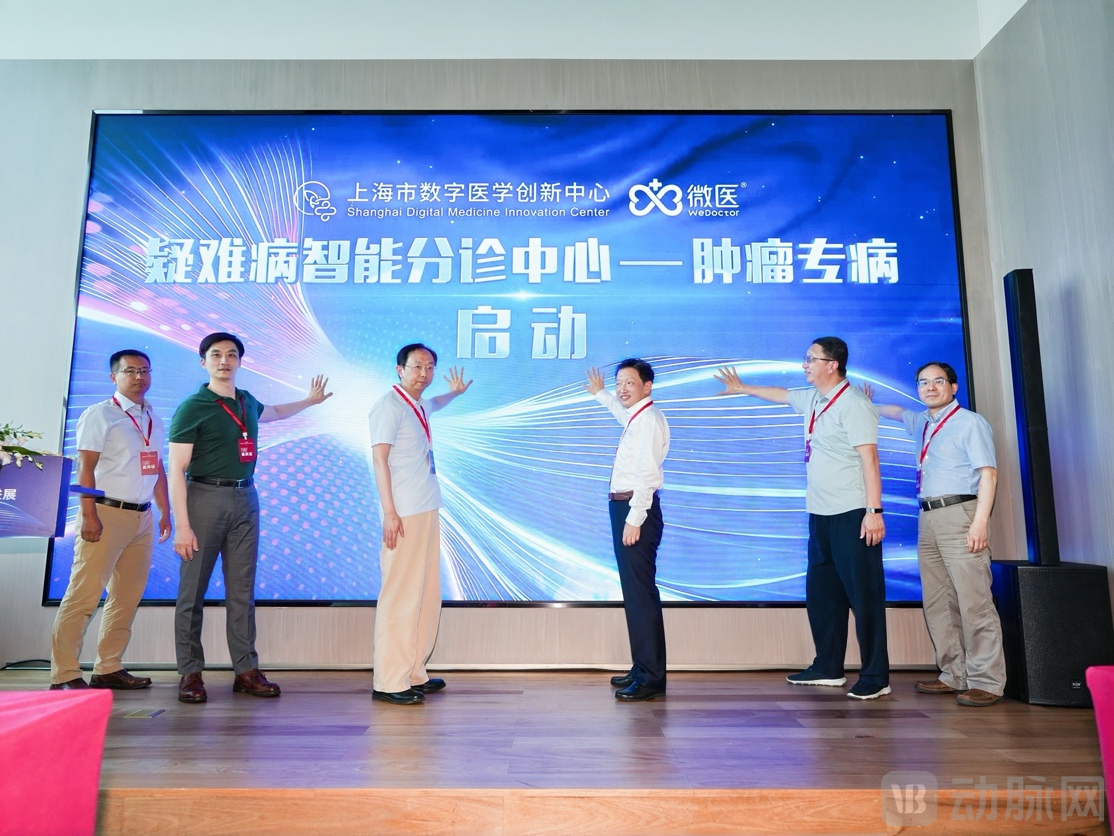
Figure | Launch of the Oncology Specialty Project at the National Intelligent Triage Center for Complex and Rare Diseases
Yang Biwei, Chief Physician of the Department of Liver Oncology at Zhongshan Hospital Affiliated to Fudan University; Zhao Hong, Director of the Department of Oncology at Huadong Hospital Affiliated to Fudan University; Long Jiang, Director of the Department of Pancreatic Surgery at Shanghai General Hospital Affiliated to Shanghai Jiao Tong University; Xiang Jianbin, Chief Physician of the Department of General Surgery at Huashan Hospital Affiliated to Fudan University; and Li Dawei, Chief Physician of the Department of Colorectal Surgery at Fudan University Shanghai Cancer Center, together with Zhang Qunhua, Dean of WeDoctor Shanghai AI Hospital, launched the “Intelligent Triage Center for Complex Diseases – Oncology Specialty” project.
Malignant tumors have become the leading cause threatening the life and health of people in China. According to recent data released by the International Agency for Research on Cancer (IARC), demographic-based projections indicate that the number of new cancer cases will reach 35 million by 2050. In the face of this severe challenge, China actively advocates the principle of “tertiary cancer prevention.” Primary prevention focuses on etiological prevention; secondary prevention emphasizes early detection, early diagnosis, and early treatment; and tertiary prevention aims to improve the quality of life for cancer patients and extend their survival time.
To explore more precise and efficient models for diagnosis, treatment, and management, and to strengthen the forward shift of cancer defense lines and early diagnosis, the construction of the National Intelligent Triage Center for Complex and Critical Diseases and the Whole-Life-Cycle Center for Co-Management of Six Major Diseases will initially focus on single types of tumors. This initiative aims to explore the application of artificial intelligence technologies in the diagnosis and treatment of complex tumors and in whole-course tumor management, with the goal of promoting the development of triage and referral systems for complex tumors in China as well as comprehensive prevention and control efforts.
It is understood that the “Intelligent Triage Center for Complex Diseases – Oncology Specialty,” built upon a database of over one million tags, an intelligent symptom analysis system, and an online multidisciplinary consultation system, can rapidly match patients with appropriate specialists, formulate personalized treatment plans, and provide precise referral channels. The “Intelligent Full-Course Management Platform for Oncology” leverages AI-enabled digital intelligence tools for comprehensive disease management. Adopting a cross-team, multi-role collaborative model featuring “health managers + responsible expert teams,” it delivers full-process, case-managed oncology services covering pre-hospital, in-hospital, and post-hospital stages. Currently, these related services have been launched on the Weiyi APP.
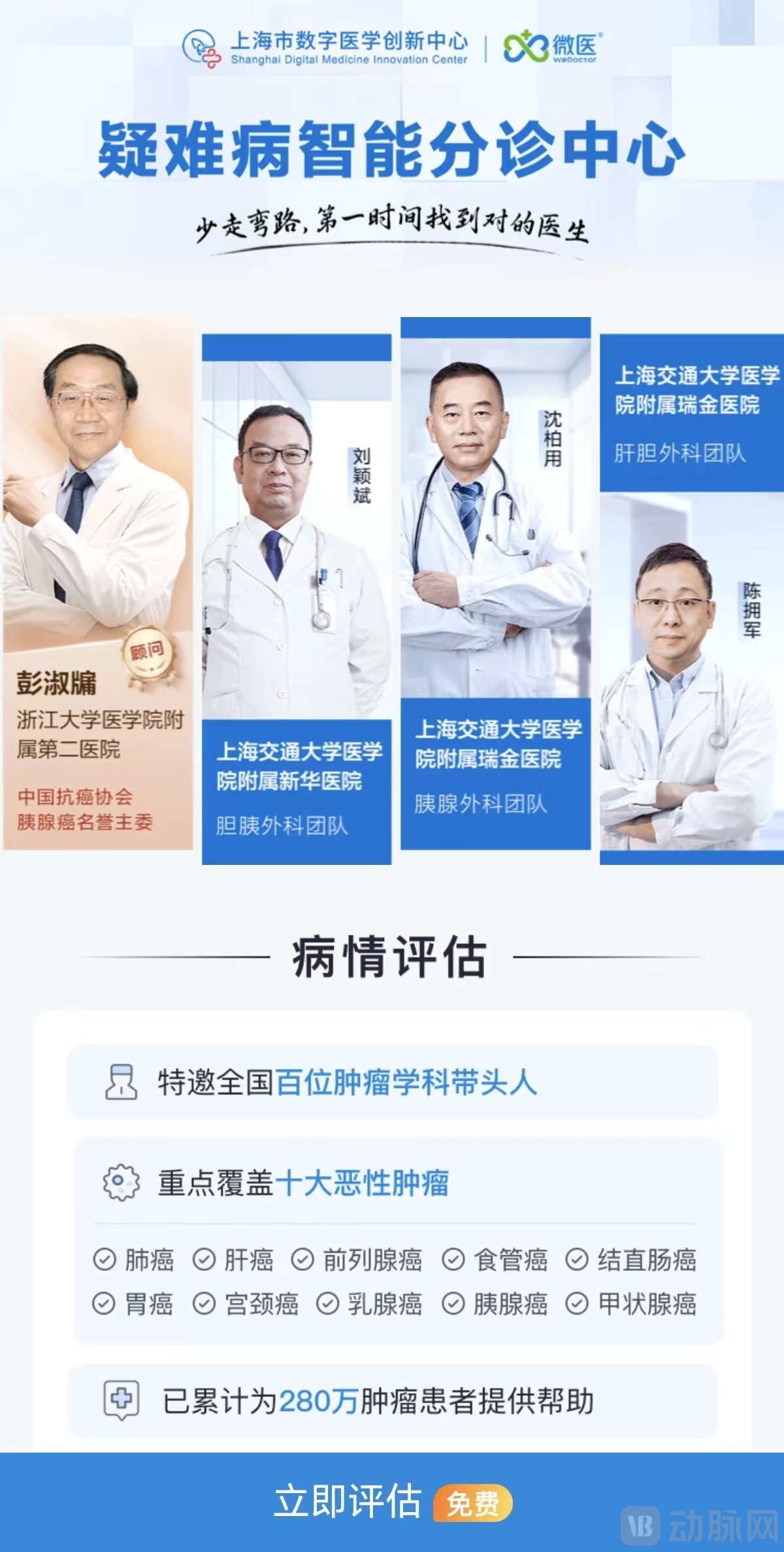
Figure | WeDoctor App Launches Intelligent Triage and Full-Course Disease Management Services for Complex Cases (Oncology)
Empowered by artificial intelligence technology, patients on the platform can connect more quickly and accurately with high-quality medical resources tailored to their conditions, thereby obtaining optimal treatment plans. The Intelligent Triage Center for Complex Diseases is led by distinguished expert advisors Peng Shuyou, Yan Lünan, and Ni Quanxing. It brings together renowned expert teams from Shanghai and across China, including those from Ruijin Hospital, Zhongshan Hospital, Huashan Hospital, Renji Hospital, Fudan University Shanghai Cancer Center, Shanghai General Hospital, East China Hospital, West China Hospital of Sichuan University, and The First Affiliated Hospital of Zhejiang University School of Medicine.
Notably, early this year, “AI Plus” was included in the Government Work Report for the first time. On July 18, the Beijing Municipal Development and Reform Commission led the release of the Beijing Action Plan for Promoting “AI Plus” (2024–2025), which calls for upgrading internet hospitals into AI-powered hospitals. Leveraging its abundant medical resources and leading advantages in artificial intelligence technology, WeDoctor has taken the lead in establishing China’s first AI hospital in Shanghai. This initiative will significantly advance the implementation and development of the “AI Plus” action plan, bringing revolutionary changes to the diagnosis and treatment of specialized diseases such as cancer, as well as to other medical and health services.
Professor Shen Baiyong, Vice President of Ruijin Hospital, Shanghai Jiao Tong University School of Medicine, Director of the Center for Diagnosis and Treatment of Pancreatic Diseases, and Deputy Director of the State Key Laboratory of Oncogenes and Related Genes, stated that the ultimate paradigm in cancer therapy is to identify and elucidate all mechanistic pathways underlying tumorigenesis, thereby implementing human-centric, full-lifecycle management. Consequently, artificial intelligence (AI) holds vast potential for application in healthcare. Examples include leveraging big data analytics to screen high-risk populations for early-stage pancreatic cancer, achieving novel breakthroughs from diagnosis to treatment, formulating individualized precision therapy regimens, and disseminating the clinical expertise of leading specialists to primary care physicians. The advancement of AI will significantly propel future research across the entire spectrum of medical science.
“Over the past decade, 2.8 million cancer patients have sought medical advice and prescriptions online through the WeDoctor platform. Empowered by technologies such as the internet and artificial intelligence, we can better break down information asymmetry in healthcare resources, enabling patients to avoid unnecessary detours and access optimal treatment plans, optimal disease management, and the best cost-effectiveness,” stated Zhang Qunhua. He emphasized that the deep integration of healthcare and AI has become an inevitable trend in industry development, which underpins WeDoctor’s strategic evolution from its 1.0 Internet Hospital model to the 2.0 Digital Health Community, and now to the 3.0 AI-driven Hospital. WeDoctor is collaborating with more hospitals, experts, and physicians to build an intelligent management platform and cooperative ecosystem for the full lifecycle of cancer care. This initiative aims to help a greater number of cancer patients across China precisely match with appropriate specialists, receive timely diagnosis and treatment, improve cure rates, and benefit from intelligent whole-course disease management services.