

Who's Really Making Money in Southeast Asia? Insights from China's Pharma Outbound Leaders
The peak of discussions on Chinese pharmaceutical companies expanding into Southeast Asia occurred around late 2023. In that year, Chinese pharma firms diversified their market entry strategies across the region. GenScript, WuXi Biologics, and CMS Pharmaceuticals sequentially invested in building or acquiring manufacturing facilities in Singapore. Junshi Biosciences and Conlida announced a partnership to co-develop and commercialize their PD-1 inhibitor, toripalimab, in nine Southeast Asian countries through their joint venture, Excellmab. Akeso’s PD-1 product, penpulimab, entrusted its commercialization in Southeast Asian markets such as Singapore and Malaysia to local Singaporean companies. Additionally, Henlius’ PD-1 inhibitor, H Drug (HLX10), was officially launched in Indonesia at the end of that year.
2023 was a year marked by the booming rise of license-out deals among Chinese pharmaceutical companies. Looking westward and southward, opportunities abound everywhere. In particular, “venturing into Southeast Asia” presents fast growth rates, numerous untapped areas, and fewer competitors compared to European and American markets. The regulatory submission process is less complex than facing the FDA or EMA, making it seem like a promising goldmine. After all, licensing out early- to mid-stage pipelines is achievable only by a select few biotech firms, while selling complete products to Europe and the United States is an endeavor manageable only by a handful of biopharma companies.
Field visits to Southeast Asia have also been placed on the agendas of many pharmaceutical executives. Government agencies, pharmaceutical companies, and healthcare institutions across Southeast Asian countries have received wave after wave of visitors. Some feedback indicates that while the market is attractive, practical entry proves quite challenging, leading some companies to rule out short-term expansion. Other feedback highlights that purchasing power in Southeast Asia remains limited, distribution channels are complex, and profitability is difficult to achieve.
The reality behind this is that expanding into Southeast Asia, while seemingly easier than entering European and American markets, is by no means easy. In other words, successful expansion into Southeast Asia is currently achievable only by a select few companies.
Hidden Barriers
Chinese pharmaceutical companies’ expectations for expanding into Southeast Asia stem primarily from the region’s growth prospects: from 2023 to 2027, the compound annual growth rate (CAGR) of emerging pharmaceutical markets, represented by Southeast Asian countries, is projected to remain at 5%–8%, surpassing the 2.5%–5.5% observed in developed markets. The Southeast Asian market is undoubtedly one of the regions with the greatest potential for future global pharmaceutical development.
Multinational corporations (MNCs) have long established their presence in Southeast Asia. For MNCs, the region serves as a node within their vast global network and a key manufacturing hub. For instance, Singapore is home to the production of high-quality biologics such as pembrolizumab, ranibizumab, adalimumab, and rituximab, with more than 15 MNCs having set up manufacturing facilities there.
Some multinational corporations (MNCs) view Southeast Asia merely as a minor component of their global market strategy, opting to export products directly to the region while maintaining high price points. For instance, in Singapore, the price of Keytruda typically ranges from SGD 8,000 to SGD 12,000 per dose (approximately USD 6,000 to USD 9,000); in Malaysia, it generally falls between MYR 10,000 and MYR 15,000 per dose (approximately USD 2,100 to USD 3,200). In many other Southeast Asian countries, PD-1 inhibitors have not yet entered the market, where treatment remains predominantly based on conventional chemotherapy, leaving substantial room for the development of innovative oncology drugs.
This is also why Chinese-made PD-1 inhibitors, having endured intense domestic competition, regard Southeast Asia as a prime market for international expansion. On one hand, they clearly hold a price advantage; on the other, countries in Southeast Asia generally accept foreign clinical data during the drug registration process, making the path to market approval relatively smooth.
However, the successful global expansion of a drug primarily refers to its successful commercialization overseas, namely “generating scaled revenue and stable profitability through drug sales.”Beyond this, collaborative development, regulatory approval, and even the initial entry into the commercialization phase cannot yet be considered successful.
On the path to commercialization, brand power is one of the biggest invisible barriers for Chinese pharmaceutical companies.To be frank, brand recognition for pharmaceuticals manufactured in China is not high in the Southeast Asian market.Last year, PharmaGend, a company jointly invested in by a subsidiary of CMS Pharmaceutical, Pharmaron, and Legend Capital, acquired a manufacturing facility in Singapore. The key consideration was that producing Chinese pharmaceuticals in Singapore would help enhance product acceptance and influence, thereby facilitating better entry into Southeast Asian and other overseas pharmaceutical markets.
Industry insiders told VCBeat, “The internationalization efforts of most Chinese companies are still in their very early stages, making it difficult to achieve a return on investment in the short term. In fact, most Southeast Asian countries still do not recognize China’s Good Manufacturing Practice (GMP) certificates, which has become one of the obstacles for Chinese pharmaceutical companies expanding overseas. In the strictly and highly regulated pharmaceutical industry, product quality, safety, and compliance are paramount and ultimately determine brand value.”
Beyond the drugs themselves, Chinese pharmaceutical companies still lack strong brand appeal.Many companies suffer from low reputations, lack brand recognition, and face uncertain prospects, making it difficult to attract high-quality talent during recruitment.
Moreover, Southeast Asia is a multilingual and multicultural region with significant differences in language, business practices, and communication styles, which poses adaptation challenges for Chinese pharmaceutical companies accustomed to centralized, integrated markets.
Who is delivering results?
While many companies are still in the exploratory phase of expanding into Southeast Asia, some are already delivering results. The fastest-growing Chinese pharmaceutical company in the Southeast Asian market is an established player: Luye Pharma.
Compared with global pharmaceutical giants, Luye Pharma still has a considerable gap in terms of both scale and development history. Nevertheless, Luye has consistently demonstrated a distinctive approach to internationalization. In 2009, Luye acquired WBM Pharmaceutical Commercial Company in Singapore, thereby establishing its marketing network in Southeast Asian countries such as Singapore and Malaysia.
Over the subsequent 15 years, Luye Pharma has emerged as an influential multinational pharmaceutical company in Southeast Asia, driven by the continuous expansion of its product portfolio—particularly in central nervous system (CNS), oncology, and cardiovascular diseases—and the growth of its local sales teams in the region. Currently, Luye Pharma offers multiple products in the Asia-Pacific market (excluding mainland China and Japan) and has established a team of dozens, covering ten countries in Southeast Asia, including Malaysia, Singapore, Thailand, Indonesia, Vietnam, and the Philippines.
Luye Pharma truly understands this complex market.Many Chinese pharmaceutical companies hold misconceptions about the Southeast Asian market, either believing that Southeast Asia is “too close” to China,This is particularly true in countries with large Chinese populations, such as Singapore and Malaysia; however, significant communication gaps still persist in practice.Either consider Southeast Asia to be “too far” removed from China’s stage of development,However, the reality is that market maturity in countries such as Indonesia and Vietnam is rapidly increasing, with both healthcare infrastructure and healthcare expenditure experiencing rapid growth.
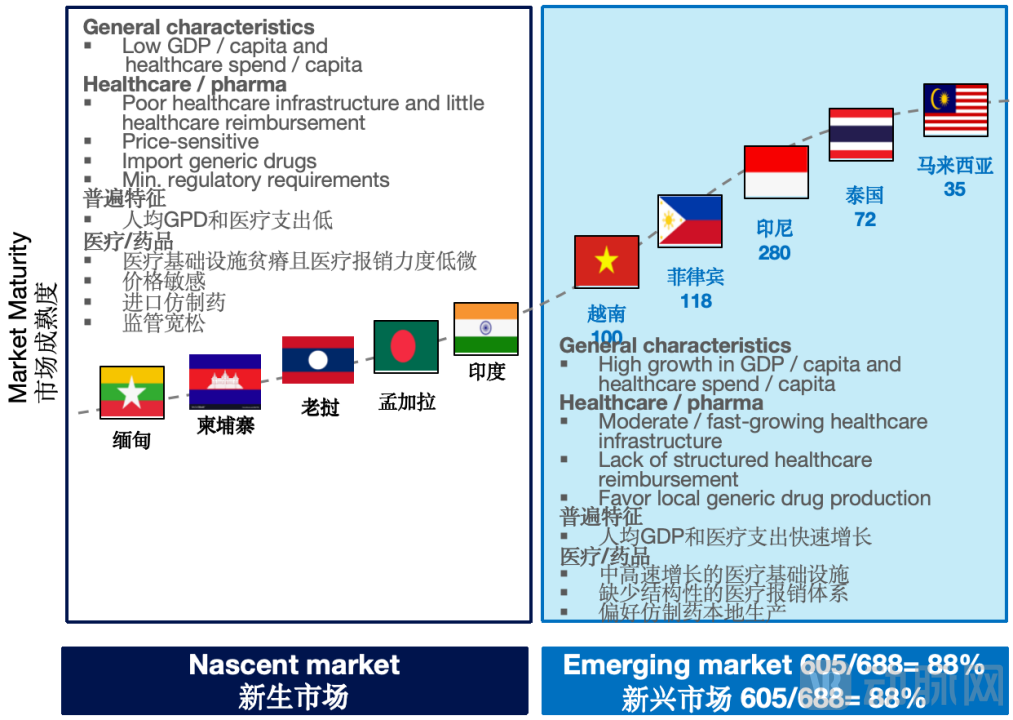
Comparison of Pharmaceutical Market Maturity in Southeast Asian Countries (Excluding Singapore)
“Across the countries and regions under my responsibility, there is significant variation in healthcare expenditure as a percentage of GDP, ranging from as low as 2–3% to as high as 9–10%. This substantial disparity reflects differences in economic conditions, government policies, and healthcare system reforms,” said Andy Siow, Vice President of Luye Pharma (International) for the Asia-Pacific region. “Doing business in Southeast Asia requires a thorough understanding of cultural differences, spanning religion, ethics, and behavior, to basic communication styles, and even public holidays and prayer times in different countries.”
Since 2019, Andy Siow has been responsible for Luye Pharma’s commercial operations in the Asia-Pacific region. A Malaysian Chinese professional, he previously drove business development for multinational corporations (MNCs) such as Bayer, Abbott, and Boehringer Ingelheim across Southeast Asia, and served as CEO of healthcare institutions in the region. He excels at bridging markets at varying stages of maturity. Within a few years, Mr. Siow has built Luye Pharma’s current marketing network across the fragmented Southeast Asian landscape, covering eight countries including Singapore, Malaysia, Indonesia, and Thailand.
Indonesia is a key strategic market for Luye Pharma and Andy Siow in Southeast Asia. With Indonesia’s economy sustaining a 5–6% annual growth rate over the past two decades, its per capita GDP surpassed US$4,900 in 2023, officially marking the country’s strongest period of development in the last 20 years. Although the Indonesian pharmaceutical market remains dominated by low-cost generic drugs, it has begun to demonstrate the capacity to pay for innovative medicines and high-end biologics. This signals that Indonesia’s large pharmaceutical market is entering an optimal phase for upgrading.
According to Andy Siow, as Indonesia’s attitude toward Chinese pharmaceuticals shifts, and inOn a case-by-case review basisIndonesia is increasingly accepting Chinese CPPs, and opportunities for Chinese pharmaceutical companies in Indonesia are growing.
This regulatory openness has also opened the door for Luye Pharma to enter Indonesia, enabling the company to fully participate in this vast, transitioning market: one that is shifting from being dominated by digestive and metabolic, cardiovascular, and anti-infective drugs to having growth led by innovative medicines in CNS and oncology.
“We need to demonstrate to regulatory authorities how Chinese pharmaceuticals can meet Indonesia’s healthcare needs, particularly those products that comply with European and U.S. standards,” said Andy Siow. “Communicating in the local language during this process helps Luye Pharma build close relationships with local government agencies and key opinion leaders (KOLs). Thanks to our understanding of Indonesia’s various cultural nuances, our communication and collaboration often proceed smoothly.”
CNS disorders and oncology are strongholds in Luye Pharma’s product portfolio. Taking schizophrenia as an example, its prevalence in Indonesia ranges from approximately 0.3% to 1%. Given Indonesia’s large population base and the gradually improving diagnosis rate, the market potential is considerable. Leveraging this market insight, along with Luye Pharma’s and Andy Siow’s extensive local networks—spanning regulatory authorities, distribution channels, and suppliers,Luye Pharma’s Seroquel is currently one of the most successfully marketed drugs by Chinese pharmaceutical companies in Indonesia and even across Southeast Asia,Seroquel is primarily used to treat schizophrenia and bipolar disorder, offering rapid onset of action along with good tolerability and compliance. It was acquired by Luye Pharma from AstraZeneca.
Under Indonesian government policy, additional pricing strategies may be applied if pharmaceuticals are manufactured locally or if there is a partnership with local Indonesian companies. This results in foreign pharmaceutical companies collaborating with Indonesian firms securing more favorable price positioning compared to purely imported products.
“Despite Seroquel’s higher price, it has still gained widespread recognition from KOLs in both public and private healthcare institutions,” said Andy Siow.
In this therapeutic area, Luye Pharma is already competitive with multinational corporations (MNCs) such as Johnson & Johnson in the local Indonesian market and across Southeast Asia.
Alongside this growth, Luye Pharma’s influence has also risen. Luye Pharma has actively invested in academic exchanges, healthcare professional training, and patient education initiatives in Southeast Asian countries such as Indonesia. The company has convened six Asia-Pacific Independent Psychiatry Symposia, annually inviting over a thousand physicians, experts, and professionals from 11 countries to discuss topics including bipolar disorder, schizophrenia, major depressive disorder (MDD), and generalized anxiety disorder (GAD).
After years of operation, Luye Pharma has become a company that is crossing the “invisible threshold” of brand recognition. As of 2024, Luye Pharma had multiple products on the market in the Asia-Pacific region, including two CNS products, one oncology product, and Hypocol, a lipid-lowering traditional Chinese medicine produced at its Singapore facility.
Respect for Emerging Markets
The Southeast Asian pharmaceutical market is often viewed as “China 20 years ago”: smaller in scale, yet characterized by political stability and rapid economic development, with substantial growth potential. Innovative drugs and biosimilars from China can capture a share of the high-end medication market alongside multinational corporations (MNCs).
However, this does not mean that reasonably priced Chinese products can automatically succeed by entering the seemingly untapped “affordable innovation market.” Expanding overseas to sell products requires substantial investment in material and human resources, presenting challenges several orders of magnitude greater than simply selling technology or raw materials.
For example, ETANA, an Indonesian biopharmaceutical company invested in by Legend Capital, has recently achieved localized mass production of bevacizumab and the PCV13 vaccine, transferred from Innovent Biologics and Walvax Biotechnology, respectively, and obtained marketing approval from the Indonesian National Agency of Drug and Food Control (BPOM). Under Indonesia’s TKDN (Domestic Component Level) localization policy, if a drug achieves at least 40% local content in Indonesia, other identical imported drugs will be excluded from the National Essential Medicines List. With their high TKDN scores, the locally produced bevacizumab and PCV13 vaccine, upon approval, will have the opportunity to be included in Indonesia’s national health insurance scheme and enjoy exclusive access to the Indonesian market.This strategic preemption in the pharmaceutical sector is underpinned by ETANA’s years of accumulated manufacturing and regulatory registration capabilities, which required substantial long-term investment during its early development phase.
According to Dr. Shi Qiuming, CTO of ETANA: “We began laying the groundwork for ETANA around 2014. Despite the complete absence of a local biopharmaceutical industry base, we spent two years recruiting talent. We then navigated a series of complex and critical steps, including establishing production facilities, sourcing suppliers, and engaging with regulatory authorities on standards and regulations, before finally launching our first commercialized product in 2018.”
“Taking the PCV13 vaccine as an example, we officially launched the sprint phase of product localization last December. Within six months, we completed the production of trial batches, engineering batches, and validation batches, obtained the GMP manufacturing license, and finished all required procedures, including three-month stability testing. Finally, we compiled and submitted all reports, formally securing marketing authorization from the Indonesian National Agency of Drug and Food Control (BPOM).”
Investments in organizational structure and human resources are significantly more complex in Southeast Asia. For many companies seeking to establish a presence in the region, it is challenging to integrate employees from diverse cultural backgrounds around the world into a cohesive team with strong internal synergy, even when assembling a merely adequate workforce.
Luye Pharma’s team in Southeast Asia has spent years building its current workforce of dozens of employees, with recent expansion seeing most key positions filled by Andy Siow, who recruited regional heads from multinational pharmaceutical companies such as Sanofi, Pfizer, and Lundbeck, leveraging his extensiveWith years of cross-cultural communication and management experience, Andy Siow has built a highly competitive team for Luye.
At its core, this reflects Luye Pharma’s attitude toward and emphasis on overseas markets—viewing Southeast Asia as an emerging market with growth potential that can contribute to revenue, rather than merely an alternative or supplementary option for international expansion. Consequently, the company has made long-term investments and prioritized the operation of local teams.
“Our collaboration with headquarters is seamless. Green Leaf’s headquarters frequently provides strategic guidance and ample resource allocation, having previously supported us in establishing our Malaysian team and office within 90 days. The brand management and public relations teams ensure consistency across all our markets, while the supply chain team helps us address logistics challenges in Southeast Asia. Headquarters also provides robust support in areas such as compliance training, financial planning, and legal guidance,” summarized Andy Siow.
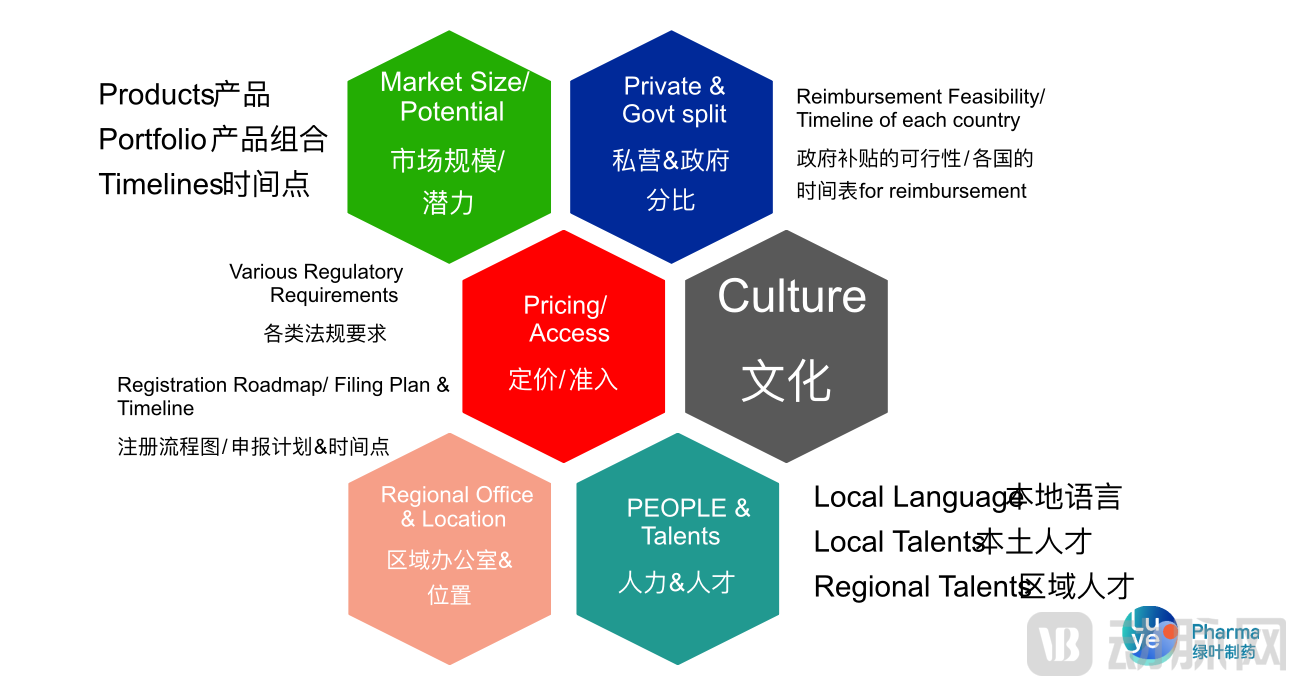
Multiple Considerations for Entering the Southeast Asian Market, Source: Luye Pharma
The Southeast Asian market is invariably associated with the term “gold rush.” However, achieving success in this region requires a profound understanding of its landscape as a fundamental prerequisite. For instance, the regulatory environment in Southeast Asia can be quite challenging. Products from Europe, the United States, and Japan enjoy broad market recognition in the region. Given that Southeast Asia’s healthcare systems are heavily influenced by these countries, product portfolios compliant with European and American standards are better suited for market entry. For example, exports to Singapore require prior market authorization in at least two countries (including the country of origin). Some other countries mandate Investigational New Drug (IND) approval from the country of original development, or even require approvals from the U.S. Food and Drug Administration (FDA) or the European Union.
Therefore, it can be seen thatNew-Type Pharmaceutical EnterpriseKanglianda Rxilient focuses on integrating pharmaceutical products that meet European and American standards, registering them locally, and launching them at reasonable prices in emerging markets such as Southeast Asia. Its introduction of Junshi Biosciences’ PD-1 inhibitor, toripalimab, into the Southeast Asian market marks a significant milestone, as it is the first PD-1 monoclonal antibody developed by a Chinese company to receive approval from both the U.S. FDA and China’s NMPA. Additionally, Kanglianda Rxilient introduces innovative drugs from Europe and America, including ruxolitinib cream, the first treatment approved by the U.S. FDA and the European EMA for non-segmental vitiligo.
Regarding a genuine understanding of Southeast Asia’s market realities and local culture, the challenge for many enterprises lies in their perception being confined to superficial characteristics such as “market fragmentation.” They observe and scrutinize the region from an outsider’s perspective through a cultural lens, rather than becoming true participants in the market.
Relevant investors told VCBeat, “Chinese pharmaceutical companies are in the early stages of expanding into Southeast Asia. Whether aiming to secure orders or generate profits, they must explore opportunities on a case-by-case basis. The most important step is to go global first.”
But before you go out to make money, respect it first.