

RayShape Intelligence Files IPO Prospectus Amid Full-Chain Expansion in the Multi-Billion-Dollar Dental 3D Printing Market

RAYSHAPE
Digital Production Solution Provider
In recent years, the development of 3D printing in the healthcare sector has indeed advanced by leaps and bounds.
On one hand, the market size of medical 3D printing is continuously expanding at a rapid pace. According to relevant reports from Acumen Research and Consulting, the global market size for 3D printing in the healthcare sector is projected to grow from USD 2.8 billion in 2022 to USD 11 billion by 2032, representing a compound annual growth rate (CAGR) of 21.59%.
On the other hand, the application scenarios of 3D printing technology in the medical and healthcare field are continuously expanding, with emerging achievements in dentistry, orthopedics, cardiovascular care, regenerative medicine, and other areas.
Among these, the dental sector has become the fastest-growing segment in the medical 3D printing market due to its high demand and extensive applications. According to SmarTech data, the value of 3D-printed dental products reached $3.5 billion in 2021, and the global market size for dental 3D printing is projected to reach $9 billion by 2028.
The market’s rapid growth has attracted a host of companies, including Suzhou Laisai Intelligence Technology Co., Ltd. (hereinafter referred to as RAYSHAPE).

RAYSHAPE is a provider of digital production solutions based on 3D printing, focusing on the dental field. Its development strategy features distinct characteristics—firstly, in terms of target customers, RAYSHAPE has a clear focus, namely dental laboratories and clinics (hospitals);
Secondly, at the business level, Liu Zhen, CEO of RAYSHAPE, believes that the core competitiveness of dental 3D printing enterprises should not be measured by hardware equipment alone. Instead, comprehensive indicators—including software and materials—should be added to holistically enhance the efficiency and quality of dental 3D printing.
Therefore, unlike most 3D printing companies that focus primarily on equipment, RAYSHAPE positions itself as a “solutions provider,” offering not only 3D printing hardware but also a comprehensive suite of solutions that include software, materials, and more.
Finally, in terms of market strategy, RAYSHAPE has pursued a dual focus on both domestic and international businesses. It has not only gained validation from leading clients in the dental field, including the globally renowned dental aesthetics brand Straumann China and Songbai Dental Group, but also expanded into markets along the Belt and Road Initiative as well as Europe. Currently, RAYSHAPE’s shipments of light-curing 3D printing equipment have ranked among the industry leaders.
RAYSHAPE primarily provides dental 3D printing solutions, encompassing hardware, software, and materials, to dental laboratories and dental clinics (hospitals).
The reason why RAYSHAPE chooses dental laboratories and dental clinics (hospitals) as its primary service targets is not complicated, as these entities are inherently the core customer base for dental 3D printing. However, it is worth noting that dental laboratories account for as high as 80% of RAYSHAPE’s service portfolio.
The reason lies in the substantial scale of the dental laboratory industry. According to the "2021-2026 In-Depth Analysis and Investment Strategy Consulting Report on the Global Dental Clinic Industry" by Zhongyan Puhua, there are approximately 2,400–2,600 registered dental laboratories in China, among which about 10–13 have an annual output value exceeding RMB 100 million, and around 40–50 have an annual output value surpassing RMB 50 million.
Amidst the vast scale of the industry, RAYSHAPE also believes that dental laboratories are an indispensable part of the oral care sector, playing a crucial “hub” role in dental implantology and prosthodontics, and will not be replaced in the short term.
On the other hand, dental laboratories demonstrate a higher degree of acceptance toward new technologies and materials and are more willing to experiment. For instance, the application of zirconia, a well-known material in the dental industry, was pioneered by dental laboratories. Meanwhile, compared to dental clinics (hospitals), dental laboratories have a significantly larger demand for 3D printing. Consequently, dental laboratories account for 80% of RAYSHAPE’s customer base, while the remaining 20% consists of dental clinics (hospitals), particularly small-scale practices founded by dentists.
Different service recipients correspond to different demands for dental 3D printing. Taking hardware—dental 3D printing equipment—as an example, dental laboratories primarily require equipment with a broad build volume, capable of stable, automated, and intelligent production. In contrast, dental clinics, in addition to printing precision, prioritize ease of use and convenience.
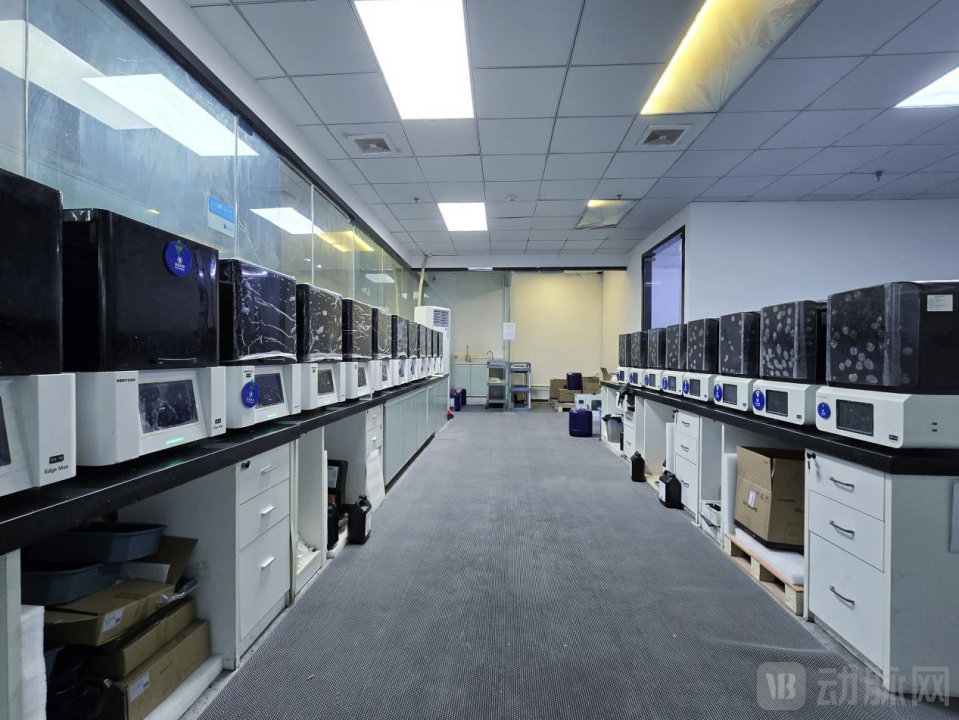
In response, RAYSHAPE is developing distinct 3D printing devices tailored to the different needs of dental laboratories and clinics. The 3D printers designed for dental laboratories will prioritize automation, intelligence, and stable production capabilities, while those intended for clinics will focus more on enhancing clinical user experience and facilitating chairside application scenarios. According to Liu Zhen, both new products are expected to be officially launched by the end of this year.
Prior to this, RAYSHAPE’s currently available product lineup primarily consists of the Edge E2, a professional-grade LCD 3D printer for dentistry, and high-end DLP 3D printers for dental applications. The Edge E2, which utilizes LCD printing technology, offers a build volume of 192 x 120 x 190 mm. Alongside its larger build area, it achieves a printing accuracy of 34.4 μm and a print speed of 85 mm/hr. By ensuring both high precision and fast printing speeds while providing a larger build volume, the LCD technology pathway further endows this product with a significant cost-performance advantage.
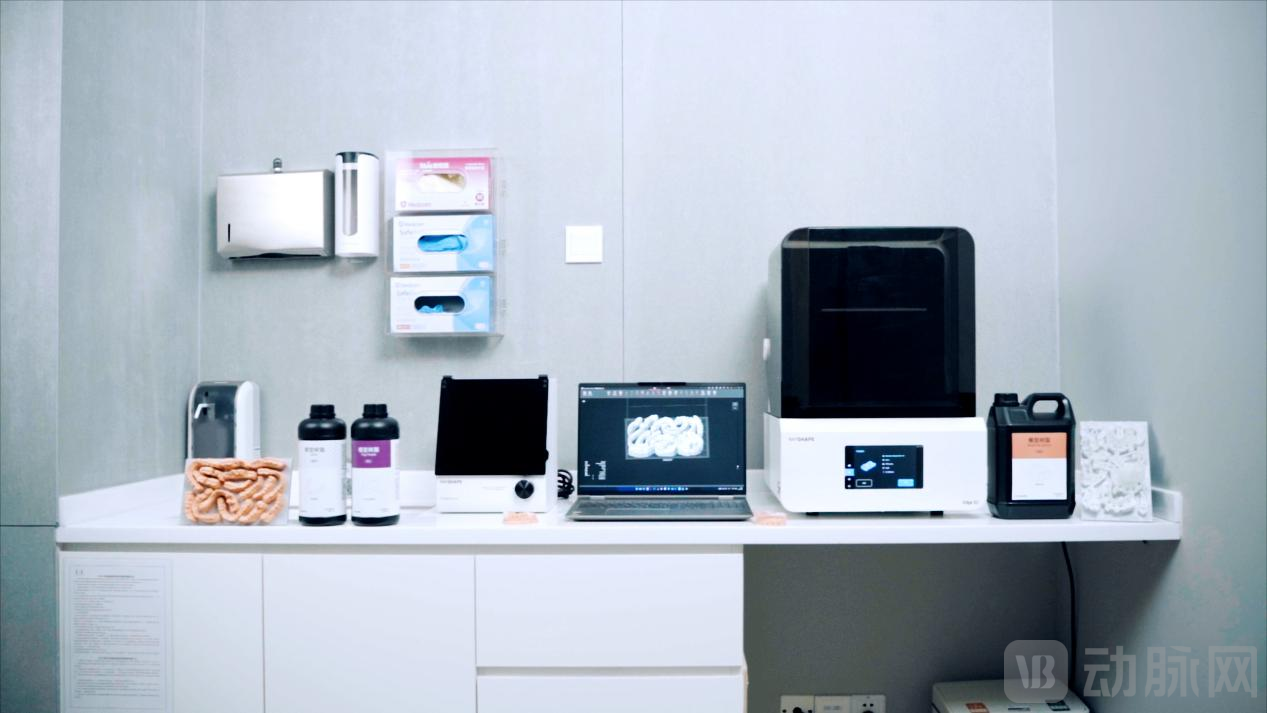
As for 3D printers adopting DLP technology, they can achieve faster printing speeds among similar products. Specifically, the maximum printing speed of this RAYSHAPE product is 72 mm/hr, whereas that of other comparable products is 50 mm/hr. Meanwhile, its build volume measures 144 x 81 x 190 mm, which is larger than the 124.8 x 70.2 x 70 mm build volume of a certain brand’s DLP 3D printer.
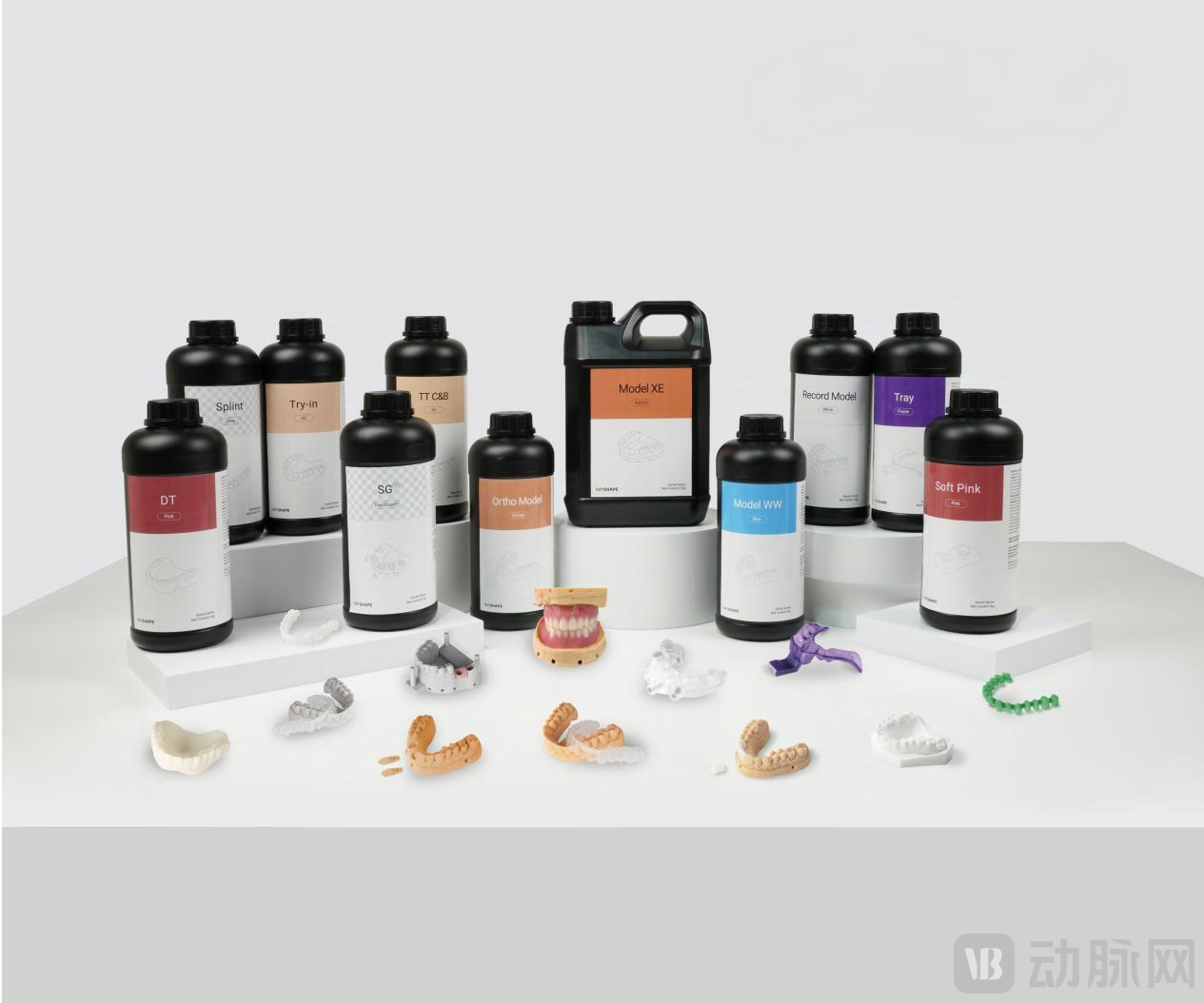
Furthermore, it is worth noting that RAYSHAPE’s 3D printing equipment is capable of producing products for orthodontics, dental implants, removable prosthodontics, and fixed prosthodontics. For instance, in the field of orthodontics, it can manufacture orthodontic dental models and occlusal splints. In implant dentistry, it can produce implant models, surgical guides, and artificial gingiva. In the realms of removable and fixed prosthodontics, it can fabricate removable denture bases, custom trays, trial dentures, as well as restorative models and temporary crowns.
Having reviewed RAYSHAPE’s dental 3D printing equipment, we now turn to its strategic layout in software and materials.
Currently, RAYSHAPE embeds dashboard software and device control software in its 3D printing equipment sales. Meanwhile, RAYSHAPE has recognized that automation and intelligence will be the future development trends for 3D printing equipment.
Therefore, RAYSHAPE is conducting corresponding research and development efforts integrated with artificial intelligence, striving to further achieve intelligent operation. In this regard, Liu Zhen mentioned in an interview, “In the future, the optimal pre-processing solution will be fully automated identification, eliminating the need for manual judgment of application types before printing.”
As for materials, after completing its Series A financing in 2022, RAYSHAPE established a dedicated 15-member R&D team focused on resin materials, developing more than 20 dental resin formulations. Going forward, RAYSHAPE will continue to concentrate on resin materials, driving their expanded application and development in the dental field.
“Although resin materials are nothing new in the field of dentistry, there is still considerable room for improvement, such as in material strength. Therefore, in the future, RAYSHAPE will continue to focus on addressing the many challenges associated with the dental application of resin materials, further promoting the development of resin materials in the dental field,” said Liu Zhen. “We are planning to research corresponding resin composite materials to meet the performance requirements of different dental products.”
Furthermore, it is worth noting that RAYSHAPE has tightly integrated its materials with its equipment in collaborations with dental laboratories, thereby enhancing stickiness in these partnerships.
With this, RAYSHAPE has completed the closed loop of its dental 3D printing business, spanning from dental 3D printing equipment and operating software to dental 3D printing resin materials. This enables the company to provide dental laboratories and dental clinics (hospitals) with a one-stop solution encompassing hardware, software, and materials. This constitutes RAYSHAPE’s comprehensive layout in the Chinese market.
“The overseas expansion” trend has long swept through the medical 3D printing industry, with many domestic companies establishing a presence in international markets, and RAYSHAPE is no exception.
However, in the interview, Liu Zhen emphasized that RAYSHAPE did not adopt a market strategy of prioritizing the domestic market before expanding overseas. Instead, it has been advancing both domestic and international markets simultaneously, with progress in overseas markets slightly slower than in China due to special circumstances. Nevertheless, RAYSHAPE has already established its market presence in countries along the “Belt and Road” Initiative. Its next-phase targets are the European and North American markets, where relevant products and sales networks are being refined according to demand.
Overall, RAYSHAPE stands out in the dental 3D printing market for two key reasons: first, its precise market positioning, offering a one-stop dental 3D printing solution by integrating hardware, software, and materials; second, its clear user profiling and deep insight into customer needs, with continuous investment in technological innovation tailored to diverse user requirements. These distinctive advantages have enabled RAYSHAPE to steadily consolidate and expand its influence in the dental market, earning the trust of more than 50 international dental distributors and over 700 dental institutions.
In the future, RAYSHAPE will continue to forge ahead, further promoting the application of 3D printing technology in dentistry and contributing more diverse and high-quality one-stop solutions to the industry.