

ADC Dark Horse EnsoCare Files for Hong Kong IPO with 12 Proprietary Pipeline Assets and Over $4 Billion in Deal Value

DualityBio
Innovative Molecular Type Drug Developer
On August 26, according to the official website of the Hong Kong Stock Exchange, ADC “dark horse” DualityBio filed its prospectus for an IPO in Hong Kong. The joint sponsors are Morgan Stanley, Jefferies, CITIC Securities, CLSA, and CICC.
According to the prospectus, DualityBio was established in 2019 and began its operations in China in 2020. Prior to this filing with the Hong Kong Stock Exchange, the company completed four rounds of financing. Following its latest Series B+ round in 2022, DualityBio’s post-money valuation (on a fully diluted basis) reached $270 million. Notably, DualityBio has built four major technology platforms and developed a proprietary pipeline of 12 antibody-drug conjugate (ADC) candidates. This has enabled collaborations with leading pharmaceutical companies, with total transaction values exceeding $4 billion. The company currently holds more than RMB 1.3 billion in cash and cash equivalents.
Listing on the Hong Kong Stock Exchange in under five years, securing multi-billion-dollar deals, and backed by prominent shareholders such as Lilly Asia Ventures, King Star Med, Yanlian Capital, WuXi Ventur (a subsidiary of WuXi Biologics), and Tonghe Yucheng, while partnering with industry leaders like BioNTech, BeiGene, Harbour Biomed, and Sinotau Pharmaceuticals—how has this dark horse in the ADC sector achieved such rapid success amidst the fierce competition of innovative drug development?
Completed four rounds of financing in three years, backed by
Lilly Asia Ventures, WuXi Biologics Industrial Fund
Dr. Zhu Zhongyuan is the founder of DualityBio, serving as its Chairman of the Board, Executive Director, and Chief Executive Officer, as well as holding directorship and management positions in several subsidiaries of DualityBio. Dr. Zhu earned a Bachelor of Science degree in Molecular Biology from Nankai University in China in July 1992, a Ph.D. in Biomedical Sciences from the University of Massachusetts Worcester in the United States in June 2001, and a Master of Business Administration degree from the University of California, Berkeley in the United States in December 2005.
Zhongyuan Zhu has participated in the investment and incubation of several renowned innovative biotechnology companies, including CStone Pharmaceuticals (2616.HK), RemeGen (9995.HK), Gan & Lee Pharmaceuticals (603087.SH), and BGI Genomics (300676.SH). Additionally, Mr. Zhu served as a Partner at biotechnology venture capital firms 6 Dimensions Capital and Wuxi Healthcare Ventures, and held various senior positions at Mingxin Capital, SIG Asia Investment Fund, Greenwoods Investment, and HighLight Capital.
Unlike most founders with a strong science and technology background,Throughout his career, Zhu Zhongyuan has remained dedicated to value creation, achieving significant accomplishments in driving growth and innovation while managing operational risks and staying attuned to market dynamics.
In terms of management operations and venture capital, Zhongyuan Zhu has over 20 years of experience in the fields of biotechnology entrepreneurship and venture capital.
In terms of market dynamics, Zhu Zhongyuan is focusing on a high-potential sector that has experienced rapid growth in recent years.
According to the prospectus, the global ADC market grew rapidly from USD 2 billion in 2018 to USD 10.4 billion in 2023, representing a compound annual growth rate (CAGR) of 38.6%. The market is expected to continue its robust growth, with CAGRs of 31.8% from 2023 to 2028 and 29.2% from 2028 to 2032, reaching USD 115.1 billion by 2032. The United States and China are expected to remain the largest and fastest-growing ADC markets, respectively, with CAGRs of 30.9% and 72.6% from 2023 to 2028.
Notably, each of the top ten global multinational pharmaceutical companies has established its antibody-drug conjugate (ADC) business through either internal development or external collaborations and investments. Since 2022, more than 20 licensing deals in the ADC field have been closed by multinational corporations worldwide, with a total transaction value exceeding $60 billion. It is worth noting that since 2022, over 20 ADC assets from Chinese companies have been licensed out or acquired, with a total transaction value surpassing $35 billion.
These are likely two key factors behind DualityBio’s rapid growth and its push toward an IPO: On one hand, DualityBio is targeting a market with substantial demand and significant room for growth. On the other hand, for startups, having a founder or investor who combines scientific expertise with operational and management acumen is often rarer than having a founder with purely technical or scientific backgrounds. The prospectus also states, “Dr. Zhu is a seasoned practitioner in China’s biotechnology industry, with extensive networks, a strong scientific background, and sharp business acumen.”。”
Leveraging the founder’s resources and intellect, DualityBio successively completed four rounds of financing—Seed, Series A, Series B, and Series B+—between 2020 and 2022 (based on agreement dates disclosed in its prospectus), raising a cumulative total of approximately $130 million. Following the completion of the final Series B+ round, DualityBio’s valuation reached approximately $270 million.

DualityBio’s Financing History, Source: Prospectus
According to the prospectus, DualityBio’s latest shareholding structure is as follows: excluding the 9.54% stake held by the founder’s holding company, Eli Lilly Asia holds 16.55%, King Star Med holds 13.22%, Yinglian Capital holds 9.38%, WuXi Venture (under WuXi Biologics) holds 6.12%, Tonghe Yucheng holds 5.87%, Orchids holds 5.52%, and other investors—including China Biologic Pharmaceuticals, Huagai Capital, Newland Capital, Yuanhe Holdings, Sinopharm Capital, Taikun Fund, AstraZeneca CICC Fund, Qisheng Investment (under the Septwolves Group), and Tasly Capital—hold a combined 33.80%.
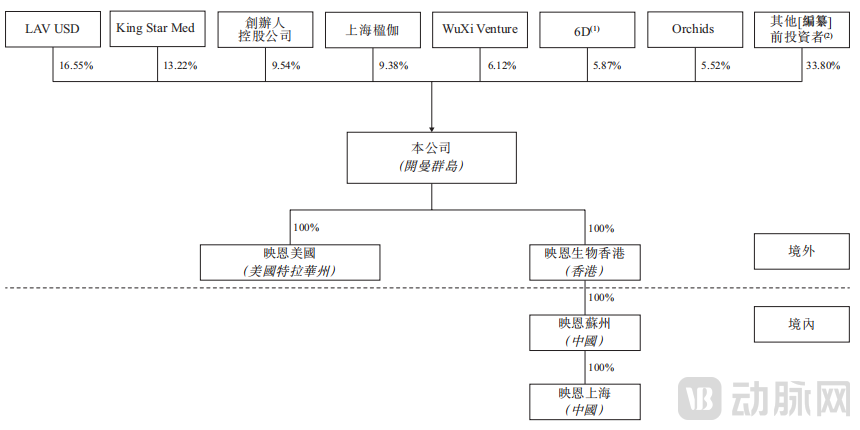
DualityBio’s Shareholding Structure, Source: Prospectus
Four Major Technology Platforms, 12 Self-Developed Pipeline Candidates,
Six Candidates in Clinical Development
Guided by its core leadership team and supported by substantial funding from numerous shareholders, DualityBio has currently established four major ADC technology platforms: DITAC, DIBAC, DIMAC, and DUPAC.
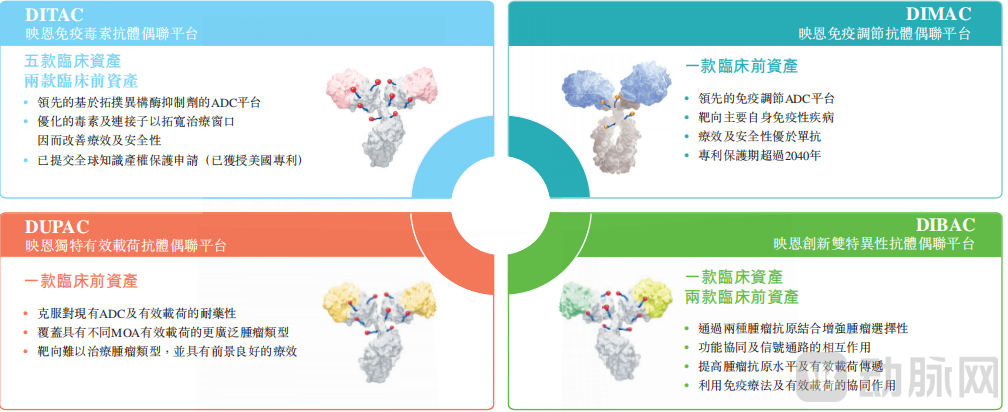
Four Major Technology Platforms (Source: Prospectus)
① DualityBio Immunotoxin Antibody-Drug Conjugate Platform (DITAC):DualityBio’s proprietary topoisomerase inhibitor-based ADC platform has been validated by global clinical data from over 1,000 patients across the United States, China, Europe, Australia, and other major markets. The development of this platform is based on significant technical improvements, screening, and optimization of its proprietary ADC component library, including its proprietary payloads P1003 and P1021. Consequently, DITAC enables DualityBio to design ADCs with key flexibility, achieving enhanced systemic stability, tumor-specific payload release, bystander killing effects, and rapid clearance of toxin payloads.
② DualityBio’s Innovative Bispecific Antibody Conjugation Platform (DIBAC):It is one of the few bispecific ADC platforms in the world. Compared with conventional ADC drugs, bispecific ADCs may offer significant advantages over traditional monospecific ADCs and combination therapies by integrating two distinct binding moieties into a single agent. Despite their promising prospects, the complexity of bispecific ADCs poses challenges in antibody engineering, stability, and manufacturing. The DIBAC platform has extensive experience in bispecific antibody engineering, as well as in AI-enabled target selection and antibody design.
③ DualityBio Immune Modulating Antibody-Drug Conjugate Platform (DIMAC):Equipped with DualityBio’s proprietary immunomodulatory payloads, this approach unlocks the potential of antibody-drug conjugates (ADCs) to address significant unmet needs in autoimmune diseases and other therapeutic areas. Currently, treatments for many chronic autoimmune diseases often lead to severe side effects. ADCs can reshape the treatment landscape for autoimmune diseases by providing targeted therapies with lower systemic exposure, enhanced efficacy, and improved safety profiles. Molecules developed using the DIMAC platform have demonstrated potent and broad anti-inflammatory activity in preclinical studies, characterized by prolonged duration of action, high stability, and low systemic exposure.
④ DualityBio Unique Payload Antibody-Drug Conjugate Platform (DUPAC):To develop linker-payload complexes with novel mechanisms of action that outperform traditional cytotoxic drugs, addressing the growing challenge of drug resistance and hard-to-treat tumors. Currently, DualityBio has made significant progress in many unique payload mechanisms and obtained candidate toxin payloads with broad anti-tumor activity against various solid tumors, which have demonstrated potent direct and bystander killing effects in preclinical studies.
Leveraging its four core technology platforms, DualityBio has established a pipeline of 12 self-developed ADC candidates, comprising six clinical-stage ADC candidates, two next-generation bispecific ADC candidates, one autoimmune disease-targeting ADC candidate, and several other preclinical ADC candidates. As of August 19, 2024, DualityBio was conducting seven global multi-regional clinical trials (“MRCTs”) across more than 230 clinical trial centers in 17 countries, with over 1,000 patients enrolled.
Its core product DB-1303/BNT323DB-1303 is a late-stage clinical HER2 antibody-drug conjugate (ADC) candidate currently undergoing two registration trials and one potential registrational study. The first indication, HER2-expressing esophageal cancer (EC), is expected to file for accelerated approval with the FDA as early as 2025. DB-1303 has the potential to become a new treatment option for patients with advanced solid tumors expressing HER2, including those with both high and low HER2 expression. Currently, DB-1303 has been granted Fast Track designation and Breakthrough Therapy designation by the U.S. FDA, as well as Breakthrough Therapy designation by China’s National Medical Products Administration (NMPA), for the treatment of patients with advanced EC who have experienced disease progression during or after treatment with immune checkpoint inhibitors.
Core Product DB-1311/BNT324DB-1311 is a B7-H3 antibody-drug conjugate (ADC) candidate with globally leading clinical progress. B7-H3, an important member of the B7 family, plays a key role in promoting tumor progression and metastasis. By binding to specific B7-H3 subtypes overexpressed on tumor cells, DB-1311 demonstrates robust selectivity. Combined with its highly potent payload, stable linker, and Fc-silenced monoclonal antibody, it may offer a favorable safety profile and a wide therapeutic window. In 2024, the U.S. Food and Drug Administration (FDA) granted Fast Track designation to DB-1311 for the treatment of patients with advanced/unresectable or metastatic castration-resistant prostate cancer (CRPC), as well as Orphan Drug Designation for the treatment of endometrial serous carcinoma (ESC).
In addition, DualityBio also has three key products., namely DB-1310, a first-in-class global HER3 ADC candidate drug for which DualityBio holds global rights; DB-1305/BNT325, a TROP2 ADC candidate drug that focuses on indications currently underexplored by other TROP2 ADC candidates (such as ovarian cancer [OC]), and has the potential to become a cornerstone frontline therapy for non-small cell lung cancer (NSCLC), OC, cervical cancer (CC), and triple-negative breast cancer (TNBC) through combination therapies; and DB-2304, a potential first-in-class BDCA2 ADC candidate drug for the treatment of systemic lupus erythematosus (“SLE”) and cutaneous lupus erythematosus (“CLE”).
Faced with such an extensive pipeline portfolio, DualityBio adopts a tiered strategy in ADC drug development.
Its first wave of candidate drugs, empowered by the DITAC platform, serves as a proof-of-concept for DualityBio’s ADC technology,Including: ① ADC candidates with clinically validated targets, strategically developed for differentiated indications, represented by the core product DB-1303 and key product DB-1305; ② ADC candidates under global development targeting high-potential targets and underserved indications, represented by the core product DB-1311 and key product DB-1310.
The second wave of candidate drugs will be developed based on the DIBAC and DIMAC platforms, with representative products being next-generation ADCs featuring novel structures and components, thereby enabling the application of ADCs in first-line treatment, difficult-to-treat cases, and new therapeutic areas., such as bispecific ADCs, including DB-1419, DB-1418, and DB-1421, and immunomodulatory ADCs for autoimmune diseases, including DB-2304.
The third wave of candidate drugs, supported by the DUPAC platform, represents DualityBio’s forward-looking layout in the field of novel ADC payloads and linker technologies.It has the potential to break through the current paradigm of antibody-drug conjugate (ADC) therapeutics, offering new possibilities for treating refractory tumors and holding promise for overcoming resistance developed after existing ADC therapies.
Holding RMB 1.37 billion in cash and cash equivalents,
Milestones Expected to Be Achieved in Abundance
Similar to most early-stage biotech startups, although DualityBio has an extensive pipeline, it has not yet received marketing approval for any drug candidates nor generated any revenue from product sales to date. Costs and expenses related to R&D activities constitute the largest component of DualityBio’s cost structure. For 2022, 2023, and the three months ended March 31, 2023 and 2024, its costs and expenses related to R&D activities were RMB 339.9 million, RMB 986.7 million, RMB 125.9 million, and RMB 490.4 million, respectively.
For this IPO, DualityBio also plans to primarily allocate the proceeds from fundraising to research and development (R&D) and related activities: ① researching, developing, and commercializing core products (DB-1303 and DB-1311); ② funding R&D for key products; ③ providing capital for the continuous development of its ADC technology platform, advancing other pipeline assets, and exploring and developing new drug assets; ④ working capital and other general corporate purposes.
However, unlike most Biotech companies that merely burn cash, DualityBio has secured substantial upfront payments and a continuous stream of milestone payments through collaborations with major pharmaceutical firms, including BioNTech (for DB-1303, DB-1311, and DB-1305), Adcendo (for ADC assets targeting specific indications using our payload-linker technology), BeiGene (for DB-1312), Sinocan Pharmaceutical, and Harbour BioMed. The total value of these transactions exceeds $4 billion (including upfront and subsequent milestone payments), providing the company with robust self-sustaining financial capabilities.
Last year alone, DualityBio entered into four collaborations each with BioNTech and BeiGene, with a total deal value of approximately $3 billion. Furthermore, according to BioNTech’s latest corporate presentation released this May, its ADC portfolio comprises four core drug candidates, three of which originate from DualityBio.
According to the prospectus, DualityBio’s revenues for 2022, 2023, and the three months ended March 31, 2024, were approximately RMB 1.6 million, RMB 1.787 billion, and RMB 641 million, respectively; the losses for the same periods were approximately RMB 387 million, RMB 358 million, and RMB 65.942 million, respectively.As of March 31, 2024, DualityBio’s cash and cash equivalents and restricted cash amounted to RMB 1.373 billion.
As its product pipeline advances, DualityBio’s ADCs are expected to achieve commercialization in the coming years. The company plans to maximize the commercial value of its drug candidates by selecting the optimal business model, which may include building internal commercialization capabilities and/or collaborating with third parties such as distributors, contract sales organizations (“CSOs”), and licensing partners.
Favorable timing (ADCs have experienced ups and downs but have reached new heights in recent years), the right people (founders with intersecting backgrounds in investment and science), and advantageous conditions (backed by major investment institutions and the rapid market growth of domestically produced ADCs)—the success of DualityBio, this dark horse, is no accident. It has carved out a unique path for the rise of Chinese ADC companies, also bringing confidence to subsequent biotech firms in the ADC field. We look forward to DualityBio accelerating its development after listing on the capital market, bringing hope to patients in the fields of oncology and autoimmune diseases at an early date.