

China's First Domestic IL-17A Inhibitor Xeligekimab Approved for Moderate-to-Severe Plaque Psoriasis, Filling a Critical Therapeutic Gap

GENRIX BIO
Developer of Novel Monoclonal Antibody Drugs
On August 27, GENRIX BIO announced that its self-developed Class 1 novel drug, secukinumab injection (brand name: Jinlixi®, product code GR1501, a recombinant fully human anti-IL-17 monoclonal antibody), has officially received marketing approval from the National Medical Products Administration (NMPA).For the treatment of moderate to severe plaque psoriasis。
It is reported that the approved specification for secukinumab is 100 mg/1 mL per vial. The recommended regimen involves subcutaneous injections of 200 mg (administered as two 100 mg injections) at Weeks 0, 2, 4, 6, 8, 10, and 12, followed by a maintenance dose of 200 mg (administered as two 100 mg injections) every 4 weeks.
Secukinumab Injection is the first domestically produced anti-IL-17A monoclonal antibody approved for marketing, breaking the monopoly of foreign pharmaceutical companies in the anti-IL-17A monoclonal antibody market and filling the gap in the field of domestic biological agents for psoriasis.
Professor Zhang Jianzhong, Peking University People’s Hospital, Lead Investigator for the Registration Clinical Trials of Secukinumab in ChinaHe stated, “China has a large population of patients with psoriasis, and conventional treatment modalities are insufficient to meet their therapeutic needs. The introduction of secukinumab injection provides a novel treatment option for Chinese patients with psoriasis. As a fully human IgG4-subtype IL-17 inhibitor independently developed in China, it represents a significant addition to the country’s psoriasis treatment landscape. We believe that more patients with psoriasis in China will benefit from this medication in the future, thereby transforming the future treatment paradigm for psoriasis.”
Psoriasis, commonly known as "psoriasis," is an immune-mediated, chronic, relapsing, inflammatory, systemic disease triggered by a combination of genetic and environmental factors, with typical clinical manifestations of scaly erythema or plaques.Epidemiological surveys indicate that the prevalence of psoriasis in China is approximately 0.47%, with nearly 7 million patients currently affected, of whom about 57% have moderate-to-severe psoriasis.Psoriatic skin lesions affect appearance, not only causing social barriers and negative psychological impacts on patients’ lives, work, and marriages, but also leading to comorbidities such as arthritis, obesity, hypertension, and major adverse cardiovascular events.
According to the "2023 Blue Book on the Current Status of Psoriasis Diagnosis and Treatment in China," data from the past two years based on the Dermatology Life Quality Index (DLQI) scores indicate a slight decrease in the proportion of patients with mild disease and a modest increase in the proportion of those with moderate-to-severe disease. However, assessments using the Psoriasis Area and Severity Index (PASI) and Body Surface Area (BSA) involvement show a slight decline in the proportion of severe cases and a marginal rise in the proportion of mild cases.This divergent trend reflects that although the severity of skin lesions in patients has slightly decreased in recent years, their experienced quality of life has deteriorated, suggesting an increased demand for quality of life among patients. Clinicians should consider providing more aggressive treatment as appropriate.
Compared with conventional therapies, biologics achieve higher rates of skin lesion clearance, demonstrate a favorable safety profile, and have driven updates in relevant clinical guidelines. The Chinese Guidelines for the Diagnosis and Treatment of Psoriasis (2023 Edition) states that,Clinical evidence has confirmed that biologics are superior to conventional therapies; therefore, complete skin clearance or achieving PASI 90 and PGA 0/1 is recommended as the indicator of satisfactory efficacy.As biologics drive advances in efficacy, the treatment goals for psoriasis have escalated from PASI 50 to PASI 90/100.
The Blue Book points out that,From 2020 to 2023, the proportion of patients receiving biologic therapy showed a year-on-year increase, and the proportion of patients undergoing systemic therapy—comprising those treated with biologics combined with conventional systemic agents—increased significantly.Currently, biologics approved for marketing in China for the treatment of patients with moderate-to-severe psoriasis mainly include early TNF-α inhibitors, IL-17A inhibitors, and IL-12/23 inhibitors. Novartis’s IL-17A inhibitor secukinumab and Johnson & Johnson’s IL-12/23 inhibitor guselkumab both entered the Chinese market in 2019.
According to Frost & Sullivan data, the market size of psoriasis drugs in China was $1.1 billion in 2021 and is projected to grow to $9.5 billion by 2030, representing a compound annual growth rate (CAGR) of 27.1%. Among these, biologics accounted for 29.3% of the market share in 2021, which is estimated to rise to 50.3% by 2030, indicating broad market prospects.
Certainly, breaking into the psoriasis market—where clinical patient awareness is limited and biologic penetration has not yet reached high levels—is no easy feat. Fundamentally, domestic innovative drugs must make strenuous efforts to strengthen their core competencies.
It is reported that secukinumab is the only fully human (IgG4 subtype) monoclonal antibody targeting IL-17A approved for marketing worldwide.Secukinumab targets IL-17A. By specifically binding to and clearing IL-17A, the core effector molecule in the IL-23/IL-17 axis—a key pathogenic pathway—it blocks the interaction between IL-17A and IL-17RA, thereby inhibiting the initiation and progression of inflammation. This mechanism leads to high rates of skin lesion clearance and plays a preventive, mitigating, and delaying role in autoimmune diseases such as plaque psoriasis and axial spondyloarthritis.
Fully Human Antibody
Fully human antibodies refer to antibodies composed entirely (100%) of human-derived components, without any murine components. They are designed to maximize the reduction in the risk of adverse reactions while ensuring that affinity remains unchanged. Clinical studies have shown that selicrelumab does not induce HAMA responses (human anti-mouse antibody responses). HAMA responses are reactions produced by the human body against murine antibodies, which can accelerate the clearance of murine antibodies, leading to ineffective repeated treatments and sometimes causing allergic reactions. The 2023 "Expert Consensus on Treat-to-Target with Biologics for Psoriasis" points out that if patients are prone to allergic reactions, fully human biologics should be chosen whenever possible.
IgG4 Subtype
Regarding the selection of monoclonal antibody subtypes, the IgG4 subtype of selicrelumab is closely aligned with clinical therapeutic objectives. The IgG4 subtype typically targets immune cells and lacks antibody-dependent cellular cytotoxicity (ADCC) and complement-dependent cytotoxicity (CDC) effects, while exhibiting weak antibody-dependent cellular phagocytosis (ADCP) activity and low cytotoxicity. It does not induce killing or phagocytosis of target cells (such as cytotoxic T lymphocytes [CTLs]), thereby preventing excessive "immune activation." This profile makes it more suitable for the development of therapies for autoimmune diseases.
The unique “half-molecule exchange” phenomenon characteristic of IgG4 subclass molecules can compromise the structural stability of antibodies. Therefore, through its independently developed dual-vector phage display platform technology, Celiquizumab optimizes the IgG4 framework by substituting serine with proline in the hinge region (S→P), thereby preventing half-molecule exchange and enhancing antibody structural stability.
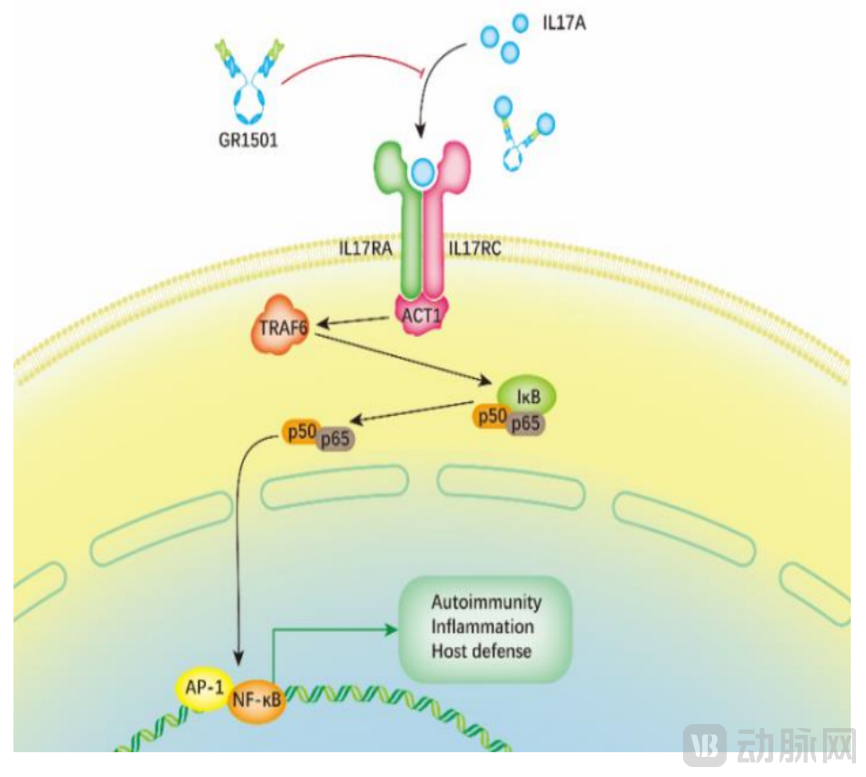
(Mechanism of Action of Secukinumab)
Excellent framework and stable structure endow secukinumab with high affinity, low immunogenicity, and favorable anti-inflammatory effects. Preclinical studies have demonstrated significant inhibition of proinflammatory cytokines. Data from the 60-week observation period in Phase III clinical trials show thatSecukinumab demonstrates a favorable safety profile and is well tolerated.The incidence rates of SAEs (Serious Adverse Events) and TEAEs (Treatment-Emergent Adverse Events) leading to trial withdrawal were both below 1%. The vast majority of TEAEs were Grade 1–2 in severity, and all resolved or improved.
As a fully human IgG4-subtype IL-17A inhibitor, secukinumab has demonstrated outstanding efficacy in Phase III clinical trial data.Compared with placebo, secukinumab demonstrated a rapid onset of action, with significant improvement in skin lesions observed from Week 2 in the treatment group. The proportions of patients achieving PASI 75 and PGA 0/1 were high at Week 4 (both P<0.001). At Week 12, the PASI 90 response rate was 74.4%, and the PASI 100 response rate was 50.2%.
Secukinumab demonstrates durable efficacy, maintaining high levels of skin lesion improvement. Patients experience significant and stable improvements in quality of life, with a low relapse rate. At 52 weeks, PASI and PGA 0/1 responses remain stable, and the relapse rate is only 0.4%, greatly addressing the urgent need among psoriasis patients to "reduce relapses."
The successful launch of secukinumab biosimilar marks the debut of GENRIX BIO’s first commercialized product, following its listing on the STAR Market of the Shanghai Stock Exchange last year. Coupled with robust commercialization strategies and market expansion plans, GENRIX BIO is poised for significant revenue growth.
According to disclosures, GENRIX BIO has recently entered into agreements with China Resources Pharmaceutical Commercial Group, Beijing Yuanxin Technology Group Co., Ltd., and Chongqing Pharmaceutical (Group) Co., Ltd.,Shanghai Pharmaceuticals Holding Co., Ltd.Achieve strategic cooperation, conduct in-depth collaboration based on respective advantages, and realize rapid market coverage of products.In terms of industrialization capabilities, GENRIX BIO initiated the Phase I expansion and renovation of its antibody industrialization base in 2022. The project has completed the addition of 20,000 L in bioreactor fermentation capacity, bringing the total capacity to 24,400 L, which can rapidly support the commercial production of new drugs. Furthermore, the Phase II project of the antibody industrialization base is planned to add an additional 40,000 L of bioreactor fermentation capacity.
While rapidly advancing commercialization, GENRIX BIO is also continuously raising the barriers in drug discovery and source innovation.Secukinumab was incubated on GENRIX BIO’s proprietary novel antibody drug discovery platform. By screening lead molecules from a large-capacity fully human antibody library, the platform enables rapid optimization and engineering of antibody drugs, enhancing molecular affinity, specificity, expression levels, and humanization, thereby breaking through the bottleneck of low efficiency associated with traditional antibody screening technologies.
In the antibody discovery phase, GENRIX BIO possesses monoclonal antibody and bispecific antibody drug discovery technology platforms based on a novel phage display system. In the drug development phase, GENRIX BIO has established an efficient process development platform for recombinant antibody drugs and has completed process development and pilot-scale production for more than ten therapeutic antibodies.
In addition, GENRIX BIO adopts a pipeline layout strategyDual-Track Development in Autoimmune and Infectious DiseasesStrategies:The marketing application for the second indication of selicrelumab—radiographic-positive axial spondyloarthritis—has been accepted; Phase III clinical trials have been initiated for GR1802 in the treatment of moderate-to-severe atopic dermatitis and chronic rhinosinusitis with nasal polyps; GR1801, the world’s first bispecific antibody for passive immunization against rabies, has entered Phase III clinical trials; and both GR2001 (anti-tetanus monoclonal antibody injection) and GR1803 (anti-BCMA×CD3 bispecific antibody injection) have been successively included in the Breakthrough Therapy Designation program by the Center for Drug Evaluation (CDE).
Although autoimmune diseases represent the second-largest disease market globally, this sector in China has long faced numerous challenges: slow market expansion, and significant hurdles in public education, clinical development, and product promotion. However, substantial unmet clinical needs point to a potential blue-ocean market, offering ample room for exploration by domestic innovative pharmaceutical companies committed to long-term innovation in autoimmune therapeutics.
Today, this landscape has undergone a fundamental transformation. The era of “no available treatments” and “unknown specific therapies” is now history. Multinational corporations (MNCs) are actively entering the autoimmune disease sector, imported innovative drugs are being included in national medical insurance coverage, and domestically developed innovative drugs are being launched consecutively.Domestic innovative biologics will help rapidly expand the psoriasis biologic market, where penetration rates remain low, by leveraging advantages in efficacy, cost-effectiveness, and local clinical data.
With imported biologics having paved the way for patient and market education, domestically developed innovative biologics with proven efficacy and robust clinical data are now expanding their reach. The blueprint for biologics in autoimmune diseases is being realized, offering clinical patients a broader selection of highly effective, high-quality domestic therapeutic options.