

Fangzhou Jianke Reports 395% Surge in Adjusted Net Profit in First Half-Year Post-IPO

Fangzhou Pharmaceutical
Chronic Disease Service Platform
On August 28, Fangzhou Pharmaceutical released its first post-IPO earnings report. In the first half of 2024, the company achieved total revenue of RMB 1.323 billion.
Amidst the wave of internet healthcare, Fangzhou Pharmaceutical has established a comprehensive online chronic disease management platform. Leveraging effective platform operations and enhanced technology to improve operational efficiency, the company’s adjusted net profit for the first half of 2024 surged by 395% year-on-year, a figure that more accurately reflects its business performance and operational capabilities.
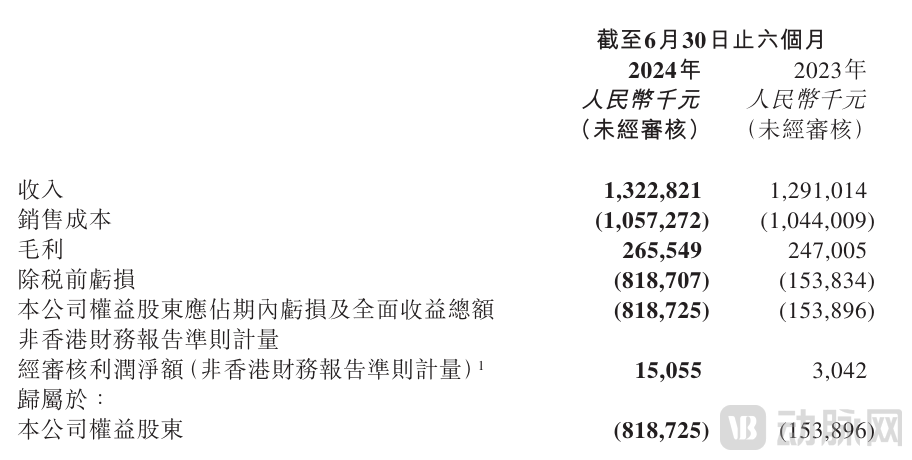
Fangzhou Pharmaceutical’s Performance Growth; Image Source: 2024 Interim Results Report
After experiencing a period of rapid development starting in 2020 and a phase of clearance and adjustment in 2023, the internet healthcare sector has now entered its harvest period. Leading companies have sequentially reported positive developments, whether through clearer and more focused business directions, continuous growth in revenue scale, or turning points in profitability... The value of the internet healthcare industry is once again becoming prominent.
Internet healthcare has become an important component of the medical service system.
In recent years, the state has issued multiple policies on internet-based healthcare, including the “Opinions of the General Office of the State Council on Promoting the Development of ‘Internet + Medical Health’” and the “Notice on Deeply Advancing the ‘Five Ones’ Service Initiative for ‘Internet + Medical Health,’” supporting internet-based healthcare in providing patients with convenient services such as follow-up consultations, prescription renewals, and online medication purchases.
In recent years, a series of favorable policies have strongly supported the expansion of internet-based healthcare into broader health and medical scenarios. The National Health Commission, in its "Action Plan for Improving Medical Access and Enhancing Patient Experience (2023–2025)," encourages the exploration of "Internet + Pharmaceutical Services," while key tasks in healthcare reform require deepening the application of "Internet + Healthcare" in health management. These frequent policy incentives have created a favorable environment for innovation within the industry.
Meanwhile, since the implementation of the National Health Commission’s “Detailed Rules for the Supervision and Administration of Internet-Based Diagnosis and Treatment (Trial),” various provinces have successively formulated and implemented regulatory measures tailored to local conditions. These efforts are steering the industry toward a more standardized and healthy development path, thereby facilitating its sustainable growth.
Policy encouragement and regulation are equally emphasized, reinvigorating industry vitality, gradually improving market health, and drawing more service providers into internet-based medical services.
To deliver greater value within the healthcare service system, Fangzhou Pharmaceutical continuously expands and optimizes its service resources.
Since 2024, Fangzhou Pharmaceutical has attracted physicians to join its online platform through various initiatives and improved physician retention rates, thereby expanding coverage of specialized services to meet the diverse needs of users.
A survey of internet-based physicians conducted by VCBeat’s VBInsight revealed that factors influencing doctors’ choice of telemedicine platforms include the quantity and quality of platform users, the standardization of clinical workflows and content, the platform’s social influence, the revenue-sharing ratio for consultation fees, and the ease of use of physician-facing tools.
Fangzhou Pharmaceutical’s chronic disease management service platform has enhanced doctors’ service quality and efficiency by expanding its operations team and introducing new platform features. By establishing an academic exchange platform and an online doctor-patient community, the platform enables physicians to access cutting-edge medical information during fragmented time intervals, disseminate professional medical science popularization content, and bridge the gap between doctors and patients. As a result of these initiatives, the platform’s appeal to physicians has significantly increased.
As of June 30, 2024, the number of registered physicians on the chronic disease management service platform increased to 217,000. Approximately 59.3% of these registered physicians are from tertiary hospitals, and about 38.8% hold the professional title of associate chief physician or higher.
In terms of pharmaceuticals, Fangzhou Pharmaceutical continues to strengthen its supply chain capabilities.
Fangzhou Pharmaceutical has maintained close collaboration with upstream pharmaceutical manufacturers, laying a solid foundation for supply chain infrastructure and ensuring stable supply at competitive prices.
As of June 30, 2024, Fangzhou Pharmaceutical has established close collaborations with over 800 pharmaceutical companies and a growing number of upstream suppliers, offering 213,000 drug SKUs, of which 61.7% are prescription drugs, thereby more comprehensively meeting the medication needs of patients with chronic diseases.
Notably, Fangzhou Pharmaceutical has actively integrated with the medical insurance settlement system to provide users with a comprehensive, end-to-end convenient chronic disease management service.
As early as 2019, the National Healthcare Security Administration issued the “Guiding Opinions on Improving Price and Medical Insurance Payment Policies for ‘Internet+’ Medical Services,” which clarified that prices for “Internet+” medical services are to be uniformly managed under the policy framework for medical service pricing and included in the scope of insurance coverage in accordance with relevant policies.
In recent years, various regions have advanced the implementation of the aforementioned policies in accordance with the local development of internet-based medical services and the status of medical insurance funds. To date, all provinces across China have issued policy documents on pricing for “Internet+” medical services, establishing enforceable standards for the pricing and reimbursement scope of online medical and pharmaceutical services. Provinces and municipalities such as Beijing, Shanghai, and Guangdong have also actively opened up medical insurance payment channels for O2O (online-to-offline) medication purchases.
For example, the Guangdong Provincial Healthcare Security Administration introduced the “Three Supports” measures, incorporating consultation fees and medication costs for online follow-up visits into the scope of reimbursement from the basic medical insurance pooled fund, thereby further strengthening the guarantee of medical care and medication for outpatients with chronic diseases. In 2024, the Guangzhou Municipal Healthcare Security Administration promoted mobile payment via medical insurance at designated retail pharmacies, enabling online medical insurance settlement for drugs under the “dual-channel” mechanism, online medical insurance settlement for externally dispensed prescriptions for general outpatient services, and the purchase of over-the-counter drugs using personal medical insurance accounts online.
During this process, Fangzhou Pharmaceutical swiftly responded to national policies and achieved significant progress in medical insurance payment in 2024. Leveraging Guangzhou Qishi Internet Hospital as its foundation, Fangzhou Pharmaceutical established an online medical insurance payment channel, enabling patients to use both the pooled fund and their personal accounts to pay for prescription medications for common outpatient conditions. Meanwhile, the online retail pharmacy service platform launched a real-time settlement function for drugs listed in the “Dual Channel” catalog. Patients with chronic diseases can utilize the Fangzhou Pharmaceutical Medical Insurance Assistant mini-program within the Yue Yibao (Guangdong Medical Insurance) platform to settle Dual Channel prescriptions issued by hospitals, with payments covered by the pooled fund and personal accounts.
Medical insurance payments for internet-based healthcare and pharmaceutical services require technical integration among various stakeholders, including platforms, medical insurance systems, pharmacies, and delivery providers. The rapid implementation of this payment system connectivity is attributable to Fangzhou Pharmaceutical’s robust technical team and established technological capabilities.
Meanwhile, health insurance authorities exercise strict oversight over designated medical and pharmaceutical institutions. Fangzhou Pharmaceutical has secured policy support from the health insurance system by consistently maintaining effective control over its online and offline service processes and quality. With the integration of health insurance payment options, Fangzhou Pharmaceutical will leverage this endorsement to gain greater user recognition.
Overall, Fangzhou Pharmaceutical has further enhanced its chronic disease management capabilities by strengthening the accumulation of service resources across healthcare, pharmaceuticals, and medical insurance.
The chronic disease management market offers substantial growth potential, with its expansion accelerating as China’s population ages. In the course of advancing the Healthy China initiative, chronic disease management has become a top priority. Since 2023, special action implementation plans targeting cardiovascular and cerebrovascular diseases, cancer, chronic respiratory diseases, diabetes, and other conditions have been successively released under the Healthy China Action framework.
Online chronic disease management can play a significant role in these efforts. Taking hypertension as an example, the *Chinese Guidelines for the Prevention and Treatment of Hypertension (2024 Revised Edition)* indicates that the prevalence of hypertension in China continues to rise, with a more pronounced upward trend observed in recent years among middle-aged and young adults as well as rural populations. Although the awareness, treatment, and control rates among hypertensive patients have improved markedly, they remain overall low, at 51.6%, 45.8%, and 16.8%, respectively. The guidelines recommend fully leveraging cutting-edge emerging technologies—including internet-based healthcare, wearable devices, and artificial intelligence—to explore and optimize hypertension management models suited to China’s national conditions.
Since 2024, patient-centricity has remained Fangzhou Pharmaceutical’s top priority. The platform provides patients with comprehensive services, including follow-up consultations, prescription counseling, patient education, medication reminders, and refill notifications.
As its service capabilities improve and market opportunities emerge, Fangzhou Pharmaceutical's chronic disease management-related businesses are entering a fast lane.
The most notable indicator is the rapid growth in user base. As of June 30, 2024, Fangzhou Pharmaceutical’s chronic disease management platform had accumulated 45.6 million registered users, with an average of 8.9 million monthly active users, sustaining high levels of user engagement and platform activity.
Driven by greater user recognition of its chronic disease management services, Fangzhou Pharmaceutical saw a concurrent rise in revenue from certain core business segments, with significant growth recorded in its online retail pharmacy services and customized content and marketing solutions.
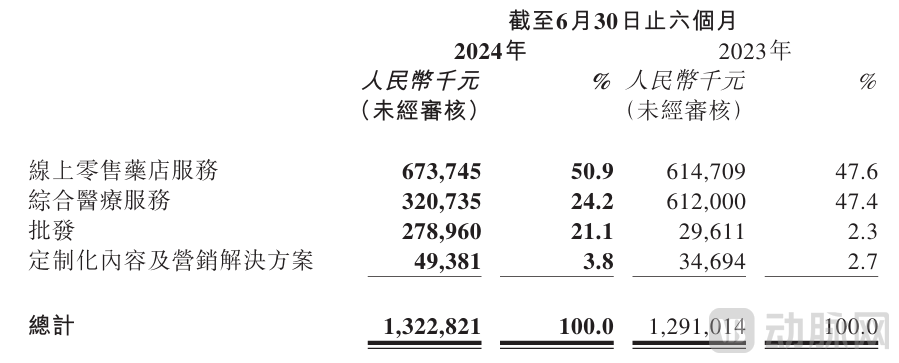
Revenue Growth of Fangzhou Pharmaceutical’s Business Segments, Image Source: 2024 Interim Results Report
Specifically, revenue generated from online retail pharmacy services increased from RMB 610 million in the first half of 2023 to RMB 670 million in the first half of 2024, primarily driven by increased sales of pharmaceuticals and health supplements, continuous growth in the user base, and supply chain advantages.
In the first half of 2024, customized content and marketing solutions generated revenue of nearly RMB 50 million, representing a year-on-year increase of 42.3%, primarily driven by the continuous expansion of the corporate client base and sustained deepening of marketing initiatives.
As overall business growth accelerates, economies of scale are becoming evident. On one hand, broader specialty coverage and higher-quality chronic disease management services have driven user base expansion. On the other hand, with the rapid growth of registered physicians and patients on the platform, Fangzhou Pharmaceutical has attracted more pharmaceutical companies to collaborate, thereby strengthening its bargaining power. This enables the company to offer more price-competitive medications to users, creating a virtuous cycle that further enhances profitability.
Reflected in the performance data, Fangzhou Pharmaceutical's gross profit margin increased to 20.1% year-on-year from the first half of 2023.
Technology is another major driver of internet healthcare, enabling enterprises to improve quality, enhance efficiency, and reduce costs.
Particularly since 2023, large medical models have advanced rapidly, becoming an essential choice for service providers and technology companies. Currently, AI large models have seen exploratory applications in nine major areas, including medical services, patient services, operational management, and clinical research. Internet healthcare can leverage these large models to enhance the proactivity and interactivity of patient services, thereby improving care continuity and treatment outcomes.
For internet-based healthcare, large language models can deliver value to multiple stakeholders, including patients, physicians, and hospitals. These applications encompass providing patients with intelligent, end-to-end consultation and health management services; offering physicians tools for assisted diagnosis and research support; and helping healthcare institutions carry out medical quality control, risk detection, and data analytics. Technological empowerment presents another significant development opportunity for internet-based healthcare.
Fangzhou Pharmaceutical has also intensified its research, development, and application of artificial intelligence technologies, including large language models. Currently, Fangzhou Pharmaceutical has completed the development and deployment of AI solutions across various business scenarios, such as intelligent visual robots, intelligent text-based robots, and intelligent auxiliary management systems.
First, technology is applied throughout the entire workflow of physicians; in particular, AI-powered physician assistants can help doctors manage patients efficiently and ensure the quality of care.
Secondly, Fangzhou Pharmaceutical leverages big data analytics to enhance user experience and continuously improve its products and services. By analyzing extensive user behavior records and data, Fangzhou Pharmaceutical can more accurately identify user needs and provide personalized services, such as medication guidance, prescription refill reminders, side effect warnings, and other targeted medical content.
Furthermore, Fangzhou Pharmaceutical applies intelligent technologies in its operational management to reduce costs. Notably, intelligent supply chain management plays a particularly significant role in cost reduction and efficiency improvement, helping to lower the procurement costs of SKUs.
Looking at the business and performance in the first half of 2024, Fangzhou Pharmaceutical promoted its penetration in the chronic disease management service market through the development of service resources and technical capabilities, thereby driving performance growth.
Moving forward, Fangzhou Pharmaceutical will continue to adhere to its existing strategy, expanding business scale and strengthening profitability. For instance, as the platform’s reputation solidifies and user habits become more entrenched, it will dynamically adjust and optimize pricing levels to enhance gross margins. By leveraging increasing procurement volumes and bargaining power, the company will reduce overall procurement costs, thereby offering medications with greater price competitiveness to users. Additionally, it will develop high-margin customized content and marketing solution businesses to improve overall gross margin performance.
As the operational performance of various internet healthcare companies continues to improve, the industry’s prospects for sustainable development have become clearer. Internet healthcare must adhere to a long-term strategy, balancing its commitment to delivering public service value with the equally important goal of realizing corporate commercial value.