

Shanghai Ninth People's Hospital to Transfer Auxiliary Orthodontic Kit for RMB 7 Million

Smartee
Oral Medical Device R&D and Manufacturer
Recently, Shanghai Ninth People's Hospital Affiliated to Shanghai Jiao Tong University School of Medicine issued a public notice proposing to transfer a set of auxiliary orthodontic kits for dentofacial deformities to Shanghai Smartee Denti-Technology Co., Ltd. for RMB 7 million.
The adjunctive orthodontic kit specifically includes: a method for fabricating tools for modified corticotomy (ZL202011439959.7), an FS orthodontic appliance (ZL202223049346.X), an anterior tooth traction device (ZL202223090896.6), an FS orthodontic appliance and its manufacturing method (202211433821.5), and an anterior tooth traction device and its method of use (202211439837.7), comprising a total of three granted patents, including two utility model patents.
Among the patents involved in this transaction, one patent is dedicated to improving the manufacturing method of tools for corticotomy.
Skeletal Class II High-Angle MalocclusionSkeletal Class II high-angle malocclusion refers to a type of malocclusion characterized primarily by disharmony between the maxilla and mandible in both the sagittal and vertical dimensions. Patients present with an ANB angle greater than 5°, excessive vertical facial development, an SN-MP angle greater than 40°, or an FH-MP angle greater than 32°.
For severe skeletal Class II high-angle cases, orthodontic treatment alone may not achieve ideal outcomes, necessitating a combined approach with orthognathic surgery. Orthognathic surgery typically involves osteotomy, repositioning, and rigid fixation of the jaws to adjust them to appropriate positions and relationships, thereby improving facial aesthetics and occlusal function. However, due to its significant invasiveness, high cost, and propensity for postoperative relapse, most patients exhibit low willingness to undergo this procedure.
For patients with skeletal Class II high-angle malocclusion who are indicated for orthognathic surgery, Shanghai Ninth People’s Hospital has designed a novel treatment model that is expected to reduce intraoperative trauma and alleviate the financial burden on patients. This model includes modified corticotomy on the buccal and palatal aspects of the bilateral maxillary posterior teeth, implantation of zygomatic titanium plates in the bilateral maxilla, and concurrent intrusion of the maxillary posterior teeth using a cast transpalatal arch to achieve vertical control.
Meanwhile, this approach creates the conditions for minimally invasive and highly efficient orthodontic treatment. Furthermore, it enables personalized customization, with items such as osteotomy guide plates, titanium plate traction hooks, and cast transpalatal arches all fabricated using three-dimensional digital printing.
Two patents, “FS Orthodontic Appliance” and “FS Orthodontic Appliance and Its Manufacturing Method,” are used to improve idiopathic condylar resorption.
Idiopathic Condylar Resorption: A Progressive Bone Resorption Disorder of the Mandibular CondyleIdiopathic condylar resorption is a progressive bone resorption disorder affecting the mandibular condyle. It has garnered significant attention due to its unclear etiology and pathogenesis, as well as its progressively worsening nature. The primary clinical manifestations in patients include posterior displacement of the mandible and decreased ramus height.
Currently, commonly used FS orthodontic appliances have some obvious defects. For example, they do not consider the position of the jawbone where the dental arch is located, require repeated adjustments and grinding of the FS orthodontic appliance worn by the patient, and suffer from issues such as imprecise and incomplete adjustments.
Shanghai Ninth People’s Hospital has designed a novel FS orthodontic appliance and its manufacturing method, which can precisely identify the ideal position of the condyle and ensure stability of the patient’s jaw position. The appliance consists of two components: a first segment and a second segment. During the initial phase of treatment, the patient wears only the first segment; once the jaw position has stabilized and reproducible occlusal movements are achieved, both the first and second segments are worn simultaneously. This design facilitates rapid stabilization of the jaw position, establishes a single, definitive occlusal position for the previously unstable mandible, and thereby enables prompt treatment of condylar resorption.
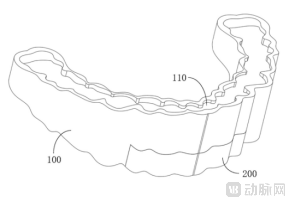
FS Orthodontic Appliance. Source: Claims
In addition, there are two patents primarily focused on the optimization of anterior tooth traction devices.
During orthodontic treatment, some patients present with conditions that preclude tooth movement, such as ankylosis between the tooth root and alveolar bone, or enlargement of bone islands at the root apex. In such cases, it is necessary to perform osteotomy on the small segment of alveolar bone enveloping the tooth, followed by distraction osteogenesis. However, most currently used distractors suffer from drawbacks including bulky size, difficulty in precise placement, and challenges in accurately controlling the direction of distraction, thereby compromising treatment outcomes.
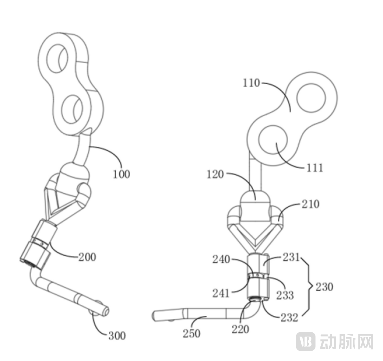
Anterior Tooth Traction Device and Method of Use Thereof — Source: Claims
Shanghai Ninth People’s Hospital Has Invented an Anterior Tooth Traction Device and Its Method of Use
Driven by heightened public awareness of oral health, continuous expansion of dental care service supply, and the introduction of numerous favorable policies for the dental industry, the orthodontics market has experienced sustained growth.
Compared with traditional orthodontics, clear aligner therapy offers advantages such as aesthetics, comfort, and removability. With the widespread adoption of new materials and technologies, and the deepening digitalization of dental clinical practice, digital diagnostic and treatment modalities represented by bracketless clear aligner therapy have grown rapidly, driving high-speed development of China’s clear aligner orthodontics industry. The White Paper on China’s Clear Aligner Orthodontics Industry shows that the compound annual growth rate (CAGR) of China’s clear aligner orthodontics market was 32.60% from 2015 to 2022, and is projected to be 16.4% by 2030.
For a long time, Invisalign and Angelalign have jointly constituted a “duopoly” among clear aligner manufacturers in the Chinese market. As the industry has gradually matured, more players have entered the clear orthodontics sector in recent years.
Zhejiang New Asia Medical Technology Co., Ltd.’s S.E align AiXinya bracketless clear aligners utilize a new generation of oral medical-grade polymer material—MaxControL. The AiXinya extraction-based clear aligner treatment protocol is based on precise analysis using DentalOrtho software and clinical validation. Through 3D optimized design of tooth movement in the sagittal, coronal, and vertical dimensions, it significantly enhances the control precision of tooth movement and the predictability of treatment outcomes in extraction cases treated with clear aligners.
Shanghai Smartee Denti-Technology Co., Ltd. and the Shen Gang Orthodontic Team have jointly developed the Smartee GS product series based on the concept of “jaw position reconstruction.” This series represents a new line of orthodontic products that uses facial aesthetics as the primary entry point, incorporating factors such as occlusion, alveolar process protrusion, and jawbone relationships into its diagnostic and treatment standards. The “jaw position reconstruction” technology diagnoses and classifies malocclusions based on patients’ facial features and provides corresponding solutions, making it better suited to the facial and oral characteristics of Chinese patients. Currently, Smartee’s GS clear aligner technologies, including models S8, S9, S10, S16, and S17, have been widely adopted in clinical practice.
Dr. Clear aligns its core strategy with big data models and artificial intelligence technologies, having launched a series of clear orthodontic solutions during its development phase, with an annual production capacity exceeding one million clear aligners. The company recently completed a Series A financing round worth hundreds of millions of yuan, exclusively invested by Qiming Venture Partners. Following this funding, the company will continue to advance the research, development, and construction of its fully automated production line for clear aligners.