

Four Provinces Include Assisted Reproductive Technology in Medical Insurance, Expanding Coverage to 19 Regions Nationwide
On August 27, the National Healthcare Security Administration released a statement,Starting from September 1, 2024, four provinces—Fujian, Henan, Shaanxi, and Tibet—officially included assisted reproductive technology in the scope of medical insurance reimbursement.. Since then, 19 provinces across China have included assisted reproductive technology in their medical insurance coverage.
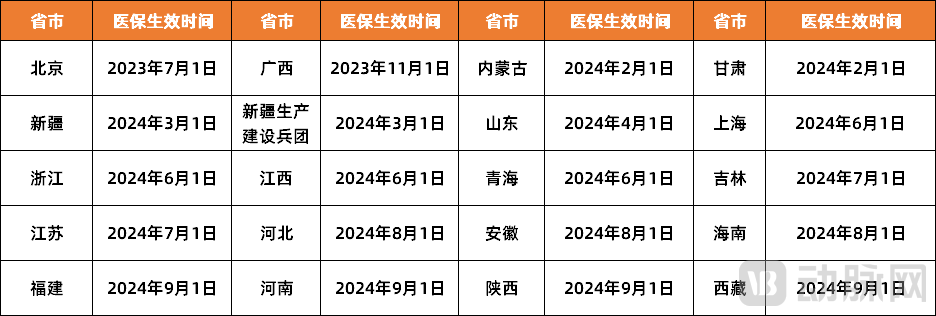 Figure 1. Nineteen provinces incorporating assisted reproductive technology into medical insurance and the effective dates of their policies (Source: National Healthcare Security Administration)
In fact, since Beijing first opened the door to including assisted reproductive technology (ART) in medical insurance on July 1, 2023, regions across China have been exploring how to incorporate ART into their medical insurance schemes over the past year. This momentum surged in 2024. Reportedly, among 19 provinces, apart from Beijing and Guangxi, the other 17 provinces included ART in their medical insurance coverage this year. In addition, Sichuan, Hubei, Hunan, Guangdong, and other regions are currently actively advancing related initiatives, with draft guidelines for public comment having been successively released.
Therefore, it is foreseeable thatAssisted Reproductive Technology Will Fully Enter the "National Health Insurance Era" in the FutureSo, what can this bring to the assisted reproductive technology industry?
Why Is It Urgent to Include Assisted Reproductive Technology in Medical Insurance?
Although assisted reproductive technology (ART) did not officially gain access to medical insurance coverage until July 2023, Beijing had already proposed in early 2022 to include multiple ART procedures under Category A reimbursement. However, due to various factors, the policy was ultimately abandoned.
Even so, the national government has not given up; in recent years, it has been actively promoting the inclusion of assisted reproductive technologies (ART) in medical insurance coverage. For instance, in August 2022, the National Health Commission, together with 17 other departments, issued the “Guiding Opinions on Further Improving and Implementing Proactive Fertility Support Measures,” which proposed gradually incorporating appropriate labor analgesia and ART services into the scope of fund reimbursement through established procedures. Since then, similar policies have emerged one after another, with increasingly substantial investment and support.
So, why is the state so committed to assisted reproductive technology?
This must be viewed from multiple perspectives,First and foremost, of course, is to boost the fertility rate.. As is well known, inclusion in the national medical insurance scheme entails price reductions. Taking Quanzhou City, Fujian Province, as an example, after assisted reproductive technology (ART) services were covered by medical insurance, the pricing of related service items was significantly reduced overall starting from September 1, with a maximum decrease of 76.96% and an average decrease of 27.54%. The direct impact of this change will be to promote an increase in the market penetration rate of ART, thereby driving up the fertility rate.
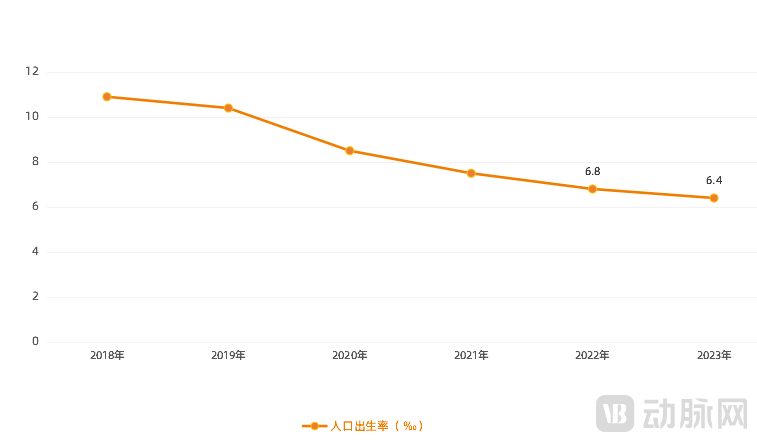
Figure 2. Changes in China’s Birth Rate from 2018 to 2023 (Data Source: National Bureau of Statistics)
This is critically necessary, as boosting the fertility rate has become an urgent priority. In 2022, China’s natural population growth rate stood at -0.60‰, marking the first return to negative population growth in 61 years. This trend intensified in 2023, with the number of births declining further to 9.02 million and the natural population growth rate dropping to -1.48‰. Moreover, this decline is not expected to abate; experts predict that China’s fertility rate will continue to fall in the coming years.
Of course, price reductions should not be viewed in isolation; while they help boost fertility rates, they also generate revenue for assisted reproductive technology (ART) companies. This is easy to understand: as market penetration rises significantly, order volumes naturally increase, driving corresponding growth in the revenue scale of relevant enterprises. It is reported thatThe assisted reproductive services covered by medical insurance mainly include ovulation induction monitoring, oocyte retrieval, artificial insemination, and embryo transfer., which is also the core technological focus of domestic assisted reproductive technology enterprises.
Taking the listed company Jinxin Fertility as an example, its main service offerings comprise three major segments: assisted reproductive services, ancillary medical services, and management services. Among these, assisted reproductive services constitute the primary revenue source, mainly providing in vitro fertilization (IVF) and artificial insemination services to patients with infertility. According to its performance in the first half of this year, Jinxin Fertility achieved a revenue of RMB 1.444 billion, representing a year-on-year increase of 8.24%. Notably, this marks the fourth consecutive year of business growth for Jinxin Fertility.
Finally, it is worth mentioning the regulation of the industry.As assisted reproductive technologies are included in medical insurance coverage, the industry will gradually move toward standardization.. This point is particularly important, according to Frost & Sullivan data statistics,In 2023, the penetration rate of assisted reproductive technology (ART) in China was only 9.2%., which is significantly lower than the 20% to 30% market penetration rates observed in Europe and the United States. In fact, this figure already reflects an improvement; prior to 2020, the penetration rate of assisted reproductive technology (ART) in China was even below 6%.
The reasons for this are, of course, multifaceted, but the most critical factor is the chaotic state of the industry, characterized by a proliferation of illicit “black market” reproductive services and the continuous expansion of gray-market activities, which has led to low customer trust. In response, in July 2023, the National Health Commission, the Central Political and Legal Affairs Commission, and ten other departments jointly issued the Work Plan for Launching a Special Campaign to Severely Crack Down on the Illegal Application of Human Assisted Reproductive Technologies. This initiative focuses on cracking down on various illegal and criminal activities arising from assisted reproduction, thereby regulating the market application of assisted reproductive technologies.
Certainly, including assisted reproductive technology (ART) in medical insurance coverage would yield similar benefits. On one hand, it would encourage more individuals to seek services at legitimate healthcare institutions; on the other hand, it would help standardize market pricing, thereby facilitating government regulation. It is precisely for these reasons that, over the past year or two, there has been intense competition within the ART sector to gain inclusion in the national medical insurance scheme.
Can Health Insurance “Save” the Assisted Reproductive Technology Industry?
In May 2021, the introduction of the “three-child policy” brought assisted reproductive technology (ART) into the public spotlight, thereby igniting growth across the entire ART industry. Reportedly, on the day the policy was announced, ART-related stocks in the secondary market rose collectively. By the close of trading, the A-share ART sector index had increased by 2.32%. In the Hong Kong stock market, Beikang Medical surged by 15.1%, while Jinxin Fertility rose by 17.51%.
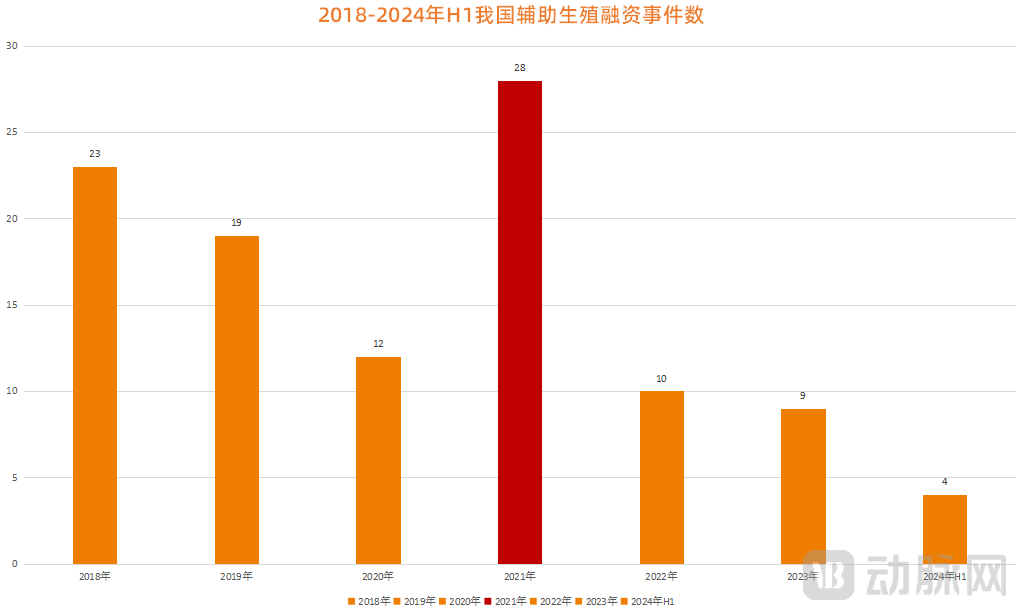 Figure 3. Number of Financing Events in China’s Assisted Reproductive Technology Sector, 2018–H1 2024 (Data Source: Statistical Bureaus of Various Cities)
This surge in interest gradually extended to the primary market. According to incomplete statistics from the VCBeat Orange Database, a total of 28 financing deals were completed in China’s assisted reproductive technology (ART) sector in 2021, with total funding exceeding RMB 1 billion. Nearly 50 top-tier institutions, including Sequoia Capital, IDG Capital, CICC Capital, and Shenzhen High-Tech Investment Group, actively invested in the space.
However, the buzz did not last. After entering 2022, assisted reproduction was quickly forgotten, with only 10 financing deals that year, and stock prices in the secondary market also declined to varying degrees. While this was partly due to the overall cooling of the market, the core reason lay in the inherent limitations of the assisted reproduction industry itself.
From a market perspective, due to the lack of strategic planning and insufficient market education,Many people still hold negative attitudes toward assisted reproductive technology.In this regard, a professional investor remarked, “China’s assisted reproductive technology (ART) has been developing for less than 30 years; more strictly speaking, it only began to gain momentum in the past decade. Coupled with the sensitivity surrounding reproductive issues and the fact that ART is not always perceived as medically essential, the market has seen limited growth despite the rising infertility rates in China in recent years. The core issue lies in the lack of public interest.”
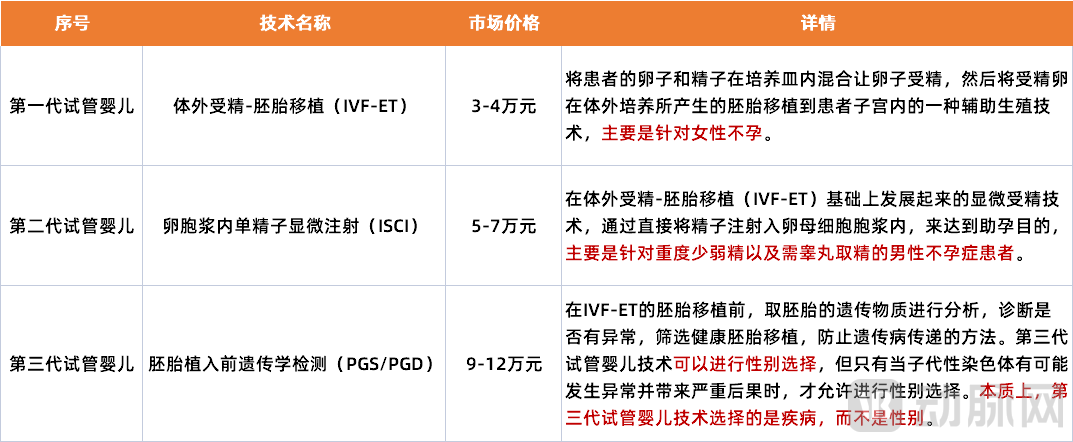 Figure 4. Details and Market Pricing (Reference) of Third-Generation IVF Technology
Secondly, in terms of price,High costs have also kept many people out.VCBeat’s research into the current market landscape reveals that the cost per cycle for first- and second-generation in vitro fertilization (IVF) ranges from RMB 30,000 to 70,000, while third-generation IVF costs between RMB 90,000 and 120,000 per cycle. Each cycle typically takes two to three months; however, due to success rate limitations, some patients require two to three embryo transfer attempts to achieve pregnancy. When accounting for living expenses, transportation, and accommodation incurred over the extended treatment period, the total cost of a single assisted reproductive technology (ART) journey can reach approximately RMB 100,000 to 200,000.
The primary reason for such high costs lies in the fact that China’s core assisted reproductive technology (ART) products remain predominantly import-dependent. According to a report released by Frost & Sullivan in 2022,China’s assisted reproductive technology (ART) industry exhibits a high degree of import monopoly in equipment and consumables, with an import share reaching 95% across approximately 40–60 product categories.。
Currently, this also reflects the insufficient innovation capacity of China’s assisted reproductive technology (ART) sector, which constitutes the final point regarding the industry’s developmental limitations: namely, low technological sophistication and immature service offerings. In fact, a considerable proportion of Chinese patients currently seek ART treatment abroad, particularly in Thailand, Malaysia, and the United States. Thailand, in particular, has gained significant popularity; it is reported that Thailand performs over 30,000 IVF cycles annually, with Chinese clients accounting for 80% of this volume. This trend is primarily driven by the higher success rates offered. CurrentlyChina's assisted reproductive technology success rate is approximately 40% to 60%., but Thailand has now reached over 75%, and coupled with the minimal price difference between the two parties, it naturally holds a greater advantage.
In fact, due to these limitations, China’s assisted reproductive technology (ART) companies are currently trapped in the awkward situation of rising revenue without corresponding profit growth. Taking Jinxin Fertility as an example, although its revenue continued to grow in the first half of 2024, its net profit declined by 15.16% year-on-year. Beikang Medical faced a similar scenario, with its net profit attributable to shareholders plummeting by 95.4% in the first half of 2024, leaving it still in a loss-making position. If listed companies are struggling in this manner, start-ups are facing even greater difficulties.
So, as assisted reproductive technology (ART) makes significant strides in being included in medical insurance coverage, can this bring a glimmer of new opportunity to the industry?
The answer is yes. On this matter, a senior investor remarked, “First and foremost, it will certainly encourage more people to pay for assisted reproductive technology (ART), significantly boosting market penetration. The direct impact will be increased revenue for enterprises, effectively alleviating their financial pressures. Meanwhile, to qualify for inclusion in the national medical insurance scheme, relevant companies will intensify their efforts, which will also attract more leading institutions to channel resources toward them, thereby driving upgrades in related technologies and services to some extent. Furthermore, as medical insurance coverage promotes standardization and normalization within the industry, the construction of the industrial chain will gradually become more complete and mature, providing substantial support for the development of the ART sector.”
Assisted Reproductive Technology: Still “Paradoxical”—Where Do We Go from Here?
In fact,Assisted reproductive technology has long been considered a niche sector that cannot be directly driven by policy., this is because it involves not only medical issues but also ethical and family concerns, and is even closely linked to the broader social environment. Nevertheless, it is undeniably a sector with consistent growth potential. Since 2015, the market size of assisted reproductive technology (ART) in China has maintained an annual growth rate of over 10%. From 2020 to 2025, its compound annual growth rate (CAGR) further increased to 14.5%, steadily progressing toward a trillion-yuan market.
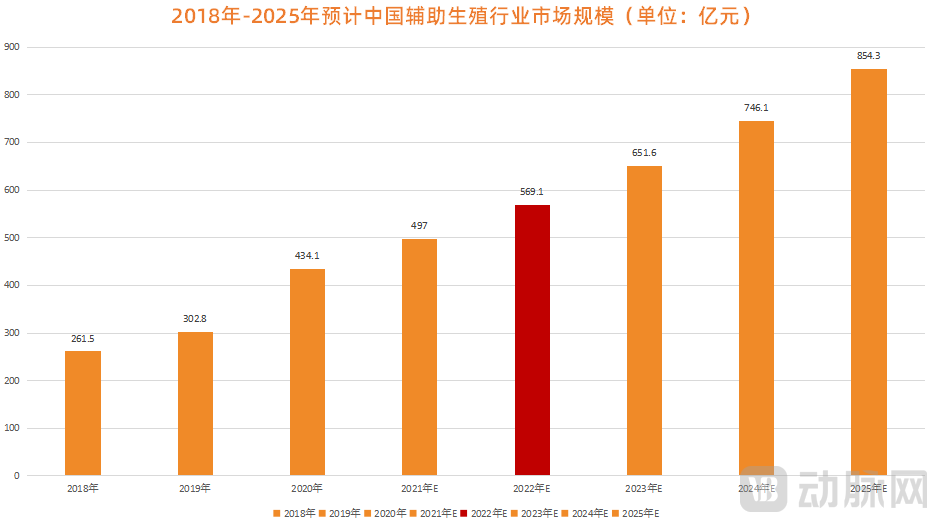 Figure 5. Estimated Market Size of China's Assisted Reproductive Technology Industry, 2018–2025 (Data Source: LeadLeo Research Institute)
This is certainly driven by initiatives at the level of medical insurance, but this is not absolute, as some contradictions remain irreconcilable within the current stage of medical insurance. For instance, regarding payment intensity, although medical insurance is promoting price reductions for numerous service items, it still prioritizes basic coverage. It has clearly defined reimbursement scopes and imposes restrictions on patient age and the number of treatments; it does not adopt an “open-door” policy. Furthermore, the inclusion of assisted reproductive technology in medical insurance only addresses issues prior to childbirth. Subsequent stages, such as child-rearing after birth and education as the child grows up, also directly impact initial fertility intentions.
It is also worth noting that many provinces have not yet included assisted reproductive technology (ART) in their medical insurance coverage. For instance, despite continuous reports, Guangdong Province has yet to make tangible progress. Industry insiders speculate that this is primarily due to the fact that many detailed implementation rules have not been fully finalized and local fiscal balances are difficult to maintain. Since such policies apply province-wide rather than being decided by individual cities, expanding medical insurance coverage remains challenging for regions with weaker economic strength.
Nevertheless, one thing is certain: the assisted reproductive technology (ART) sector remains promising. In recent years, this field has been on an upward trajectory, as evidenced by the approval of numerous innovative products. According to publicly available data, 24 domestically produced Class III medical devices for ART were approved in China over the past two years, covering procedures such as oocyte retrieval, sperm preparation, fertilization, and cryopreservation.
Therefore, in retrospect, the development of assisted reproductive technology may have only just begun, and how to break through boils down to two key words:One is "success rate," and the other is "cost-effectiveness."。
1. “19 Provinces and the Xinjiang Production and Construction Corps Have Included Assisted Reproductive Technology in Medical Insurance Coverage” — National Healthcare Security Administration;
2. “A Song of Ice and Fire in Assisted Reproductive Technology: Why Did ‘Aggressive Efforts’ Fail to Produce Miracles?” — Amino Acid Observer;
3. “Assisted Reproductive Technology Finally Gains Access to Medical Insurance: Is the Hidden Hundred-Billion-Yuan Market on the Verge of an Explosion?” — VCBeat.