

Chongqing's First Class 1 Innovative Drug Approved: Can the City Rise as a National Pharma Powerhouse?
Recently,Chongqing’s First Class 1 Innovative Biologic—Sailiqimab Injection Officially Approved for Market Launch. It is reported that secukinumab injection is primarily indicated for the treatment of moderate-to-severe plaque psoriasis. It marks the first product approved for market launch by Zhixiang Jintai and is also the first fully human IL-17A-targeted drug in China.
In fact, in recent years, Chongqing has frequently disclosed significant information in the pharmaceutical field. For example, at the end of 2022, with the blood purification leaderShanwaishanSuccessfully listed on the STAR Market,Chongqing not only achieved a “zero” breakthrough on the STAR Market, but also broke the awkward five-year streak without any IPOs in its healthcare sector.. Bolstered by these numerous breakthroughs, a question has gradually emerged within the industry: When will Chongqing’s pharmaceutical sector experience an explosive growth? Can it ascend to the national first tier, mirroring Chongqing’s economic stature? This has drawn significant attention from many industry professionals.
Why Was Chongqing Pharmaceutical Left Behind?
In fact, Chongqing’s pharmaceutical industry has long presented a striking contrast, as it has consistently lagged behind relative to the city’s economic stature. Taking the primary market as the most intuitive example, incomplete statistics from the VCBeat Orange Database show that only five financing deals were completed in Chongqing’s pharmaceutical sector this year, a figure that falls significantly short compared with other first-tier cities.
However, Chongqing’s pharmaceutical industry once enjoyed a period of glory. In the early 1990s, its output value had already reached approximately RMB 7 billion, making it one of the six major pharmaceutical manufacturing bases in China. It was home to numerous large-scale pharmaceutical manufacturers, including Southwest Synthetic Pharmaceutical, Southwest Pharmaceutical, and Chongqing Pharmaceutical Factories No. 1 through No. 7. However, after entering the 21st century, amid global transformations in the pharmaceutical industry, Chongqing’s weaknesses—such as insufficient innovation capability, scarcity of professional talent, low capital activity, and weak agglomeration effects—became increasingly pronounced. As a result, the industry entered a slump, with its national ranking rapidly falling from the top six to nearly the 20th position.
It was also during this period that Chongqing’s automotive industry ushered in a golden decade, driven by joint ventures such as Changan Suzuki, Ford, and Mazda, as well as local brands. Consequently, greater attention and resources were directed toward the sector, leaving Chongqing’s pharmaceutical industry gradually overlooked in stark contrast.
However, two decades later—starting in 2020—China’s pharmaceutical industry once again stood at a critical juncture of transformation. This time, Chongqing has decided to make a comeback, committing substantial investments to the pharmaceutical sector in recent years. These efforts include establishing a RMB 200 billion fund-of-funds, setting up the Jinfeng Laboratory, and building an International Bio-City, all aimed at addressing the weaknesses in Chongqing’s pharmaceutical industry.
At the 2023 “Chongqing Industrial Investment Fund of Funds Themed Roundtable,” Liu Bo, Vice President of Shenzhen Capital Group (SCGC), concisely pointed out the areas where Chongqing still lags in industrial development:First, there is a lack of leadership from industry-leading enterprises; second, the ecosystem is incomplete; third, there is a shortage of sci-tech innovation enterprises; fourth, there are few listed companies; fifth, there is a scarcity of capital and venture investment; sixth, there is a lack of effective mechanisms—Chongqing needs to explore the introduction of market-oriented operational mechanisms within the state-owned system.。
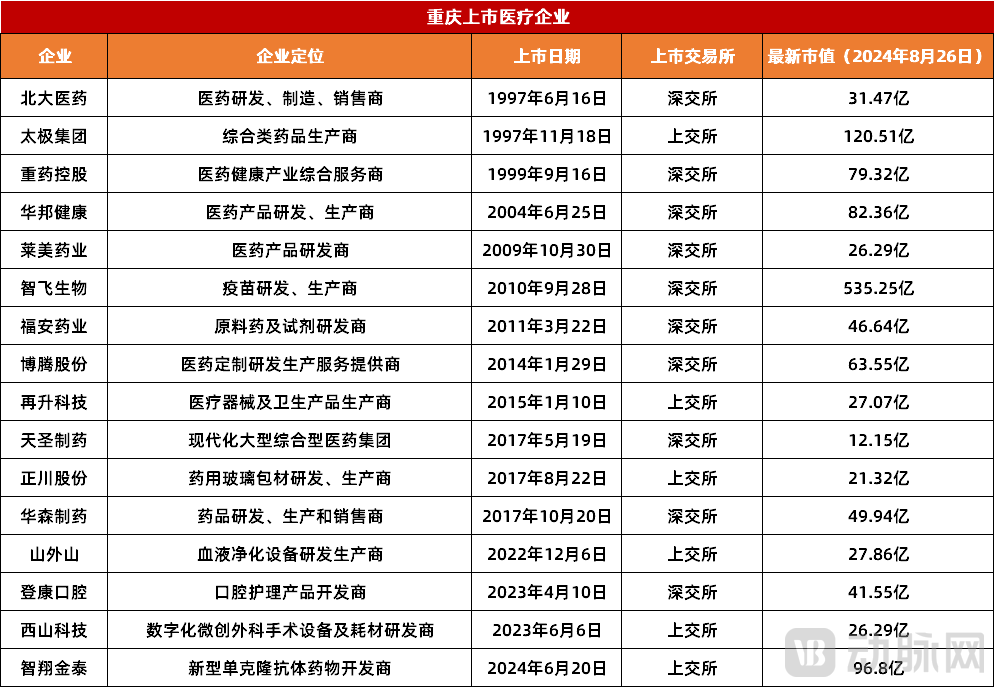 Figure 1. Representatives of 16 Listed Medical Enterprises in Chongqing (Data Source: Public Information)
Although these issues are industry-wide, they are equally applicable to the pharmaceutical sector. For instance, there is a lack of leading enterprises to drive development. Currently,Chongqing has a total of 16 listed companies in the pharmaceutical sector.Among them, Zhifei Biological Products, Taiji Group, and ZhiXiang JinTai each have market capitalizations exceeding RMB 10 billion, with Zhifei Biological Products, as the leading vaccine manufacturer, surpassing RMB 50 billion. However, at this stage, these listed companies have not significantly driven the development of the local industry; Chongqing still lacks a “leader” akin to Changan Automobile that can spur regional industrial growth.
In addition, a shortage of capital is also a major obstacle facing Chongqing’s pharmaceutical industry. Due to the lack of specialized talent and mechanisms, Chongqing has long had a weak presence in the venture capital community, with few local firms and significant difficulty in attracting investments from leading external institutions. This disadvantage is clearly reflected in the primary market; according to incomplete statistics from the VCBeat Orange Database,Since 2020, Chongqing has completed 56 financing deals in the pharmaceutical and healthcare sector., the scale of investment is clearly insufficient.
Last but not least is the issue of innovation, which has long been a major weakness in Chongqing’s industrial development. As a major manufacturing hub, Chongqing boasts a comprehensive range of industrial categories and a solid industrial foundation; however, its emerging industries are currently concentrated primarily at the stage of manufacturing implementation, rather than being driven by research and development. In this regard, the founder of a pharmaceutical company in Chongqing remarked, “The core weakness in Chongqing’s innovation ecosystem lies in the insufficient drive for transformation, indicating that both leadership and supply-side support for innovation remain inadequate.”
So, to what extent has Chongqing currently addressed these pain points?
Four Consecutive IPOs: Chongqing Draws Closer to Pharmaceutical Companies
At the end of 2022, Shanwaishan, a leading company in blood purification, successfully listed on the STAR Market.Achieved Chongqing’s “zero” breakthrough on the STAR Market, and broke the awkward record of no IPOs in Chongqing’s medical sector for five years.. Subsequently, Dengkang Oral Care, Xishan Technology, and Zhixiang Jintai also went public within a year.
This is certainly inseparable from the efforts made behind the scenes by Chongqing. Taking Dengkang Oral Care as an example, prior to its listing, the Chongqing Equity Service Group organized two visits by experts from the Shenzhen Stock Exchange (SZSE), primarily to provide targeted guidance to relevant personnel. Driven by these efforts, Dengkang Oral Care took only 50 days from the acceptance of its IPO application to its official listing. This is just one aspect; to assist enterprises in going public, Chongqing has also implemented many strategic measures, including deregulating policies and providing financial support to companies.
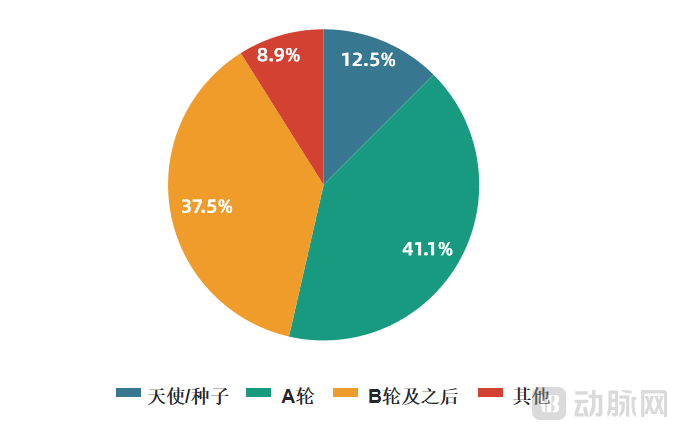
Figure 2. Proportion of Financing Rounds for Chongqing Pharmaceutical (Data Source: VCBeat)
Having discussed listed companies, we now turn to Chongqing’s appeal to startups. In recent years, while the number of investments in Chongqing’s pharmaceutical sector has remained relatively stable, the investment stage has shifted significantly earlier. According to incomplete statistics from VCBeat, a total of 24 financing deals were completed in Chongqing’s pharmaceutical sector between 2023 and August 2024, with 16 of them occurring at pre-Series A stages, accounting for 67%. This indicates that capital is increasingly flowing toward early-stage pharmaceutical projects.
Underpinning this is the gradual maturation of the industrial chain, a prerequisite for attracting early-stage projects. Chongqing is currently accelerating the development of its “1+5+N” biopharmaceutical industrial system, where “1” refers to the Chongqing International Bio-City—the city’s only national strategic emerging industry cluster and key biopharmaceutical industrial park. It is reported that the Bio-City has initially established a leading “1 Institute, 5 Centers, and 10 Platforms” biopharmaceutical innovation system in western China, creating full-chain innovation capabilities that span basic research, product development, pilot and small-scale trials, and achievement commercialization.
In addition to supporting the development of local enterprises, Chongqing has actively collaborated with leading pharmaceutical companies in recent years to encourage them to establish a strong presence in the city. A case in point is Pharmaron, a CRO company. In December 2021, Pharmaron (Beijing) New Drug Technology Co., Ltd. made a new external investment and established Pharmaron (Chongqing) New Drug Technology Co., Ltd. Initially, Pharmaron (Chongqing) had planned to recruit only 300 employees; however, during the actual recruitment process, this number quickly increased to 2,000 and continues to expand. According to insiders, Pharmaron’s establishment in Chongqing aims to accelerate capacity building for small-molecule CDMO services, which is well supported by Chongqing’s large pool of foundational talent and relatively low industrial costs.
Meanwhile, Chongqing’s ties with numerous multinational pharmaceutical giants have grown increasingly close. On March 31, 2024, Danaher signed a strategic cooperation agreement with the Administrative Committee of Chongqing Liangjiang New Area, under which both parties will jointly establish the Danaher Western Innovation Center to support medical research and innovation commercialization in the Chengdu-Chongqing region. In fact, this is not the first time Chongqing has forged deep connections with multinational corporations (MNCs). In recent years, companies including AstraZeneca, Bayer, Sanofi, GlaxoSmithKline, and BD Medical have all engaged in business collaborations with Chongqing across various dimensions.
It is evident that Chongqing Pharmaceutical is making significant strides in strategic deployment, ranging from focusing on startups and driving listed companies to fostering close collaborations with industry leaders. As the concentration of enterprises increases, the pharmaceutical industry atmosphere in Chongqing is becoming increasingly vibrant, and the industrial chain is gradually being perfected.
A 200 Billion Yuan Fund-of-Funds Emerges, Driving More Refined and Market-Oriented Investment
May 2023,Chongqing Announces Establishment of RMB 200 Billion Industrial Investment Fund-of-Funds, for a time, nearly 100 top-tier investment institutions came to Chongqing, including CICC, Hillhouse, Sequoia, Fortune Capital, Shenzhen Capital Group, IDG, Legend Capital, Qianhai Ark, and Cowin Capital, all gathering in Chongqing.
In fact, this is only the beginning. Since then, Chongqing has successively launched multiple specialized industrial funds. For instance, in May of this year, Chongqing Bonded Port Area Group announced the establishment of a RMB 2 billion special sub-fund for biomedicine. Currently, the total scale of Chongqing’s specialized pharmaceutical industry funds has exceeded RMB 10 billion. Driven by these incentives, an increasing number of leading institutions are flocking to Chongqing to seek opportunities.
However, the fund’s focus alone cannot directly drive industrial development; the top priority is to enhance its market-oriented operations. Taking Yufu Fund as an example, as one of Chongqing’s largest local investment institutions, it established a dedicated pharmaceutical investment team in 2021 and recruited a group of professionals with expertise in pharmaceutical investment. Meanwhile, to offset its weaknesses in the pharmaceutical sector, Yufu Fund has actively collaborated with leading institutions to jointly invest and strategically position itself within the pharmaceutical industry.
In response, a healthcare investor at Yufu Fund remarked, “In the past, we tended to focus on mid- to late-stage projects, but in recent years, we have shifted our focus to the early stages, moving our investment horizon significantly earlier. Amid this transition, we have placed greater emphasis on market-oriented practices, ensuring that fundraising, investing, portfolio management, and exit strategies are all executed in strict accordance with market-driven mechanisms.”
This is highly necessary. According to VCBeat’s observations, since the beginning of this year, the issue of exit strategies for local government guidance funds has become increasingly urgent. Although many local governments are currently easing exit restrictions through measures such as implementing liability exemptions, lowering return investment multiples, reducing return investment constraints, and establishing S-funds, it is foreseeable that subsequent fund exits will remain challenging. This is because, over the past two years, many local state-owned assets have prioritized submitting performance reports that meet administrative requirements without incurring losses, a approach that completely deviates from market principles.
Chongqing recognized this early on, thereby granting greater initiative to investment institutions. In light of this, a senior industry expert remarked, “The Chongqing municipal government is not concerned about investment losses incurred by state-owned capital platforms, nor has it imposed overly stringent requirements on state-owned venture capital firms regarding returns and tax contributions. In their view, investment losses are a normal occurrence, reflecting market logic and the operational mindset of these platforms. In fact, as long as investments comply with regulations, regulatory authorities will not readily intervene.。”
It is precisely for this reason that, in recent years, an increasing number of pharmaceutical and healthcare investors have begun traveling to Chongqing—a sight that was rarely seen in the past.
Innovation Hubs Are Being Established in Succession, with Multiple Frontier Fields Poised for Breakthroughs
In June 2022, the Jinfeng Laboratory was officially unveiled and put into operation. It is a new-type R&D institution benchmarked against Chengdu’s Tianfu Laboratory and Changsha’s Furong Laboratory. According to a resident research team, “Jinfeng Laboratory focuses on the field of life and health, with next-generation diagnostics for major diseases as its core mission. Its primary objectives are original theoretical innovation and breakthroughs in the fundamental theories underpinning ‘chokehold’ technologies. This represents Jinfeng’s distinct strategic focus compared to other laboratories.”
Currently,Jinfeng Laboratory has onboarded 40 research teams, with 371 research personnel in place.A total of seven technology-based enterprises in the biopharmaceutical sector have been established, six research task lists for subfields of major diseases have been formulated and studied, 77 high-level papers such as SCI-indexed articles have been published cumulatively, and seven invention patents have entered substantive examination. Clearly, the establishment of Jinfeng Laboratory is providing Chongqing’s pharmaceutical industry with a continuous stream of innovative power.
However, Chongqing’s layout for pharmaceutical innovation extends beyond Jinfeng. For instance, in terms of universities and medical institutions, Chongqing has continuously strengthened research support for multiple higher education institutions in recent years, including Chongqing Medical University, Chongqing University, and Southwest University, while encouraging their deep involvement in the development of the pharmaceutical industry. Additionally, regarding platform construction, on April 29, 2024,Chongqing Officially Establishes Clinical Research Center, the official stated that this move aims to improve the ecosystem for the translation of biomedical research outcomes in Chongqing, providing new momentum for accelerating the cultivation of new quality productive forces in the biomedical industry.
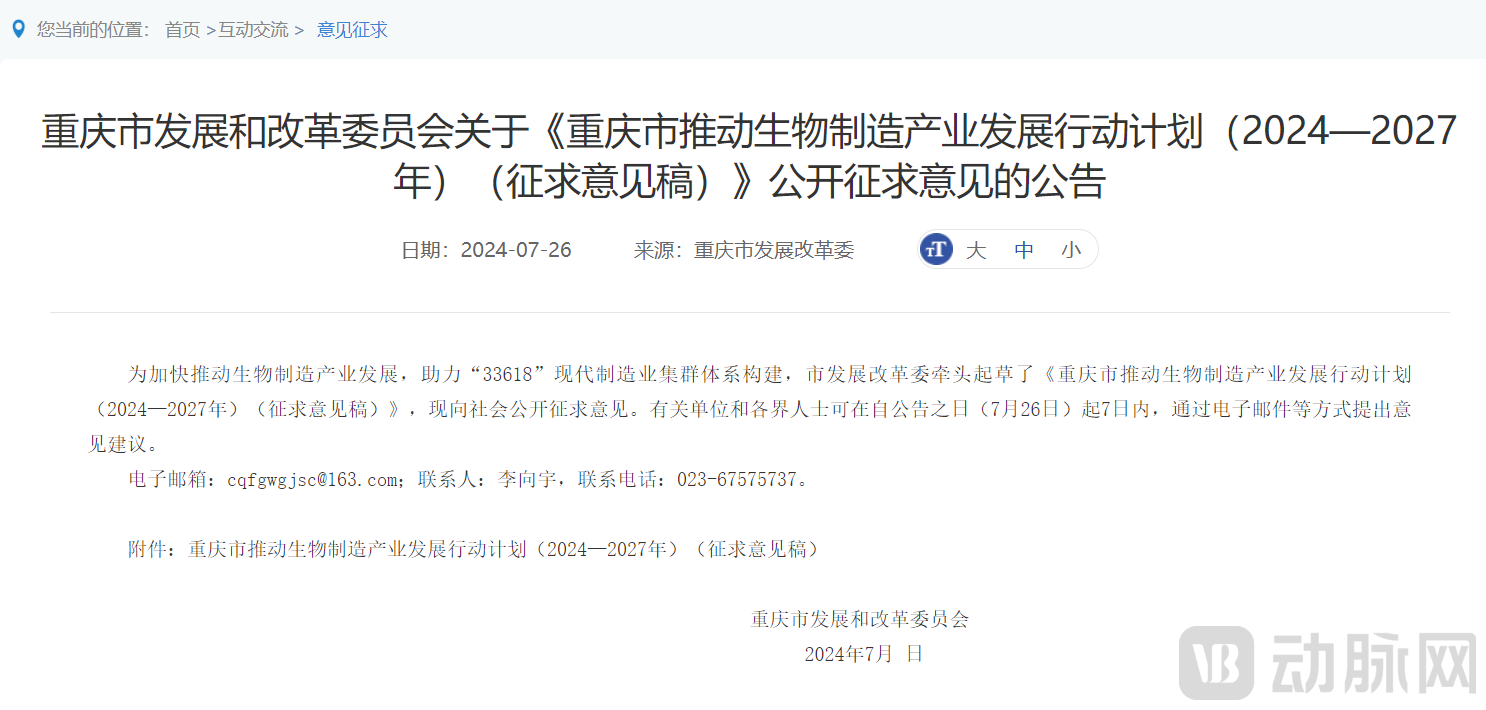 Figure 3. Action Plan for Promoting the Development of the Biomanufacturing Industry in Chongqing Municipality (2024–2027) (Draft for Comment)
With significantly enhanced innovation capabilities, Chongqing Pharmaceutical is making in-depth strategic layouts across multiple frontier fields. On July 29, 2024, the “Action Plan for Promoting the Development of the Biomanufacturing Industry in Chongqing Municipality (2024–2027) (Draft for Comments)” was released, explicitly stating that efforts will be directed towardBiochemical Engineering and Bio-based Materials, Biopharmaceuticals, Bio-agriculture and Food, Bioenergy and EnvironmentContinue to promote innovation and transformation in these fields, facilitating the practical application of more research outcomes. Additionally, guided by policy directives, Chongqing aims to achieve a series of groundbreaking “zero-to-one” research breakthroughs in basic research and key core technologies within the pharmaceutical and biological manufacturing sector by 2027. This will drive the deep integration of artificial intelligence with biotechnology and establish more than three high-level technological innovation platforms that are at the forefront, firmly grounded, and robustly supportive.
In this regard, the founder of a local pharmaceutical company in Chongqing remarked, “Innovation has long been a weak point for Chongqing, particularly in the pharmaceutical sector, where the emphasis on cutting-edge technology exacerbates this disadvantage. However, in recent years, with the introduction of more innovation-friendly policies, the establishment of multiple innovation platforms, and the deeper involvement of universities and medical institutions, Chongqing’s potential for pharmaceutical innovation is being rapidly unlocked.”
Final Thoughts
Since 2020, as China’s pharmaceutical industry has entered a new cycle, the industry’s focus has begun to shift rapidly toward a group of “new first-tier” cities. The logic behind this trend is twofold: first, the pharmaceutical markets in Beijing, Shanghai, Guangzhou, and Shenzhen are gradually reaching saturation, creating an urgent need to release production capacity; second, new first-tier cities have demonstrated a significantly stronger demand for economic growth, leading them to seize upon the pharmaceutical sector as a high-quality target for development.
Therefore, in the past few years, emerging first-tier cities represented by Chongqing, Chengdu, Hefei, Hangzhou, Wuhan, and Changsha have been intensifying their efforts to develop the pharmaceutical industry. At the current stage, various regions have achieved varying degrees of success in this sector. However, as industrial development continues to advance, the growth of the pharmaceutical industry in these regions is gradually encountering bottlenecks. Typical manifestations include a slowdown in growth rates and an increasing number of pressing issues that need to be addressed.
Chongqing is currently in a similar situation. After successfully navigating the “0 to 1” phase of industrial development, it is now advancing into the new “1 to 10” stage. Notably, since 2022, Chongqing has significantly increased its initiatives in the pharmaceutical industry, which may well become a key advantage for its future prominence in this sector.
1. “Has Chongqing Solidified Its Position as ‘China’s Fourth City’?” — CVSource;
2. “Behind Chongqing’s Sharp GDP Growth in the First Half of the Year, the Automotive Industry Worth Trillions Has Emerged a Leader” – Haina Finance;
3. “Over RMB 200 Billion + RMB 30 Billion: Investment in Chongqing’s Pharmaceutical Sector Has Kicked Off!” — VCBeat.