

Three Academicians Convene in Changzhou to Chart Innovative Directions for Smart Orthopedics at Industry Summit
“The penetration rate of robotic-assisted joint replacement in the United States has exceeded 90%. Given China’s accelerating aging population, intelligent orthopedics will represent a vast market in China,” stated Tang Peifu, Academician of the Chinese Academy of Engineering and Director of the National Clinical Research Center, at the Second Conference on Orthopedic Convergence Innovation Ecosystem Driving High-Quality Development.
With the rapid development of medical models such as smart healthcare, telemedicine, and precision medicine, and the further proliferation of medical technologies like surgical robots and 3D printing in the industry, the orthopedics field is ushering in new development opportunities while also facing new challenges. In this market with massive demand, how can we further promote innovative development in the field of orthopedics?
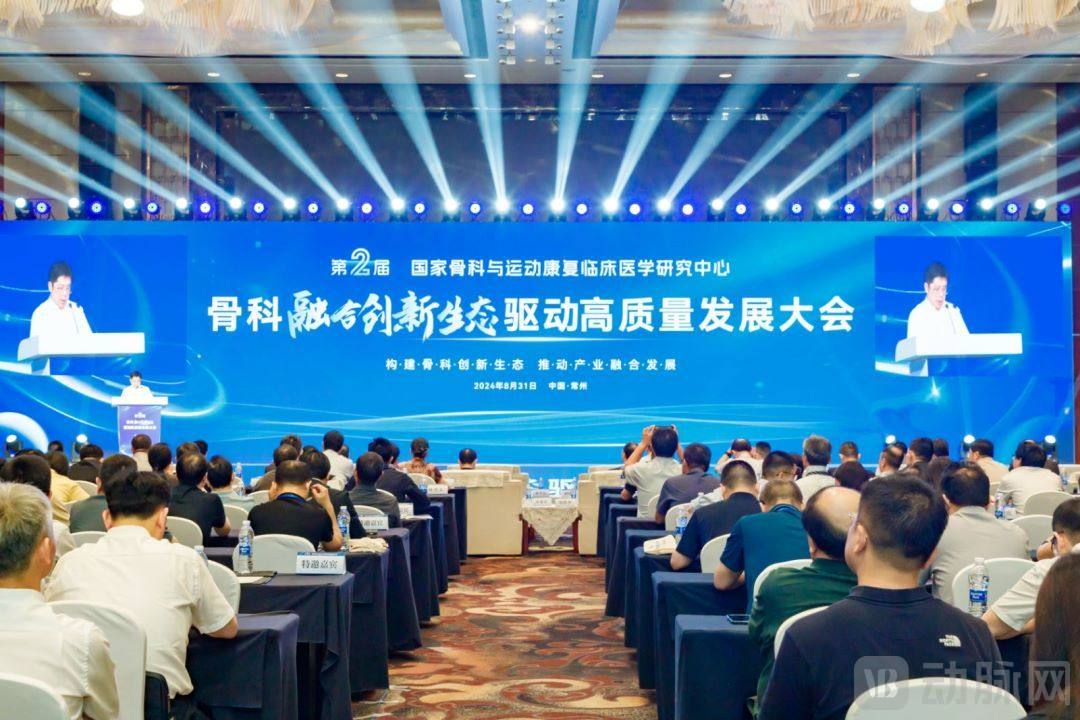
August 31,The 2nd “Orthopedic Integration and Innovation Ecosystem-Driven High-Quality Development Conference,” hosted by the National Clinical Research Center for Orthopedics, Sports Medicine and Rehabilitation (hereinafter referred to as the “National Clinical Center”), was held in Changzhou.National functional agencies, over one hundred hospitals, numerous universities and research institutes, and innovative enterprises all participated in the event. Attendees included leaders from the Changzhou Municipal Government, Wujin District Government, and the National Health Commission; as well as distinguished experts such as Gu Xiaosong, Academician of the Chinese Academy of Engineering; Tang Peifu, Academician of the Chinese Academy of Engineering and Director of the National Clinical Research Center; and Meng Qinghu, Academician of the Canadian Academy of Engineering.
The conference focuses on cutting-edge topics such as “AI + Healthcare” and “Large Language Models,” aiming to further gather innovation elements, stimulate innovation momentum, and improve innovation efficiency. It seeks to establish a high-end platform for the fields of orthopedics, sports, and rehabilitation that pools collective wisdom, promotes in-depth exchanges, and facilitates resource sharing, thereby driving the high-quality development of China’s orthopedics and sports rehabilitation profession, industry, sector, and cause.
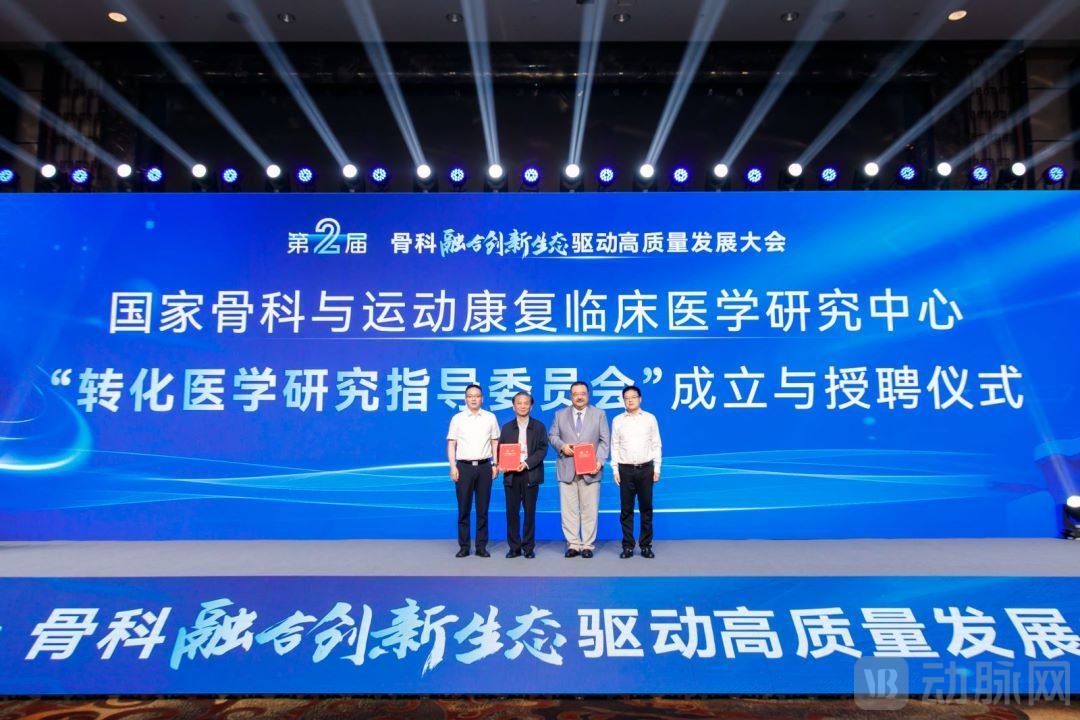
At this conference, ten outstanding projects were selected for the inaugural National Clinical Center Innovation Fund. To further promote the incubation of innovative concepts into innovative products, the Translational Medicine Research Steering Committee of the “National Clinical Center” was established, with Academician Gu Xiaosong serving as Chairman and Academician Meng Qinghu as Vice Chairman. Meanwhile, the National Clinical Center has laid out a nationwide network of Smart Orthopedics Regional Training Bases and Smart Orthopedics Application Demonstration Bases, adopting a model of “system construction and regional drive.” The signing ceremony for the initial batch of National Clinical Center base preparations was also officially held during the conference. Concurrently, several activities took place, including the final review meeting for the first phase of the “Innovation Fund of the National Clinical Research Center for Orthopedics and Sports Rehabilitation,” a seminar on the center’s five-year strategic plan, specialized training sessions on intelligent training bases, and the mid-term defense review for the second phase of the “Innovation Fund of the National Clinical Research Center for Orthopedics and Sports Rehabilitation.”
The National Clinical Center, approved for construction in May 2019, asThe Only Clinical Medical Research Center in the Field of Orthopedics and Sports Rehabilitation, is currently making significant strides to fill the gaps in basic technological infrastructure within the orthopedics sector, maximizing the aggregation of industry innovation elements and driving an overall enhancement of innovation standards across the industry.
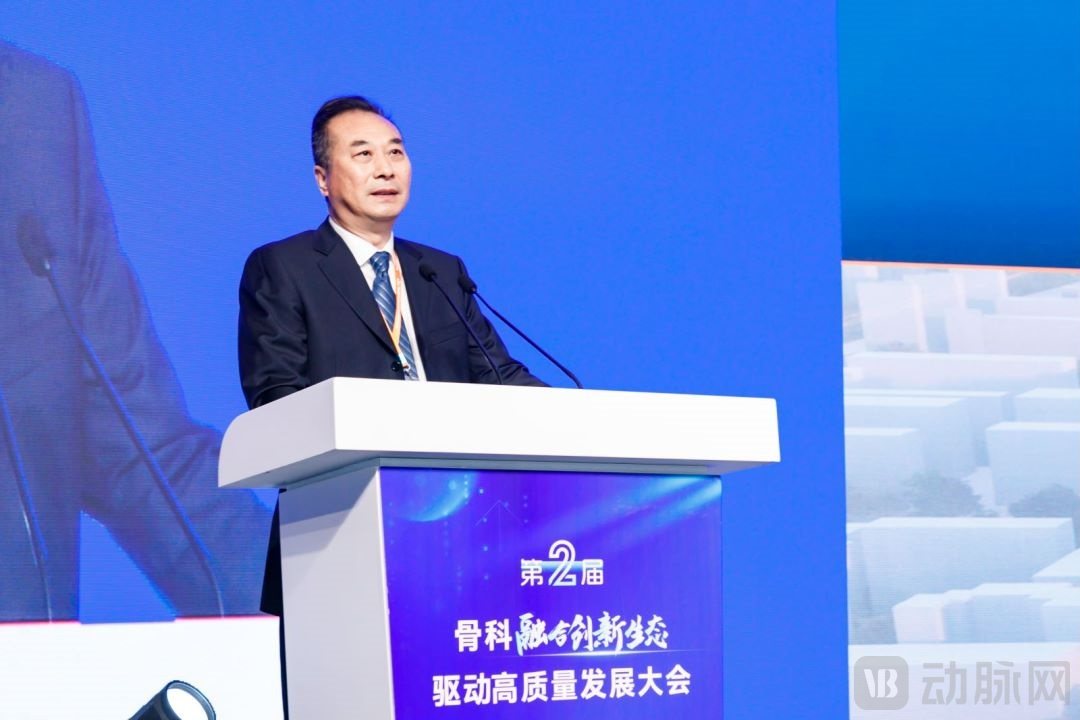
Professor Wang Songjun, Executive Director of the National Clinical Center
At the conference, Professor Wang Songjun, Executive Director of the National Clinical Center, provided a detailed overview of the center’s exploratory efforts in recent years and its strategic layout for future development. He pointed out that the mission of the National Clinical Center is to build an integrated innovation ecosystem encompassing medical care, administration, research, and industry, focusing on major national livelihood needs and public health demands in the three key areas of orthopedics, sports medicine, and rehabilitation. The center aims to establish itself as a hub for technological innovation and achievement translation in China, as well as a highland for clinical and translational medical research, thereby driving high-quality development across the industry.
To consolidate China’s scientific and technological innovation resources, foster innovation, and lead industry development, the National Clinical Research Center and the Changzhou Municipal Government of Jiangsu Province jointly established the “Clinical Application-Oriented Medical Innovation Fund” to support the research and development of medical devices. The initial fund, with a capital of RMB 10 million, supported 77 projects, bringing together experts with innovative capabilities and commitment to form an innovation consortium on the platform. As planned, the second phase of the fund will provide greater total funding to advance R&D in areas such as orthopedic surgical robots, surgical navigation systems, and innovative materials. The National Clinical Research Center aims to ultimately achieve full-process coverage, spanning from conceptual development to scientific research, clinical studies, regulatory review and registration, industrialization and commercialization, as well as technology dissemination and science popularization.
Currently, the National Clinical Research Center has established multipleEmpowerment Platform, includingNational Database of Chinese Skeletal Anatomy and Translational Application Platform, NCRC Real-World Research and Standards Platform, NCRC Clinical Research Platform (designed to enhance project management efficacy and resource allocation efficiency; it provides comprehensive strategic support for orthopedic clinical research through mechanisms such as clinical research management frameworks, the National Clinical Center Ethics Alliance, the National Clinical Center Electronic Data Capture (EDC) System, the Drug and Medical Device Clinical Trial Evaluation Platform, full-lifecycle project management, and the training of Clinical Research Coordinators [CRCs]), NCRC Education Platform, and NCRC Science Popularization Platform.Furthermore, the National Clinical Center is also accelerating the translation of research findings into practice. Technologies such as key techniques for intelligent monitoring and minimally invasive treatment of pelvic fractures, development of fully intelligent orthopedic robots, full-process intelligent digital surgical navigation systems, and mixed reality imaging technology for soft tissue navigation are being implemented in hospitals.
He stated that the National Clinical Research Center will increase investment in multiple areas, including the development of an innovation ecosystem, the establishment of a collaborative innovation network, the construction of enabling platforms, standard-setting, and institutional improvements. These efforts aim to safeguard innovation while collaborating with national functional departments to promote the innovation and application of frontier, breakthrough, and disruptive technologies. The center seeks to achieve breakthroughs in fields such as orthopedic implants, robotics, surgical planning and navigation, and stem cell and tissue engineering, thereby playing a leading and demonstrative role.
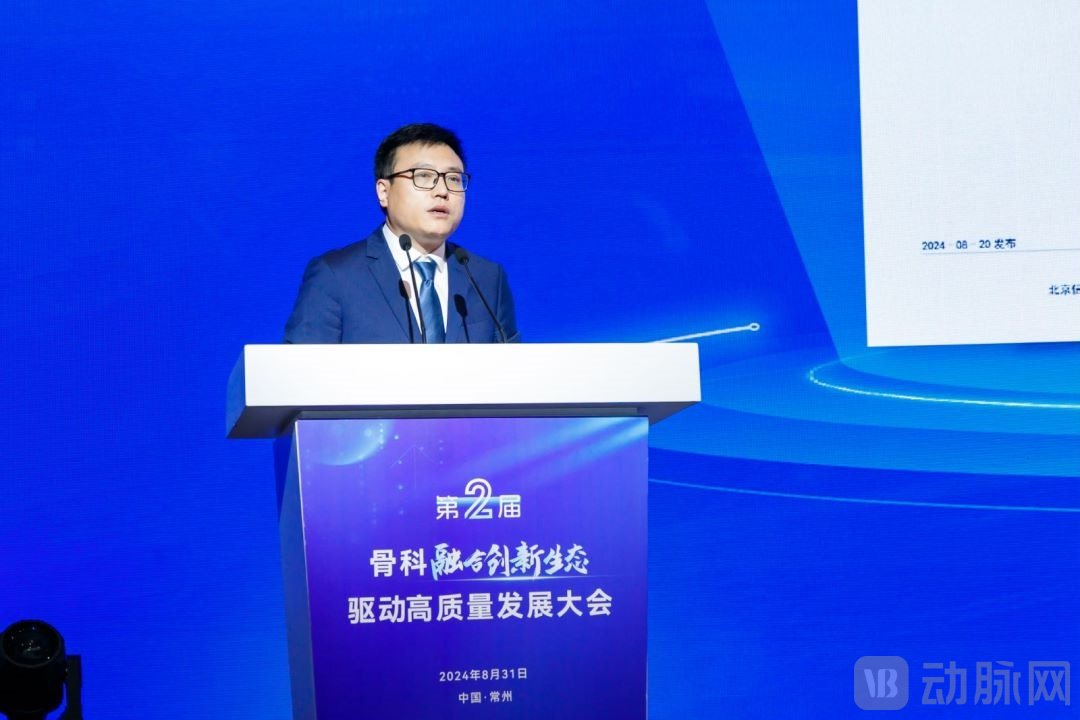 Zhang Hao, Director of the National Clinical Center Management Center
Zhang Hao, Director of the National Clinical Research Center Management Center, presented to the public the various achievements resulting from the explorations conducted by the National Clinical Research Center in the past.
Advances in science and technology have ushered in an era of intelligence, minimally invasive techniques, and personalization in the field of orthopedic diagnosis and treatment. Against this backdrop, how can high-quality industrial development and innovation be achieved? The remarks by Academician Tang Peifu, Academician Gu Xiaosong, and Academician Meng Qinghu offer valuable insights for reference.
First, the essence of intelligent orthopedic surgery is a paradigm shift.
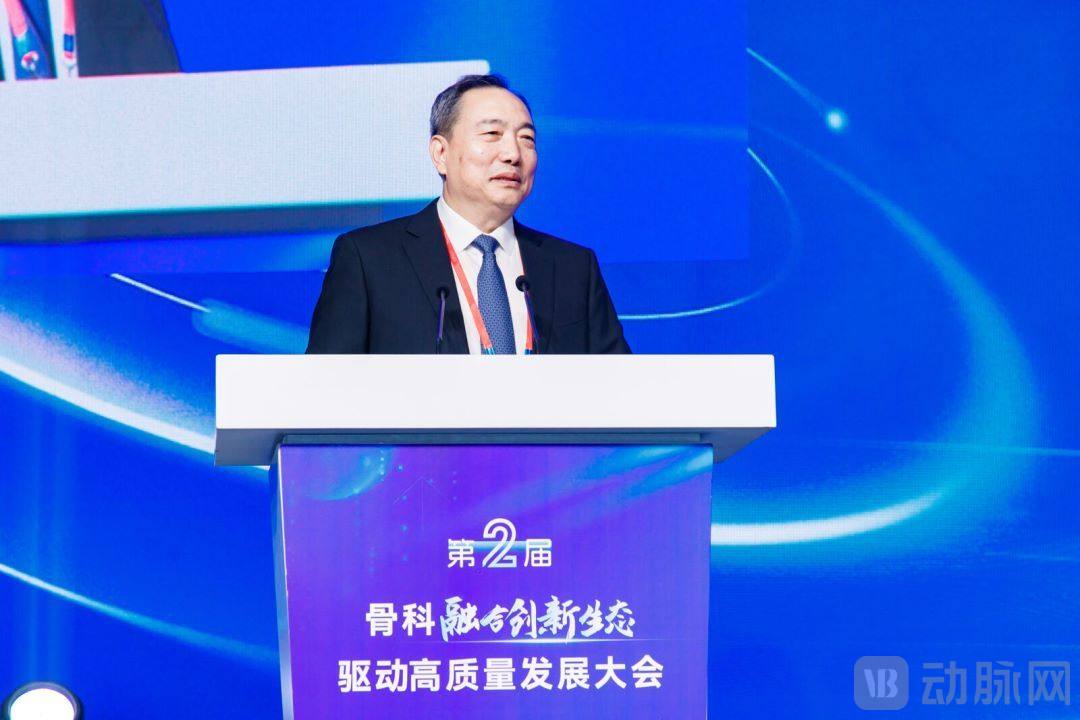
Tang Peifu, Academician of the Chinese Academy of Engineering and Director of the National Clinical Medical Research Center
Tang Peifu, an Academician of the Chinese Academy of Engineering and Director of the National Clinical Research Center, explored the topic in his work “Prospects and Future of Digital Intelligence in Orthopedics,” citing the “Intelligent Surgical Robot for Fracture Reduction” as a representative technology. He pointed out that the emergence of innovative products has transformed current surgical paradigms, enabling diagnosis and treatment without open surgery—a departure from traditional approaches. In the past, limited by technological constraints, traditional Chinese bone-setting techniques, which lacked direct visualization of internal musculoskeletal structures, could lead to complications such as impaired mobility, malunion, and limb disability. Conversely, open surgical reduction under direct vision in Western medicine faced challenges like nonunion and inadequate reduction. Orthopedic surgeons have long eagerly anticipated minimally invasive, precise, and safe orthopedic procedures with minimal or even no radiation exposure. Today, the explosion of medical data, advancements in robot development and application, and breakthroughs in artificial intelligence algorithms have created favorable conditions for addressing these clinical challenges.
By achieving breakthroughs in the theoretical framework of robotic fracture reduction surgery—including intelligent planning of fracture reduction pathways and establishing classification standards for robot-assisted fracture reduction—the Academician’s team has resolved critical challenges in robotic surgery. For instance, intelligent navigation-guided reduction and fixation of long bones have addressed key difficulties associated with minimally invasive procedures, such as limited visibility, inaccurate alignment, and extensive tissue trauma from open surgeries. Building on this foundation, the team has further advanced to tackle pelvic fractures, often regarded as the “crown jewel” of orthopedic surgery, by leveraging intelligent technologies to overcome the complexities of reducing irregular pelvic bone fractures. Through intelligent navigation, they have achieved minimally invasive, precise fracture reduction and implant placement.
He emphasized that the essence of surgical intelligence lies in a paradigm shift, achieved through advancements in equipment, algorithm optimization, device integration, and technological evolution. This transformation aims to simplify complex procedures, standardize simple ones, and engineer standardized operations. In the future, smart orthopedics will be built upon smart operating rooms, with the operating table serving as the core hub, to deliver a cluster of minimally invasive orthopedic solutions featuring modular construction, intelligent analysis, and precise execution. The smart orthopedics ecosystem will be underpinned by technologies such as big data, artificial intelligence, the Internet of Things (IoT), and intelligent manufacturing, forming an integrated smart system covering orthopedic diagnosis and treatment workflows, R&D of implants and new materials, and development of surgical robots. In this process, it is essential to accelerate the construction of a technological innovation system, particularly by rapidly resolving critical “chokepoint” technical challenges, thereby establishing new competitive advantages for development.
Second, independent innovation is the prerequisite for fields such as orthopedics to go global.
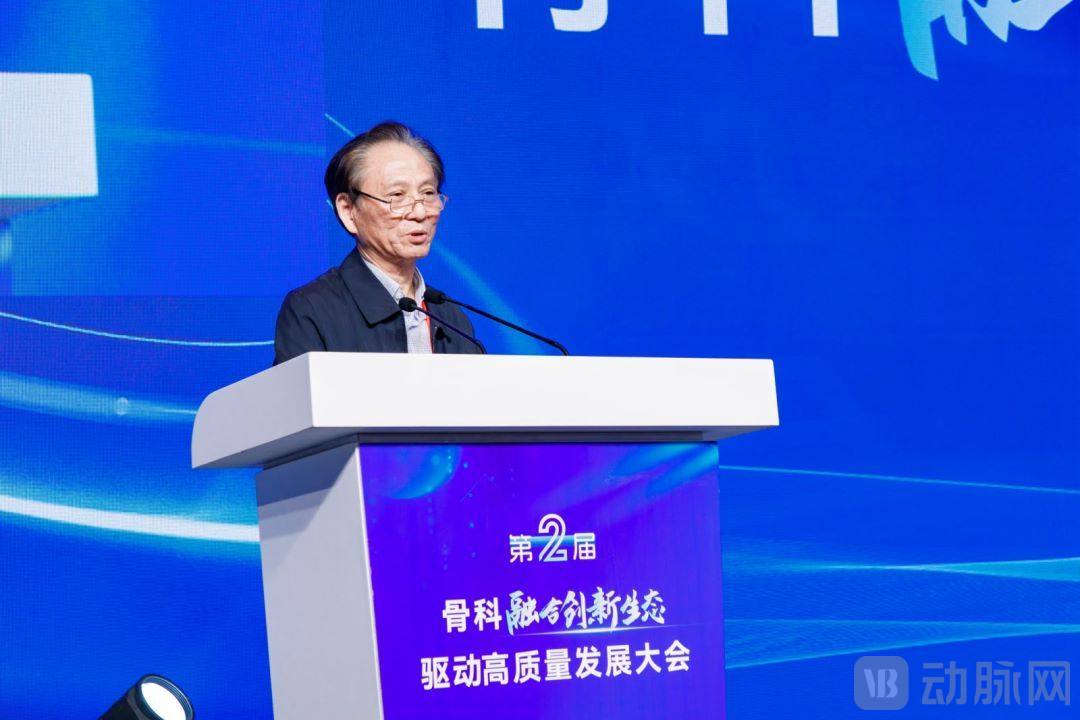 Academician of the Chinese Academy of Engineering, Gu Xiaosong
Academician Gu Xiaosong, an academician of the Chinese Academy of Engineering, Director of the State Key Laboratory of Advanced Medical Materials and Medical Devices, and Director of the NMPA Key Laboratory for Research and Evaluation of Tissue Engineering Products, shared his insights on “Innovation and Translation in Tissue Engineering.” As a pioneer in translational medicine for tissue-engineered nerves, Academician Gu’s team was the first to clinically apply nerve grafts composed of chitosan conduits and PGA fibers. The academic concept of “biodegradable tissue-engineered nerve construction” proposed by his team has been included in textbooks at the University of Cambridge. The structural composition of the “Peripheral Nerve Repair Graft” product is a domestic and international innovation, and it received approval from the National Medical Products Administration (NMPA) for market launch in November 2020. Additionally, a patent for invention was granted for the construction of novel tissue-engineered nerves mediated by MicroRNA genes and their application in repairing nerve defects.
Over the past two decades, Academician Gu Xiaosong’s team has continuously advanced the field of tissue-engineered nerves, achieving a leap from early chitosan-based artificial nerve grafts to silk fibroin tissue-engineered nerve grafts, then to cell-matrix tissue-engineered nerves, and finally to small nucleic acid-based and biomimetic tissue-engineered nerves. Their work has propelled China’s innovative research and translational applications in tissue-engineered nerves to the international forefront.
The Key Laboratory for Research and Evaluation of Tissue Engineering Technology Products, where the Academician is based, was recognized by the National Medical Products Administration (NMPA) in 2021 as part of the second batch of key laboratories. It is also the only approved key laboratory dedicated to tissue engineering technology in China. In the strategic research and consulting project of the Chinese Academy of Engineering led by the Academician’s team—namely, the Strategic Study on High-Quality Development of China’s Biopharmaceutical Industry—it was proposed that focus should be placed on “building an innovation system for high-quality development, optimizing regional layout for high-quality development, cultivating world-class enterprises and branded products, strengthening industrial development policies and talent teams, and promoting international cooperation in industrial development.” The study also outlined phased improvement measures, industrial development tasks, and technological roadmaps for industry growth. At the conference, the Academician repeatedly emphasized this concept, pointing out that only by adhering to innovation-driven development can China achieve global leadership. “To go global, we must achieve independent innovation.”
Third, the path toward intelligent orthopedics is long, but the prospects are promising.
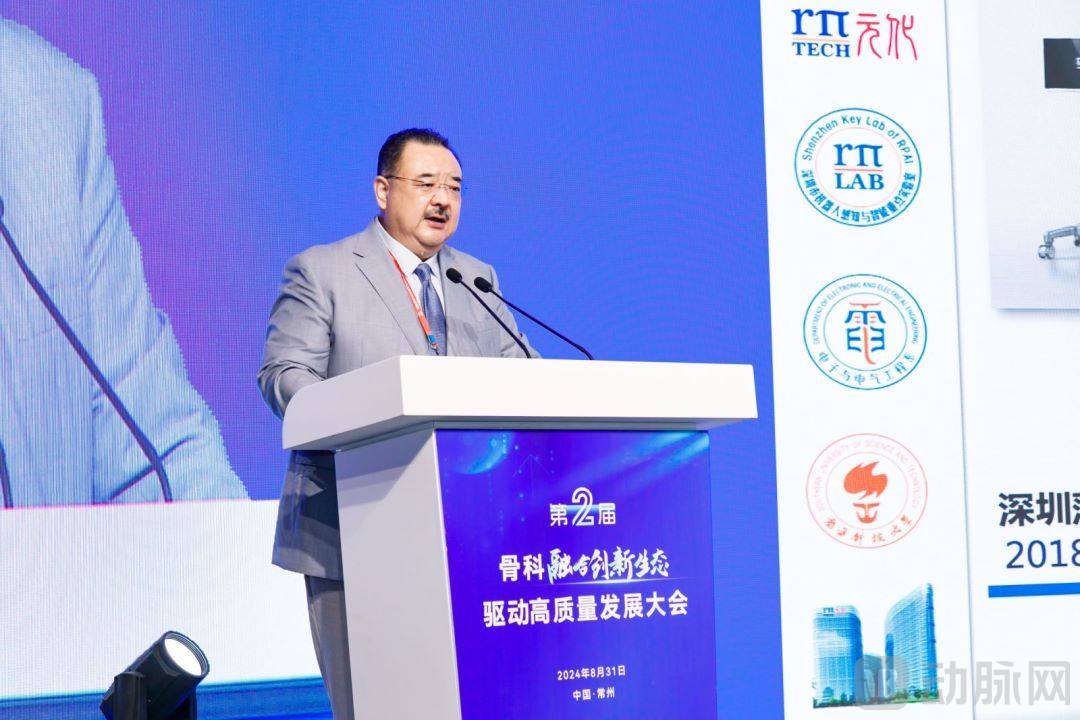 Academician of the Canadian Academy of Engineering, Meng Qinghu
Meng Qinghu, an Academician of the Canadian Academy of Engineering and Chair of the Department of Electrical and Electronic Engineering at Southern University of Science and Technology, emphasized in his speech titled “Intelligent Innovation in Orthopedics in the GPT Era” that although AI is currently a hotspot for innovation, it is essential to remain clear-headed and not be swept away by capital hype. He stated that smart healthcare should not merely replicate what physicians can already do, but rather enable tasks that physicians are unable to perform or cannot yet perform optimally. Citing the Kunlun surgical robot as an example, he highlighted several frontier explorations in intelligent innovation within orthopedics.
First, innovative industrial design and user experience. Surgical robots and similar products are deployed in operating rooms to assist surgeons, where they compete for limited space. Therefore, these robotic systems must have a smaller footprint, and the surgeon’s interface and interaction mechanisms must be more convenient. Second, the development of a universal orthopedic surgical robot. Currently, orthopedic surgical robots are highly segmented into specialized systems for joints, spine, and trauma. Kunwu Surgical Robot aims to create a universal orthopedic surgical robot that can assist in all orthopedic procedures by simply changing the end-effector tools and selecting the corresponding software. Products for total knee arthroplasty, hip arthroplasty, and unicompartmental knee arthroplasty have already received regulatory approval and been launched on the market. Third, achieving independent research and development (R&D) of core components. In addition to its self-developed navigation system, Kunwu Surgical Robot has independently developed surgical robotic arms specifically designed for orthopedics, delivering more stable, precise, and efficient surgical outcomes. Fourth, pioneering the clinical application of innovative technologies. This includes being the first to introduce new technologies such as AR navigation and spinal ultrasound navigation into clinical practice. Fifth, soft-tissue navigation. By leveraging proprietary photoacoustic imaging technology, soft-tissue navigation enables surgeons to better avoid nerves and blood vessels and accurately identify tumor boundaries during surgery, allowing the robot to precisely and completely resect malignant tissue. Sixth, innovation in arthroscopic robotics. He emphasized that the purpose of technological innovation is to help surgeons perform procedures more effectively through intelligent assistance.
Regarding the innovative development direction of surgical robots, Meng Qinghu noted: Currently, surgical robots have progressed from non-existence to existence, yet the path toward intelligence remains long. There is a clear trend toward the domestic production of core components, and specialization and miniaturization of surgical robots are becoming prevailing trends. The surgical robot industry also faces certain challenges; for instance, the pain point in smart healthcare lies in insufficient accumulation of core technologies, making sustainable development difficult and forcing companies to merely cobble together individual products to barely survive. Meanwhile, we may boldly envision the bright future of AI-assisted surgical robots in an era of rapid advancements in artificial intelligence technologies such as Gemini and GPT. Future surgical solutions will inevitably feature video demonstrations based on technologies like ChatGPT and SORA, along with real-time discussion, adjustment, and three-dimensional visualization of surgical plans guided by voice commands. In such a scenario, communication among physicians and between doctors and patients will evolve into a new science-fiction-like paradigm where “a picture is worth a thousand words, and a video surpasses ten thousand,” which is certainly something to look forward to.
On the afternoon of August 31, participating experts discussed the application of cutting-edge technologies in orthopedics, including musculoskeletal dynamics, visualized robotics, intelligent navigation, and large language models. They also explored the use of medical devices and new orthopedic materials, such as graphene, in rehabilitation medicine, as well as the development of laser-direct-writing resin-based smart orthopedic implants. These discussions provided new insights, technologies, and directions for the sustained development of the orthopedic industry, sector, and profession.
With the formation of an integrated innovation ecosystem encompassing “medical care, research, government, enterprise, and capital,” spearheaded by the National Clinical Research Center, we believe that while better empowering patient diagnosis and treatment and contributing to the realization of a Healthy China, all stakeholders will further accelerate industrial transformation. This will enable us to advance from domestic substitution to indigenous innovation, step onto the global stage, and lead industry development.