

YouDi Bio Secures China's First Clinical Registration Certificate for SIMOA® Single-Molecule Array Immunoassay Analyzer, Advancing Early and Accurate Diagnosis of Alzheimer’s Disease
UltraDx Bio
Developer of Single-Molecule Digital Ultrasensitive Protein Detection Technology
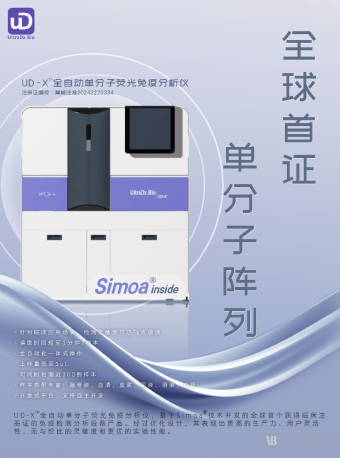
On August 20, 2024, Udi Bio reached a significant milestone as its flagship product, the UD-X™ Fully Automated Single-Molecule Fluorescence Immunoassay Analyzer, successfully obtained the Class II Medical Device Registration Certificate issued by the Hebei Provincial Medical Products Administration (Registration No.: Ji Xie Zhu Zhun 20242220334). The approval of this product will greatly advance the early screening, diagnosis, and personalized medication guidance for Alzheimer’s disease (AD), while also ushering in a new chapter in the commercial development of Udi Bio.
When used in conjunction with the accompanying diagnostic kit pending approval, this product meets the clinical and community screening needs for qualitative and quantitative detection of trace protein biomarkers in various body fluid samples at femtogram-level sensitivity.
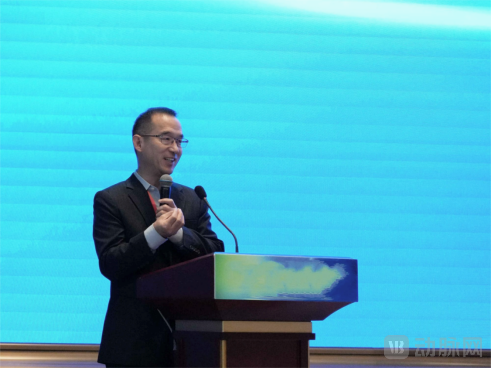
On August 25, 2024, the unveiling ceremony for the UD-X™ Fully Automated Single-Molecule Fluorescence Immunoassay Analyzer was held at UDI Bio. Mr. Dong Zengjun, Founder, Chairman, and CEO of UDI Bio, delivered a speech at the event. The launch attracted significant attention from professionals both within and outside the industry. Experts from various fields highly recognized the exceptional performance demonstrated by single-molecule array technology in academic and clinical research, and expressed strong expectations for the broad application prospects of UDI Bio’s newly approved UD-X™ Fully Automated Single-Molecule Fluorescence Immunoassay Analyzer in the early screening and diagnosis of diseases such as Alzheimer’s disease.
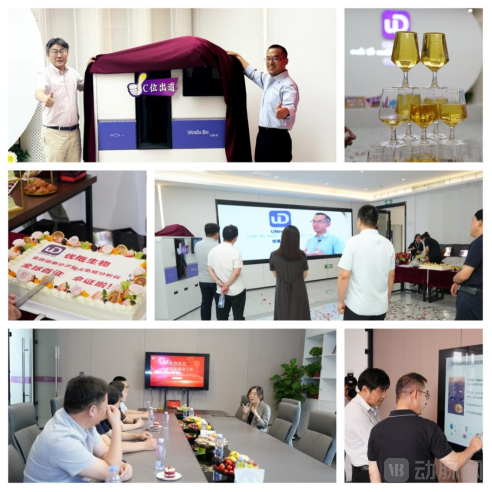
On the same day, UDI Bio invited distinguished experts and scholars to visit the company for observation, exchange, and guidance, including Gao Fu, Academician of the Chinese Academy of Sciences (CAS), Foreign Associate of the U.S. National Academy of Sciences, and Foreign Member of the Royal Society; Xu Guoliang, Academician of CAS and Researcher at the Shanghai Institutes for Biological Sciences, CAS; Yu Jintai, Deputy Director of the Department of Neurology at Huashan Hospital Affiliated to Fudan University, Executive Deputy Director of the Institute of Neurology at Fudan University, and Vice Chairman of the Youth Committee of the Chinese Society of Neurology; and Cai Yanning, Director of the Clinical Sample Center at Xuanwu Hospital of Capital Medical University and Deputy Director of the Key Project Department at the National Center for Neurological Disorders. The visitors gained a detailed understanding of the company’s manufacturing processes, quality control systems, and progress in product research and development, and engaged in discussions on cutting-edge issues in precision medical testing technologies.
Subsequently, all invited experts explored the theme of “Opportunities and Prospects for Early Detection and Diagnosis of Diseases” and reached a consensus. The low rates of early diagnosis and medical consultation for diseases represented by Alzheimer’s disease are primarily attributed to the following factors: patients’ insufficient awareness of the disease; the current scarcity of clinical tools for early diagnosis and treatment; and the close correlation between early diagnosis rates and broader societal development and progress.
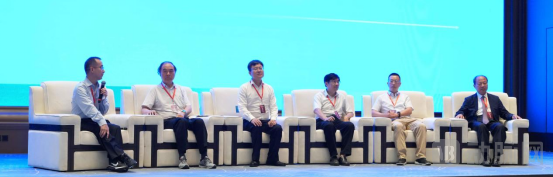
Academician Gao Fu, a member of the Chinese Academy of Sciences, a Foreign Associate of the U.S. National Academy of Sciences, and a Foreign Member of the Royal Society, emphasized, “Precision diagnosis is the cornerstone of precision medicine, with its core lying in accurate diagnosis.” Meanwhile, Academician Gao highly commended UdiBio for its efforts and phased achievements in the clinical development of products for the precision diagnosis of Alzheimer’s disease.
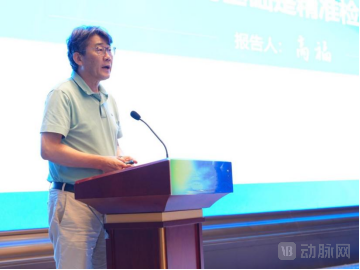
Academician Xu Guoliang, a researcher at the Shanghai Institutes for Biological Sciences of the Chinese Academy of Sciences and an academician of the Chinese Academy of Sciences, pointed out: “The cornerstone of precision medicine lies in in-depth basic research; without such foundational depth, the development of technologies and drugs will face significant challenges.” He further emphasized: “Scientific research achievements must also rely on translation through clinical practice and industry collaboration, ultimately achieving the goal of benefiting humanity.”

Professor Yu Jintai, Deputy Director of the Department of Neurology at Huashan Hospital Affiliated to Fudan University, Executive Deputy Director of the Institute of Neurology at Fudan University, and Vice Chairman of the Youth Committee of the Neurology Branch of the Chinese Medical Association, conducted an in-depth discussion on the precise diagnosis of Alzheimer’s disease (AD). He clearly pointed out the main challenges facing early diagnosis of AD and emphasized that once patients progress to the dementia stage, existing treatment options have limited efficacy; therefore, early detection and intervention are crucial for delaying disease progression. When discussing methods for early diagnosis of AD, Professor Yu particularly highlighted the promising application of plasma biomarker testing as an effective approach to addressing the challenges of large-scale population screening.

Professor Cai Yanning, Director of the Clinical Sample Center at Xuanwu Hospital of Capital Medical University and Deputy Director of the Key Project Department at the National Center for Neurological Disorders, emphasized the importance of standardized and regulated management of clinical samples. He proposed that enterprises should place greater emphasis on sample quality and establish standardized processes across the entire lifecycle to ensure the smooth translation and application of precision medicine.
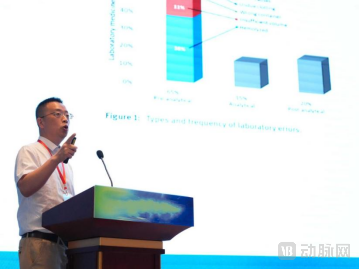
Professor Yao Shukun, a doctoral supervisor at Peking Union Medical College, Peking University, and Beijing University of Chinese Medicine; former Vice President of China-Japan Friendship Hospital; and Chair of the Precision Medicine Special Committee, stated following an academic discussion with Professor Yu Jintai on the commonalities and distinctions between Alzheimer’s disease (AD) and vascular dementia: “From the clinical perspective, we hope to join hands with researchers and enterprises to make concerted efforts toward contributing to the early diagnosis and treatment of AD.”
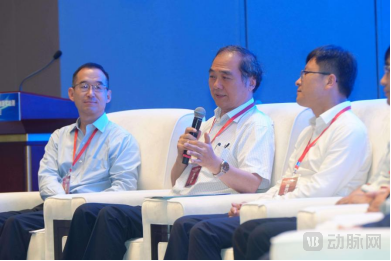
Alzheimer’s disease (AD) is the most prevalent neurodegenerative disorder closely associated with aging, and China has become the country with the largest number of AD patients worldwide. According to data from the “China Alzheimer’s Disease Report 2024,” the number of individuals living with AD and other dementias in China exceeded 16.99 million in 2021.
Early identification of the disease and timely intervention are currently the only effective measures to delay the progression of Alzheimer’s disease (AD). The primary diagnostic approach at present combines PET-CT imaging with cerebrospinal fluid sampling via lumbar puncture to detect protein biomarkers. However, this method is associated with high costs, delayed detection stages, and significant patient discomfort, making it unsuitable for widespread adoption in early screening and diagnosis due to economic, temporal, and patient-experience considerations.
Ultra-sensitive and precise detection of trace-specific protein biomarkers for Alzheimer’s disease enables more accurate and earlier diagnosis, thereby facilitating more effective disease-modifying interventions and symptomatic treatments. Youdi Biotech’s series of clinical diagnostic products, based on Simoa® technology, provide a novel and efficient solution to this urgent clinical need.
Simoa® technology is recognized as one of the most sensitive immunoassay platforms currently available. Its core innovation lies in isolating individual magnetic beads, each bearing an immune complex with a single target protein molecule, within discrete reaction microwells with a volume of merely 50 femtoliters (10⁻¹⁵ liters). This configuration enables the independent detection and quantification of signals from individual molecules, thereby achieving ultrasensitive digital detection and quantification at the true single-molecule level.
As a premier application of Simoa® technology, the UD-X™ Fully Automated Single-Molecule Fluorescence Immunoassay Analyzer represents a revolutionary leap in detection capabilities. By leveraging single-molecule detection technology, it enables sub-femtogram quantification of trace proteins, achieving sensitivity over 1,000 times greater than traditional immunoassays and detecting biomarkers at fg/mL levels. Its ability to accurately detect ultra-trace amounts of Alzheimer’s disease (AD) biomarkers in peripheral blood samples significantly advances the diagnostic window. Furthermore, its non-invasive sampling method greatly reduces patient discomfort, thereby markedly improving treatment adherence and overall patient experience.
Founded in September 2022, Youdi Biotech specializes in providing advanced single-molecule diagnostic solutions. Through its partnership with Quanterix, Youdi Biotech is committed to advancing the clinical application of SIMOA® technology in China, enabling more accurate and earlier diagnosis of Alzheimer’s disease (AD) to facilitate more effective therapeutic interventions for patients.
In November 2023, the company completed a financing round of nearly RMB 100 million led by top-tier investors including ARCH and GF Securities, and announced a partnership with Quanterix, a leader in proteomics, to jointly accelerate the clinical adoption of Simoa technology in China.
Dong Zengjun, Founder and CEO, pursued his early studies at the Massachusetts Institute of Technology (MIT, MBA), Peking Union Medical College, and The Fletcher School of Law and Diplomacy at Tufts University. He previously engaged in immunological research and antibody development at Tufts University School of Medicine and its affiliated hospitals, as well as at Millennium Pharmaceuticals. Later, he served as Marketing Product Manager at BD, a Fortune 500 company; President of Asia-Pacific and Founding General Manager of the China subsidiary for SME (CST); and Global Vice President, among other roles. Additionally, he is a Visiting Professor at the Medical Research Institute of Wuhan University, a member of the American Association of Immunologists (AAI), a Director of the Sino-American Biopharmaceutical Professionals Association (SABPA), a Director and Vice Chairman of BayHelix, a global organization of Chinese business elites, and Chairman of the MIT Shanghai Alumni Board.
UdiBio leverages the globally cutting-edge Simoa® single-molecule digital immunoassay technology, advancing its clinical application in China through a strategy that combines overseas introduction with local optimization. Relying on advanced detection equipment and a series of clinical-grade reagents, the company focuses on multiple disease areas, including neurology, infectious diseases, immunology, cardiovascular disorders, and oncology. It is committed to building a leading multi-dimensional platform for disease screening, assisted precision diagnosis, and related services, aiming to establish itself as a leader in China and globally.
The Company boasts comprehensive team capabilities spanning R&D, technology transfer, manufacturing, clinical registration, and quality management. It operates R&D and production centers in Shanghai, Shijiazhuang, and other locations. Its product portfolio includes instruments and reagents for early diagnosis of Alzheimer’s disease (AD), along with full-service solutions, and it has obtained multiple medical device filings and registration numbers.
It is reported that Youdi Biotech will accelerate the market promotion of its UD-X™ fully automated single-molecule fluorescence immunoassay analyzer. Leveraging the robust technological foundation of Simoa, the company will gradually expand into the fields of oncology, infectious diseases, immunology, and cardiovascular care.
It is reported that UdiBio is set to accelerate the market promotion of its UD-X™ Fully Automated Single-Molecule Fluorescence Immunoassay Analyzer. Leveraging the robust foundation of Simoa technology, the company is steadily expanding into multiple disease areas, including oncology, infectious diseases, immunology, and cardiovascular conditions. By building a multidimensional application platform integrating “antibodies + protein biomarker validation + disease screening and auxiliary diagnosis,” UdiBio aims to provide patients with earlier and more precise health protection.