

2024 Recombinant Collagen Industry White Paper: From Beauty Innovation Pioneer to Precision Medicine Powerhouse
From the perspective of source, collagen is primarily categorized into two major types: animal-derived collagen and recombinant collagen. Compared with traditional animal-derived collagen, recombinant collagen demonstrates significant advantages in terms of biological activity, biocompatibility, low immunogenicity, reduced risk of undetected pathogens, water solubility, and absence of cytotoxicity. As the sources and production methods of collagen continue to evolve, recombinant collagen is gradually becoming the mainstream choice in high-demand fields such as healthcare and aesthetics, owing to its superior properties.
Market Outlook: Demand Continues to Rise, Application Fields Expand Comprehensively
1Commercial Products: Market Leapfrog, Efficacy-Based Skincare Takes the Lead
Efficacy-Based Skincare Products Surge, Industry Concentration Remains High, and Core Ingredients Become the Focus of Attention
With the rise of “ingredient-conscious” and “efficacy-driven” consumers, skincare philosophies are shifting from basic maintenance to targeted efficacy. Against this backdrop, the dermocosmetics market is experiencing robust growth, significantly outpacing the overall cosmetics industry. Compared with conventional skincare products, dermocosmetics rely on more complex technological frameworks and unique ingredient combinations. These factors create high barriers to entry, driving market consolidation toward a select few companies with strong R&D capabilities and extensive sales and production resources.
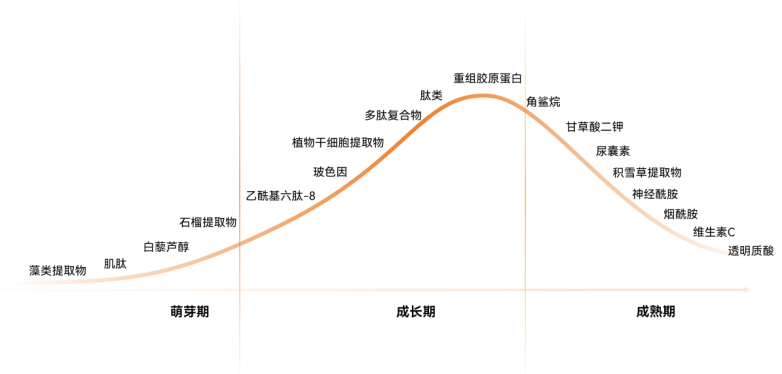
Lifecycle Chart of Popular Ingredients
Data source: Public information, VCBeat
In China, the active ingredients in functional skincare products are predominantly hyaluronic acid and plant-based actives, while the penetration rate of collagen remains relatively low. Among these, recombinant collagen is emerging as a prominent ingredient in skincare formulations, owing to its superior bioactivity and biocompatibility, as well as its more versatile processing properties.
Given the cyclical nature of the skincare ingredients market, hyaluronic acid, once a trending ingredient, has entered a mature phase with gradually diminishing growth momentum. In contrast, recombinant collagen, as an emerging force, is at a critical stage of concept popularization and deepening consumer awareness. Its potential for diverse, multifunctional benefits remains underexplored, offering brands ample room for innovation and marketing opportunities. Following the success of Giant Biogene’s flagship brands, Comfy and Collgene, in establishing recombinant collagen as a core ingredient and launching a series of best-selling reparative and anti-aging products, an increasing number of mainstream domestic and international brands have recognized the developmental potential of collagen. These brands are either pursuing independent R&D or collaborating with upstream manufacturers to introduce related products. The entry of major brands has further solidified consumer perception of recombinant collagen, driving its application in the cosmetics sector and expanding the market. Consequently, competition among brands is expected to intensify in the future.
The medical dressing market is relatively fragmented, with established brand awareness, making it difficult for late entrants to gain a competitive edge.
In recent years, China’s medical dressing market has demonstrated robust growth, primarily driven by the rapid rise of the medical aesthetics sector and the increasing demand for sensitive skin care. Collagen and hyaluronic acid are currently the primary raw materials used in these dressings, with applications mainly covering three areas: first, the treatment of skin conditions such as acne, dermatitis, and allergies; second, providing rapid repair for skin following medical aesthetic procedures; and third, meeting the needs for daily functional skincare. This market opportunity has attracted significant attention from skincare companies and enterprises with backgrounds in biopharmaceuticals, leading to the successive launch of Class II medical device-certified dressing products featuring recombinant collagen as their core ingredient.
The 2017 edition of the Medical Device Classification Catalog provided, for the first time, a detailed definition of medical dressings but did not specify regulatory guidelines for dressings with recombinant collagen or hyaluronic acid as core ingredients. With the issuance of the Principles for Classification and Definition of Recombinant Collagen-Based Medical Products in 2021, product classification has become increasingly clear. Recombinant collagen dressings and hyaluronic acid dressings have subsequently received explicit Class II regulatory approvals, leading to a surge in the number of registration certificates for collagen products following the release of the relevant policies.
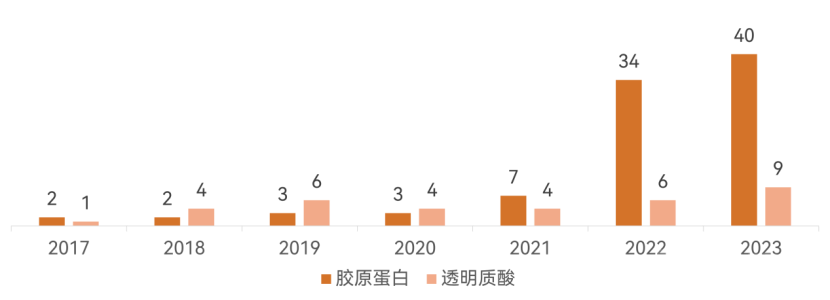
Annual Number of Approved Collagen and Hyaluronic Acid Products (Units) in Recent Years
Data Source: Center for Medical Device Evaluation, National Medical Products Administration; VCBeat
Due to the initial lack of regulatory clarity and the limited number of approved products, early movers were able to establish qualification barriers. Today, as new players continue to enter the functional dressing sector, product homogenization has intensified. Many new manufacturers or brands are launching Class II medical devices containing collagen through OEM (original equipment manufacturer) production, capturing market share with lower end-user prices. This has led to increasingly fierce competition in the field of recombinant collagen for medical dressings. However, with strengthened industry regulation and deeper market education, non-compliant products will gradually be phased out, making room for compliant Class II and Class III medical devices. This trend will drive the market toward greater concentration and specialization, while shifting demand toward these high-end products.
As the price disadvantage of injections diminishes, their market potential will be fully unleashed
The primary challenges facing collagen implants in the market are their high cost and relatively short duration of effect. Due to the limited number of approved collagen brands and product varieties, coupled with insufficient production capacity, the cost of collagen implants remains high. Furthermore, existing cross-linking technologies have not yet achieved breakthroughs in enhancing the stability and longevity of collagen, resulting in the effects of a single injection typically lasting only 3 to 12 months.
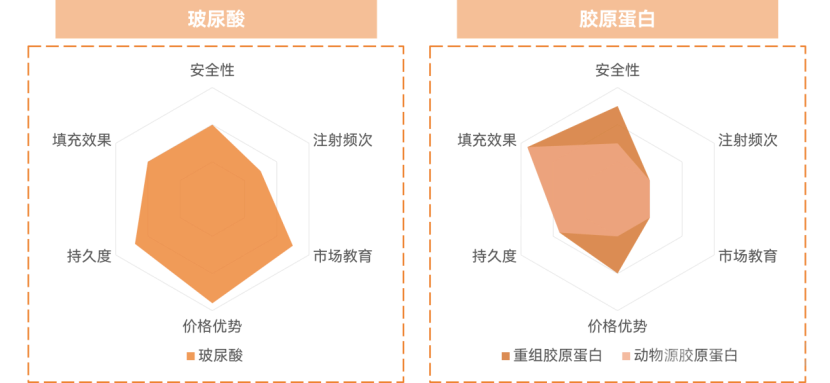
Comparison of Hyaluronic Acid and Collagen in the Field of Injection
Data Source: VCBeat
China’s collagen injectables market is still in its nascent stage, with competition not yet reaching a fever pitch; recombinant collagen injectables, in particular, are regarded as a blue ocean. As Class III medical devices, recombinant collagen injectables are subject to lengthy approval cycles and stringent regulatory oversight, resulting in extremely high market concentration. Currently, only a handful of companies have obtained approval in the domestic market, where products are predominantly based on animal-derived collagen. By comparison, the R&D threshold for Class III recombinant collagen devices is even higher; to date, only Jinbo Bio’s Wei Yimei successfully secured Class III device approval in 2021. As the number of market participants continues to expand, the supply of collagen injectables will increase significantly. This will not only provide consumers with more choices but also drive prices toward greater affordability, thereby gradually narrowing the price gap with hyaluronic acid injectables and enhancing market acceptance.
A Rising Star in the Multi-Billion Dollar Market: Dual-Engine Growth Driven by Medical Aesthetics and Skincare
In recent years, recombinant collagen has emerged as a high-growth sector in terms of market potential. It is poised to replicate the development trajectory of the hyaluronic acid industry, achieving a virtuous cycle that spans from technological breakthroughs on the supply side to widespread adoption and expanded application scenarios on the demand side, ultimately driving the market size from the tens of billions to the hundreds of billions.
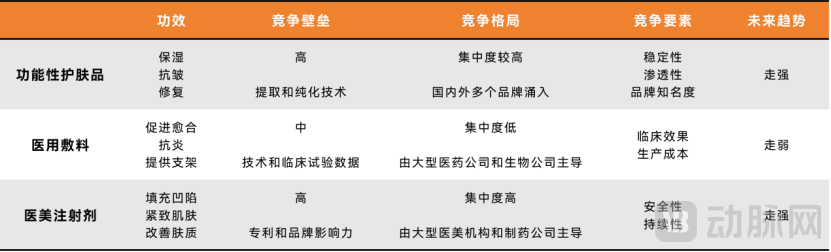
Competitive Analysis of Recombinant Collagen Across Various Fields
Source: VCBeat
Recombinant collagen offers greater growth potential in functional skincare and medical aesthetic injectables. The medical aesthetic injectable segment primarily relies on breakthroughs in raw material technology and regulatory approval capabilities, resulting in a relatively limited market size. Although the current penetration rate of collagen in medical aesthetic injectables is low, it is growing rapidly and is expected to partially replace the market share of hyaluronic acid injections in the future. Leveraging its differentiated composition, recombinant collagen injectables may become the vanguard for domestic medical aesthetic products entering the international market. In contrast, the functional skincare sector depends more heavily on downstream brand building and channel operation capabilities. Companies with vertical integration capabilities spanning from raw materials to channels and branding possess a stronger competitive advantage.
2Serious Healthcare: Mass Production Breakthrough, Seizing the High Ground in Medical Care
Recombinant collagen, characterized by its high tensile strength, biodegradability, low antigenicity, and low irritancy, is not only an ideal bioactive ingredient for skincare products, medical aesthetic products, and health supplements, but also plays a critical role in the field of serious medical care.
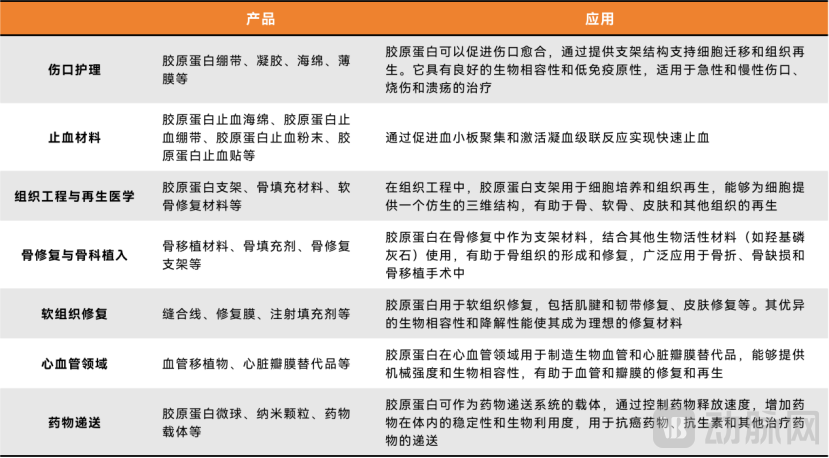
Serious Medical Applications of Recombinant Collagen
Data Source: VCBeat
Although recombinant collagen has demonstrated significant potential in the field of biomedical materials, its large-scale application in serious medical settings has been primarily hindered by production capacity failing to keep pace with demand. First, the production of recombinant collagen relies on bioengineering technologies, such as gene editing and protein expression systems. These processes not only require high-precision operations but also substantial investments of time and resources. While small-scale laboratory production can meet the needs of research and certain high-end products, achieving large-scale commercial manufacturing requires breakthroughs in process optimization, production line construction, and quality control. In particular, ensuring consistency is critical; every batch must meet stringent quality standards, which places exceptionally high demands on a company’s technical capabilities and management proficiency. Furthermore, the production process necessitates rigorous purification and modification techniques, which are not yet fully mature. Finally, as a biomaterial, the degradation rate of collagen must match the pace of human tissue repair and regeneration. Stabilizing this characteristic under mass-production conditions remains a formidable challenge.
Currently, only a handful of companies in China have mastered the large-scale manufacturing processes for recombinant collagen, while no competitors overseas have yet reached comparable levels. Leveraging its proprietary AIGC-enabled synthetic biology model, Meiliu Bio has optimized secretion signal peptides and collagen codons using machine learning strategies, with surface charge of the N-terminal domain of collagen as the primary parameter. This approach has significantly enhanced cellular synthesis efficiency. As a result, the yield of recombinant collagen in Pichia pastoris has increased by 4 to 9 times, while maintaining high productivity and achieving product purity exceeding 99% in accordance with pharmacopoeial standards. Meiliu Bio consistently emphasizes that sufficient collagen dosage is essential to deliver genuine reparative efficacy. This technological advancement not only effectively reduces production costs but also curbs the prevalent market practice of “conceptual inclusion,” where collagen is added in negligible amounts merely for marketing purposes. Breakthroughs in production capacity are a critical prerequisite for the application of collagen in evidence-based medical settings. Only by resolving this bottleneck can market demand be truly met, thereby fostering a virtuous cycle within the industry.
Technical Overview: Breaking Traditional Constraints, Accelerating Industrial Progress
1Technical Barriers: Supply-Demand Resonance and Strong Technological Breakthrough
Target Gene Design: Precision Design to Enhance Stability and Bioactivity
In the preparation of recombinant collagen, target gene design is a critical step. Its core objective is to optimize the structure and properties of collagen at multiple levels to meet the demands in fields such as healthcare and biomanufacturing.
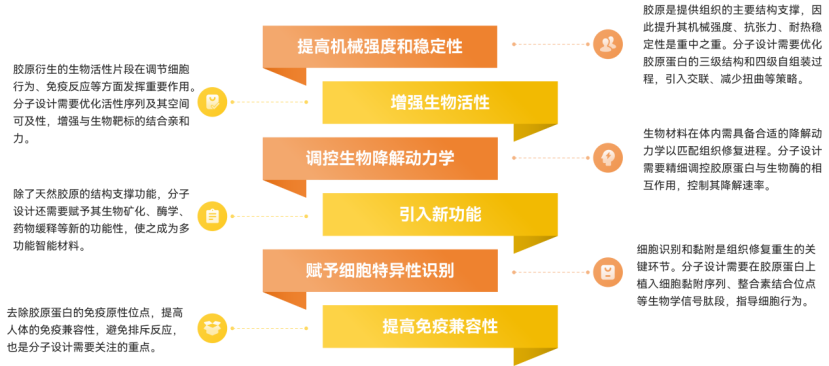
Core Requirements for Target Gene Design
Source: VCBeat
During the gene design process, it is essential to meticulously optimize the target gene sequence, protein folding, and modifications to ensure that recombinant collagen maintains stability under environmental challenges while retaining the necessary bioactivity to achieve its intended functions. Achieving this balance not only helps preserve the protein’s structure and function during production but also effectively reduces waste rates caused by degradation or inactivation. Furthermore, proteins with high bioactivity can achieve the desired effects at lower doses, thereby reducing both production and usage costs.
Multidimensional Strategies to Optimize Collagen Stability and Mechanical Properties: From Molecular Engineering to Nano-Enhancement
Optimizing intramolecular interactions is fundamental to enhancing collagen stability. Through molecular dynamics simulations and sequence analysis, residues that influence key intramolecular interactions—such as hydrogen bonds, salt bridges, and hydrophobic interactions—can be identified. Site-directed mutagenesis can then be employed to introduce amino acids at these critical sites that favor more stable interactions. This approach enhances conformational stability within the molecule and improves overall mechanical strength. According to an academic paper published by Yu Jianjun and Zhao Hua in 2022, Meishangjie collaborated with a specialized research institution in Switzerland to develop a unique microencapsulation model. They extracted an effective fragment of type I collagen (the COL1A1 segment, corresponding to gene sequence positions 498–788) from the human collagen genome and fused it with an amino acid sequence fragment of fibronectin (Fn). This fusion technology not only maximizes the advantageous expression effects of both components but also ensures the biological activity of the collagen, significantly improving its permeability and stability in the skin. In subsequent R&D upgrades, the company has replaced the type I collagen fragment with a type III collagen fragment.
In addition to relying on non-covalent interactions between natural amino acids, artificial cross-linking agents, such as glycosylation reagents or epoxides, can be introduced at specific sites to form stable covalent cross-linked structures. Computational simulation techniques can predict optimal cross-linking sites and the degree of cross-linking, thereby enhancing mechanical strength while maintaining appropriate flexibility. Common cross-linking methods include physical, chemical, and enzymatic cross-linking. Physical cross-linking is simple to perform but may affect the bioactivity and structural integrity of collagen. Chemical cross-linking offers high efficiency and superior mechanical properties, but residual chemical reagents must be controlled to mitigate toxicity risks. Enzymatic cross-linking provides excellent biocompatibility and mild reaction conditions, but the cost of enzymes and reaction time may serve as limiting factors.
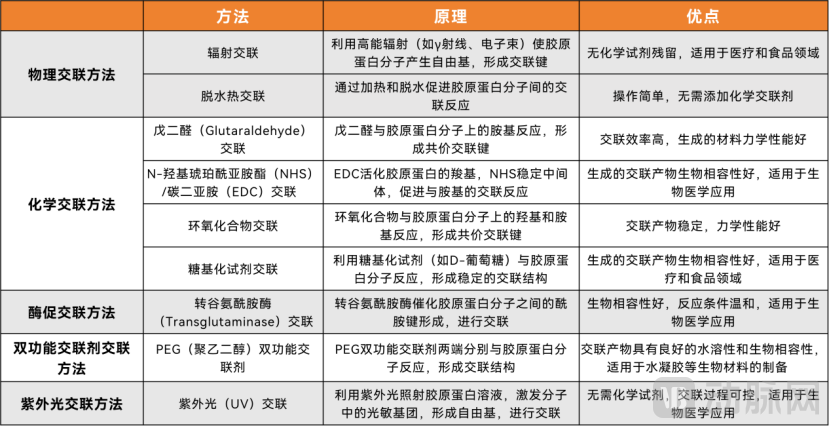
Comparison of Different Cross-Linking Methods
Data source: “Mechanism of Action and Research Progress of Enzymes for Protein Cross-Linking,” VCBeat
Furthermore, designing novel cross-linking domains represents an effective strategy for enhancing the mechanical properties of collagen. By introducing functional domains with self-assembly capabilities, such as the coiled-coil regions of viral capsid proteins, at the molecular termini or other suitable sites, additional cross-linking points can be formed between collagen molecules. These functional domains form stable molecular structures through self-assembly, thereby further strengthening the mechanical coupling between collagen molecules. Meanwhile, regulating self-assembly behavior can optimize the arrangement of collagen triple-helix structures. Different alignment patterns, such as parallel or antiparallel arrangements, have distinct effects on mechanical stability. Leveraging computational simulation techniques allows for the prediction of optimal self-assembly conformations and pathways, thereby identifying the most stable arrangements to enhance the mechanical strength and structural stability of collagen.
Furthermore, the mechanical properties of collagen largely stem from its unique triple-helical structure. By optimizing secondary structure parameters—such as adjusting the pitch and helical angle of the α-helix to approach their theoretical optima—it is possible to reduce torsional strain and enhance the overall thermodynamic stability of the helix. Molecular dynamics simulations can be employed to optimize these helical parameters, identifying the most suitable combination of pitch and helical angle to minimize internal stress and deformation within the helix. Drawing on the design principles of natural bone, inorganic nanoreinforcements, such as hydroxyapatite, can be incorporated into collagen to form bone-like composite materials. This bio-inorganic hybridization strategy significantly improves the mechanical strength of collagen, markedly enhancing its mechanical performance for biomedical applications.
Enhancing the Bioactivity of Recombinant Collagen: From Active Site Optimization to Multifunctional Module Design
On the basis of ensuring overall stability and mechanical strength, enhancing its biological activity is another goal of recombinant collagen. Collagen with high biological activity can better interact with cells, promoting cell adhesion, proliferation, and differentiation, which is crucial for wound healing, tissue repair, and regeneration.
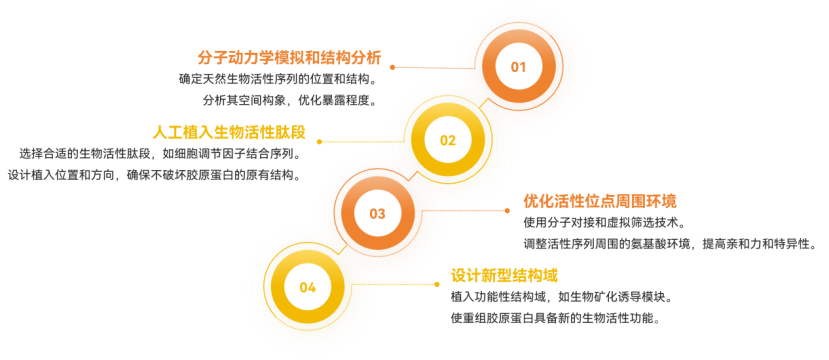
Strategies for Enhancing the Bioactivity of Recombinant Collagen
Source: VCBeat
First, optimize the spatial accessibility of active sites. Through molecular dynamics simulations and structural analysis, naturally occurring bioactive sequences within collagen molecules, such as the cell-adhesion RGD sequence and integrin-binding sites, can be identified. By optimizing the spatial conformation and exposure of these active sites, their recognition and binding by cellular receptors or other biological molecular targets are facilitated, thereby enhancing biological activity.
Secondly, new biological functions can be conferred upon recombinant collagen by incorporating novel bioactive peptide segments. Molecular design allows for the insertion of known bioactive peptides, such as cell modulator-binding sequences and enzymatic cleavage sites, at appropriate positions within the collagen structure. When designing the insertion sites and orientation, it is essential to avoid disrupting the native structure while ensuring that the inserted peptides perform their intended functions. Furthermore, molecular docking and virtual screening techniques can be employed to optimize the active sequences and their surrounding amino acid environments, thereby enhancing affinity and specificity for cellular receptors or other biological targets. For instance, strategies such as introducing additional hydrogen bond donors or acceptors and adjusting hydrophobicity can help strengthen these interactions, thus improving biological activity.
Finally, novel functional domains, such as biomineralization-inducing modules and enzymatic active sites, can be designed and incorporated to endow recombinant collagen with new biological activities, including the induction of biomineralization and catalysis of reactions. By combining different functional modules, multifunctional biomaterials can be engineered, thereby further enhancing their application value.
Optimize Fermentation for Yield, Enhance Purification for Quality
Optimizing fermentation conditions can enhance the growth rate of microorganisms or cells and increase protein expression levels, thereby shortening production cycles and improving production efficiency. Meanwhile, the effectiveness of separation and purification directly impacts the purity and activity of the final product; this process removes impurities to ensure that the product meets the stringent quality requirements of high-standard industries such as pharmaceuticals and cosmetics.
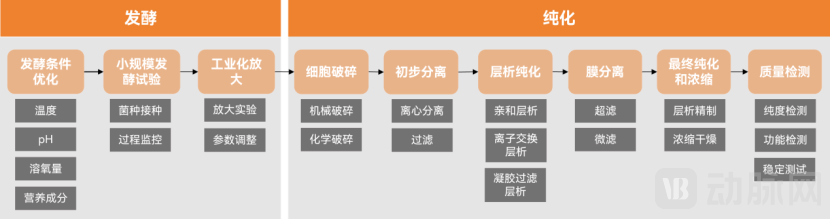
Recombinant Collagen Fermentation and Purification Process Flow
Data source: VCBeat
Fermentation processes involve the integrated regulation of multiple parameters, which not only influence each other but are also closely related to the growth status of microorganisms or cells. In small-scale laboratory production, optimizing these conditions is relatively straightforward; however, precise control of these parameters becomes exceptionally challenging in large-scale industrial manufacturing. Furthermore, the varying requirements for fermentation conditions across different microbial or cell expression systems add to the complexity of the process. In addition, fermentation processes optimized under laboratory conditions often exhibit reduced efficiency or instability when scaled up to an industrial level. This is because physical parameters (such as mixing and mass transfer) in large-scale bioreactors are difficult to maintain consistent with those in small-scale reactors, leading to alterations in cell or microbial growth and metabolism, thereby affecting the expression of target proteins.
The subsequent purification process often generates various impurities, such as host cell proteins, nucleic acids, and endotoxins. These impurities not only affect product purity but may also adversely impact the safety and functionality of the final product. Furthermore, a trade-off between purity and yield is frequently encountered during purification. Enhancing purity typically leads to reduced yield and increased product loss, whereas improving yield may result in incomplete removal of impurities, thereby compromising product purity. Although many efficient purification technologies, such as chromatography and membrane separation, can effectively improve purity, they are associated with high costs, which directly influence the market competitiveness of the final product. In addition, scaling up laboratory-scale purification processes to industrial scale often encounters technical bottlenecks, including column scale-up, flow rate control, and pressure management, all of which can affect purification efficacy.
Giant Biogene has been the first globally to resolve the efficiency bottlenecks that previously hindered the production of recombinant collagen, leveraging high-density fermentation and highly efficient separation and purification technologies. This breakthrough enables a 90% recovery rate of the target protein from recombinant E. coli after a single processing round—a purification and recovery level leading the industry—while achieving a recombinant collagen purity of 99.9% and bacterial endotoxin concentrations below 0.1 EU/mg, significantly surpassing industry standards for medical-grade materials. While efficiently producing high-quality products, the company has expanded its production scale, becoming one of the companies with the largest recombinant collagen production capacity worldwide. High efficiency and high quality are critical to the industrialization and application of recombinant collagen in serious medical care; breakthroughs in core technologies will effectively deepen its applications and drive the overall development of the industry.
2Clinical Translation: Overcoming Challenges and Exploring Commercial Pathways
In recent years, clinical research on collagen has shown a vibrant trend. In the landscape of clinical studies, areas such as facial skin improvement, skin aging, and wound healing have garnered significant attention, becoming current hotspots for research. Against the backdrop of rapid advancements in biotechnology, although scientists have made notable progress in designing and producing recombinant collagen with natural or collagen-derived structures, challenges remain substantial on the path to clinical application. The core issue lies in the lack of standardization across expression systems and production platforms.
Although the National Medical Products Administration (NMPA) issued the *Principles for Classification and Definition of Recombinant Collagen-Based Medical Products* in April 2021, numerous challenges persist in the practical review and classification of such products. Key issues requiring further standardization and exploration include how to demonstrate “non-absorbability” as stipulated in the Principles, what documentation manufacturers should submit, how to conduct testing if experimental data are provided, which test samples and wound types to select, and how factors such as molecular weight and duration affect the transdermal performance of recombinant collagen. Furthermore, production systems involve diverse biological organisms, each with its unique advantages and limitations, and regulatory authorities responsible for clinical approval have not yet reached a clear consensus on which systems are suitable for large-scale manufacturing.
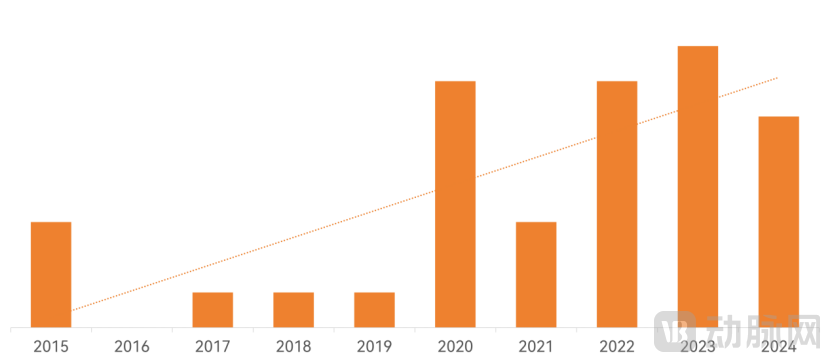
Clinical Registration Trends for Recombinant Collagen
Data Source: Chinese Clinical Trial Registry, VCBeat
Similarly, the diversity of market demand has further exacerbated the complexity of this issue. On one hand, research hotspots are focused on pursuing the integrity and functionality of collagen that mimics natural collagen; on the other hand, synthetic linear peptides, triple-helix fragments, and genetically engineered collagen variants have also demonstrated broad application prospects. In particular, there remains controversy over whether to use full-length collagen or specific fragments, which directly impacts the final performance of products and their market acceptance.
The potential applications of recombinant collagen are extensive, spanning multiple frontier medical fields such as drug delivery, tissue repair and regeneration, wound healing, and protein replacement therapy. However, commercialization in this sector has progressed slowly due to the specific requirements for different collagen types across various tissues and organs, as well as the absence of a dominant market-leading product. Furthermore, animal-derived collagen continues to hold a significant position in the pharmaceutical, cosmetic, and food industries, owing to its low cost, easy accessibility, and long-established safety record, thereby posing direct competition to the market adoption of recombinant collagen.
Although numerous companies have long established their presence in the production and supply of recombinant collagen, widely recognized medical-grade products have yet to emerge in the market. This discrepancy highlights a misalignment between market demand and corporate expectations. For instance, in the field of tissue engineering—a key beneficiary of recombinant collagen technology—while preclinical studies have demonstrated significant potential, there have been limited successful cases of clinical translation. Consequently, this has failed to effectively stimulate urgent industry demand for novel recombinant materials. As an important tool for studying the collagen family and the extracellular matrix, the scientific value of recombinant collagen cannot be overlooked. It is poised to play a more substantial role in basic research in the future, thereby laying a solid foundation for clinical applications.
Outlook: Responding to Precision Medicine, the Industry Boasts Broad and Promising Prospects
1Application Pioneering: Breaking Homogeneity, Meeting Downstream Demand
As national and industry regulations and standards for recombinant collagen products continue to improve, companies are required to adhere to unified production, testing, and quality control standards. This has, to some extent, promoted product standardization but simultaneously constrained enterprises’ room for innovation in product performance, leading to increasingly severe product homogenization. However, with in-depth research into each link of the recombinant collagen preparation chain, more types of collagen and their efficacy are being continuously discovered. The end-use application scenarios and product matrices developed around these findings are constantly expanding, bringing new opportunities and challenges to the market.
Recombinant Type XVII Collagen Poised for Breakthrough, Promising Applications in Hair Loss Treatment and Regrowth Market
From a structural perspective, type XVII collagen (COL17) is a unique transmembrane collagen, with its N-terminus located in the cytoplasm and its C-terminus extending into the extracellular matrix. By facilitating the formation of hemidesmosomes, it firmly anchors the basement membrane to basal cells, ensuring the integrity and tightness of the skin structure, thereby maintaining skin health. Furthermore, COL17 plays a critical role in regulating hair loss-associated stem cell populations. It maintains hair regeneration by modulating cellular quiescence, activation, and self-renewal.
The preparation of recombinant COL17 is highly challenging, demanding a high level of technical maturity from manufacturers. Compared to recombinant humanized collagen types I and III, which have the most mature industrialization processes, type XVII collagen typically exhibits lower expression levels. Even with optimized expression conditions or the use of more advanced expression systems, achieving efficient production comparable to other collagen types remains difficult. Currently, only a few companies in China have mastered the mass production technology for recombinant COL17. Patent analysis indicates that enterprises such as Giant Biogene, Weiming Shiguang, Jinbo Bio, Juyuan Biology, and Trautec Medical have fully mastered the industrial-scale production and preparation technology for COL17.
The future value of COL17 in the field of hair care has begun to emerge, but there is currently no consensus on how to best leverage its potential. With an expanding patient population and heightened awareness of hair loss prevention, the domestic market for anti-hair-loss and hair-growth products is poised for rapid growth. Although there are no mature commercialized products currently available on the market, deep exploration of the value of Type XVII collagen in hair care will enable recombinant collagen to open up a new growth curve in the future.
Rising Attention to Intimate Health Drives Strong Demand for Recombinant Type III Collagen
Vaginal mucosa in women is rich in collagen, with its total content accounting for more than 60% of the overall collagen. With aging, as well as factors such as hormonal imbalance, inflammation, and physical and chemical injuries, significant loss of collagen occurs, leading to symptoms such as vaginal laxity, stress urinary incontinence, and atrophy of the vaginal mucosa. The Expert Consensus on Clinical Diagnosis and Treatment of Genitourinary Syndrome of Menopause points out that human-derived type III collagen plays a significant role in improving these symptoms. It can increase the extracellular matrix of the vaginal mucosa, promote cell and blood vessel growth, and reduce inflammatory responses, thereby enhancing the thickness and elasticity of the vaginal mucosa and effectively alleviating atrophic symptoms. Due to these properties, human-derived type III collagen shows broad application prospects in the field of female intimate care.
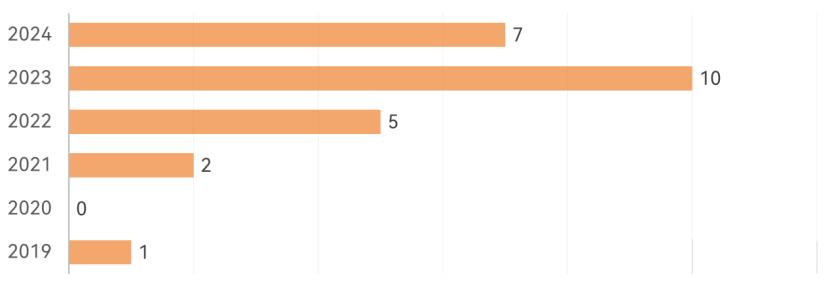
Annual Number of Approved Class II Medical Devices for Gynecological Use Containing Recombinant Collagen (Units)
Data Source: National Medical Products Administration, VCBeat
As of August 2024, information disclosed on the official website of the National Medical Products Administration (NMPA) indicates that 25 Class II medical devices containing recombinant collagen for gynecological symptoms have been approved in the market. These products are primarily available as gels and dressings, mainly used for vaginal hygiene protection, vaginal inflammation, and the care of superficial, non-chronic wounds caused by cervicitis or vaginitis. However, no Class III gynecological medical devices with recombinant collagen as the core component have emerged yet; existing products remain concentrated in the topical application scope of Class II devices. Currently, two Class III gynecological medical devices from Jinbo Bio are in the research and development stage. One of these, a self-developed lyophilized fiber of recombinant humanized type III collagen for gynecological use, has submitted its product registration application and is primarily indicated for the treatment of vaginal laxity. Due to advantages such as low risk and rapid recovery, demand for non-surgical intimate aesthetic procedures is expected to grow steadily, positioning recombinant collagen-based products for significant opportunities in this field.
2The Path of Metamorphosis: Striving for Excellence, Leading Industrial Upgrading
Cross-Boundary Integration: The Co-evolution of Recombinant Collagen and New Materials
The relationship between recombinant collagen and existing market materials is not purely competitive; on the contrary, the intrinsic efficacy of recombinant collagen can be further amplified through combination with other materials or treatments. As a material with excellent biocompatibility, recombinant collagen holds promise when used alone, yet it often exhibits insufficient performance in biomedical applications.
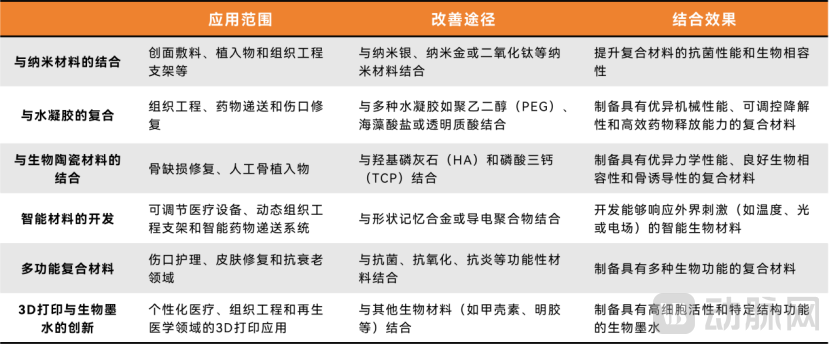
Listing and Comparison of Combined Material Applications
Source: VCBeat
The joint research and development of materials is not an overnight achievement. Although recombinant collagen exhibits excellent biocompatibility, its combination with other materials may still trigger immune or inflammatory responses. These reactions not only compromise the biosafety of the materials but may also adversely affect host cells. Differences in chemical and physical properties between materials, such as hydrophilicity, surface charge, and molecular structure, can lead to weak bonding, separation, or uneven degradation in vivo, thereby undermining the performance of the final product. Furthermore, mismatched degradation rates among materials can cause composite failure; for instance, in tissue engineering scaffolds, if collagen degrades faster than the scaffold material, the scaffold structure may collapse. Long-term interactions may also induce chemical reactions, interpenetration, or morphological changes, further weakening mechanical properties and service life. If the composite material fails to degrade completely in vivo, residues may provoke inflammation or other adverse reactions. Additionally, regulatory compliance, safety assessments, and efficacy validation for novel materials typically require prolonged clinical trials, factors that further increase the difficulty and cost of research and development.

Prospects and Challenges of Combined Materials
Data Source: VCBeat
By comprehensively optimizing material design, manufacturing processes, and clinical validation, the inherent limitations associated with the combined application of materials can be effectively overcome. This not only fosters innovative products with greater market appeal and competitiveness but also significantly enhances the overall value of the biomedical materials industry, serving as a powerful driver for enterprises to establish technical barriers and expand their market presence. The application of combined materials not only broadens the scope and depth of biomaterials science but also acts as a catalyst for innovation in both medical and industrial sectors. From wound care to smart medical devices, and from customized implants to precise drug delivery systems, each innovation accurately addresses the modern healthcare demand for personalization and high efficiency, thereby accelerating the rapid development of biomaterials science.
Intelligent Design: AI-Driven Customization of Recombinant Collagen
Gene design is the first step in the production of recombinant collagen, and the introduction of AI will greatly optimize the molecular design of recombinant collagen. By employing learning algorithms, AI can rapidly process and analyze vast amounts of protein structure data to identify optimal sequences. This process not only enhances the functionality and stability of collagen but also enables developers to more precisely control protein properties. Furthermore, AI can simulate protein folding processes and predict their three-dimensional structures, generating multiple collagen variants in a short period, thereby significantly shortening the research and development cycle.
Secondly, AI can monitor and adjust the production process of recombinant collagen in real time, including control of fermentation conditions, optimized selection of expression systems, and fine-tuning of purification processes. By leveraging deep learning models, key factors affecting production efficiency can be analyzed and predicted, thereby optimizing manufacturing processes. This intelligent production management not only enhances yield and product purity but also effectively reduces resource waste, delivering greater economic benefits to enterprises.
AI technology also empowers the personalized customization of recombinant collagen. By extracting key information such as users’ biological data and skin conditions, and analyzing genomic data or skin types, AI enables the design of collagen products tailored to individuals, precisely meeting the needs of diverse populations. In evaluating product efficacy, AI applications provide robust support for the continuous optimization of recombinant collagen products. Through the analysis of user feedback, skin images, or biomarker data, AI can identify subtle changes during product use. Based on these insights, product formulations or usage instructions can be adjusted in a timely manner to ensure users consistently achieve optimal results, thereby continuously enhancing product effectiveness and user experience.
Currently, some enterprises have taken the lead in applying AI technology to the development of recombinant collagen. For instance, Meishangjie and Tushen Zhihe have initiated a strategic partnership to jointly develop a protein sequence editing and optimization platform, successfully integrating AI with recombinant gene editing technologies. Leveraging its extensive expertise in cutting-edge fields such as graph neural networks, Transformers, and generative AI, Tushen Zhihe provides robust technical support for synthetic biology R&D. With the support of this platform, Meishangjie has successfully overcome R&D challenges associated with recombinant human BMP-2 protein, recombinant human GDF-11/BMP-11 protein, and recombinant metallothionein. Furthermore, the platform can efficiently and precisely optimize recombinant sequence expression according to the specific requirements of different parts of the human body, thereby enhancing the specific functions of proteins and meeting the growing demand for personalized medical care. Through deep integration with AI, recombinant collagen technology has achieved significant functional optimization and improvement in key stages including design and development, production processes, personalized customization, and efficacy evaluation. This not only streamlines the entire R&D and production workflow but also drives the medical field toward greater precision and personalization.
The above is an excerpt from the report. The overall framework of the report is as follows:
Chapter 1 Industry Insights: A Diverse Array of Collagen Types, with Recombinant Technology Leading Innovation
1.1 Category Overview: Diverse Sources and Multifaceted Functions
1.2 Recombinant Innovation: Clearly Defined with Prominent Advantages
Chapter 2 Market Outlook: Sustained Demand Growth and Comprehensive Expansion of Application Areas
2.1 Commercial Products: Market Leapfrog, with Efficacy-Based Skincare Leading the Way
2.2 Serious Medical Care: Mass Production Breakthrough to Seize the High Ground in Healthcare
Chapter 3: Technology Overview: Breaking Traditional Constraints and Accelerating Industry Progress
3.1 Technological Evolution: Molecular Analysis Drives the Synthesis Revolution
3.2 Technical Barriers: Supply-Demand Resonance and Strong Technological Breakthroughs
3.3 Clinical Translation: Overcoming Challenges and Exploring Commercial Pathways
Chapter 4: Future Outlook: Responding to Precision Medicine, the Industry Boasts Broad and Promising Prospects
4.1 Regulatory Strengthening: Policy Direction and Multi-Pronged Development
4.2 Application Pioneering: Breaking Homogeneity and Meeting Downstream Demand
4.3 The Path of Metamorphosis: Striving for Excellence to Lead Industrial Upgrading
Chapter 5 Corporate Case Studies
5.1 Giant Biogene
5.2 Meiliu Bio
5.3 Meishangjie
Please scan the QR code to add our assistant and obtain the full report. If you have already added us, please feel free to inquire directly.

Special Acknowledgments (Listed in Order of Research Interviews):
Mr. Duan Zhiguang, Chief Technology Officer of Giant Biogene; Mr. Nan Shan, Director of Marketing and Media at Giant Biogene; Mr. Ying Xinxiang, Founder of Meiliu Bio; and Mr. Zhao Hua, Founder of Meishangjie