

AI+ Healthcare Services Evolve into a New Paradigm with Integrated, On-Demand Solutions
In the healthcare services sector, any discussion of technological innovation inevitably involves AI.
At the 2024 Two Sessions, the Government Work Report proposed deepening the research, development, and application of big data, artificial intelligence, and other technologies, and launching the “AI Plus” initiative. The shift from the earlier “Internet Plus” to the current “AI Plus” reflects the rapid surge of the digital technology wave through a simple change in terminology.
In the healthcare sector, the “Internet+” model has previously achieved significant results in optimizing resource allocation and enhancing public convenience by breaking through spatial limitations. Today, building on the efficient connectivity of healthcare service resources, AI is advancing toward the core of healthcare delivery.
Yesterday, at the “2024 Inclusion·Bund Summit,” Alipay launched its new AI-powered product, the “AI Health Manager,” and announced the opening of a collaborative ecosystem for medical AI agents. Viewed against the backdrop of the industry landscape, this move signals a new trend in AI-enabled healthcare services.
As AI penetration in healthcare services deepens and technology continues to iterate, a large number of AI-integrated healthcare products have emerged in the industry.
Most of these products target specific stages within the healthcare service workflow, such as screening and assessment, triage and patient guidance, pre-consultation interviews, report interpretation, and health counseling. Long-standing challenges in seeking medical care—such as uncertainty about which department to visit, limited time for communication with physicians, and the need for multiple hospital visits for a single episode of care—have been alleviated by AI-powered solutions deployed across these various stages.
Some products also integrate multiple service workflows to address the needs of disease management and specific health issues, delivering AI-driven disease management solutions for patients. Leveraging accessible medical institutions and healthcare professional resources, and grounded in knowledge of clinical diagnosis, treatment, and health interventions, these solutions assist healthcare providers in managing patients through automated processes.
Furthermore, AI has been applied in certain specialized therapeutic scenarios. For instance, in the field of mental health, psychotherapy or psychological counseling often requires long-term engagement, with each session involving extended dialogue. In response, AI-driven products offering psychological services—such as emotional support, emotion regulation, mindfulness meditation, and sleep improvement—have emerged.
In general,AI is gradually expanding its coverage of healthcare services, with dimensions such as service workflows and specialty-specific diseases.
The value of AI in healthcare services is already evident. From the patient’s perspective, AI enables more efficient and convenient access to care, improves adherence to disease management protocols, and thereby leads to better therapeutic outcomes. From the standpoint of healthcare institutions, AI enhances operational efficiency and management capabilities. In recent years, the Chinese government has vigorously promoted the development of smart hospitals, with AI technology accelerating the digital transformation and intelligent advancement of healthcare services.
Nevertheless, there remains substantial room for innovation in AI-powered healthcare services.
A review of current mainstream AI-enabled healthcare service products reveals many commonalities: they primarily function within single or multiple service stages, serve individual healthcare institutions, or provide AI empowerment focused on the management of a single disease; they deliver services in a question-and-answer format, offering recommendations or guidance.
Consider the following scenario: when the general public falls ill or encounters health issues, they can only access the aforementioned convenient AI service workflows if they already know which hospital or medical service platform offers services suitable for their needs and then locate the service entry point of that hospital or platform.
However, the reality is that most of the time, the general public is only aware of their medical conditions but lacks a deeper understanding of the diseases themselves, leaving them at a loss when seeking products and services equipped with advanced technologies and concepts. Even though patients may have experienced the convenience of certain AI-driven healthcare services, they often face the challenge of searching for other medical institutions or service platforms and striving to adapt to different service workflows when encountering new health issues.
That is to say,Despite AI assistance, the fragmentation of healthcare services persists, and the integration of AI with healthcare urgently requires upgrading.
Public health status, disease conditions, and specific needs are highly diverse. Is it possible to have an “on-demand” product that responds to various needs at any time? At yesterday’s “2024 Inclusion·Bund Summit,” Alipay’s launch of the “AI Health Assistant” demonstrated to the industry the potential of exploring this direction.
“AI Health Steward” starts by helping to alleviate the difficulties and complexities of seeking medical care. It currently offers over 30 services, including finding doctors, interpreting reports, accompanying patients during consultations, answering health insurance inquiries, and managing personal health, with continuous iterations and upgrades planned for the future.
Zhang Junjie, Vice President of Alipay and General Manager of the Digital Medical Health Division, introduced that the “AI Health Steward” has integrated its business processes with service providers such as health commissions, medical insurance agencies, and healthcare institutions, linking together previously fragmented services. More than 20 AI agents representing doctors, hospitals, and other institutions have been onboarded in the initial phase. “It can also be understood as a steward team; you simply summon the specific agent needed to provide service.”
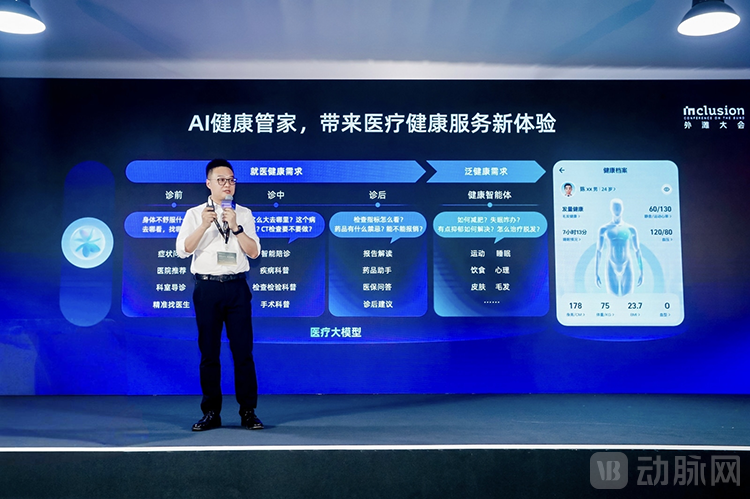
Alipay Vice President and General Manager of the Digital Medical Health Business Unit, Zhang Junjie, Introduces the Main Features of the “AI Health Assistant”
Compared with previous major AI+ healthcare service products, the “AI Health Manager” features significant distinctions:
First, it offers a one-stop solution. Leveraging the backing of the Alipay platform, the “AI Health Assistant” addresses users’ specific needs by linking to 3,600 public hospitals and local health systems across China. It extensively integrates the vast service resources connected through the platform, rather than providing AI services limited to a single hospital.
Secondly, it covers the entire patient journey, integrating end-to-end services ranging from online appointment registration and offline in-person consultation accompaniment to post-consultation medical insurance reimbursement, rather than being limited to isolated stages.
Finally, the “AI Health Manager” is not merely a Q&A product; it has achieved “Q&A as a service.”
Medical insurance services are one of the distinctive features of the "AI Health Assistant."
In recent years, the National Healthcare Security Administration has continuously optimized public services, with healthcare security policies and specific measures being constantly updated and iterated. Given the variations in local conditions across provinces and pooling areas, coupled with the implementation of policies for direct settlement of cross-regional medical expenses, patients may be unaware of the latest local policies when seeking medical care.
In response to user inquiries regarding medical insurance, the “AI Health Assistant” leverages Alipay’s extensive experience and accumulated knowledge from serving over 600 million medical insurance users to provide professional answers. In certain regions, the AI can also directly handle basic requests such as medical insurance reimbursement and inquiries.
It is evident that the “AI Health Steward” has initially achieved one-stop services for medical healthcare and health insurance reimbursement. By assuming an anthropomorphic “steward” role and leveraging full-platform, end-to-end service resources, it maximizes its stewardship functions to address challenges such as difficult and cumbersome access to medical care.In short, the “AI Health Manager” has advanced the product form of AI-integrated medical services by a significant leap.
Numerous enterprises are positioning themselves in the AI-plus-healthcare services sector, each with distinct technical characteristics and functional orientations.
Healthcare IT companies are actively expanding into AI-enabled healthcare services. Having been deeply involved in the digitalization of medical institutions over the past two to three decades, these enterprises have accumulated extensive experience in medical data processing, laying a solid foundation for AI product development. They also possess mature market channels and deep insights into in-hospital patient needs. Meanwhile, a new wave of healthcare technology startups is emerging, leveraging the opportunities presented by large language models to achieve rapid growth.
Some healthcare institutions are also vigorously developing AI, applying it to areas such as physical examinations, health management, and elderly care. These enterprises hold the advantage of being well-versed in service scenarios and having accumulated vast amounts of health data, enabling AI to emerge from real-world applications and return to them.
Of course, large technology platforms such as Alipay, leveraging their diversified business layouts and versatile technical capabilities, have naturally become key participants in the AI-plus-healthcare sector.
Overall,Each company has been deeply cultivating its own area of expertise, with little overlap. So why did Alipay choose to start by AI-enabling the public healthcare service system?
On the one hand, this is due to Alipay’s decade-long strategic presence in the healthcare sector, which has extensively connected medical and health insurance service resources.
Since launching its first online appointment registration service in 2014, Alipay has been deeply engaged in the healthcare industry for a decade. Over these ten years, Alipay has provided comprehensive support for the digital supervision of medical insurance funds and mobile payments within the medical insurance sector, accumulating a user base of over 600 million insured individuals and building an extensive, rapidly updated knowledge repository on medical insurance policies.
In the healthcare sector, Alipay is accelerating the digital transformation of medical institutions. To date, more than 3,600 hospitals across over 300 cities in China have been providing patients with digital healthcare services through Alipay.
Alipay also prioritizes user needs by significantly strengthening the integration of medical insurance and healthcare services. Currently, Alipay’s Medical Health channel aggregates over 100 categories and more than 20,000 specific services from official sources—including medical insurance authorities, health commissions, and hospitals—to meet users’ essential demands.
Precisely because the “AI Health Assistant” deeply integrates technological capabilities and service resources accumulated over a decade, it has become a representative achievement of Alipay’s endeavors in the healthcare sector since its entry into the field.
“In the past, we made long-term investments and earned the trust of a large user base by continuously improving our medical insurance inquiry, payment, and handling services, as well as providing end-to-end hospital services.” Zhang Junjie believes that this is the unique advantage of the “AI Health Steward,” and also the strength that positions Alipay to take its next step in the healthcare sector.
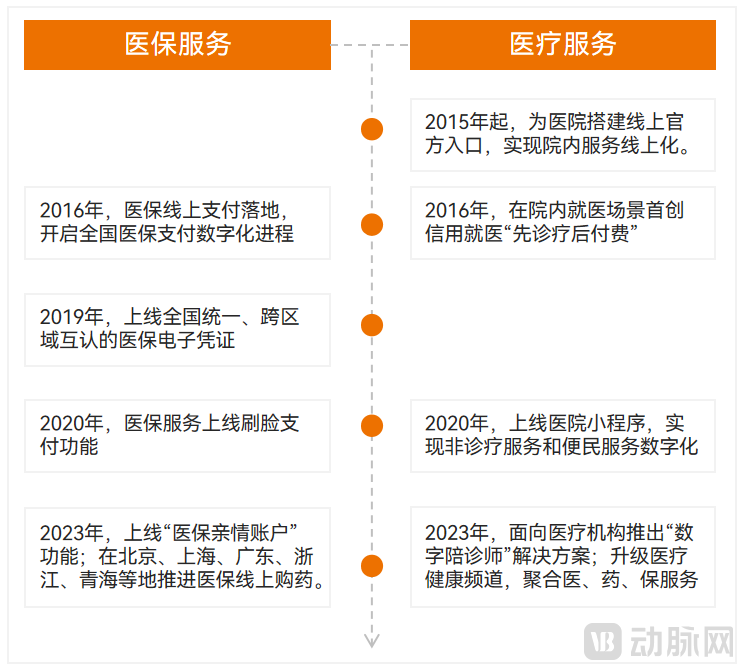 Key Milestones in Alipay’s Healthcare Strategy. Source: Public reports; graphic by VCBeat.
On the other hand, Alipay has built an agent collaboration ecosystem based on its accumulated resources, providing comprehensive service capabilities to support the “AI Health Manager.”
At the Bund Summit, Alipay announced the opening of its medical AI agent collaboration framework to the healthcare and broader health industries, aiming to co-build an AI-driven health services ecosystem. To reduce development and operational costs for institutions, Alipay has launched a professional collaborative platform for healthcare AI agents, offering free access to large healthcare language models along with supporting computing power and data security solutions. Currently, more than 20 professional medical institutions, specialties, and physician-led AI agents have joined the “AI Health Assistant” platform.
“AI Health Steward” and its underlying agent collaboration ecosystem will reverse the previous industry trend of stakeholders operating in silos, enabling their collective strengths to converge into a unified force.
The immense value potential of AI in the healthcare service system is undeniable; however, its value extends far beyond enhancing efficiency on the service delivery side. It also lies in addressing resource shortages and promoting quality improvement from the supply side, thereby penetrating deeper into the core of healthcare.
Currently, AI-assisted diagnostic and clinical decision support products are already being deployed to help the supply side address key challenges. Class III AI medical devices have emerged as one of the representative core products of AI-enabled healthcare in recent years. According to statistics from VCBeat’s “2023 Medical Artificial Intelligence Report,” as of November 2023, more than 100 AI products had been approved as Class III medical devices in China, including those for assisted diagnosis and surgical planning, directly serving hospitals and physicians.
Meanwhile, AI technologies have been progressively embedded into healthcare IT products and solutions to optimize system performance. Coupled with the continuously enhanced capabilities of AI in scenarios such as human-computer interaction, scale analysis, intelligent early warning, and quality control, these advancements have supplemented resources and improved quality from the supply side.
Similar to the service side, the supply side also requires systematic AI empowerment.
Zhang Junjie stated that over the past decade, Alipay has primarily focused on driving the digitalization of offline services, emphasizing connectivity and efficiency enhancement; in the coming decade, it will direct AI applications toward solving productivity challenges.
To this end, Alipay has adopted a more systematic approach by building AI agents. In November 2023, the Zhejiang Provincial Health Commission and Alipay jointly launched the first medical service AI agent, “Anzhen’er,” replicating and promoting its standardized service processes across healthcare institutions throughout Zhejiang Province. To date, “Anzhen’er” has served over 1,000 healthcare institutions in Zhejiang, reaching nearly 5 million patient visits.
Specialized AI agents are also available for medical specialties and individual physicians. For instance, Zhang Tao, a chief physician at Peking University People’s Hospital, was the first doctor to launch an AI assistant agent on Alipay, while the Department of Urology at Shanghai Renji Hospital has introduced a specialty-specific AI agent. These specialty- and physician-focused AI agents provide AI tools tailored to the needs of specialty development or clinical practice, and even create “digital twins” of physicians. This amplifies the service capacity of renowned experts and helps improve diagnostic and treatment capabilities at primary care levels.
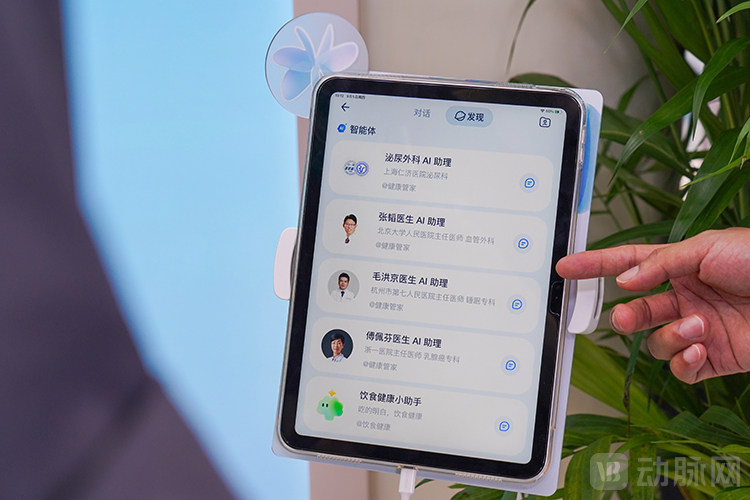
Professional agents provide services through the “AI Health Assistant.”
In Zhang Junjie’s view,Alipay defines a medical AI agent as a technological form that, empowered by artificial intelligence, integrates previously fragmented healthcare service chains to address user needs in a one-stop manner. It shifts the paradigm from “users seeking services” to “services seeking users,” and resolves productivity challenges even under conditions of insufficient overall medical resources.
Looking ahead, AI will inevitably become deeply integrated into the entire process of healthcare services. Its role will evolve from point-specific enablement to systematic empowerment, ultimately delivering “seamless” services to end-users, healthcare institutions, and physicians. The essence of “seamlessness” lies in its invisibility during normal operations; however, should it cease functioning, users would be left disoriented and unable to cope.
Alipay has proposed making AI-powered healthcare services as convenient for everyone’s daily life as QR code payments. Just as QR code payments have seamlessly permeated every aspect of our lives, when will AI-integrated healthcare achieve a similar level of ubiquity? With the opening up of Alipay’s healthcare AI agent collaboration and the further expansion of its ecosystem, the sector is venturing into the deeper waters of the healthcare service system. We believe that this progress brings us ever closer to achieving the aforementioned goal.