

Guarding Diabetic Patients with Digital Therapeutics: Hainan Province's Practice and Achievements
Diabetes is one of the four major categories of chronic diseases that seriously threaten the health of residents in China, and it is also a risk factor for various other diseases. Diabetic complications affect multiple organs, including the blood vessels, eyes, kidneys, and feet, resulting in high rates of disability and mortality. These complications severely impact patients' health and impose a heavy burden on individuals, families, and society, thereby exerting a significant adverse effect on public health and socioeconomic development. This situation is more pronounced in economically underdeveloped mountainous areas and townships in China, where doctors are unable to provide long-term“Tracking” patients to adjust treatment plans in real time; patients also lack timely awareness of their health status, making them prone to poor disease management.
To address this challenge, Hainan Province has been piloting digital therapeutics for diabetes since 2023 in Baoting Li and Miao Autonomous County and Lingshui Li Autonomous County, leveraging innovative digital therapy technologies and products. By capitalizing on the prominent advantages of digital therapeutics—such as effectively coordinating medical and non-medical factors in disease prevention and control, integrating in-hospital and out-of-hospital scenarios, rapidly empowering primary care facilities, and supporting precise digital governance—Hainan is building a comprehensive, digitized health service system for the entire continuum of diabetes prevention and treatment, thereby accelerating improvements in service quality and outcomes.
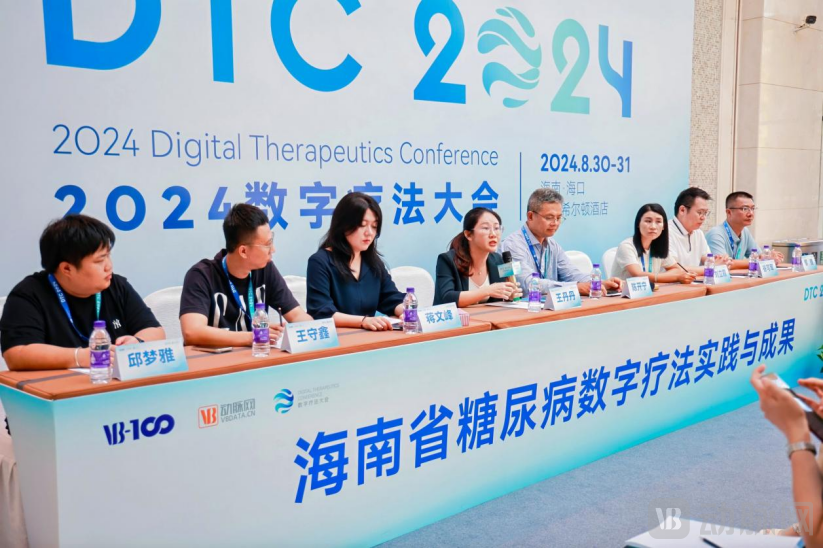 Conference Venue
On the afternoon of August 30, 2024, a sharing session focusing on the practice and achievements of digital therapeutics for diabetes in Hainan Province was held concurrently with the 2024 Digital Therapeutics Conference. The meeting was chaired by Chen Kaining, Director of the Department of Endocrinology at Hainan General Hospital. Representatives from the health commissions, hospitals, and pilot enterprises of Baoting Li and Miao Autonomous County and Lingshui Li Autonomous County participated jointly. Using practical outcomes as case studies, they discussed the innovative application of digital therapeutics in grassroots diabetes management and the significant changes it has brought, providing new insights and directions for future chronic disease management.
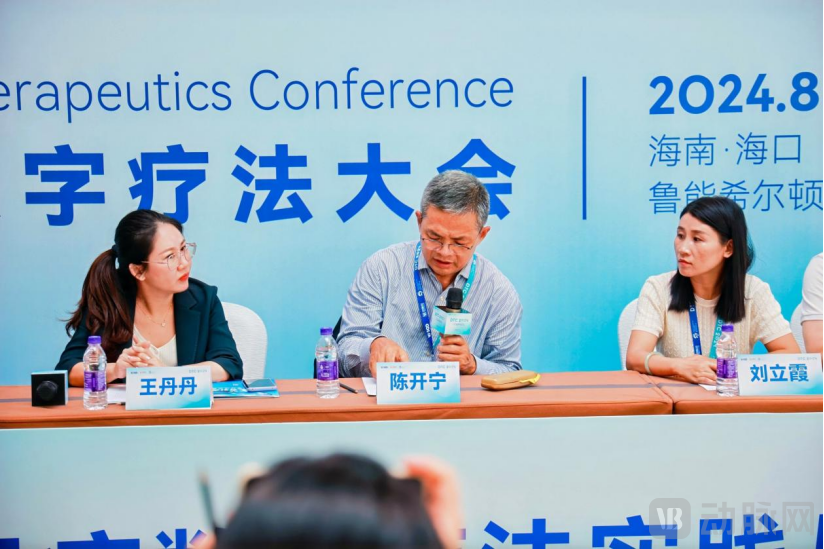 From left to right: Wang Dandan, Director of the Lingshui County Health Commission; Chen Kaining, Director of the Department of Endocrinology at Hainan Provincial People's Hospital; Liu Lixia, Director of the Chronic Disease Management Center of the Baoting Li and Miao Autonomous County Health Commission
At the outset of the sharing session, Director Chen Kaining provided a detailed introduction to the Hainan Provincial Digital Therapeutics Project for Diabetes. He noted that since its pilot launch in November 2023, the project has achieved significant results in diabetes management, not only enhancing the professional capabilities of primary care physicians but also effectively controlling patients’ blood glucose levels. These positive outcomes have received high recognition from the provincial government and will be promoted across the entire province in 2024.
Wang Dandan, Director of the Lingshui County Health Commission, and Liu Lixia, Director of the Chronic Disease Management Center at the Baoting Li and Miao Autonomous County Health Commission, also stated at the meeting that, to ensure the smooth implementation of the project, the Provincial Health Commission has provided comprehensive support in policy guidance, technical assistance, talent development, data management, and funding assurance. Through multiple training sessions, primary healthcare professionals have become proficient in operating the digital therapeutics system, thereby enhancing patient care. Furthermore, the project strictly safeguards patient information security, ensuring data accuracy and timeliness.
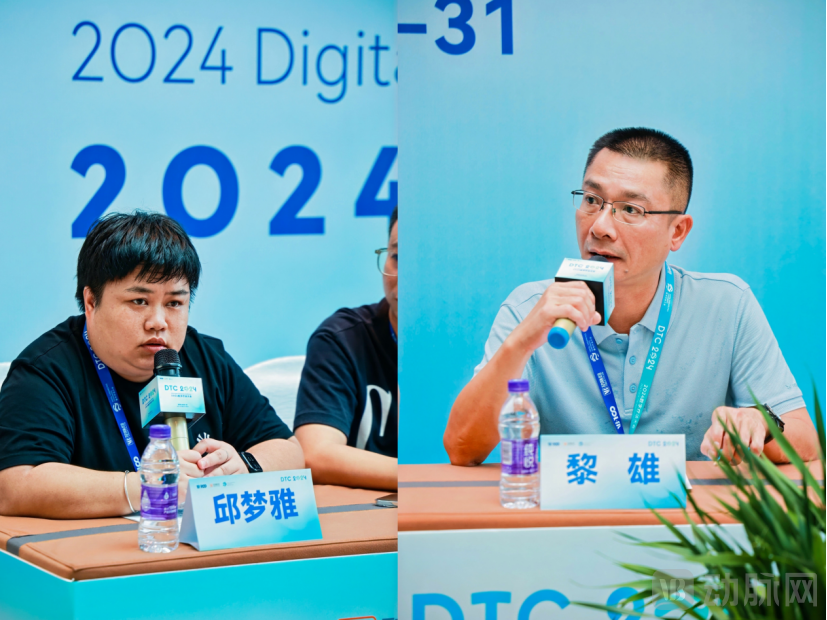 From left to right: Qiu Mengya, Deputy Director of Timon Health Center; Li Xiong, Director of Baocheng Town Health Center
At the sharing session, Li Xiong, Director of Baocheng Town Health Center, and Qiu Mengya, Deputy Director of Timeng Health Center, also shared their practical experiences at the primary care level. They stated that the application of digital therapeutics systems has significantly enhanced the diagnostic and treatment capabilities of primary care physicians, enabling them to manage diabetic patients in a more scientific and systematic manner. Meanwhile, patients’ blood glucose levels have been effectively controlled, and their quality of life has markedly improved. However, they also pointed out certain challenges encountered during implementation, such as low acceptance of electronic devices among elderly patients. To address these issues, they have leveraged their in-depth frontline work and guidance from higher-level institutions, combined with measures such as intensive health education and provision of health check-in services, to gradually build patients’ confidence in accepting and adapting to digital therapeutics. In the future, they aim to effectively improve diabetic patients’ self-management capabilities and quality of life through a health management model supported by family physician and health manager teams, with participation from provincial expert teams.
 From left to right: Jiang Wenfeng, Commercial Director of Digital Innovation at Yidu Cloud; Gu Kejun, Chairman and General Manager of Suzhou Yiduoyun Health Co., Ltd.
In addition, Gu Kejun, Chairman and General Manager of Suzhou Yiduoyun Health Co., Ltd., and Jiang Wenfeng, Digital Innovation Business Director at Yidu Cloud, engaged in an in-depth discussion on the future development direction of digital therapeutics systems. They proposed that integrating new technologies such as large AI models into digital therapeutics platforms would further enhance the intelligence level of these systems, providing patients with more personalized health management solutions. Meanwhile, they emphasized the importance of data quality, pointing out that only by ensuring the accuracy and timeliness of data can the current status of diabetes management be accurately reflected and the effectiveness of the entire management system be monitored.
In conclusion, representatives from all attending parties jointly expressed that the innovative application of digital therapeutics for diabetes in primary care has provided new perspectives and directions for chronic disease management. Looking ahead, with continuous technological advancements and ongoing optimization of delivery models, digital therapeutics are poised to be applied more broadly and play an even greater role. Meanwhile, they called on governments at all levels and healthcare institutions to further strengthen support for digital therapeutics, expand and enhance multi-party collaboration, accelerate the digital transformation of primary healthcare, and contribute to the high-quality development of the Healthy China strategy.