

Intelligent Brain-Computer Interaction and Neuromodulation Beijing Municipal Key Laboratory Led by Peking University First Hospital Submits Prospectus

Symbionics
Brain-Computer Interface Device Developer
Intelligent Brain-Computer Interaction and Neuromodulation represent a critical frontier at the intersection of neuroscience, clinical medicine, artificial intelligence, and high-end implantable medical devices. In China, tens of millions of patients require reconstruction of motor, sensory, and cognitive functions, creating an urgent need for more precise, safer, and more stable technologies for neural functional restoration.
In response to this significant clinical need, the "Beijing Key Laboratory of Intelligent Brain-Computer Interaction and Neuromodulation," jointly applied for by Professor Yi Zhiqiang, Director of the Department of Neurosurgery at Peking University First Hospital, and Symbionics (Beijing) Technology Co., Ltd., has recently been officially approved as a Beijing Key Laboratory for 2026.

Figure 1. The Beijing Key Laboratory of Intelligent Brain-Computer Interaction and Neuromodulation, led by Professor Yi Zhiqiang from the Department of Neurosurgery at Peking University First Hospital, collaborates with a multidisciplinary core team to conduct clinical translational research on brain-computer interfaces and neuromodulation.
This laboratory focuses on cutting-edge areas such as intelligent brain-computer interfaces, neuromodulation, brain cognition, and high-end implantable medical devices. Leveraging the robust clinical foundation of the Department of Neurosurgery at Peking University First Hospital in precise epidural and subdural implantation, it primarily conducts research in the following areas: acquisition and interpretation of brain signals, development of flexible neural electrodes, minimally invasive implantable devices, closed-loop acquisition and stimulation systems, preclinical validation, and translation of research outcomes into practical applications.
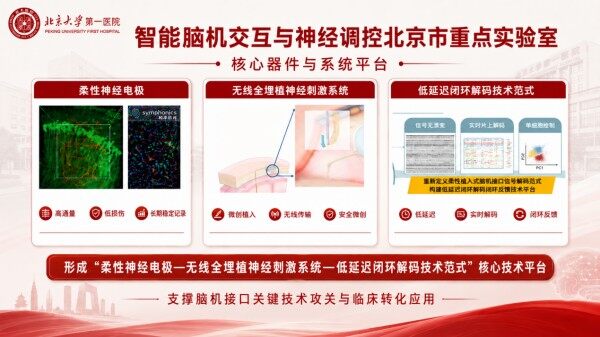
Figure 2. The laboratory has established a core technology platform for brain-computer interfaces, leveraging flexible neural electrodes, fully implantable wireless neural stimulation systems, and low-latency closed-loop decoding technologies.
The team has completed the world’s first clinical exploration of a 128-channel intelligent brain-computer interface (BCI) implant, marking a critical step forward for China in this field. Leveraging Peking University Hospital’s Department of Neurosurgery’s extensive long-term clinical experience, the team has established significant research advantages in neuromodulation therapies for Parkinson’s disease, essential tremor, dystonia, epilepsy, and chronic pain, while continuously exploring more precise and personalized modulation strategies. Meanwhile, the team is prudently advancing clinical research on intelligent BCI implantation technology and has established a comprehensive research workflow encompassing preoperative assessment, precise implantation, signal acquisition, decoding training, and postoperative rehabilitation follow-up.
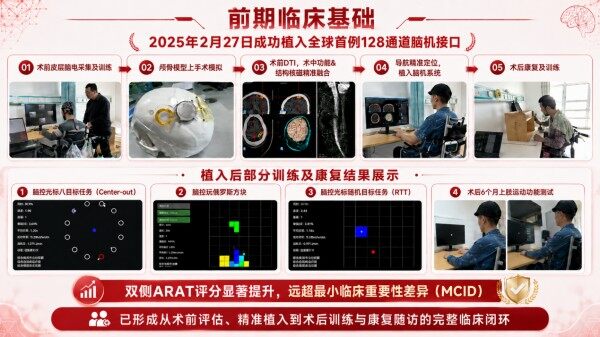
Figure 3. The team completed the world’s first implantation of a 128-channel brain-computer interface, establishing a complete clinical closed loop encompassing preoperative assessment, precise implantation, and postoperative training and rehabilitation follow-up.
In the future, the laboratory will fully leverage its advantages in clinical research and precision implantation, collaborating with partner institutions to build upon their technical foundations in flexible neural interfaces, implantable devices, and engineering translation. This effort aims to advance the core technologies of intelligent brain-computer interaction and neuromodulation through research and development, clinical validation, and translational implementation in Beijing, thereby supporting the high-quality development of the high-end medical device industry in Beijing and across China, and bringing more precise, safer, and more stable rehabilitation hope to millions of patients with neurological impairments nationwide.
Appendix: List of Newly Added Beijing Key Laboratories at Peking University Health Science Center in 2026
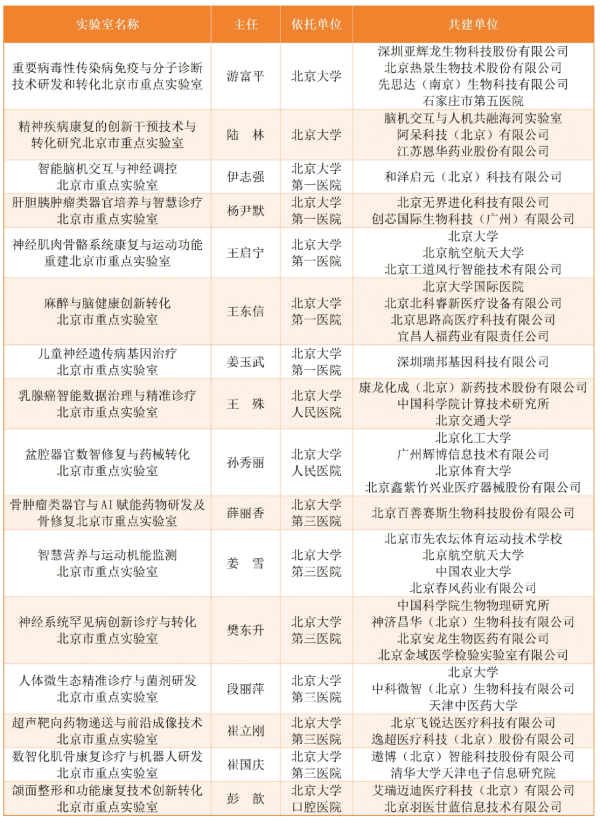
(Neurosurgery)