

China's Top GDP County, Kunshan, Accelerates Medical Innovation with Three IPOs and New Healthcare Initiatives
Kunshan, which tops the "2024 CCID Top 100 Counties List," is accelerating its efforts in the field of medical innovation.
Recently, Kunshan has begun to lay out its presence in the medical aesthetics sector and has already established the Shanghai-Kunshan Plastic Surgery and Anti-Aging Industrial Park. It is reported that the park aims to become China’s first specialized industrial zone dedicated to plastic surgery and anti-aging within three to five years, attracting more than 20 enterprises above designated size and achieving an annual output value exceeding RMB 5 billion.
Prior to this, Kunshan had been making full efforts in the nucleic acid sector and currently boasts Asia’s largest nucleic acid research base., and a self-developed innovation system for the small nucleic acid and biopharmaceutical industries,The brand “For Nucleic Acid Testing, Go to Kunshan” has gained international recognition.Among them, the Kunshan High-Tech Industrial Development Zone has gathered nearly all renowned enterprises and research institutions in China's small nucleic acid field, accounting for 80% of the national supply of small nucleic acid services and scientific research reagents, and 90% of small nucleic acid raw materials and drugs.
Beyond establishing a niche in the nucleic acid sector and initiating forays into the medical aesthetics space, Kunshan’s medical innovation enterprises are gradually achieving scale and garnering strong investor interest in the capital markets.
Specifically, in the secondary market, three innovative medical enterprises—Zelgen Biopharmaceuticals, Jiangsu Manse Biotechnology, and Hongguanzhuang Guoyao Shares—successfully completed their initial public offerings (IPOs). In the primary market, innovative companies such as Hanerxi, Kunshan Boqing Biotechnology, Xinyunda Biotechnology, Suzhou Bochuang Tongkang Biotechnology, and Kunshan Yiyuan frequently secured financing...
Behind the Remarkable Achievements, What Kind of Industrial Innovation Story Is Kunshan Telling in the Medical Field?
In the 1980s, Kunshan, then an agricultural county, attracted little attention: it not only lacked an industrial base but also ranked last among Suzhou’s six counties in terms of economic performance.
Yet four decades have flown by. Kunshan now ranks among the top county-level divisions in China’s GDP landscape, has long topped the “Top 100 Counties” lists published by various institutions, and in 2023 became the only county-level city with a GDP exceeding RMB 500 billion—on par with the economic scale of many provincial capitals in western China.
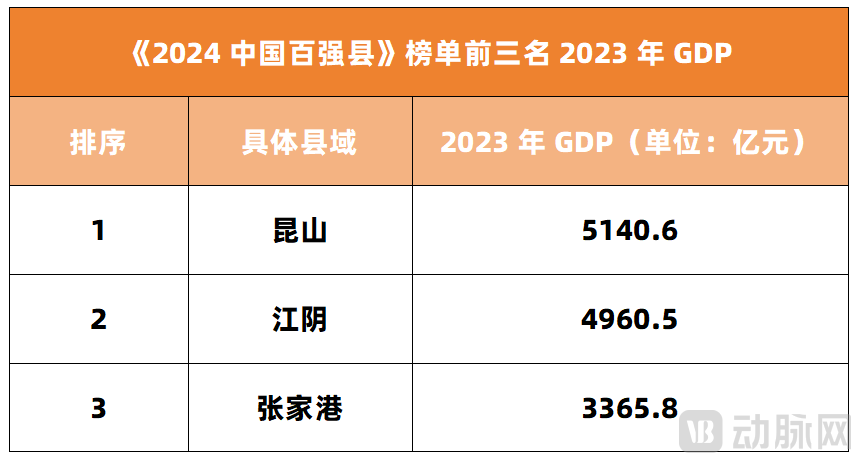
What Has Fueled Kunshan’s Rapid Economic Surge?
According to the official website itself,Kunshan’s successful experience lies in its emphasis on transforming the mode of economic growth. From a chronological perspective, there are two key phases.
· First, in 1984, Kunshan residents self-funded the establishment of an industrial park and erected a billboard at Shanghai Hongqiao Airport bearing the slogan “National-Level Economic and Technological Development Zone—Kunshan Welcomes You,” pioneering a new trend across China and thereby gradually shedding its identity as a purely agricultural county.
· Second, since the 1990s, Kunshan has continuously strengthened its industrial advantages and promoted the development of industrial agglomeration and clusters. Initially, Kunshan seized opportunities by introducing and cultivating electronic information enterprises, becoming a major global production base for laptop computers and capturing one-third of the global market. Subsequently, Kunshan once again accurately identified and capitalized on the rise of smartphones and terminal devices, ushering in more rapid development and forming an electronic information industry cluster with a scale of RMB 700 billion.
Returning to the present, Kunshan is once again seizing opportunities with an open mindset amid a new wave of industrial transformation. While continuing to deepen its existing advantageous industries, the city has also begun to lay out its strategy in emerging sectors such as healthcare.
Specifically, Kunshan has undertaken three major initiatives.
First, policy guidance. It is worth noting that unlike policies in other regions, which tend to offer broad and comprehensive support, Kunshan’s industrial policies are more targeted, with most measures implemented in specific niche sectors.
Taking the 2022 document on the construction of an innovation cluster for the oligonucleotide and biopharmaceutical industries as an example, it explicitly states that Kunshan should focus on three distinctive areas—oligonucleotide drugs, medical devices, and integrated traditional Chinese and Western medicine aesthetic medicine—to foster new competitive tracks characterized by “offering what others do not, and specializing in what others already have.”
Second, to attract talent for the industry. In this regard, Kunshan has gradually established a “1+N+X” talent policy framework, which comprises one overarching policy—the Kunshan Talent and Sci-Tech Innovation Policy Version 4.0—N specialized talent programs such as the Leading Talent Program, Innovation and Entrepreneurship Talent Program, Industrial Talent Program, and Highly Skilled Talent Program, and X supporting measures including housing assistance, contribution-based rewards, and “one-stop” services for high-level talents.
Taking “Head Goose Talent” as an example, Kunshan released the fifth batch of projects under its “Head Goose Talent” program this July. Among them, Zou Yun, an expert selected under China’s National Major Talent Projects and designated as a “Head Goose Talent,” established Suzhou Yiteng Electronic Technology Co., Ltd. in Kunshan. It is reported that the company focuses on the research, development, and industrialization of high-end X-ray tubes for medical CT scanners. Its first 5.5 MHz CT X-ray tube has obtained Class II medical device certification and successfully entered the market.
Third, deliver high-quality, in-depth services. With 40 years of experience in fostering industrial development, Kunshan has been sparing no effort to optimize its business environment and support enterprise growth from all aspects.
For example, in the realm of medical innovation, Kunshan has actively coordinated with the Jiangsu Provincial Productivity Promotion Center and meticulously organized a special initiative titled “Kunshan Biopharmaceutical and Medical Device Industry Sci-Tech Financial Service Express.” Through customized, in-depth bank-enterprise matchmaking, this initiative provides exclusive credit products featuring low thresholds, low interest rates, and high efficiency to enterprises in Kunshan’s biopharmaceutical and medical device sectors, thereby addressing the challenges of difficult and costly financing.
Three Major Initiatives Deliver Tangible Results for the Development of the Medical Innovation IndustryAs previously mentioned, Kunshan has already seen three medical companies go public and has made deep inroads into niche sectors such as nucleic acids, medical aesthetics, and medical devices. Notably, the Kunshan Small Nucleic Acid and Biopharmaceutical Industrial Park is now home to 134 enterprises, covering key follow-up projects, internationalized projects, academician-led initiatives, major industrialization projects, and collaborations with prestigious research institutions.
In addition, Kunshan has increasingly prioritized addressing “chokehold” issues across various industrial sectors in recent years, repeatedly emphasizing the need to accelerate original technological research. In the field of medical innovation, it is focusing on new drug development, medical devices, medical aesthetics, and frontier biotechnology.Prioritize breakthroughs in key biopharmaceutical technologies, including small nucleic acid drug development, biomacromolecule delivery, site-specific protein modification, and incorporation of non-natural amino acids into proteins. Overcome core technical bottlenecks in high-end medical devices, such as the domestic production of recombinant thrombin drugs and pencil-beam scanning technology.
In summary, it is evident that Kunshan has achieved significant progress in medical innovation and continues to make deeper breakthroughs in the field.
In Kunshan, thanks to a fertile environment for innovation, a cohort of outstanding medical startups has emerged in recent years, frequently attracting investor interest and securing financing.
According to the VCBeat database, a number of investment firms—including Northern Light Venture Capital, Shenzhen Capital Group, Dongwu Innovation Capital, New Silk Road Financial Holdings, Qianhui Capital, CCB International, and Zhejiang Industrial Investment—have all invested in medical innovation enterprises based in Kunshan.
Behind the frequent achievements lies Kunshan’s unique “playbook” in the process of industrial agglomeration—focusing on characteristic industries and providing comprehensive support across all aspects, from talent to infrastructure, thereby deepening and strengthening the entire industrial chain.
A single point can reveal the whole picture. As the earliest biopharmaceutical subsector in Kunshan to receive systematic support, the small nucleic acid industry has grown from scratch to become the largest in Asia, serving as a concrete manifestation of the “Kunshan Model” in medical innovation.
Let’s rewind to the early 2000s. At that time, Kunshan was considering industrial transformation and upgrading, but it was not entirely clear which specific niche sector to pursue. After extensive research and meticulous planning of emerging industries, Kunshan ultimately chose to focus on the small nucleic acid industry.
On the one hand, the small nucleic acid industry represents a frontier segment within the biopharmaceutical sector, and China has already established a certain foundation for research and development. On the other hand, few local governments had systematically laid out plans for this industry at that time; thus, those who took the initiative to deploy resources gained a first-mover advantage.
However, it is important to recognize that many things now taken for granted faced significant challenges in their specific historical context: at that time, understanding of small nucleic acids was still in its infancy, and developing a small nucleic acid industry within a county-level region carried substantial risk.
To quickly get started from scratch,The first step for Kunshan is to identify talent most relevant to industrial development.In 2003, facilitated by Tsinghua Science Park, Kunshan established contact with Professor Liang Zicai. This initial engagement laid the groundwork for Professor Liang’s return to China four years later, when he established his startup, Suzhou Ribo Life Science, in Kunshan.
As an early researcher in the oligonucleotide industry, Professor Liang Zicai has been deeply engaged in the field of oligonucleotide technology since the 1990s. Over the following decade, he published more than 50 papers related to nucleic acid technologies and holds nearly 20 patents and patent applications. It can be said that it was Professor Liang Zicai’s arrival that ignited the first spark of Kunshan’s oligonucleotide industry.
In near lockstep with the introduction of top-tier talent, Kunshan established a market-oriented management company, jointly formed by the government and third-party enterprises, to effectively operate companies in the oligonucleotide industry and to develop and manage the Oligonucleotide Industrial Park.
Throughout this process, Kunshan has also demonstrated its sincere commitment by providing robust support for industrial development.One telling detail serves as corroboration: in 2007, when Professor Liang Zicai proposed establishing a Translational Medicine Center for RNAi technology, Kunshan promptly committed to investing RMB 200 million to advance the infrastructure development of the Kunshan Institute of Small Nucleic Acids, followed by an annual operational funding of RMB 20 million. It is worth noting that the biopharmaceutical industry is characterized by long development cycles, substantial capital requirements, and high risks. Kunshan’s unwavering support for industrial development over more than a decade demonstrates its determination and steadfast commitment to this field.
Driven by Professor Liang Zicai and Ribobio, an increasing number of oligonucleotide companies have begun to establish themselves in Kunshan. Meanwhile, in 2008, the Kunshan High-Tech Industrial Development Zone even launched the slogan, “For nucleic acids, come to Kunshan.”
Subsequently, laboratories established under the leadership of Academician Zhang Lihe, Academician Chan Sun Chiu, Professor Xi Zhen, and Dr. Lu Yang were successively built and became operational in Kunshan.By 2021, the Small Nucleic Acid and Biopharmaceutical Industrial Park in Kunshan had taken shape, establishing Asia’s largest portfolio of small nucleic acid drug candidates and forming a full industry chain covering new drug development, preclinical studies, and clinical trials.
The industrial cluster effect empowers the sound and healthy growth of enterprises. From an industry perspective, innovative companies settled in Kunshan have established a complete industrial chain for small nucleic acid (oligonucleotide) biopharmaceuticals in China: covering intellectual property, synthesis and modification, large-scale preparation and new drug development, technical services and diagnostic reagents, preclinical studies (pharmacology, efficacy, pharmacokinetics, safety, etc.) and clinical research, as well as formulation, drug manufacturing, logistics, and marketing, all centered around applied research in small nucleic acids.
Currently, companies within the small nucleic acid industrial chain in Kunshan are achieving continuous breakthroughs, with encouraging progress.For instance, in January of this year, Ribo Life Science and its International R&D Center (hereinafter referred to as “Ribo”), under the leadership of Professor Liang Zicai, announced a collaboration with Boehringer Ingelheim of Germany to jointly develop innovative small nucleic acid therapies for the treatment of non-alcoholic steatohepatitis (NASH) or metabolic dysfunction-associated steatohepatitis (MASH). According to the terms of the agreement, in addition to receiving an upfront payment, Ribo is entitled to milestone payments based on the initiation of clinical studies, regulatory approvals, and commercial success, as well as tiered sales royalties on marketed products, bringing the total potential transaction value to over $2 billion.
As the first company to go public under the fifth set of listing standards of the STAR Market, Zeltis Pharma, which focuses on multiple disease areas including oncology, hemorrhage, and autoimmune disorders, currently has a market capitalization of approximately RMB 15 billion. According to the company’s latest financial report, Zeltis Pharma is developing a series of globally leading and competitive bispecific and trispecific antibodies, among which ZG005, ZGGS18, and ZGGS15 have completed dose escalation and entered Phase I/II clinical trials. Notably, the key product ZG006 is the world’s first CD3/DLL3/DLL3 antibody, and its investigational new drug application for the treatment of advanced solid tumors has been approved by both the FDA and the NMPA.
As can be seen from the above, Kunshan’s industrial clusters do not merely aggregate enterprises; rather, they have formed an ecosystem encompassing all segments of the industry value chain.
In recent years, regions across China have been actively strategizing the development of the medical innovation industry, pulling out all the stops—from industrial park construction and investment attraction to tax incentives and dedicated service teams.
How many regions are involved in the fierce competition? There is even a joke in the industry that goes,The growth rate of biopharmaceutical companies lags behind that of the industrial park.
This trend is underpinned by China’s emphasis on the medical innovation industry. For instance, the Outline of the 14th Five-Year Plan for National Economic and Social Development and the Long-Range Objectives Through the Year 2035 explicitly lists the biopharmaceutical sector as a strategic emerging industry critical to “seizing the initiative in future industrial development.” Furthermore, against the backdrop of an aging population, the medical innovation industry presents substantial market opportunities, capable of generating employment and driving the development of related industrial chains.
From the above two points, it is both reasonable and urgent to exert efforts in developing the medical innovation industry.
However, like two sides of a coin, significant challenges lie behind the opportunities.
First, industrial development is not an overnight achievement; neither local governments nor participating enterprises should rush the process. Therefore, it is crucial to nurture the industry with patience, respect market dynamics, and maintain sufficient market openness. For instance, while policy support plays a vital role in corporate development, particularly in the early stages, once innovative companies have grown, they should be subjected to market validation rather than being afforded excessive protection.
Furthermore, local governments must avoid the temptation to pursue scale and comprehensiveness at all costs; instead, they should maintain a sharp focus on niche sectors. The case of Kunshan’s strategic push into the small nucleic acid industry demonstrates that regions must cultivate specialized niche industries aligned with their own endowments to achieve sustained breakthroughs and maximize efficiency.
Once a solid industrial foundation has been established, it is advisable to expand into more specialized niche sectors. Kunshan exemplifies this approach: after consolidating and deepening its capabilities in the biopharmaceutical sector, it leveraged its strengths in the small nucleic acid industry to gradually extend into medical devices, medical aesthetics, and other related fields.
Taking medical devices as an example, in 2020, Kunshan signed a comprehensive strategic cooperation agreement with Maisheng Medical to jointly establish an Innovation Center for the High-End Medical Equipment Industry. The industrialization project of Maisheng Proton Therapy was signed and launched in the Kunshan High-Tech Industrial Development Zone, thereby fostering the development of an advanced manufacturing cluster for high-end medical equipment valued at hundreds of billions of yuan, and incubating a regional innovative service cluster for proton therapy valued at tens of billions of yuan. These initiatives are currently advancing rapidly.
Winds rise from the tips of duckweed; waves form from subtle ripples. On the journey of medical innovation, local governments must recognize that only by taking steady, down-to-earth steps can they achieve sustainable, long-term progress.
References:
1. “What Kind of Path Is the ‘Kunshan Model’?” — Xinhua Daily
2. “Liang Zicai: The Trailblazer of China’s Oligonucleotide Industry” – Xiaofei Daily Online
3. “The Kunshan Park Revelation: How to Grow from Zero to Asia’s Largest” — Fangsheng Research