

Wang Xiaochuan and Baichuan Intelligence File IPO Prospectus: Building AI Doctors with Large Models, Choosing the Hard but Right Path

BAICHUAN AI
AI Medical Technology Researcher
On August 28, BAICHUAN AI signed a strategic cooperation agreement with the National Center for Children’s Health at Beijing Children’s Hospital. The two parties plan to jointly launch five AI-powered healthcare products, dubbed “One Major and Four Minor,” to leverage artificial intelligence in expanding access to high-quality pediatric medical resources, promoting their decentralization, and ensuring balanced regional distribution.
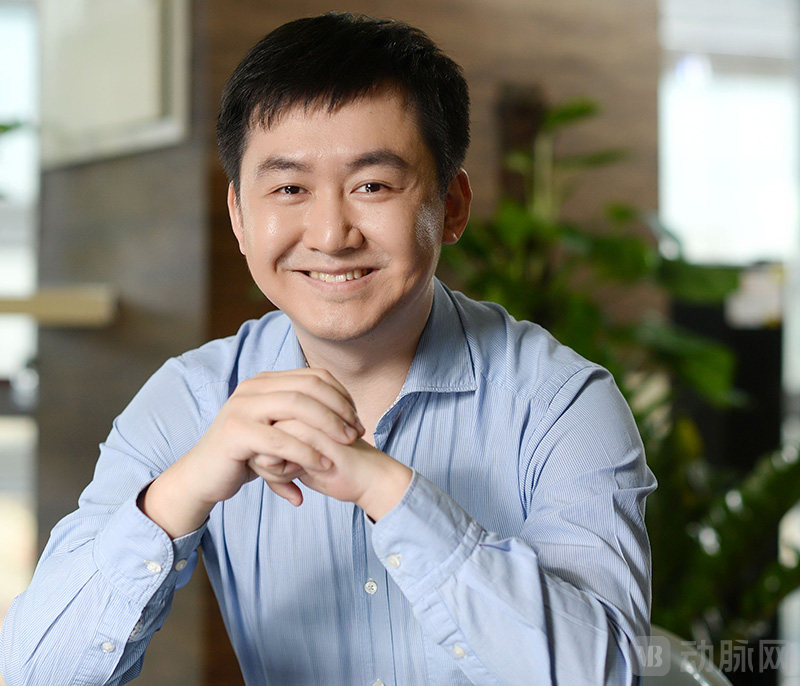
Wang Xiaochuan, Founder and CEO of BAICHUAN AI (Photo courtesy of BAICHUAN AI)
As the only large-model unicorn to prioritize healthcare as its core development focus, how will BAICHUAN AI further expand and implement its solutions in medical scenarios? VCBeat had the privilege of speaking with Wang Xiaochuan, Founder and CEO of BAICHUAN AI.
China has long faced a shortage and uneven distribution of pediatric medical resources. To address these issues, policies concerning child health have been frequently issued in recent years. For instance, the State Council’s promulgation of the Outline for the Development of Chinese Children (2021–2030) and the Opinions on Promoting High-Quality Development of Pediatric Medical and Health Services exemplify this focus.
BAICHUAN AI is set to release the pediatric large language model, the first of its kind in the industry specifically designed for children’s health, addressing a issue of significant public concern. BAICHUAN AI aims to leverage this large language model to create “AI doctors” capable of empowering grassroots healthcare providers, thereby offering support in resolving the numerous challenges currently facing pediatrics in China.
“Beijing Children’s Hospital will provide its maximum expert resources to collaborate with us. We believe there is an opportunity to develop an AI-powered pediatrician within three years that matches the professional competency of attending physicians at Grade 3A hospitals, equivalent to creating one million attending physicians—sufficient to cover township-level clinics across China.” Wang Xiaochuan believes this collaboration holds significant importance.
Regarding the upcoming strategic layout in the healthcare sector, Wang Xiaochuan also has a clear plan: “We will continue to follow the ‘super model + super application’ approach. We already had strong models at the beginning of this year, and we will gradually allocate more resources and energy to large healthcare models throughout the year. Next, we will launch a general-practitioner AI doctor designed to empower primary care providers, and some strategic initiatives will begin to take effect. Subsequently, you will see the entire team achieve further breakthroughs this year, both in terms of organizational structure and implementation.”
Wang Xiaochuan believes that BAICHUAN AI holds numerous advantages in the field of AI healthcare: “First, we have chosen to focus on primary care, specifically pediatrics and general practice, which sets our strategic path apart from many others. I believe this approach not only aligns with the capabilities of large language models but also meets national needs.”
“Second, our technological advantages are evident; we can be described as the company with the best technology, further enhanced by our profound understanding of application scenarios. Much like successful AI systems such as AlphaGo, which combined top-tier programmers with a deep understanding of Go, our success stems from this synergy. Third, there is the comprehensive commitment of the entire company.”
“As a leading unicorn in the large language model sector, BAICHUAN AI boasts cutting-edge technology, substantial capital resources, and independent decision-making capabilities, along with a deep-seated commitment to and understanding of the healthcare industry. This constitutes BAICHUAN’s competitive advantage in surpassing other companies in the medical field,” he added.
However, for BAICHUAN AI, creating an AI doctor is just the beginning. At the inception of BAICHUAN AI, Wang Xiaochuan proposed the company’s strategic approach to healthcare: “Build Doctors, Transform Pathways, and Advance Medicine.”
Wang Xiaochuan explained to VCBeat, “The first point is about ‘creating doctors,’ which refers to empowering primary care physicians at the last mile. This is our strategic starting point. Today, we are launching an AI pediatrician, and subsequently, general practitioner AI doctors aimed at primary care and health management, all of which align with this logic.”
He stated that the development of AI doctors would transform patient care pathways, a process he termed “pathway restructuring”: “With the assistance of AI doctors, physicians can provide more consultations remotely, and primary healthcare institutions can enhance their diagnosis and treatment of common diseases. This pathway restructuring can address many challenges in the ‘last mile’ of healthcare delivery.”
With the accumulation of data, clinical research will also be empowered, thereby achieving the ultimate goal of “promoting medicine.” “Once you have a complete chain, you can implement follow-up procedures, thereby obtaining data across the entire life cycle of diseases and even across all disease types, which in turn forms a new paradigm for medical research. This is the detailed explanation of our nine-character phrase: ‘From training physicians to conducting scientific research,’” he added.
To realize this vision, BAICHUAN AI has assembled a top-tier technical team, with its core members comprising leading AI talents from tech giants such as Sogou, Google, and Tencent. Furthermore, Baichuan has engaged over one hundred experts holding the title of associate chief physician or above from Grade A tertiary hospitals to annotate data for its large language models, thereby ensuring the professionalism and authority of BAICHUAN AI in the healthcare sector.
Since its inception, BAICHUAN AI has maintained a rapid iteration pace, releasing 12 large language models. According to reports, its open-source models have filled the gap in the domestic market for open-source, free, and commercially usable large language models. Among the 160 models registered with the Cyberspace Administration of China, approximately half are built upon BAICHUAN’s models.
It is worth noting that among the large models currently known in the medical field, many are also built based on BAICHUAN AI’s open-source large language model.
In the medical field, BAICHUAN AI’s large language models have achieved phased breakthroughs. Its self-developed general-purpose medically enhanced large model has surpassed OpenAI’s GPT-4 and Google’s Med-PaLM 2 in multiple authoritative evaluations. For instance, in the USMLE (United States Medical Licensing Examination) test, the Baichuan medical model scored 88.7%, higher than GPT-4’s 81%.
Wang Xiaochuan has always maintained a profound passion for healthcare. Since founding BAICHUAN AI, he has repeatedly stated on various occasions that “healthcare is the crown jewel of large language models.” The demand for large model technology in AI-driven healthcare is virtually limitless. Nearly all capabilities of large models—including knowledge, reasoning, multimodality, emotional perception, and empathetic communication—are utilized in AI healthcare, with efficacy and user experience improving in tandem with advancements in these capabilities. In a sense, AI healthcare can be regarded as synonymous with Artificial General Intelligence (AGI).
He told VCBeat that large language models will spark a supply-side revolution in healthcare services: “The previous wave of internet entrepreneurship emphasized demand-side reform, focusing on identifying new markets and creating consumer-centric demand. However, healthcare is characterized by excess demand over supply, necessitating a supply-side revolution. The application of large language models to healthcare operations can directly or indirectly increase supply through AI physicians. More, better, and cheaper care represent the three directions of this supply-side revolution.”
In principle, large language models (LLMs) do possess such potential. Medicine is inherently an empirical science; clinical guidelines are formed through the continuous summarization and compression of accumulated experience, while diagnosis involves predicting diseases based on these guidelines. To some extent, this process bears a strong resemblance to the training and generation mechanisms of LLMs. Furthermore, physician training is a process of accumulating knowledge and experience to enable clinical reasoning—often described as “broad exposure enhancing internal medicine expertise”—which parallels the training paradigm of large language models.
Wang Xiaochuan’s immense passion and dedication to healthcare are inextricably linked to his early experiences.
Tracing back to the year 2000, Wang Xiaochuan serendipitously became involved in gene sequencing while pursuing his master’s degree at the Institute for High Performance Computing within the Department of Computer Science and Technology at Tsinghua University. From that point on, his interest in life sciences grew uncontrollably.
“I used to excel in subjects such as computer science, mathematics, and physics, and I always viewed the world as a mechanistic, physical one. Gene sequencing has given me a new understanding of complexity science.”
“Within the framework of traditional physics, surpassing a certain level of complexity leads to indeterminacy; for instance, the orbits in the three-body problem are incalculable. Life science, however, presents the opposite scenario: life transcends complexity yet exhibits greater determinism. For example, humans develop from a fertilized egg into adults who, despite decades of complex biological evolution, still broadly resemble their parents. This phenomenon lies entirely outside the computational paradigms of contemporary science, which I find profoundly startling. I believe that new scientific principles can be derived from this phenomenon, offering both scientific significance—satisfying our research curiosity—and substantial practical value, with the potential to evolve into a viable business model.”
Since then, Wang Xiaochuan has maintained a profound interest in the life sciences sector and has invested in numerous healthcare enterprises. “I have invested in more than ten healthcare companies, with mixed results of success and failure. I have found that ventures leaning towards internet and artificial intelligence tend to have a relatively higher success rate. Moreover, this is a path that is easier for me to understand and gain insights into, given my background and experience. First, I am familiar with the internet and AI sectors; second, it involves focusing on grassroots levels, targeting the broader population or markets with a higher degree of commercialization.”
The Wei Zexi incident in 2016 gave Wang Xiaochuan a new perspective on healthcare, making him realize that “he who wins over doctors wins the market.” Subsequently, the operation of Sogou Mingyi (Sogou Famous Doctors) deepened his understanding of certain issues within medical scenarios. For instance, how can we ensure that searches for medical-related questions return results with 100% accuracy and correctness?
At that time, internet-based healthcare and AI-driven healthcare built on the previous generation of artificial intelligence technologies were fundamentally rooted in changes to production relations. Large language models, by mastering language, represent a transformation at the level of productive forces, capable of increasing the supply of physicians. As he stated in 2018, “Once machines master language, strong artificial intelligence will arrive.”
He believes that, drawing an analogy between large language models and autonomous driving, AI in healthcare can also be categorized into five stages, from L0 to L5. The current technological framework has the potential to achieve Level 3 (L3), where AI automatically recommends treatment plans under specific conditions, while key decisions still require physician confirmation. L3-level AI healthcare applications will initially be deployed in medical scenarios such as health consultations and assisted diagnosis and treatment, primarily in the forms of AI health advisors and AI physician assistants.
BAICHUAN AI will next strive to reach Level 4 (AGI). “If we can ‘create’ an AI doctor at the level of an associate chief physician in a Grade A tertiary hospital, it would signify the realization of AGI. The next step is AI for Science, namely Super AGI that explores the fundamental nature of genes and proteins. This ultimate large life model will be capable of autonomously discovering new therapies based on real-world data.”
Leveraging this large life-science model, BAICHUAN AI also aims to make sustained efforts in areas such as comprehensive disease management covering the entire care continuum—both in-hospital and out-of-hospital, online and offline—and continuous home-based monitoring via digital biomarkers. Ultimately, it seeks to achieve a breakthrough from merely “building doctors” to deeply understanding the human body, diseases, and the mechanisms of illness.
Coincidentally, Dario Amodei, an AI technologist who previously worked at Baidu, Google, and OpenAI before founding the renowned AI unicorn Anthropic, expressed similar views in a recent interview. He believes that AI is poised to achieve within the next decade biological advances originally projected to take the entire 21st century, including curing rare diseases.
Great minds think alike among tech geniuses; such is the case.
“The notion that ‘healthcare is the crown jewel of large language models’ is gaining increasing recognition.” The “Several Measures of Beijing Municipality to Promote the Innovative Development of General Artificial Intelligence (2023–2025)” proposes seizing the opportunities presented by large language models and driving innovation leadership in the field of general artificial intelligence, with detailed provisions including exploring demonstration applications of large language models in the healthcare sector.
Healthcare is a field that demands extremely high technical precision and reliability. The application of large language models (LLMs) can significantly enhance the efficiency and quality of medical services, offering broad market prospects. As future healthcare LLMs become increasingly capable and truly able to perform certain independent tasks under human supervision, a revolution in service supply will emerge, bringing about transformative changes in the industry.
Although this path is bound to be fraught with thorns, the day will inevitably arrive; let us wait and see.