

Siemens Healthineers Unveils China's First Domestically Produced 7T MRI System MAGNETOM Terra.X Following NMPA Approval

Siemens Healthineers
Medical Solutions Provider
The First Domestically Produced 7T Clinical MRI System Has Arrived!
On September 10, Siemens Healthineers’ official WeChat account published a concise announcement, stating that itsThe domestically produced next-generation 7T MRI system, MAGNETOM Terra.X (hereinafter referred to as Terra.X), has received approval from the NMPA (National Medical Products Administration), becoming China’s first fully domestic 7T clinical MRI system.。
A New Era Is Dawning.
Siemens’ newly approved Terra.X is its latest 7T MRI system, achieving full localization in China.
Prior to this, its sibling modelMAGNETOM Terra (hereinafter referred to as “Terra”) was approved by the NMPA in October 2022, making it the first and, at that time, the only ultra-high-field device licensed by the NMPA in China. It was also the world’s first 7T MRI system to hold simultaneous approvals from the NMPA, FDA, and CE.。
AsThe industry’s first dual-mode 7T MRI system, Terra, enables rapid and seamless switching between clinical and research modes. As such, it marks the first time a clinical MRI system in China has reached the ultra-high field strength of 7T, representing a significant breakthrough.。
Terra.X is the upgraded version of Terra, featuring the world’s first 8-channel dynamic parallel transmission architecture., greatly improving transmission uniformity. Meanwhile,It also integrates artificial intelligence to provide enhanced 7T imaging capabilities and accelerated image acquisition, enabling high-resolution brain and knee examinations to be completed in under 15 minutes., which is of great significance to clinical practice.
Prior to this, the FDA had just approved Terra.X in April. Subsequently, Siemens installed the first Terra.X unit at the Neuroimaging Center of the Samuel Ginn College of Engineering at Auburn University in Alabama, USA. The system is reportedly valued at $9 million (approximately RMB 64 million). It is expected that its price will decrease accordingly following localization of production in China.
Magnetic Field Strength (field strength, unit: T, i.e., Tesla) is a core indicator for measuring the performance of magnetic resonance systems. Based on the strength of the static magnetic field generated by the magnet, magnetic resonance systems are classified into low-field (0.1–0.5 T), mid-field (0.6–1 T), high-field (1.5–2 T), and ultra-high-field (3 T). Currently, mainstream clinical magnetic resonance systems are predominantly 1.5 T, falling within the mid-field category. The recently emerging 3 T magnetic resonance systems belong to the ultra-high-field category.
Higher field strengths typically enable higher image resolution or faster human body imaging, such as3T MRI images can resolve 1 mm details, while 7T enables 0.5 mm high-resolution imaging, offering significantly clearer images than 3T and the clinically prevalent 1.5T systems, even enabling visualization of neuronal signal transmission in the human brain. Taking epilepsy as an example, 7T MRI can detect 43% more epileptogenic foci compared to 3T. In musculoskeletal imaging, 7T MRI captures the minutest details within cartilage and menisci, thereby supporting physicians in making treatment decisions.
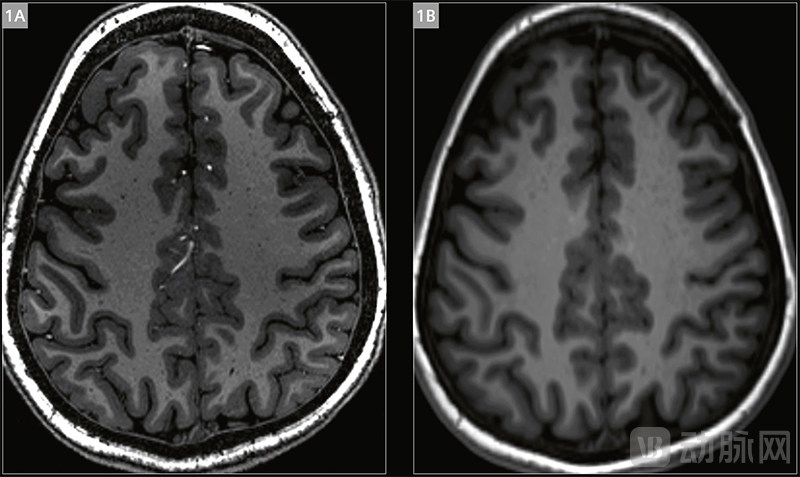 Comparison of 7T (left) and 3T (right) brain images
7T MRI systems have been applied in scientific research for decades. As early as 1999, Siemens collaborated with the University of Minnesota in the United States to develop the world’s first 7T engineering prototype, and commercialized 7T MRI systems in 2002—the world’s first commercial 7T MRI system for research purposes was installed and put into operation at Massachusetts General Hospital in the United States.
However, early 7T systems were not only expensive but also subject to numerous technical limitations. For instance, limited coverage, image inhomogeneity, and prolonged acquisition times were tolerable in research settings but unacceptable for clinical applications.
The first-generation 7T magnets also had many shortcomings in terms of installation and transportation. For example, they adopted passive shielding, and the magnet itself weighed as much as 40–50 tons. This required special shielding treatment for the room housing the MRI system, bringing the total weight to 100–150 tons, which made deployment in healthcare institutions virtually impossible. It was not until the current third-generation magnets that these issues were gradually resolved, enabling clinical installation.
Meanwhile, the effects of ultra-high magnetic field strength on the human body remain controversial. Studies have found that subjects in ultra-high-field MRI systems report experiencing dizziness; during the scanning process, they sometimes report tasting metal, seeing white flashes, or experiencing involuntary eye movements known as nystagmus.
On the other hand, high field strength delivers high resolution, but it is also more sensitive to minute movements than ever before, thereby affecting imaging. For instance, subjects cannot remain absolutely still during lengthy magnetic resonance imaging (MRI) scans; even unconscious movements such as idly wiggling toes can induce changes in brain images—because the toes are neurologically connected to the brain.
It is precisely for these reasons that, although 7T magnetic resonance imaging has long been available, it was not untilIn late 2017, the FDA and CE approvals of Siemens’ Terra system officially marked the advent of the clinical 7T era., and was first implemented at the Mayo Clinic in Minnesota, USA. The clinical introduction of 7T MRI in China occurred later; as previously mentioned, approval was not completed until 2022.
According to media reports,In May 2024, China’s first research-oriented 7T ultra-high-field MRI scanner approved for clinical use was officially commissioned at Xiangya Hospital of Central South University., also provided by Siemens.
Siemens has consistently maintained its advantage in 7T MRI systems. This edge stems from its acquisition of a core magnet technology source—in 2003, Siemens acquired the Magnet Technology Division of Oxford Instruments. To date, this division has achieved numerous firsts in the field of magnets, including the world’s first actively shielded 1.0T, 1.5T, and 3T magnets.
In addition to Siemens, another imaging giant, GE HealthCare, also announced its first 7T MRI system for research applications, the SIGNA 7.0T, in 2020, and launched it in the Chinese market in 2021.
7T is not the endpoint; magnetic resonance systems with higher field strengths are also under development. In 2023, Siemens Healthineers signed an agreement with ASG Superconductors to collaborate on the joint development of ultra-high-field MRI systems with enhanced clarity for pioneering brain research. The first project under this agreement involves delivering a 10.5T MRI system to the Hefei Comprehensive National Science Center in Anhui Province, China.
Unlike the previously approved Terra in China,Terra.X is Siemens’ first domestically produced 7T MRI system, with “first domestic model” being its most significant label.。
The Localization of Multinational Medical Device Companies: Pressure from Policies on One Hand。
In 2021, the Ministry of Finance and the Ministry of Industry and Information Technology jointly issued the "Guidance Standards for Reviewing Government Procurement of Imported Products" (2021 Edition), which clearly stipulated the proportion requirements for government agencies (public institutions) to procure domestically produced medical devices and instruments. Among these, 1.5T and 3.0T magnetic resonance systems must achieve a 100% domestic procurement rate.
Although 7T MRI systems have not yet been included in procurement requirements due to their highly advanced nature, their eventual inclusion in restricted lists is not impossible as top-tier hospitals in China begin to adopt them and domestic medical device brands make breakthroughs in this field.
According to media statistics, as of 2021, there were 100 7T MRI systems worldwide. Among them, the United States alone accounted for 37 units, while China had only 9, lagging behind the United States and Germany. However, by 2023, the number of publicly known 7T MRI systems in China had reached at least 15, including those installed at 8 research institutions and 7 hospitals. Given the substantial demand for scientific research and clinical applications in China, there is considerable room for growth.
It is precisely for this reason that, in response to procurement requirements, global medical device manufacturers are placing greater emphasis on “localization” than ever before.
In response, Siemens officially launched its “Local Innovation” localization strategy in June 2022, announcing that it would deeply participate in the construction of “Healthy China” as a “Chinese company” through three dimensions: “promoting the localization of its entire product portfolio,” “further deepening innovation and R&D based on Chinese market demands,” and “advancing the upgrading of local business models.”
Driven by the strategy of “promoting full localization across all product lines,” Siemens Healthineers has successively achieved complete domestic production for multiple medical devices, with Terra.X being the latest example. These products, manufactured in China and certified accordingly, have been granted the status of domestically produced medical devices and have successfully won bids in numerous public tenders that exclude imported products.
On the other hand, driven by cost and market considerations, medical device giants have maintained strong enthusiasm for localization.As early as 2020, Siemens had already explored the use of rail transport for high-end medical devices. Prior to this, the transportation of high-end medical devices between China and Europe relied primarily on air and sea freight; while air transport is fast, it is costly, whereas sea freight offers lower costs but involves longer transit times.
During this trial run, Siemens leveraged the China-Europe Railway Express, shipping from Germany through multiple countries to China, with final delivery to the hospital completed via road transport. The entire journey took 28 days, reducing transit time by at least one-quarter compared to traditional sea-and-land freight, while also lowering transportation costs.
Certainly, once local manufacturing is implemented, these costs and lead times can be significantly reduced. Given the substantial growth potential of China’s medical device market, coupled with its strong advantages in manufacturing, there is no reason from a business perspective not to pursue this strategy.
In fact,This process of localization has been gradually underway over the past few decades.。
As early as 2002, Siemens established Siemens (Shenzhen) Magnetic Resonance Co., Ltd. in Shenzhen, primarily responsible for the research and development and production of magnetic resonance imaging systems. In 2005, the Siemens Healthineers MRI Park was also established in Shenzhen. In 2013, Siemens Healthineers expanded its R&D and production capacity for high-end MRI systems in Shenzhen.
After years of dedicated development, Siemens (Shenzhen) Magnetic Resonance Ltd. has become one of Siemens’ largest global R&D and manufacturing bases, with a total area of 46,000 square meters and approximately 1,000 employees, over 20% of whom are engaged in research and development.
Undoubtedly, these localization strategies of multinational corporations have permeated manufacturing and R&D innovation, cultivated a substantial pool of relevant talent, and established a multi-tiered, multi-dimensional local ecosystem. The rise of domestic imaging brands and their related industrial chains has also benefited significantly from this trend.
Taking United Imaging Healthcare as an example, the company has established a self-controlled, closed-loop ecosystem across its entire industrial chain. Its independently developed 5.0T magnetic resonance (MR) system successfully received FDA approval within the year. Furthermore, in 2020, United Imaging Healthcare launched China’s first ultra-high-field 9.4T animal MR system for preclinical research, paving the way for the future development of 7T or higher-field MR systems for human use.
In addition to United Imaging Healthcare, Chenguang Medical has also grown into a key upstream player in the magnetic resonance imaging (MRI) system sector. It is one of the very few independent suppliers globally with in-house development and commercialization capabilities for 7T superconducting magnets. The company maintains close collaborations with multinational imaging corporations and serves as a core supplier to numerous domestic MRI system brands. Currently, Chenguang Medical has successfully developed a pre-clinical 7T whole-body MRI system, which has been installed at the Institute of Science and Technology for Brain-inspired Intelligence, Fudan University.
In time, the first 7T MRI system from a domestic brand will also arrive.
The Rise of Domestic Brands Is Rapidly Reshaping the Industry’s Market Landscape.
First, the market share of domestic brands is rising rapidly. According to statistics on publicly awarded bids for magnetic resonance imaging (MRI) systems in China during the first quarter, as reported by the China Association of Medical Equipment in its Q1 2024 report, United Imaging Healthcare ranked second with a 24.90% market share, trailing Siemens Healthineers by less than 2%. Additionally, Neusoft Medical successfully broke into the top five in terms of the proportion of winning bids.
Under intense competitive pressure, large-scale imaging equipment, once prohibitively expensive, has seen significant price reductions. Based on the procurement prices from a purchasing consortium comprising 32 public medical institutions at the municipal, county, and township levels in Anyang City, Henan Province, in 2024, the winning bid for the Philips 1.5T MRI system showed a price reduction of as much as 83.52%. This will substantially increase the penetration of MRI systems at the primary care level, which is undoubtedly beneficial for patients in these communities.
With the approval of Siemens’ first fully China-made 7T MRI system, which will gain access to a wider range of settings, more research institutions and hospitals are expected to target this product. China is also poised to accelerate into the 7T MRI era, offering substantial value for both scientific research and clinical practice.
On the other hand, the localization of cutting-edge imaging equipment is also a microcosm of the current fierce competition in the medical imaging device market. Whether it is the localization of multinational corporations or the breakthroughs of domestic brands, increasingly intense competition is making medical imaging devices, led by magnetic resonance imaging (MRI), more widely available, thereby unlocking greater clinical value.
In the course of this industry’s evolution, can we cultivate our own global imaging giant, thereby adding a letter to “GPS”? Let us wait and see.
References:
Wang Haohao, Hong Xinyi: “China Science Daily: China’s First Clinical-Research 7T MRI Scanner Put into Use at Xiangya Hospital”
MedTech Study Group: "How Many 7T MRI Scanners Are There in China?"
Medical Device Distributors Alliance: “Q1 2024 | Bid Award Data for Domestic Medical Imaging Equipment Released”
Zhongcheng Medical Devices: “Post-Volume-Based Procurement Price Cuts Reach Up to 101.16%: How the Localization Strategies of the GPS Trio Penetrate the Domestic Market”
Yidu Data: "Chenguang Medical (430300) – A Leading Chinese Manufacturer of MRI Components, Breaking Foreign Technological Monopolies"
Emmanuel C. Obusez, M.D.; Doksu Moon, M.D.; Paul Ruggieri, M.D.; Irene Wang, Ph.D.; Stephen E. Jones, M.D., Ph.D. MAGNETOM Flash (80) 1/2022 Clinical · Neurologic Imaging:Comparison of Clinical 7T vs 3T MRI for Epilepsy: A Photo Essay