

MGI Unveils Novel Nanopore Sequencers Integrating Short- and Long-Read Technologies to Break Market Ceiling

MGI
Gene Sequencing Instruments and Related Reagent & Consumables R&D Manufacturer
After a prolonged period of exploration in silence, the growth of China’s nanopore sequencing market has finally hit the accelerator.
On September 9, at the BGI Spatiotemporal Center located at the foot of Wutong Mountain in Yantian District, Shenzhen, BGI Group officially launched two gene sequencers developed based on its latest CycloneSEQ sequencing technology: the nanopore sequencer CycloneSEQ-WT02 (Chinese name: “Wutong”) and CycloneSEQ-WY01 (Chinese name: “Wuyue”). The company also signed strategic cooperation agreements with multiple domestic gene sequencing service providers. Among them,WT02 boasts globally leading sequencing performance, has achieved large-scale mass production, and is being commercially deployed or undergoing test runs in multiple customer scenarios; WY01 is scheduled for official market launch in the first half of 2025, featuring the world’s highest-throughput nanopore sequencing chip.。
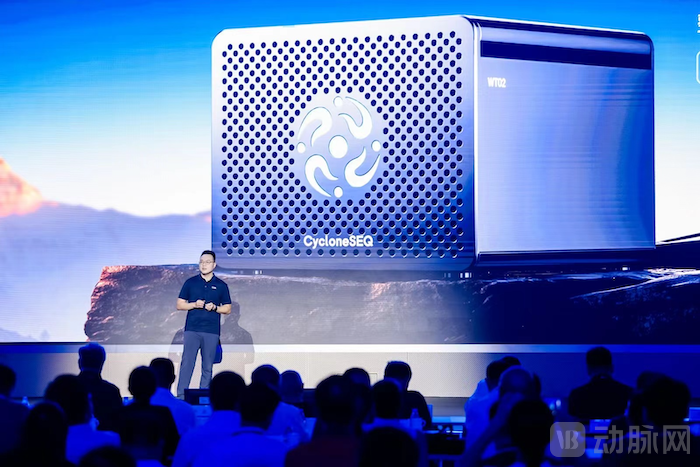
Xu Xun, Dean of BGI Research, introduced CycloneSEQ-WT02 (Wutong) on-site.
Previously, MGI secured global distribution rights for BGI’s nanopore sequencers in late June, thereby establishing a comprehensive sequencing solution covering both short- and long-read technologies, as well as a one-stop toolkit for gene sequencing. This achievement of group-wide resource sharing and collaboration has provided MGI with a promising growth driver for its performance, while also facilitating efficient commercialization channels for BGI’s nanopore sequencers.
In recent years, nanopore sequencing technology has gradually gained widespread adoption across various end-use applications, including forensic identification and the prevention and control of infectious diseases. After years of exploration, domestic manufacturers of nanopore sequencers are now entering a critical sprint phase toward commercialization. Backed by China’s leading groups in gene sequencing instruments and services, BGI’s nanopore sequencer was launched with significant inherent advantages, thereby opening up new possibilities for this market.
The Path to Self-Developed Nanopore Sequencers
To outside observers, MGI’s development of nanopore sequencing has long remained an enigma. Consequently, the international research community was taken aback when the CycloneSEQ technology was first disclosed on bioRxiv. Initially, MGI sought to employ a novel technology to address areas inaccessible to second-generation sequencing, and nanopore sequencing offered an ideal solution.“We must never simply follow in others’ footsteps; instead, we need to blaze a new trail and adopt a different approach.” At the launch event for CycloneSEQ, Wang Jian, Chairman of BGI Group, described the original intention behind the initiative in these terms.
Within the BGI Group, the development of nanopore sequencing technology was undertaken by a specialized team established by its research institute, which later became MGI Xufeng. Long-read sequencing based on nanopore technology operates on fundamentally different principles and processes compared to short-read sequencing, commonly known as next-generation sequencing (NGS). For the MGI Xufeng team, everything presented a new challenge.
In simple terms, second-generation sequencing involves fragmenting long DNA strands, immobilizing them on surfaces of various materials for DNA amplification to enhance signal intensity, and labeling the four nucleotide bases with distinct fluorescent dyes to determine the base sequence via fluorescent signals. In contrast, nanopore sequencers operate by using motor proteins to draw single-stranded DNA through a nanoscale pore; the sequence of bases passing through the pore is determined by monitoring changes in the ionic current signal.
In the development of next-generation sequencing (NGS) technologies, mastering the chemical reactions involved in DNA fragmentation, amplification, and labeling constitutes the most fundamental core. In contrast, the development of nanopore sequencing follows an entirely different paradigm. The key to this process lies in identifying suitable motor proteins and nanopore proteins, integrating them into biological membranes, and designing a reaction environment that ensures stability and continuity. Among these, motor proteins and nanopore proteins represent the most significant technical barriers for developers of nanopore sequencers. Prior to the official release of CycloneSEQ technology, even researchers at MGI’s laboratories referred to this approach as long-read sequencing.
According to reports, the nanopore proteins and motor proteins used by MGI Xufeng were both discovered in deep-sea microbial communities.Among these, the nanopore protein they discovered is a polymer with a pore diameter of 1.2 nm. Its compact structure and exceptional rigidity result in minimal current noise during open-pore signals across biological membranes, making it an ideal protein for nanopore sequencing. The motor protein, a double-stranded DNA helicase, can unwind the DNA double helix at speeds far exceeding current standards without requiring modification. Its strong thermal stability provides a robust power source for nanopore sequencing. The combination of these two proteins yields extremely stable sequencing signals.
Certainly, from motor proteins and nanopore proteins to nanopore sequencers, the process involves complex current detection, chip design, electrochemical reactions, signal conversion, and data analysis technologies. At every stage of nanopore signal generation, capture, and interpretation, MGI has achieved significant performance improvements through process innovation, building upon existing strategies. Therefore,As the first commercialized nanopore sequencer developed based on CycloneSEQ technology, the WT02 has achieved breakthroughs in key performance metrics, including the number of pore proteins per chip, sequencing speed, read length, and accuracy.
Specifically, the WT02 is characterized first by its long read lengths. The sequencing reads of the WT02 can reach up to the megabase pair (Mbp) level, with an average N50 read length of 30–50 kbp for genome sequencing, offering more comprehensive coverage compared to next-generation sequencing (NGS). Second, it is fast: users can complete sequencing within 10 minutes to 72 hours depending on experimental requirements, achieving a sequencing speed of 350–420 nucleotides per second and generating 10 Mb of data per minute. At the CycloneSEQ launch event, Xu Xun, Dean of the BGI Research Institute, demonstrated the WT02’s microbial identification capability on-site, obtaining detection and analysis results in just 10 minutes. Furthermore, the WT02 features a compact and flexible design, small enough to fit in the palm of one’s hand, thereby imposing minimal space requirements for laboratory settings.
In terms of accuracy, nanopore sequencing relies on raw signals from individual molecules and lacks the mathematical optimization process for multi-copy molecules inherent in next-generation sequencing. Consequently, its relatively lower accuracy has long constrained the widespread adoption of this technology. However, through protein engineering and algorithmic optimization,WT02 achieves a single-test accuracy rate of 97%, the highest in the industry, and can attain a concordance accuracy of 99.99% at greater sequencing depths.
Notably, as a rapidly iterated new product,MGI’s upcoming second nanopore sequencer, the WY01, will fill the gap in high-throughput nanopore sequencing in China.The sequencing chip integrated into the WY01 system delivers an eightfold increase in nanopores, reaching an impressive 30,000 protein pores per chip. Consequently, single-chip data output will also increase eightfold (previously, the maximum throughput of the WT02 single-chip laboratory was 50 Gb). With the market launch of the WY01, nanopore sequencers will be able to address application scenarios with higher data throughput demands, such as large-genome sequencing, human genome resequencing, full-length transcriptome sequencing, and epigenetic analysis. This advancement will accelerate disease research and diagnostics, foster interdisciplinary research collaboration, and support studies in biodiversity and ecology.
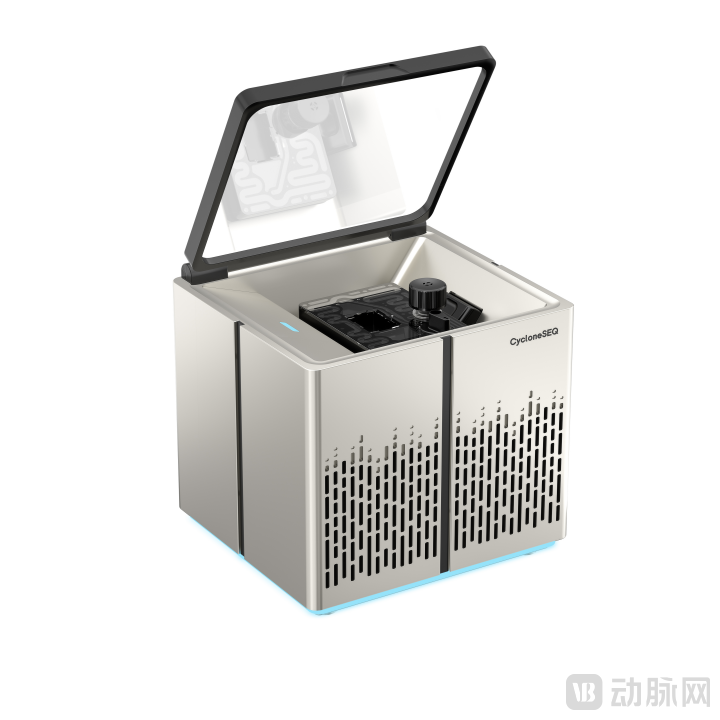
MGI's Independently Developed CycloneSEQ-WY01 (Wuyue)
It is understood that, due to its ability to achieve complete assembly of circular genomes even in those with extreme GC content, CycloneSEQ is being deployed as part of a deep-sea sequencing system. Operating under the extreme conditions of the deep sea, it has enabled in situ identification of microorganisms in marine water environments.This technology, which originated in the deep sea, has completed its application loop within the same environment.
Making Genetic Sequencing More Accessible
Enabling everyone to have access to their own whole-genome sequence is one of BGI’s visions.
Today, with the integration of CycloneSEQ technology, BGI has become the only entity worldwide to possess both long- and short-read sequencing tools, offering ultra-high-throughput, ultra-low-cost, and ultra-long-read sequencing solutions.As one of the earliest professional teams in China to engage with gene sequencing, BGI has chosen to promote the widespread adoption of gene sequencing by leveraging the most comprehensive technical platform possible, rather than relying on any single technology. According to Jiang Hui, COO of MGI, at the current stage,The combination of DNBSEQ (MGI’s second-generation sequencing technology) and CycloneSEQ maximizes the “1+1>2” effect, further advancing the goal of making life measurable.
Historically, as an emerging gene sequencing technology, nanopore sequencing has remained relatively siloed from second-generation sequencing (NGS) applications. It has primarily sought viable use cases in areas not yet covered by NGS or where it is difficult to generate incremental value. Consequently, the adoption of nanopore sequencing has failed to gain significant traction in either research services or clinical diagnostics, and its product ecosystem remains far from thriving.
In practice, nanopore sequencing indeed serves as a complement to next-generation sequencing (NGS) to a certain extent. This is primarily reflected in the long-read capability of nanopore sequencing, which can provide genetic information that may be lost during the DNA fragmentation process inherent to NGS. For instance, 8% of the genome remains “dark matter” regions that are undetectable by conventional methods. Furthermore, as previously mentioned, many marine microbial genomes exhibit abnormal GC content, making them impossible to assemble using standard sequencing techniques. Clinically, existing NGS technologies struggle to resolve genetic diseases caused by complex structural variants and cannot achieve real-time, rapid sequencing to meet the urgent need for quick infection detection in intensive care units (ICUs). These are precisely the areas where nanopore sequencing excels.
Taking CycloneSEQ as an example, in the field of scientific research, CycloneSEQ has successfully completed single-bacterium assembly maps for thousands of species and achieved the construction of chromosome-level reference genome maps for multiple animals and plants. This includes the first complete resolution of the Z chromosome in the bearded dragon, revealing numerous transposable elements and frequent recombination regions, which shed light on the potential sex-determination mechanism of this species. Clinically, CycloneSEQ can rapidly identify various pathogens in the diagnosis of infectious diseases, such as hundreds of respiratory pathogens, and also accurately detect complex genetic variations in the diagnosis of genetic disorders, including thalassemia.
However,As Yin Ye, CEO of BGI Group, stated, sequencing is not categorized by generations; rather, it involves different technological approaches. This is akin to the distinctions among various assisted reproductive technologies, which differ based on the clinical needs they address. “A technology that solves problems is a good technology.”Jiang Hui also pointed out that different data combinations may be required to yield optimal results across varying application scenarios. In BGI’s exploration of gene sequencing, leveraging multi-dimensional genomic data to compensate for the limitations of single methodologies has consistently been a key problem-solving strategy. The decision by BGI Shunfeng to partner with MGI during the commercialization phase of its nanopore sequencers is a direct extension of this approach.
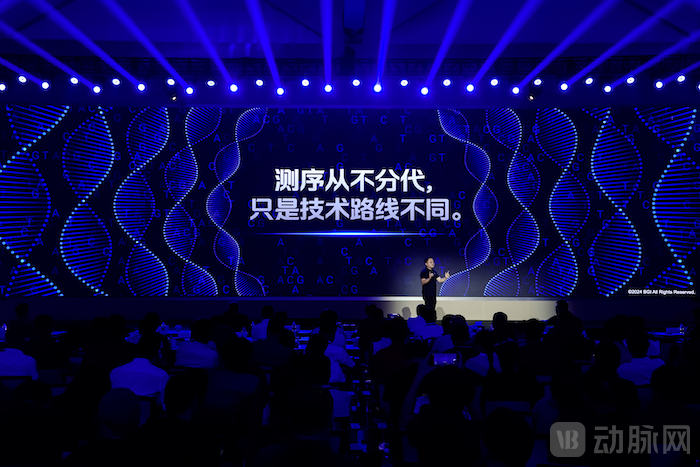
BGI Group CEO Yin Ye Delivers Keynote Speech
At the CycloneSEQ launch event,MGI organized a large-scale signing ceremony, establishing strategic partnerships with a number of professional gene sequencing institutions in China that specialize in next-generation sequencing (NGS) and nanopore sequencing services.“Partners have demonstrated strong procurement intent, with some purchases already underway,” Jiang Hui told VCBeat.For the nanopore sequencing industry, the emergence of such cross-platform sequencing solutions may even disrupt the existing competitive landscape. However, the more significant implication of CycloneSEQ’s launch lies in its potential to make gene sequencing faster, more accessible, and more widely adopted.

Signing Ceremony for CycloneSEQ’s First Batch of Partners
Earlier, after MGI obtained the relevant collaboration license for CycloneSEQ in June, it began promoting external adoption. Combined with early test units, the number of installed systems at customer sites has now approached 50–60.Furthermore, four instruments have been awarded through open public tendering. The users include universities, research institutions, centers for disease control and prevention, and hospitals, covering all potential application areas of future nanopore sequencing.At the press conference, MGI also offered a limited-time early-bird price of RMB 199,000 for the WT02, demonstrating its commitment to promoting the widespread adoption of gene sequencing.
In the future, the gene sequencing market can truly flourish and gene technology can tangibly benefit humanity only when gene sequencers become widely adopted in most life science laboratories.