

Cingular Bio Submits CE MDR Application for Innovative Bovine Pericardial Heart Valve, Marking Major Milestone in Global Expansion
On August 7, 2024, Shanghai Xinjite Biotechnology Co., Ltd. formally submitted its CE MDR certification application for its core product, the “Bovine Pericardial Prosthetic Heart Valve,” to the European Union, marking a significant step forward in the company’s internationalization journey and demonstratingMilestone significance.
In October 2018, the company andFaculty of Medicine, KU LeuvenCollaboration, by the DeanProf. Dr. Paul HerijgersCompleted the first patient implantation of the “Xin Valve” under the CE Mark. Subsequently, clinical trials were conducted at several renowned European hospitals in Belgium, Germany, Poland, and other countries, all yielding satisfactory results, thereby laying a solid foundation for the successful submission of the MDR certification application.
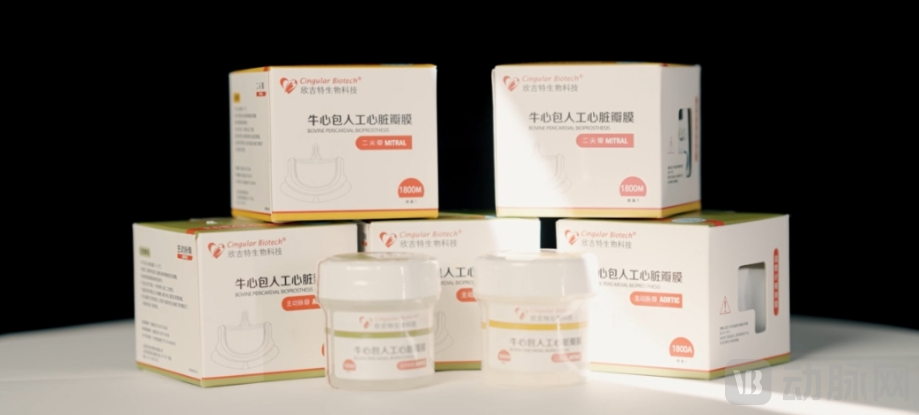
Cingular is a classic supra-annular bioprosthetic valve. This productBreakthrough solution to the clinical issues of small effective orifice area (EOA) in bioprosthetic valves and the high risk of prosthesis-patient mismatch (PPM),The effective orifice area (EOA) of its same-model valve is compared to similar products.Average increase of 30%–50%, with a more pronounced advantage in small valves, better suited to the anatomical characteristics of small-valve sinuses in Asian populations.
Compared with traditional mechanical valves, bioprosthetic valves offer advantages such as freedom from lifelong anticoagulation therapy and a higher quality of life post-surgery. It is reported that the application rate of bioprosthetic valves in China is approximately 20%-30%. In clinical practice, there is often a pursuit of larger effective orifice area (EOA); however, mechanical valves are frequently used for patients with small annuli (accounting for approximately 30%), while“Xin Valve”’s larger orifice area not only provides patients with small annuli the opportunity to receive bioprosthetic valves, but also reserves sufficient space for future valve-in-valve (VIV) procedures in younger patients, enabling lifelong benefits.
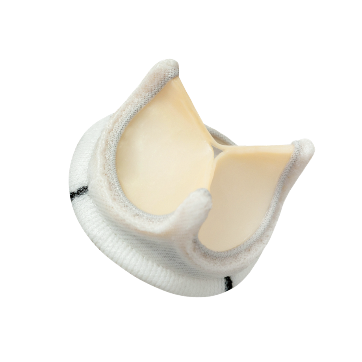
● Carefully selected imported pericardium from healthy 2-year-old calves, featuring superior collagen structure to extend service life.
● Global patent, triple-ring valve seat, stable and durable, with over 900 million fatigue test cycles.
● Thin-foot and soft sewing ring design facilitates minimally invasive small-incision surgery for easy implantation
Overview of European Clinical Research
This prospective, international, multicenter, single-arm clinical study was initiated in 2018 to evaluate the effectiveness and safety of the Cingular biological aortic valve prosthesis.
Baseline data showed that 62.5% of the patients were male and 37.5% were female. The mean age was 70.9 (60.0–82.0) years for male patients and 71.7 (63.0–81.0) years for female patients, with a mean preoperative EuroScore II of 1.91.
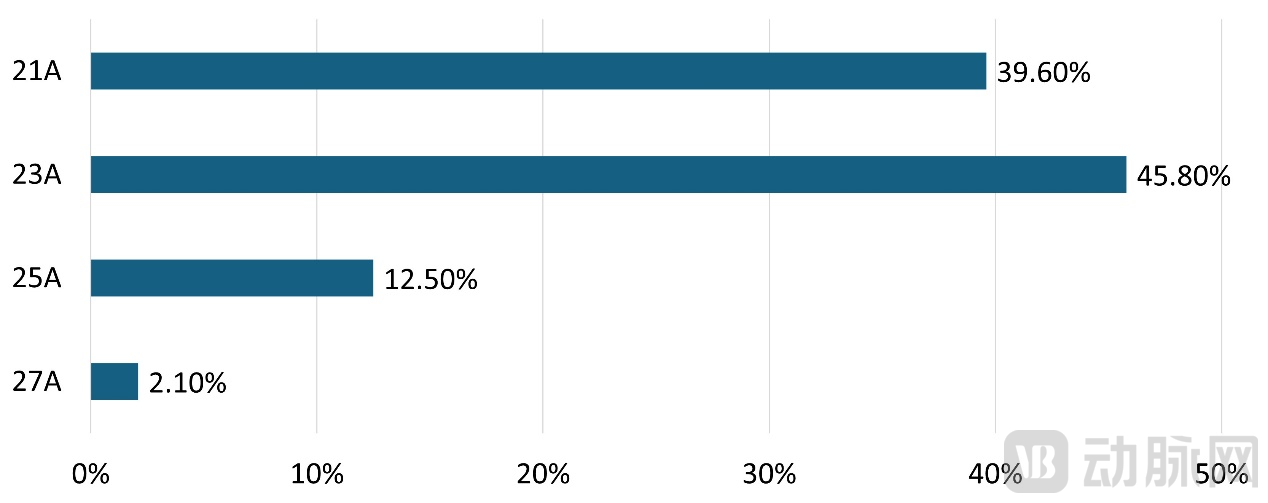
Among them, the 23A model of aortic valve was used in the largest number of patients, accounting for approximately 45.8%, followed by the 21A model, which was used in 39.6% of patients.
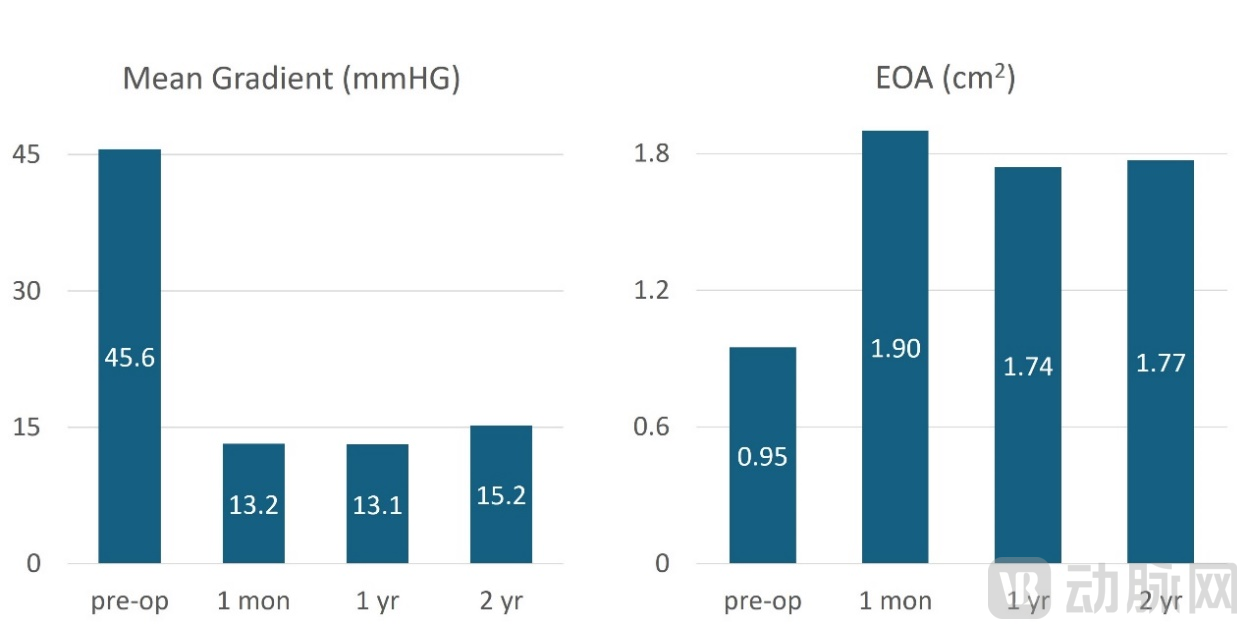
Regarding the primary efficacy endpoint, at the 1-month postoperative follow-up, the patient’s mean aortic valve orifice area increased from the preoperative value of 0.95 cm²2Increased to 1.9 cm2, over time, these data results are consistent, with the mean valve orifice area reaching 1.77 cm² at 2 years postoperatively2. Similarly, the mean transvalvular pressure gradient across the aortic valve decreased from 45.6 mmHg preoperatively to 13.1 mmHg at one month postoperatively, and this result demonstrated a consistent trend over time.
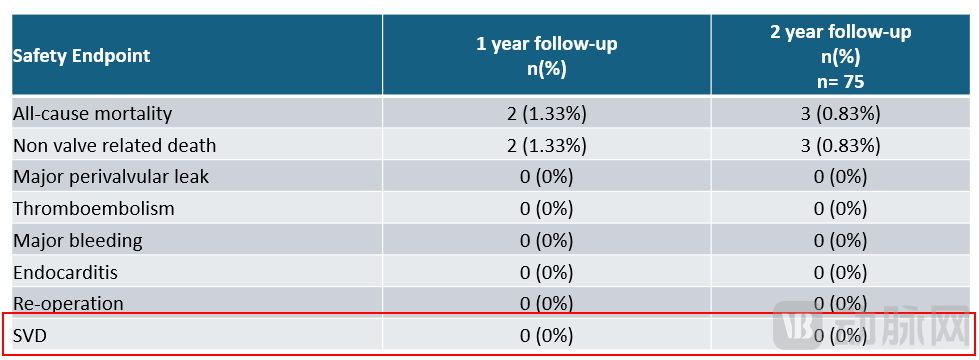
Regarding safety endpoints, there were only three cases of all-cause mortality within two years post-valve procedure: one due to urosepsis, one due to aneurysm rupture, and one due to cardiac arrest caused by colonic volvulus; none were related to the valve. No reintervention events occurred within two years post-procedure, and there was no structural valve deterioration.
Since its inception, Xingjite has consistently prioritized overseas market expansion as a core strategic direction. The formal submission of the CE MDR application marks another significant milestone in Xingjite’s internationalization journey. Moving forward, while enhancing the global competitiveness of our existing products, we will also intensify our innovative R&D efforts to better address the diverse medical needs of patients across different countries. We are confident that patients with valvular heart disease abroad will soon have access to novel solutions from China.

● Ph.D. in Biomedical Engineering, Case Western Reserve University, USA
● Over 30 years of experience in heart valve R&D; formerly Chief R&D Scientist at a leading global valve company
● Expert Member of the Cardiovascular Implant Subcommittee, National Medical Products Administration (NMPA)
● Expert, Valve Working Group, Division of Medical Device Testing, National Institutes for Food and Drug Control (NIFDC)
I began my collaboration with Xingji Te in 2018, embarking on a rewarding journey of clinical research together. This marked the first multicenter clinical study conducted in Europe for a surgically implanted bioprosthetic heart valve independently developed in China, giving me firsthand insight into the immense potential of Chinese “intelligent” manufacturing in European applications. This valve features a large effective orifice area (EOA), which not only helps extend valve durability and reduce the risk of reoperation but also improves patients’ quality of life and satisfaction. I congratulate the team at Xingji Te for completing this landmark study.
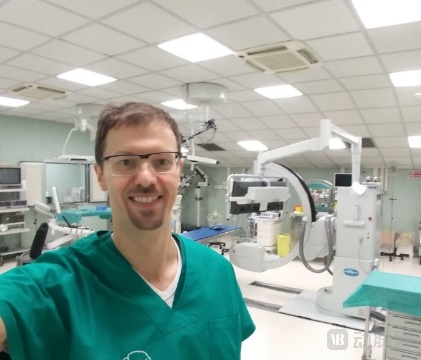
● Tenured Professor of Medicine in Cardiovascular Surgery and Transplantation, Faculty of Medicine, Jagiellonian University Medical College, Krakow, Poland
● Member of the European Association for Cardio-Thoracic Surgery/European Society of Cardiology; Member of the Polish Society of Cardiothoracic Surgeons/Polish Cardiac Society
● Reviewer for international medical journals including Circulation, Cardiovascular Interventions, Polish Heart Journal, and European Journal of Cardio-Thoracic Surgery; has published over 200 academic papers to date.
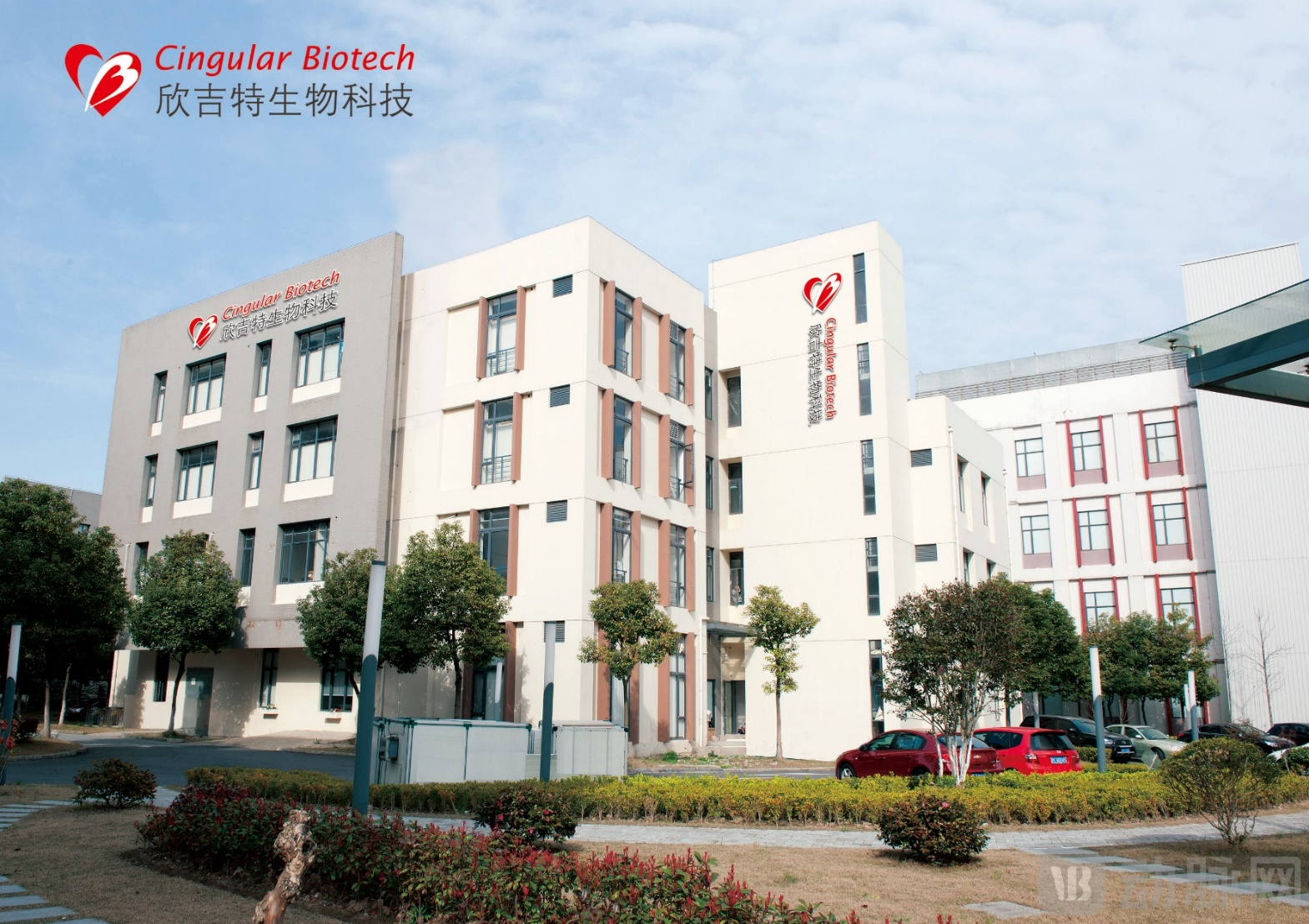
Xinjite Biotech, established in 2010, is a high-tech medical enterprise dedicated to the research and development, production, and sales of premium implantable biological medical products for human use.Table of ContentsThe products previously approved by the NMPA include dural (spinal) patches, bovine pericardial bioprosthetic valves, and cardiac surgery biological patches.
The company owns20+ overseas R&D consultants, European clinical technology advisors, and supply chain management team,Remains committed to exploration and innovation, proactively laying out a series of high value-added products, such asSutureless Flap, Interventional Mitral ValveWait. In addition, Xinjite Biotech has actively laid out multiple supplementary surgical production lines, which will form a complete “surgical product matrix.”
The submission of this CE MDR certification not only demonstrates the company’s strength and market potential, but also signals that Xinjite Biotech is poised to enter a broader global market and face international competition head-on!
The MDR is the regulation that manufacturers must comply with when placing medical devices and accessories on the European market. Since May 2021, products can only be sold in the 30 countries/regions of the European Economic Area after obtaining CE marking approval.
The CE mark is a safety certification mark that constitutes a mandatory certification requirement in the European Union (EU) market. Whether products are manufactured by enterprises within the EU or in other countries, they must bear the “CE” mark to circulate freely in the EU market, thereby indicating compliance with the essential requirements of the EU’s “New Approach to Technical Harmonization and Standardization” directives.