

JD Health Launches "Expired Medicine Recycling" Public Welfare Initiative to Promote Ecological Protection and Safe Medication

JD Health
Internet Medical and Health Service Platform Provider
On September 11, JD Health officially launched its “Expired Medication Recycling” public welfare initiative. As a responsible new-generation healthcare service provider, JD Health has established a mature and comprehensive end-to-end management system within the pharmaceutical supply chain. Through this initiative, JD Health is opening up its expired medication destruction and disposal capabilities to external partners, aiming to achieve large-scale application, ensure safe medication practices for a broader population, and make tangible contributions to ecological environmental protection.
Going forward, users with expired medications at home can search for “Expired Medication Recycling” on the JD App. After submitting the required information, a JD courier will pick up the medications from their doorstep, and JD Health will ensure their proper disposal.
Jin Enlin, CEO of JD Health, stated that the “Expired Medicine Recycling” public welfare initiative carries multiple significances, including ecological environmental protection, fulfillment of corporate social responsibility, and education on safe medication use. It also represents JD Health’s latest exploratory practice in integrating and opening up its years of accumulated public welfare experience with its mature business capabilities.
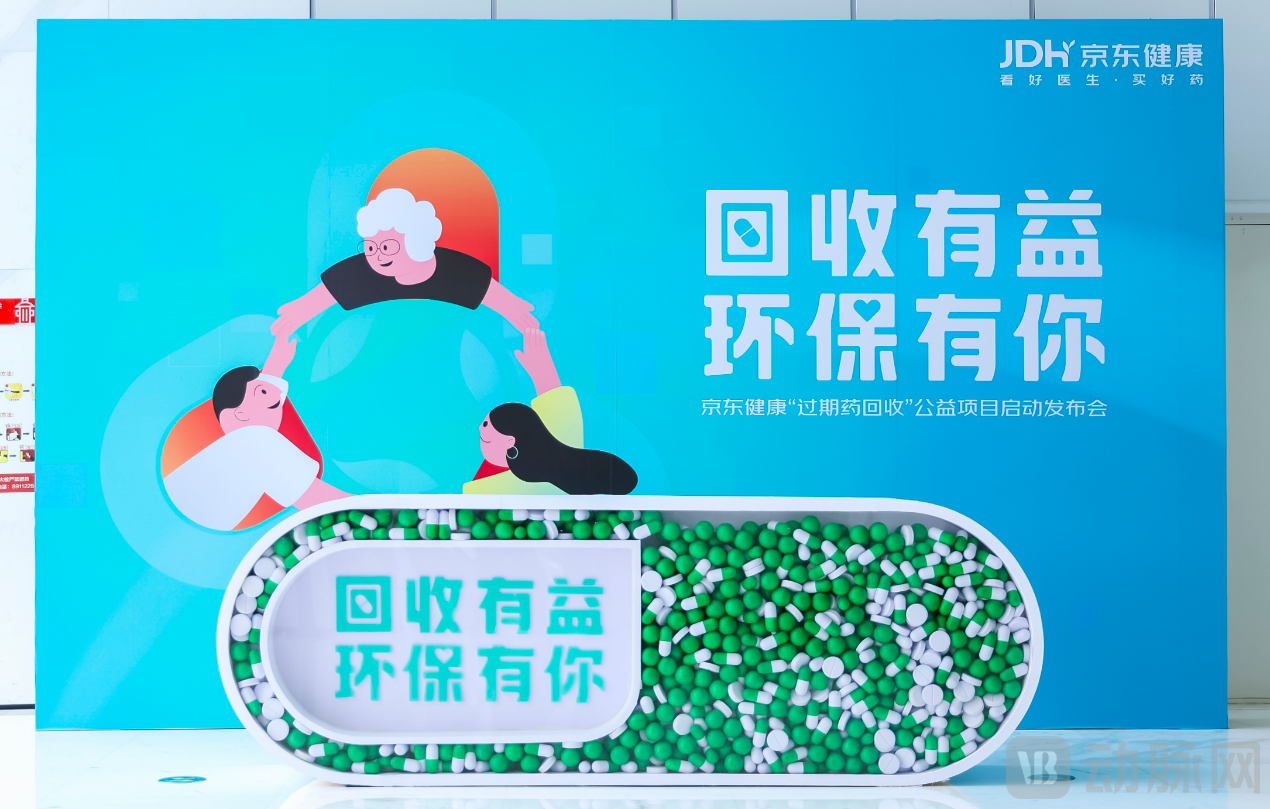
“Who Will Meet the Demand for Expired Medication Recycling?”
In daily life, every household keeps a stock of common medications for emergencies. However, due to reasons such as forgetting to take them, not using them, or being reluctant to discard them, many medications are prone to expiration. According to relevant data, the amount of expired drugs generated annually in China is staggering. If these expired drugs are not disposed of properly, they can not only cause environmental pollution but also pose risks to human health through accidental ingestion and other means.
A user survey conducted by JD Health revealed that 86% of respondents had expired medications at home, with over 36% reporting a substantial quantity. Nearly 85% of users indicated that they would dispose of expired drugs along with their household waste upon discovery.
Wang Jiawei, Chief Pharmacist at Beijing Tongren Hospital, Capital Medical University, noted during his presentation at the press conference that a drug’s expiration date is not entirely equivalent to its usable shelf life. Many medications are considered “expired” if they are not fully consumed within a specified period after opening. For instance, it is recommended to use bottled medications within six months of opening, and eye drops or ophthalmic ointments within four weeks of opening.
In April this year, during the “Free Exchange for Expired Products” campaign launched by JD Health, nearly 30% of users contacted customer service to inquire whether expired products that had already been opened were eligible for return and disposal. Over the past year, inquiries related to “expired medications” accounted for 20% of the online consultations received by JD Health’s team of licensed pharmacists.
However, the economic value of recycling and disposing of expired medicines is generally low, while their collection, transportation, storage, and destruction processes require a high degree of professionalism, making it impossible for single-function, non-professional institutions to undertake. Hou Guiguang, Director of the Comprehensive Business Department of the Solid Waste and Chemicals Management Technology Center of the Ministry of Ecology and Environment, and a Senior Engineer, proposed at the project launch site that promoting the recycling of expired medicines requires adhering to a combination of government guidance, social participation, and public action.
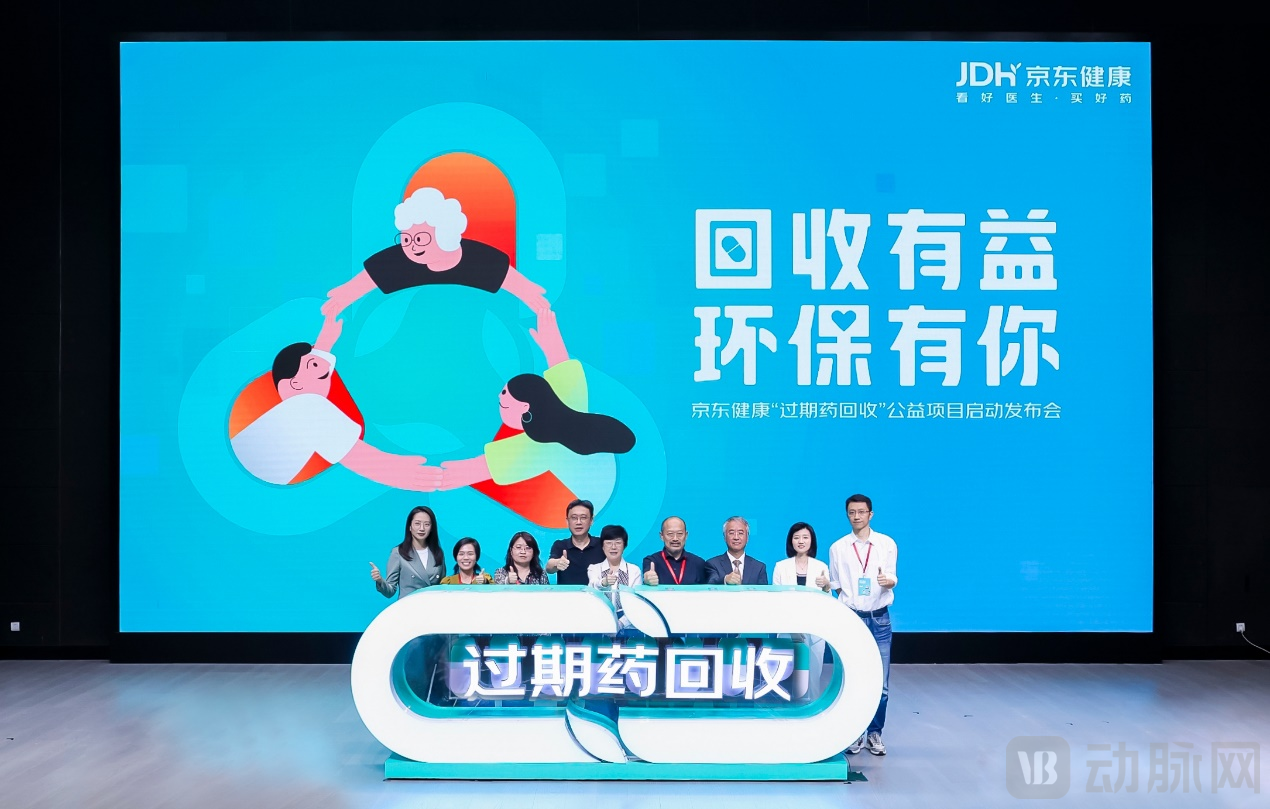
Full-Process Visibility, Compliance, and Efficiency: Bridging the “Last Mile” of Expired Drug Recycling
To safeguard medication safety for users, in December 2023, five departments, including the National Health Commission and the State Administration for Market Regulation, jointly issued the Implementation Plan for Conserving Pharmaceutical Resources and Curbing Drug Waste. The plan emphasizes the need to standardize the collection and destruction of discarded medications. In the collection phase, efforts should be made on one hand to strengthen publicity and guidance on waste sorting, thereby raising public awareness of drug recycling; on the other hand, it is recommended that local authorities adopt incentive measures to actively encourage pharmaceutical manufacturers and distributors to carry out activities for collecting discarded medications.
In active response to the national call for ecological civilization construction, and to participate in social governance and contribute corporate strength, JD Health has launched the "Expired Medicine Recycling" public welfare initiative. Leveraging its own advantages and capabilities, the head of JD Health’s Comprehensive Services Department stated that, relying on its highly efficient, self-built supply chain operation system covering the entire country, JD Health can ensure the efficient operation of all links in the collection and transportation of expired medicines, thereby reducing recycling costs and improving efficiency. Its mature and comprehensive end-to-end pharmaceutical management mechanism also provides strong safeguards for key processes such as the transportation, storage, and destruction of expired medicines, ensuring the professionalism and compliance of the recycling work. Meanwhile, by virtue of its robust e-commerce platform user operation system, JD Health can precisely reach users and stimulate their enthusiasm for participation through diverse incentive measures, thus promoting the widespread implementation of expired medicine recycling.
Liu Pei, former Director of the Department of Policies and Regulations under the National Medical Products Administration (NMPA), stated that government authorities at all levels are actively implementing measures concerning pharmaceutical distribution, public education on safe medication use, and the collection of expired drugs. Some pharmaceutical manufacturers and distributors have promoted the safe use of medications by launching public welfare initiatives for the collection of expired household medicines. She spoke highly of JD Health’s public welfare program for expired drug collection, commending the company for fulfilling its corporate social responsibility. By leveraging new quality productive forces, internet technologies, and logistics capabilities, JD Health has bridged the “last mile” in expired drug collection, guiding the public to return expired medications through accessible and popular approaches, thereby reducing resource waste and environmental pollution.
Exploring the Joint Establishment of a Long-Term, Sustainable Mechanism for Expired Drug Recycling
Whether it is ecological environmental protection or ensuring the safe use of medications by users, sustained efforts are required, necessitating joint collaboration among the government, enterprises, and the public. At this press conference, Jia Feng, former Director and Chief Expert of the Publicity and Education Center of the Ministry of Ecology and Environment, as well as Adjunct Professor at the College of Environmental Sciences and Engineering of Peking University, served as the roundtable moderator. He invited multiple stakeholders across the expired medication recycling chain to discuss how to establish and improve a long-term mechanism for the collection and disposal of expired drugs.
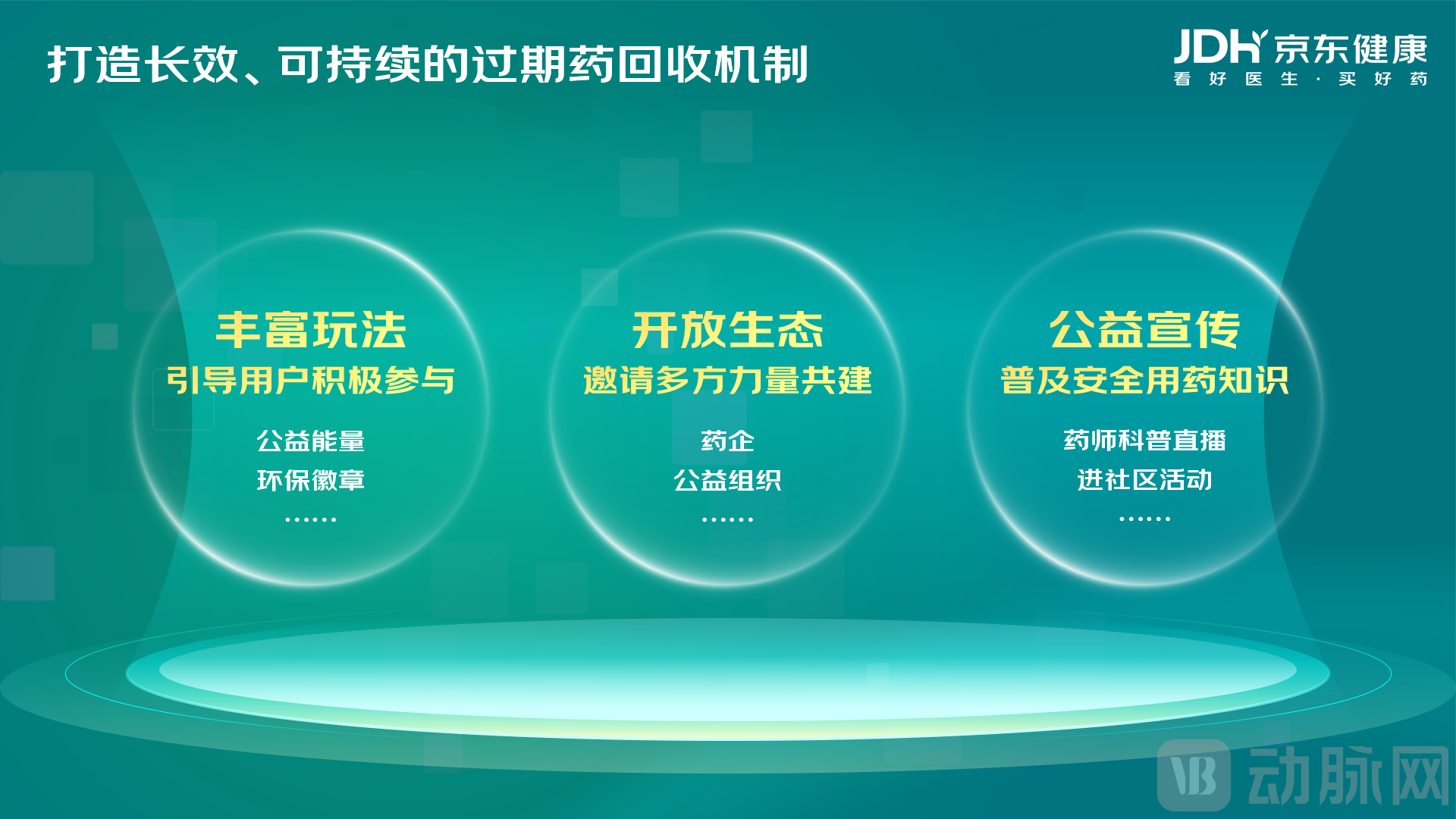
During the roundtable discussion, Liu Chunlong, Secretary-General of the China Environmental Protection Foundation, stated that based on years of public welfare practice, the sustainable development of a public welfare project hinges on exploring and establishing mechanisms for sustained, in-depth public participation. By fostering a sense of gain and honor among the public, and integrating carbon inclusion models, it is possible to stimulate enthusiasm for participating in environmental public welfare initiatives focused on the recycling of expired medications.
It is understood that for this public welfare initiative, JD Health has designed various interactive features, offering incentives such as charity energy points, environmental protection badges, and coupons to encourage active user participation. To further boost engagement, the Vice President of JD Group and Head of the Pharmaceutical Division at JD Health stated that JD Health has assembled an online service team composed of licensed pharmacists with clinical pharmacy experience. This team provides a range of professional online pharmaceutical services, including medication therapy evaluations, post-consultation medication regimen adjustments, and follow-ups on treatment plans. Regarding the hazards of expired medications and the significance of their recycling, the pharmacist team will conduct ongoing public education through accessible formats such as live streams, videos, and illustrated articles to enhance user awareness.
CR Sanjiu has multiple products that are staples in household medicine cabinets. Cheng Weiwei, Deputy General Manager of the Marketing Department at CR Sanjiu, stated that during routine marketing activities, the company actively guides consumers to purchase medications rationally, thereby avoiding pharmaceutical waste.
Liu Lili, Deputy Secretary-General of the Solid Waste Treatment and Utilization Professional Committee under the China Association for Environmental Protection Industry and Researcher at the Basel Convention Regional Centre for Asia and the Pacific at Tsinghua University, proposed that an ideal expired drug recycling mechanism must earn user trust, making the final disposal of collected expired medications a critical concern for users.
It is understood that after JD couriers collect expired medications from customers’ homes, the drugs are consolidated into a designated non-conforming products area within JD Health’s pharmaceutical warehouses. This area is subject to closed-loop management by dedicated personnel in specialized facilities. Following registration with the environmental protection bureau’s system, the expired medications are uniformly destroyed by licensed hazardous waste disposal companies. According to the head of sustainable development at JD Logistics, the expired medication recycling process leverages JD Logistics’ intelligent integrated supply chain solutions. By employing big data and Internet of Things (IoT) technologies, the flow and disposal status of expired medications are tracked, ensuring safety and transparency throughout the entire recycling process.
In the future, JD Health looks forward to more users and partners joining the “Expired Medicine Recycling” public welfare initiative, working together to build a solid line of defense for safe medication use and green development, safeguarding public health and the ecological environment.