MicroPort Medical Launches Smart Insufflation System, Targets Global Leadership in Minimally Invasive Surgery with Over 40% Overseas Revenue and Presence in 90+ Countries
As the advantages of laparoscopic surgery—such as minimal trauma, reduced blood loss, faster recovery, and less pain—become increasingly prominent, its clinical application is expanding. During laparoscopic procedures, establishing a pneumoperitoneum is a critical step that provides operative space, improves the surgeon’s visual field, and minimizes patient injury. As an essential piece of equipment for laparoscopic surgery, medical insufflators will see growing market demand.
According to QYResearch, the global market size for insufflators was approximately RMB 1.4 billion in 2022 and is projected to reach RMB 2.4 billion by 2029, representing a compound annual growth rate (CAGR) of 7.8% from 2023 to 2029.
With the rising number of obese individuals and an accelerating aging population, the demand for medical insufflators is set to expand further. Driven by technological iterations and upgrading requirements, intelligence, automation, and multifunctionality will become key development directions for medical insufflators. Propelled by innovative domestic enterprises, the pace of import substitution and technological renewal in the insufflator industry is accelerating.
Among them, Microcure (Suzhou) Medical Technology Co., Ltd. (hereinafter referred to as “Microcure Medical”) is a medical innovation enterprise deeply engaged in this field. Based on in-depth insights into clinical needs and pain points, the company has launched a new constant-pressure, smoke-filtering intelligent pneumoperitoneum system for minimally invasive surgery.

As a company that started with minimally invasive surgical instruments, Microcure Medical has built a complete industrial chain covering R&D, production, sales, and after-sales service through nearly ten years of experience accumulation. Currently,Microcure Medical has obtained 18 Class II medical device registration certificates in China and 12 EU CE certificates.The product portfolio encompasses minimally invasive suspension and retraction systems, minimally invasive surgical pneumoperitoneum systems, laparoscopic surgical consumables, and surgical stapling systems, covering the digestive, respiratory, urinary, and reproductive systems.
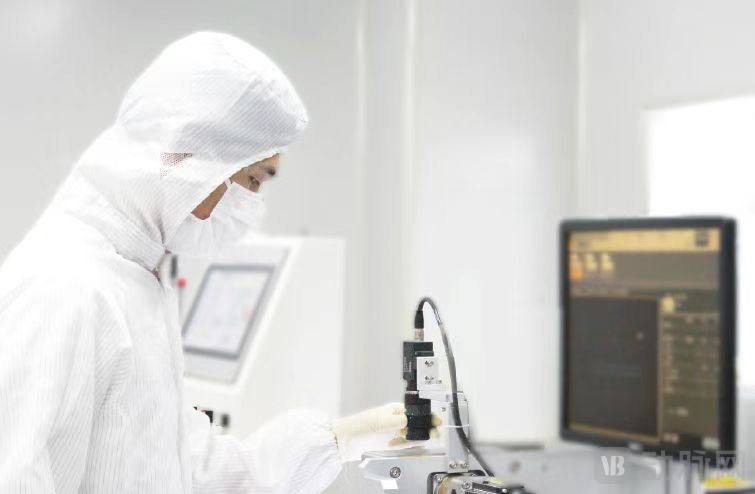
Microcure Medical Workshop
Ms. Liu Yuxi, Founder and President of Microcure MedicalSince launching her entrepreneurial venture in Beijing in 2003, she has specialized in the field of minimally invasive surgical instruments, accumulating extensive expertise in the medical translation and commercialization of products. In 2015, Ms. Liu Yuxi founded Microcure (Suzhou) Medical Technology Co., Ltd., where she oversees corporate development strategies and comprehensive value chain management.
Meanwhile, several members of Microcure’s co-founding team possess experience in product R&D and sales at publicly listed companies.Co-Operations DirectorHolds a Master’s degree in Accounting from Boston College and is a U.S. Certified Public Accountant (CPA), with extensive management experience gained at Fortune 500 companies and publicly listed firms across France, Canada, the United States, and China;Management RepresentativeHolding a Master’s degree in Pharmacy from Yangzhou University and serving as a regulatory expert in the medical device industry, he brings over a decade of experience in medical device registration and oversees the company’s quality system certification and registration processes. In addition, the core team at Microcure Medical includes medical experts with extensive experience in surgical procedures, who provide valuable insights for product development from the perspective of clinical practice.
The Company has established close collaborations with the Institute of Medical Engineering of the Chinese Academy of Sciences, Aesculap Academy, and the Animal Experiment Center of Beijing Friendship Hospital, providing robust support for functional validation of prototypes, as well as post-market safety and usability verification for multiple products, including the intelligent pneumoperitoneum system. Furthermore, Microcure maintains close cooperation with clinicians from numerous Grade IIIA hospitals, enabling timely acquisition of clinical feedback to drive product updates and optimization.
Currently, Microcure Medical’s products have reached 23 provinces, four municipalities directly under the Central Government, and five autonomous regions, with collaborations spanning over 700 hospitals and a network of more than 360 distributors.
During actual surgical procedures, the use of instruments such as ultrasonic scalpels, electrosurgical units, and argon beam coagulators generates substantial amounts of smoke. Furthermore, minimally invasive surgeries involve small incisions and a relatively confined operative space; excessive smoke accumulation can obscure the surgeon’s field of view and hinder surgical manipulation. In contrast, traditional insufflators feature relatively simple designs, primarily focusing on the rapid and safe establishment and maintenance of pneumoperitoneum. Most are limited to providing basic inflation and pressure maintenance functions during laparoscopic surgery and fail to address the issue of smoke evacuation.
Therefore, during surgery, surgeons often need to repeatedly vent smoke through the valves of trocars, thereby prolonging the operative time. Moreover, harmful chemicals generated by tissue carbonization and protein decomposition, as well as active viruses, viable cells, and bloodborne pathogens, are released into the operating room environment, posing certain health risks to medical personnel.
To address these challenges, the new-generation intelligent insufflation system developed by Microcure Medical features smart management of surgical smoke. Its tiered filtration and closed-loop smoke evacuation design significantly enhance surgical safety and visual clarity. Furthermore, the system maintains stable intra-abdominal pressure even under low-flow and low-pressure conditions, thereby improving surgical efficiency. Upholding the philosophy of “creating a green and eco-friendly surgical environment,” this innovation from Microcure Medical provides physicians with a safer, cleaner, and more efficient surgical solution.
Microcure Intelligent Pneumoperitoneum System features an intelligent UI on the main unit, offering two operational modes—Smoke Filtration Circulation Mode and Standard Mode—to accommodate diverse surgical requirements.In standard mode, the system can be used with conventional trocars to achieve high-flow ventilation and stable pneumoperitoneum, meeting clinical requirements. In smoke filtration circulation mode, the filter tube assembly is paired with a smoke-evacuation trocar featuring a double-valve design to provide airflow circulation, enabling continuous smoke removal and stable intra-abdominal pressure.
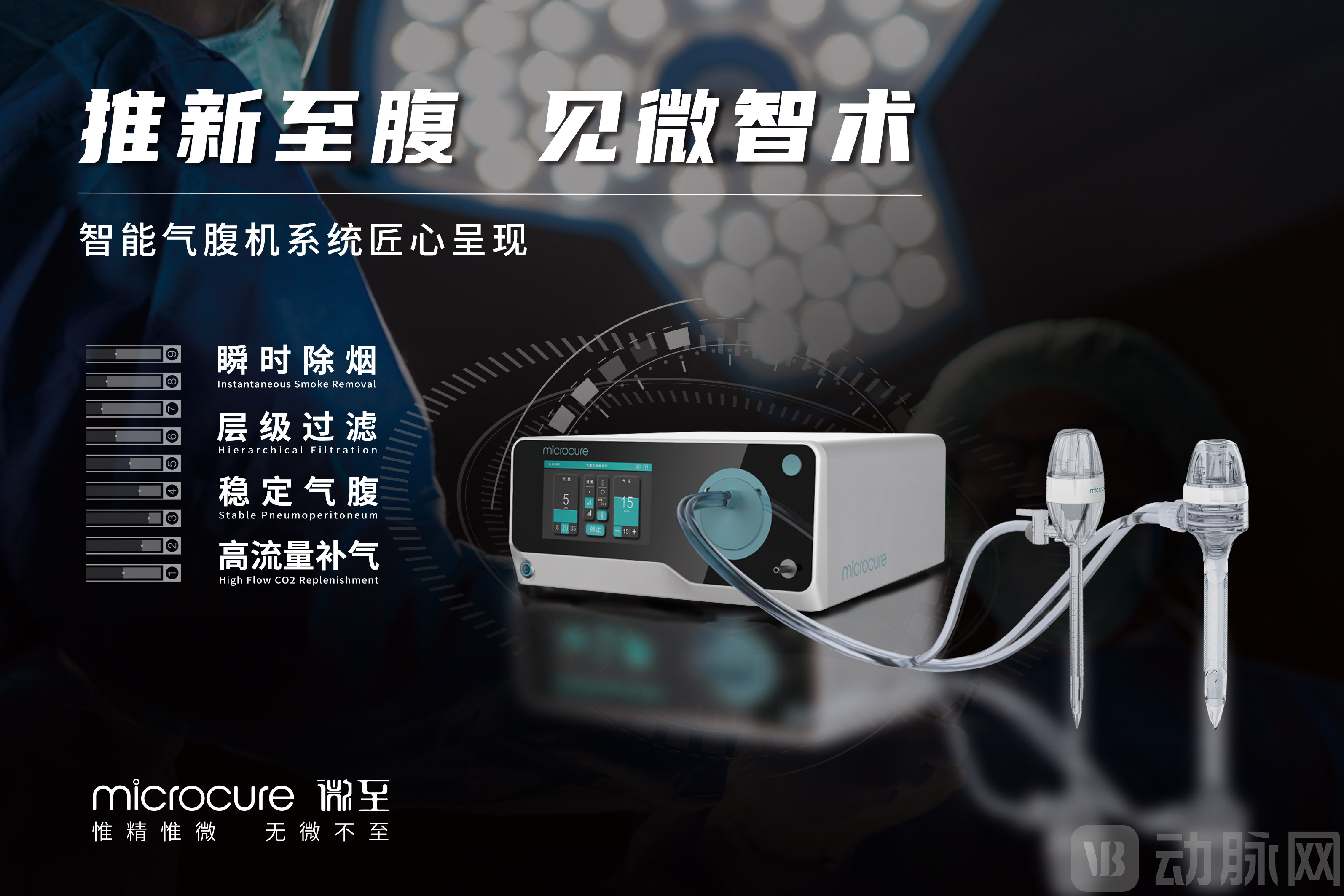
Microcure's Next-Generation Intelligent Insufflation System
Specifically, the Microcure Intelligent Pneumoperitoneum System can achieveClosed-Loop System, ensuring no leakage of smoke or toxic gases during surgery, thereby maintaining a sterile surgical environment and reducing health risks to medical personnel; furthermore, the system enables instantaneous smoke evacuation, providing real-time smoke removal throughout the surgical procedure to ensure a clear surgical field. This eliminates the need for additional smoke evacuation maneuvers by the surgeon, thereby enhancing procedural efficiency and shortening operative time.
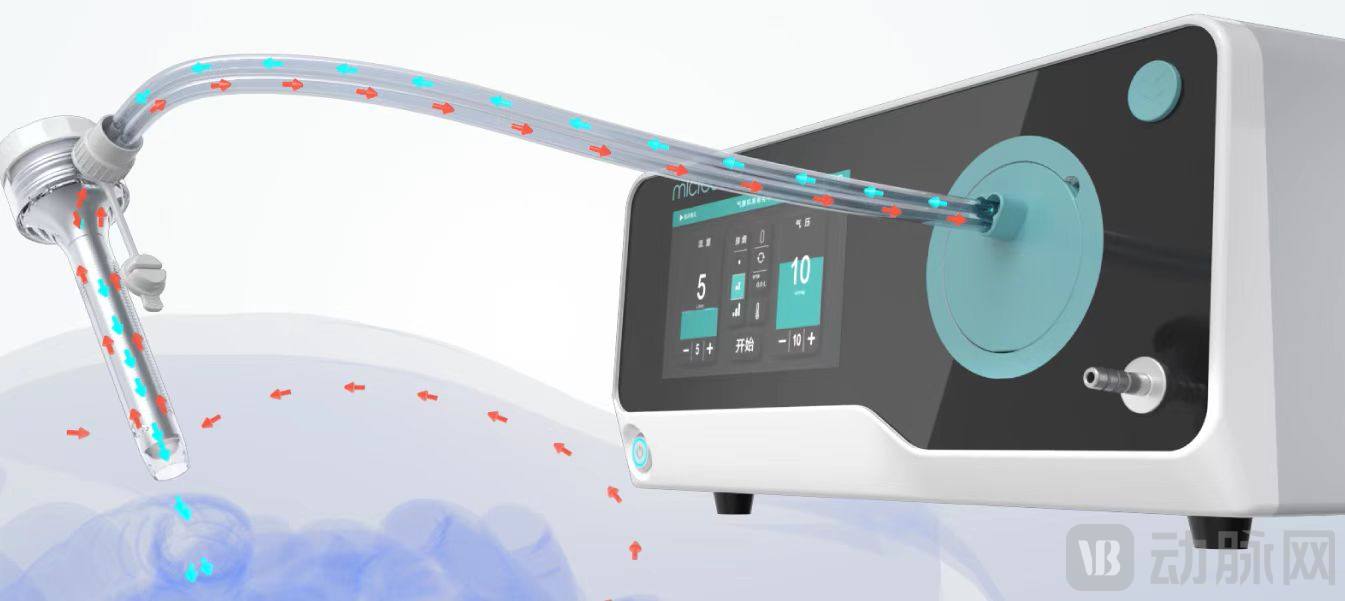
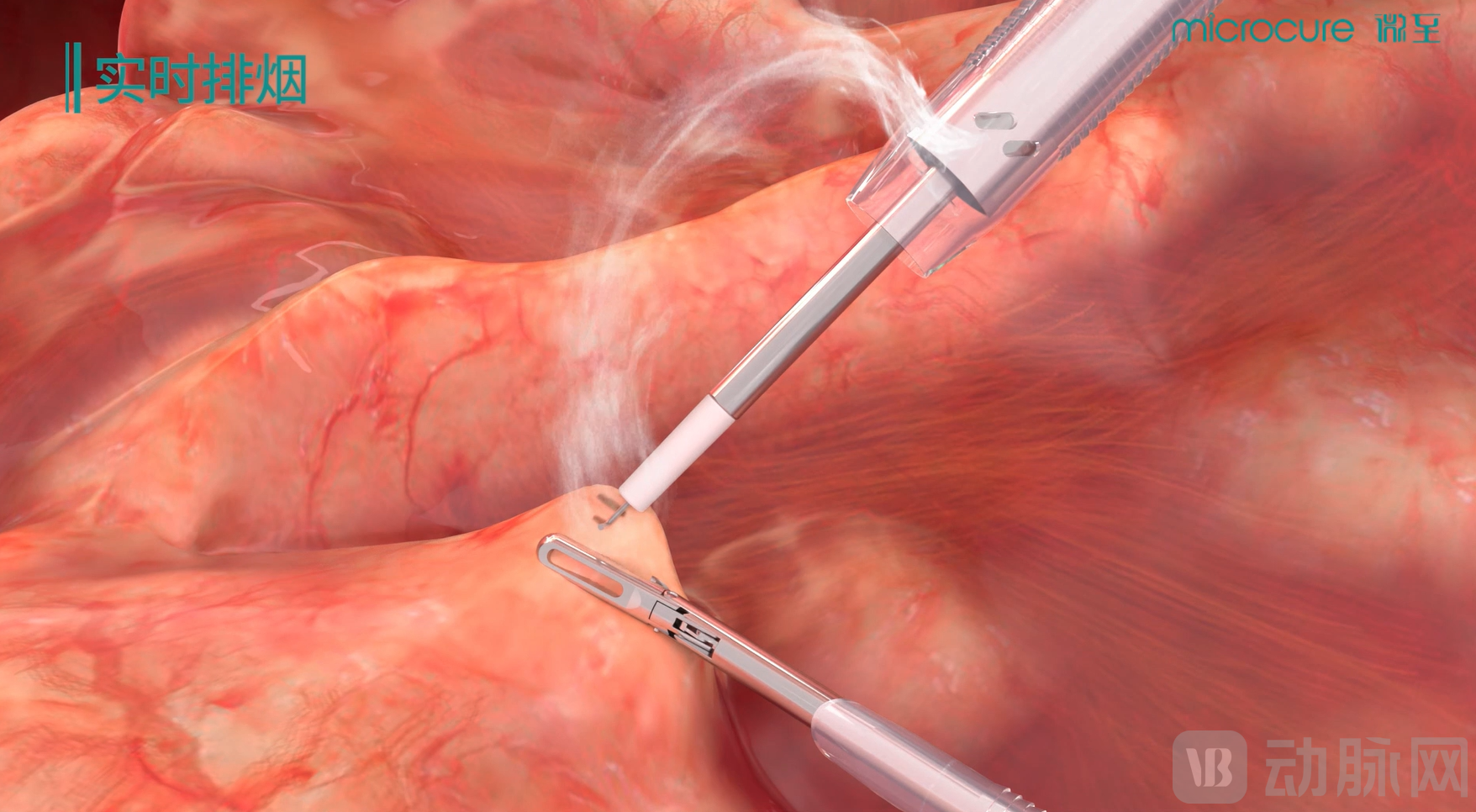
Microcure Medical Intelligent Pneumoperitoneum System: Circulating Smoke Filtration Mode
Clinical trial data from Microcure Medical shows that, compared with conventional insufflators, its intelligent insufflation system can reduce average surgery time by 1/4., it has demonstrated particularly outstanding performance in surgeries for uterine fibroids, cervical cancer, and gastric cancer.
Furthermore, the system featuresHigh-Efficiency Filtrationfunctionality, enabling a filtration rate of up to 99.99% for microscopic particles, and providing highly effective barrier and filtration against toxic particles, as well as bacteria and viruses.
Currently, conventional insufflators exhibit significant fluctuations in intra-abdominal pressure during use, making it difficult to meet the increasingly stringent precision requirements of minimally invasive surgery. In contrast, Microcure’s intelligent insufflation system leverages the company’s proprietary constant-pressure algorithm and independent pressure-measurement channels to ensure stable and reliable gas replenishment throughout the surgical procedure, thereby achievingIntelligent Constant Pressure。
In addition, Microcure’s intelligent pneumoperitoneum system is designed with full consideration of clinical practice, ensuring that its use minimizes changes to surgeons’ established operative habits and offers high operational convenience. The system is suitable for a variety of surgical scenarios, such as transanal approaches, procedures with strong demands for constant-pressure smoke evacuation, and operations with limited working space. In gynecological, hepatobiliary, anorectal, and gastrointestinal surgeries, it provides a stable pneumoperitoneum environment and a clear surgical field, thereby assisting surgeons in performing procedures more effectively.
Currently, the market landscape for conventional insufflators has become relatively mature and stable, whereas the high-end intelligent insufflator market remains largely untapped. Ms. Liu Yuxi predicts that the high-end intelligent insufflator market will see a 30%-40% growth potential within the next five years, with an even higher market share likely in developed countries such as those in Europe and the United States.
“Currently, European and American countries have established relevant regulations and rules regarding smoke evacuation in surgical environments, emphasizing the protection of healthcare workers’ health during surgical procedures,” introduced Ms. Liu Yuxi. For instance, as early as 1996, the National Institute for Occupational Safety and Health (NIOSH) called for controlling smoke generated by lasers and electrosurgical units during surgery, stressing the use of high-performance filtered ventilation systems and comprehensive protective measures for staff. Since 2008, NIOSH and the Association of periOperative Registered Nurses (AORN) have listed surgical smoke as a key issue and have successively released related management strategies and operational guidelines. These measures include emphasizing the use of effective smoke evacuation systems and establishing protective standards to reduce the health risks posed by surgical smoke to healthcare personnel. Driven by these efforts, 15 U.S. states have completed relevant legislation.
“However, at present, the clinical significance of intelligent insufflators has not been widely recognized in many countries around the world. We hope to become a market leader by leveraging the stability of our products and the cost-controllability advantages of our supply chain, enabling hospitals in more developing countries and regions to understand the benefits of intelligent insufflator systems and access higher-quality, cost-effective products,” added Ms. Liu Yuxi.
Currently, the Microcure Intelligent Pneumoperitoneum System has received regulatory approval for market launch and has established collaborations with numerous top-tier tertiary hospitals, including Peking University First Hospital, Beijing Friendship Hospital, and The First Affiliated Hospital of Sun Yat-sen University in Guangzhou. Meanwhile, the system has expanded deeply into overseas markets, gaining hospital formulary inclusion in countries such as the United Arab Emirates and Brazil, where it has earned high recognition from local physicians and healthcare institutions.
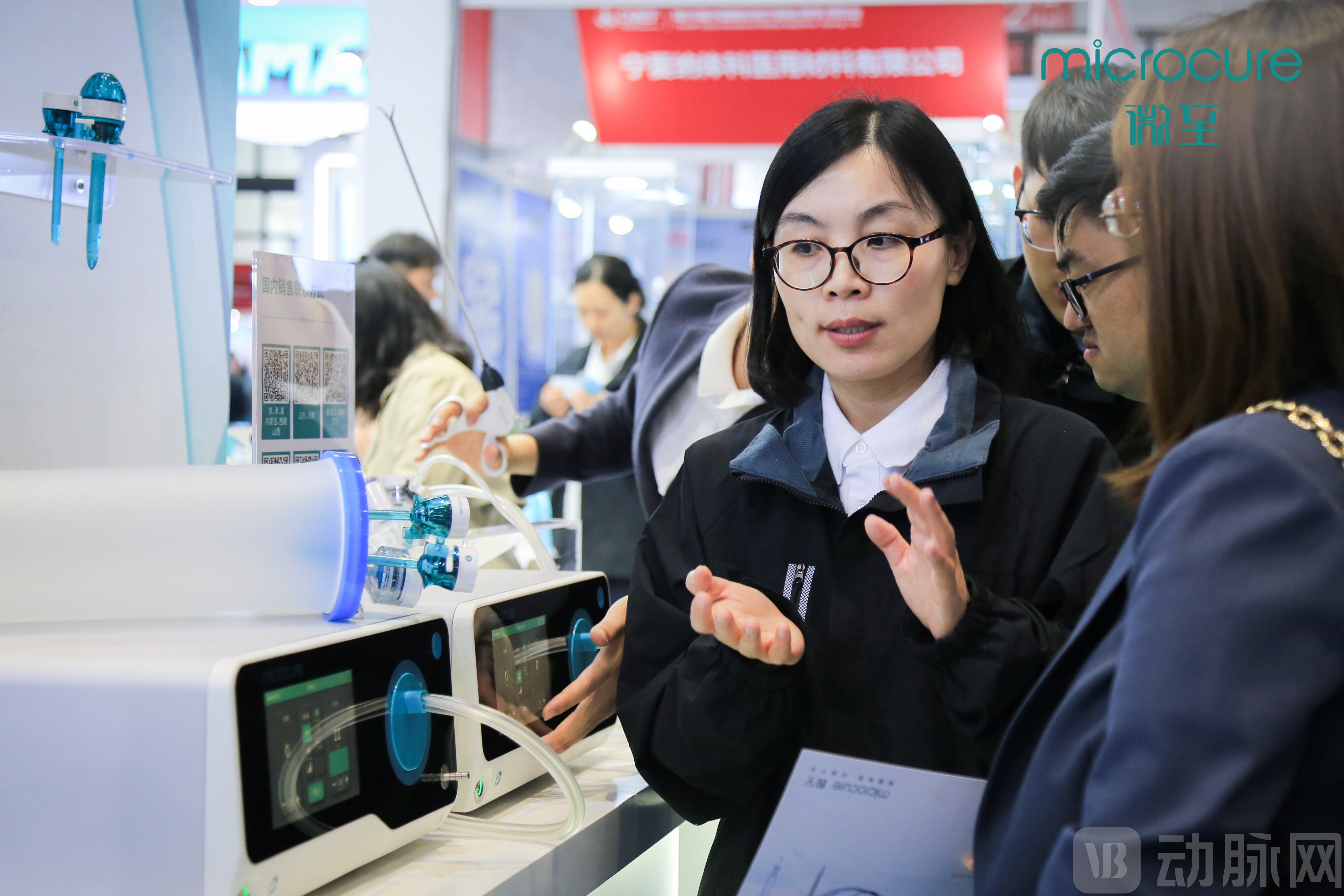
Microcure Medical’s Intelligent Pneumoperitoneum System Showcased at CMEF Shanghai
It is worth noting that Microcure has already begun to see initial results in expanding its overseas distribution channels and commercializing its products.“We went global at least five years earlier than other companies.”“At that time, the costs associated with overseas expansion and product registration were relatively high. However, from a holistic strategic perspective, Microcure believed that going global would have a profound impact on the company’s future development layout, and thus it actively pursued overseas market expansion even during the pandemic,” introduced Ms. Liu Yuxi. She noted that many companies only began conducting market research and launching overseas initiatives after the end of the pandemic or in response to domestic policies such as volume-based procurement. In contrast, Microcure Medical actively explored overseas markets from its early stages, laying a solid foundation for the subsequent internationalization of its products.Meanwhile, the company’s nearly decade-long experience navigating overseas markets has endowed it with exceptional adaptability to global market conditions.
Microcure’s overseas marketing team comprises nearly 20 professionals, each bringing extensive experience from both domestic and international listed companies. The company has established a specialized marketing team integrating market research, sales, business development, and after-sales services, thereby creating a comprehensive marketing system encompassing market intelligence, customer acquisition, exhibition promotion, and user support. This robust framework has laid a solid foundation for the rapid growth of its overseas revenue.
In overseas markets, Microcure currently covers Asia, Europe, Oceania, Africa, and South America,We have partnered with clients in nearly 90 countries worldwide and over 400 distributors.The company holds 12 EU CE certificates and has successfully passed TÜV SÜD certification. In 2023, overseas revenue accounted for 40% of Microcure Medical’s total revenue, with projections indicating it will rise to 60% this year.
From 2018 to 2024, Microcure Medical has achieved annual sales growth of over 200% for six consecutive years.Moving forward, Microcure Medical will leverage its comprehensive operational system encompassing R&D, technology, regulatory affairs, manufacturing, and sales. By capitalizing on the Yangtze River Delta’s complete industrial chain, abundant innovation resources, and favorable policy environment, the company aims to refine its end-to-end layout in the minimally invasive surgery sector, centered on its intelligent insufflation systems. Within five years, Microcure Medical strives to become a global leader in providing comprehensive solutions for intelligent insufflation systems in minimally invasive surgery, making outstanding contributions to the development of the global healthcare industry.
Microcure Medical seeks resource connections in financing, distributor networks, overseas expansion, and upstream and downstream supply chains. If you are interested in Microcure Medical and its products and solutions, please scan the QR code below to contact us.