Chongqing Three Gorges Hospital Licenses $5.8M Smart Reagent Management Patent Powered by RFID Technology
July 5,Chongqing University Three Gorges Hospital (hereinafter referred to as “Three Gorges Hospital”) and Chongqing MicroID Technology Co., Ltd. (hereinafter referred to as “MicroID”) have signed“Patent License Agreement for High-Throughput RFID Identification Equipment and Management System for Medical Supplies,” with a commercialization contract value reaching RMB 42 million。
This collaboration not only marks the in-depth application of RFID (Radio Frequency Identification) technology in the healthcare sector, but also heralds an impending intelligent revolution in medical supply management. It is understood that the management of laboratory reagents has long faced challenges such as low inventory efficiency, difficulties in information traceability, and an urgent need for improved quality control.This patent leverages digital technology in smart healthcare scenarios to achieve refined, intelligent management of laboratory reagents:On one hand, highly automated and traceable management has been achieved across key processes, including inventory counting, procurement planning, distributor stock preparation, reagent inspection and warehousing, and requisition and outbound logistics. On the other hand, digital twin technology enables visual monitoring of critical indicators such as cold storage temperature and humidity, reagent outbound volumes, inventory levels, and reagent consumption ratios. This approach aims to make reagent management more labor-efficient, reagent storage safer, cost control more precise, and laboratory operations more compliant.
To this end, VCBeat had the privilege of interviewing Li Bo, Deputy Director of the Department of Laboratory Medicine at Three Gorges Hospital, to gain an in-depth understanding of the story behind this innovative project and its impact on future medical services.
Focusing on RFID Technology R&D to Overcome Two Major Challenges in Reagent Management
In the clinical laboratory, a scene of tense yet orderly activity unfolds, with various precision instruments and busy medical staff. However, beneath this seemingly calm surface lie numerous hidden concerns stemming from poor reagent management. Director Li Bo told VCBeat:"Reagents are the lifeline of laboratory testing; their management quality directly impacts the accuracy of test results and patient diagnostic and treatment safety."
Currently, traditional management models suffer from numerous drawbacks. On one hand, they are plagued by issues such as a wide variety of reagents, high consumption volumes, complex circulation processes, labor-intensive manual management, challenging inventory control, and imprecise cost management. Taking inventory management difficulties as an example, excessive inventory not only ties up valuable capital resources but also increases the risk of reagent expiration and waste; conversely, insufficient inventory may lead to supply shortages during emergencies, thereby disrupting the continuity of medical testing and patients’ treatment plans.
On the other hand, as large-scale modern hospitals continue to expand in size and face increasing operational complexity, traditional manual management models struggle to efficiently support hospital administrative needs and long-term development. Specifically, paper-based barcode management remains cumbersome and inefficient. Despite the adoption of barcode technology, steps such as printing, affixing, and scanning still require significant manpower and lack batch processing capabilities, substantially increasing the burden on physicians. Meanwhile, regulatory bodies such as the National Medical Products Administration (NMPA) and the National Health Commission (NHC) have imposed stricter oversight requirements on aspects including expiration date management of diagnostic reagents, cold chain management, inventory reconciliation, documentation management, and traceability.
Driven by this clinical need, Director Li Bo began to explore how technological innovation could address these challenges. Starting in late 2020, he initiated planning for a project leveraging RFID technology to optimize reagent management processes. After two years of preparation and exploration, the project was officially established in 2022, receiving significant attention and support from hospital leadership.
When VCBeat asked, “Among the many available technical solutions, why is there a particular preference for radio-frequency identification (RFID) technology?”
“RFID technology, as a key component of the Internet of Things (IoT), offers advantages such as contactless identification, rapid reading, batch processing, and long-range operation.“Director Li Bo explained, ‘First, it enables seamless end-to-end tracking and monitoring of reagents throughout the entire workflow—from warehousing to dispatch, and from storage to usage. Second, its batch processing capabilities significantly enhance management efficiency while minimizing errors and omissions associated with manual operations. Finally, RFID technology can be integrated with smart devices to leverage data mining for advanced functionalities such as intelligent monitoring and early warning systems, lean cost analysis, and other data-driven decision support mechanisms.’”
Based on this, Director Li Bo believes that RFID technology will provide a solution for whole-process optimization.
Deliver end-to-end solutions, saving millions in costs annually
After finalizing the technical roadmap, Director Li Bo led his team in launching an intensive system development effort. Director Li Bo was well aware that a successful medical supplies management system requires not only advanced technological support but also a comprehensive, customized solution tailored to practical needs.
“Our system development adheres to the principle of “full-process, fully self-developed.”.” Director Li Bo explained, “The term ‘full-process’ means that the system must cover the entire lifecycle of reagents, from warehousing to outbound delivery, and from storage to usage; while ‘fully self-developed’ indicates that we not only independently develop core software algorithms but also design and manufacture the supporting hardware equipment.”
To achieve this goal, Director Li Bo’s team has worked in close collaboration with MicroID. It is understood that MicroID primarily focuses on the application development of RFID (Radio Frequency Identification) electronic tags. By deeply integrating RFID technology into industry-specific scenarios, its products have been successfully deployed in smart railways, civil aviation airports, automotive manufacturing, and digital healthcare, thereby capturing a significant market share.
Taking airport baggage sorting as an example, MicroID embeds a thin electronic chip inside each baggage tag. Visually, these tags are indistinguishable from traditional ones due to their minimal thickness. This design enables the use of radio-frequency identification (RFID) technology, which remains unaffected by bending or other physical distortions, achieving a recognition accuracy rate of up to 99%. In 2017, MicroID participated in the construction of Terminal T3A at Jiangbei International Airport. Estimates indicate that the RFID-enabled baggage sorting system can save the airport tens of millions of yuan in annual costs.
In the field of digital health, MicroID has partnered with Three Gorges Hospital to launch a Smart Reagent Management System. With its high level of intelligence and integration, this system brings unprecedented convenience and efficiency to medical institutions.“In the words of Director Li Bo, compared with traditional management methods, the system has taken the lead in achieving the ‘three transformations’ toward informatization, automation, and intelligence.”。
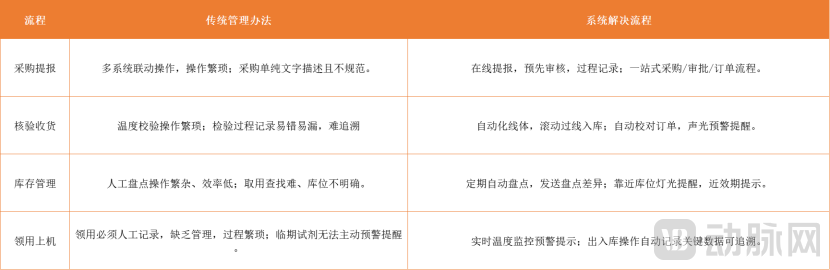
Process Comparison Chart
First, compared with traditional management methods, this system achieves seamless integration between cold storage facilities and work areas by building a robust Internet of Things (IoT) ecosystem. Specifically, leveraging an advanced reagent traceability management platform, the system can display key information in real time and in an intuitive manner, including reagent outbound quantities, inventory levels, statistics on key performance indicators, reagent consumption proportions, and cold storage temperatures. This provides managers with comprehensive and accurate data to support decision-making.
From the very source of the reagent supply chain, the system assigns a unique electronic tag to each reagent. Throughout every stage—including procurement planning, distributor stocking, automated inspection and warehousing, inventory counting, and outbound delivery—the system enables automatic identification and tracking. This ensures the accuracy of reagent information and full-process traceability, thereby achieving true closed-loop control in reagent management.
Notably, the Intelligent Reagent Management System leverages its robust data analytics capabilities to monitor dynamic changes in reagent inventory, intelligently predicting potential risks such as overstocking, expiration, loss of efficacy, and stockouts, while issuing early warnings. This functionality not only effectively prevents reagent waste and losses but also significantly enhances the precision of hospital reagent management, resulting in substantial cost savings for hospitals. According to conservative estimates by Director Li Bo, the implementation of this system saves the hospital over one million yuan annually in costs, while markedly improving operational efficiency and safety.
Furthermore, the smart reagent management system prioritizes user experience and operational convenience. Its interface features a clean and intuitive design with clear, easy-to-understand workflows, enabling even non-specialist personnel to quickly become proficient in its use. Additionally, the system offers comprehensive report generation and data analytics capabilities, allowing administrators to effortlessly monitor key reagent management metrics and providing robust support for evidence-based decision-making within hospitals.
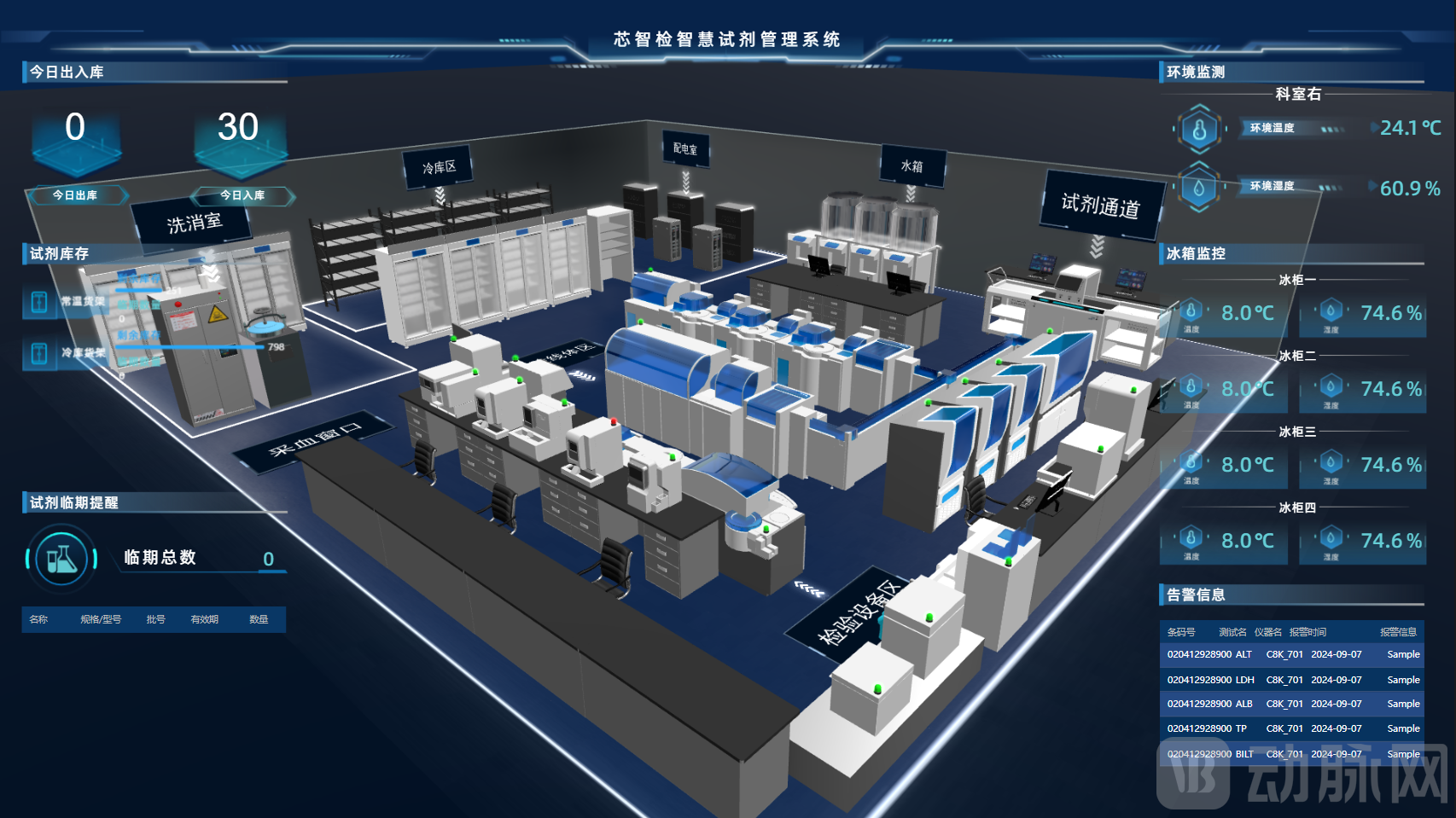
Xinzhijian Smart Reagent Management System. Image provided by the interviewee.
With the successful development and launch of the system, reagent management at the Department of Laboratory Medicine of Three Gorges Hospital has been completely transformed. Director Li Bo told VCBeat,The core value of the new management system can be summarized in four characters: “Cost-saving, Safety, Control, and Compliance.”。
“Labor-saving” refers to more efficient reagent management, where end-to-end automation reduces processing time by 70%, significantly cutting labor costs and improving reagent utilization efficiency; “Safety” ensures safer reagent storage and usage, with full-process transparency and traceability guaranteeing worry-free security in reagent storage and handling; “Control” enables more precise cost management, allowing granular tracking of the utilization rate for each individual reagent kit; “Compliance” ensures that reagent management adheres strictly to regulations, as the system automatically records timestamps throughout the entire reagent lifecycle, perfectly aligning with regulatory requirements for reagent oversight.
Exclusive Licensing Deal Worth $42 Million; Next Steps Are Product Optimization and Promotion
Currently, the “High-Throughput RFID Identification Equipment and Management System for Medical Supplies” has been exclusively licensed to MicroID, with a commercialization value of RMB 42 million.It is understood that the physician team, represented by Director Li Bo, will continue to be responsible for both product optimization and product promotion in the future.
Regarding product optimization, Director Li Bo’s team told VCBeat that the core elements for better operation of a clinical laboratory are nothing more than the following: fast speed, high efficiency, excellent quality, comprehensive service, and ensured safety throughout the operational process. In addition, cost control has increasingly become an aspect that cannot be overlooked.
Therefore, to achieve integrated management of cost, efficiency, and quality, Director Li Bo’s team has pioneered the development of a digital management system, with a concrete plan already in place. For instance, in terms of cost management, the team is building an advanced cost management system centered on RFID and 4G technologies. This system not only enables automated management of laboratory testing costs but, more importantly, facilitates lean cost analysis. This means the team can meticulously track monthly consumables, monitor the flow of every expenditure, assess profit margins and cost savings, and even identify potential waste, thereby addressing the industry-wide challenge of accurately accounting for laboratory testing costs.
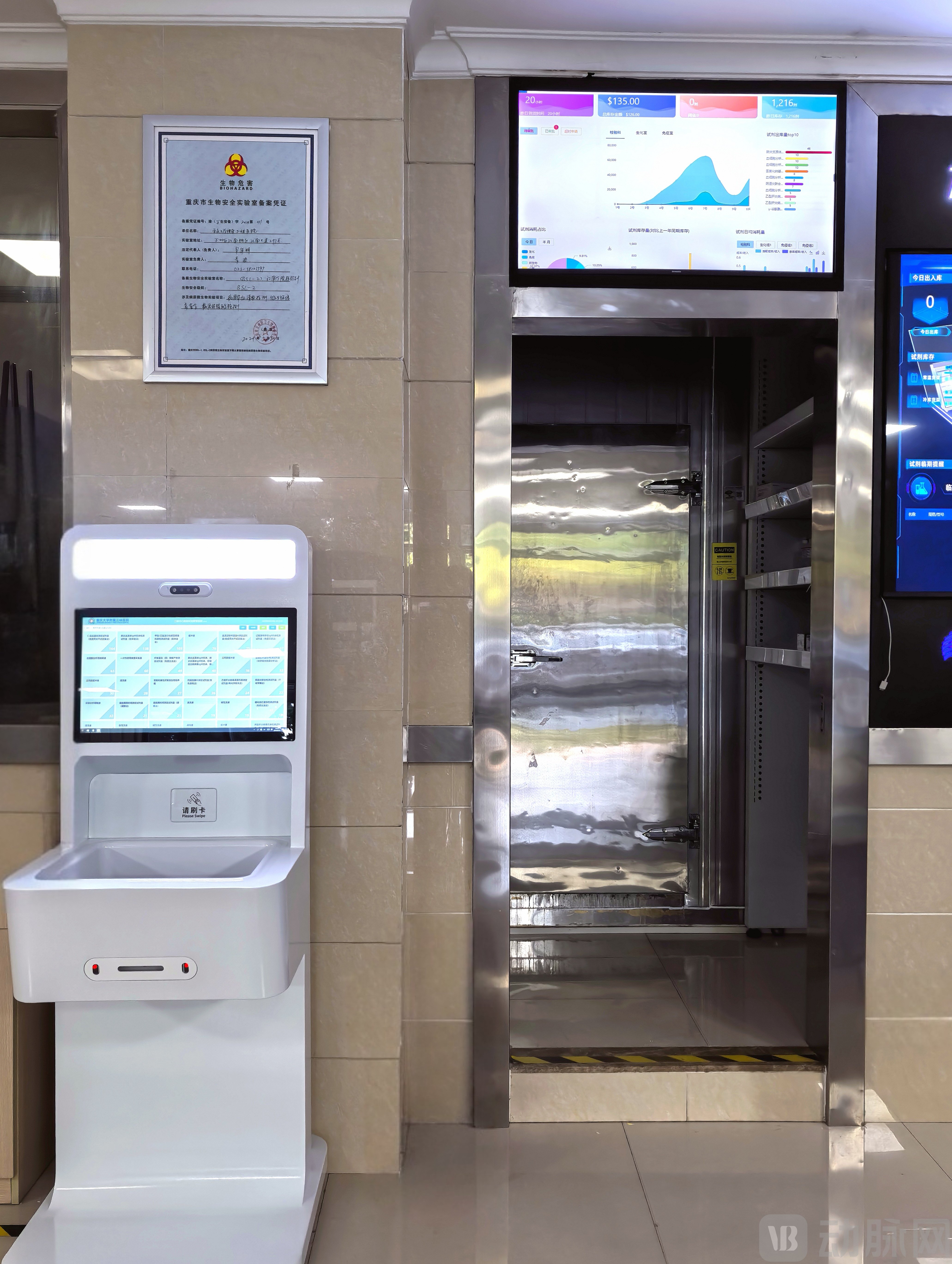
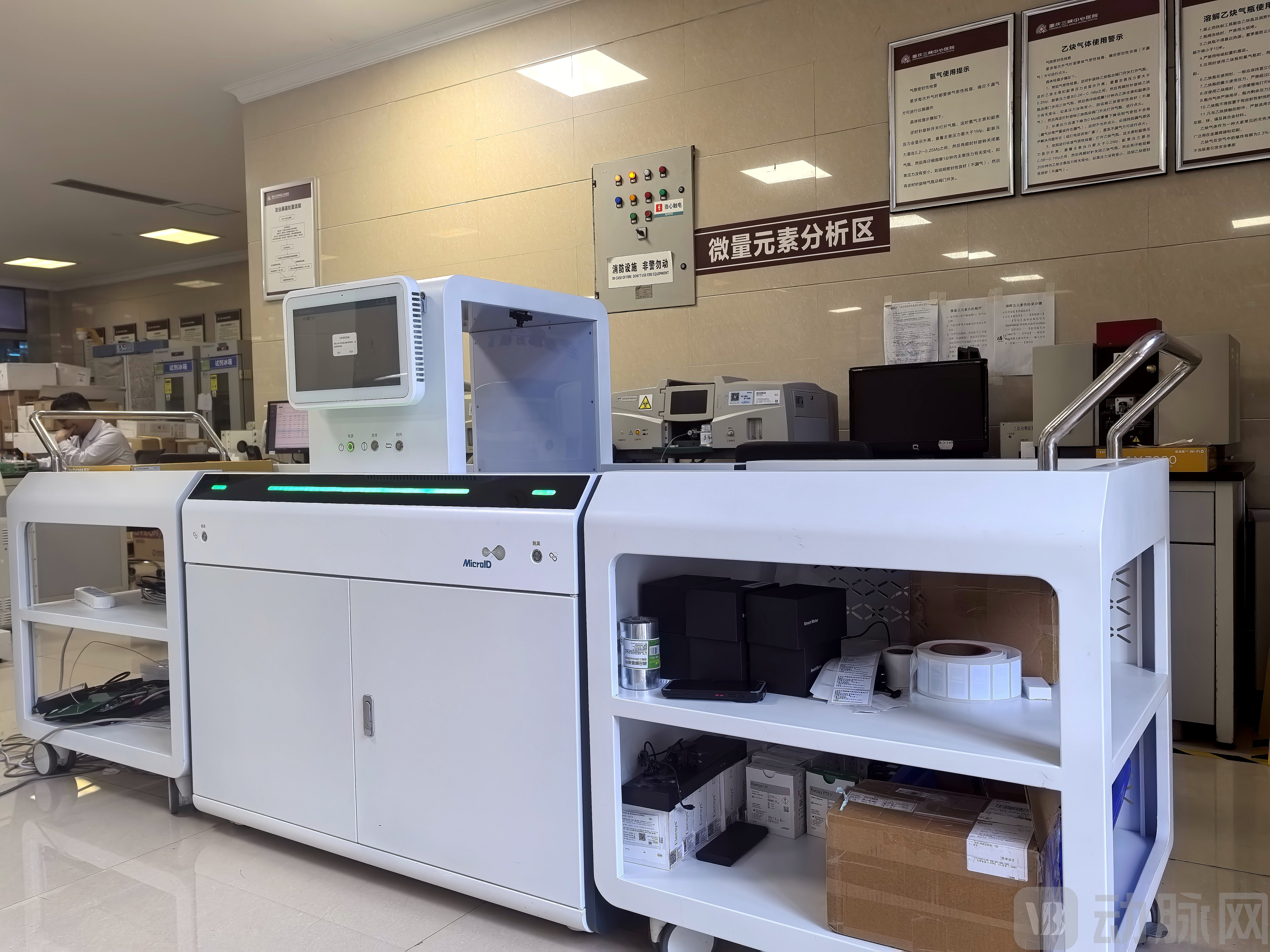
The Xinzhijian Smart Reagent Management System in Operation at Three Gorges Hospital. Photo provided by the interviewee
In terms of product promotion, the system is actively advancing project implementation at Three Gorges Hospital. Director Li Bo stated, ““It is expected that the project will be launched in one of our branch hospital’s laboratories by the end of September this year, and will then gradually expand to cover all laboratories across the entire hospital.”
In addition to vigorous internal promotion, the team has joined forces with corporate partners to jointly expand the market. Li Bo revealed that after the project is implemented, the team plans to invite industry peers to visit and exchange insights. Furthermore, the team actively participates in various exhibitions and has established collaborative relationships with numerous forward-thinking manufacturers.
Looking back on the entire project journey, from initial R&D planning to successful commercialization, Director Li Bo’s team dedicated over two years of relentless effort. They have come to deeply appreciate that it is no easy feat for physicians to translate scientific and technological achievements into practical applications; this requires pinpointing market needs and securing suitable partners to jointly advance the process. Li Bo candidly remarked, “It is difficult to achieve commercialization relying solely on an individual physician’s efforts. Behind this success lie countless rounds of refinement and testing by the team, as well as substantial investments of human and material resources.”
Of particular importance,In this medical-engineering integration project, a "translator" with expertise in business, information technology, and medicine played a bridging role in the translation process.They are able to translate complex medical technical jargon into language easily understood by engineers and marketing professionals, facilitating effective alignment between clinical needs and IT solutions as well as market demands, thereby providing strong impetus and assurance for the successful commercialization of scientific and technological achievements.
With the successful commercialization and widespread adoption of the “High-Throughput RFID Identification Equipment and Management System for Medical Supplies,” we have every reason to believe that the future of smart healthcare will be even more promising.
The Smart Reagent Management System is currently in the market promotion phase. If you are interested in this product, please scan the QR code below to contact us.