

Codiak Biosciences Files for Chapter 11 Bankruptcy Amid Clinical Setbacks Despite Pioneering Exosome Therapeutics

Codiak
Biopharmaceutical Exosome Therapy Developer
On March 27, 2023, Codiak Biosciences (“Codiak”), the world’s first exosome-based medical technology company, announced that it had filed for Chapter 11 bankruptcy protection and would seek buyers for its entire business or core assets as reasonably practicable. Chapter 11 refers to Chapter 11 of the U.S. Bankruptcy Code, which provides debtor companies with an opportunity to reorganize and obtain a stay on debt repayment, thereby enhancing their likelihood of recovery.
Nevertheless, at that time, many voices still believed that Codiak’s foray into exosome therapies had reached its end. Another perspective expressed sheer shock, given that just before Codiak declared bankruptcy, numerous investors and analysts had predicted its stock price could surge tenfold by the end of 2023; following the bankruptcy announcement, Codiak’s shares plummeted 52% on the same day.
Behind this polarized perception lies a snapshot of the nascent exosome industry, which faces immense opportunities and challenges. Exosomes, known as "natural lipid nanoparticles," are a subset of extracellular vesicles released by cells under normal physiological conditions or certain specific pathological states. They have garnered significant attention from the scientific community due to their ability to transmit information via proteins, nucleic acids, and other biomolecules. As research deepens, the biological characteristics of exosomes have positioned them as a dark horse in liquid biopsies for tumor diagnosis and as a next-generation revolutionary drug delivery platform with high global expectations, offering vast potential for future development.
Starting with Pancreatic Cancer Diagnosis, Pivoting to Engineering Infrastructure in the Early Stages of the Startup
Approximately 50 years ago, researchers first observed minute particles in human plasma, a substance named “platelet dust,” which is lipid-rich and may be involved in the platelet activation process. It was not until the 1980s that researchers clearly defined these extracellular vesicles, ranging in size from 30 to 150 nm, and coined the term “exosomes.”
Similar to liposomes, exosomes consist of a lipid membrane and an internal aqueous medium. However, researchers have found that exosomes possess a more complex structure, containing abundant proteins and lipids. Exosomes are generated within the endosomal compartments of most eukaryotic cells and are released into the extracellular space upon fusion with the plasma membrane. After being secreted by donor cells, they transmit information to recipient cells through several mechanisms, including surface receptor interactions, plasma membrane fusion, receptor-mediated endocytosis, phagocytosis, and/or micropinocytosis.
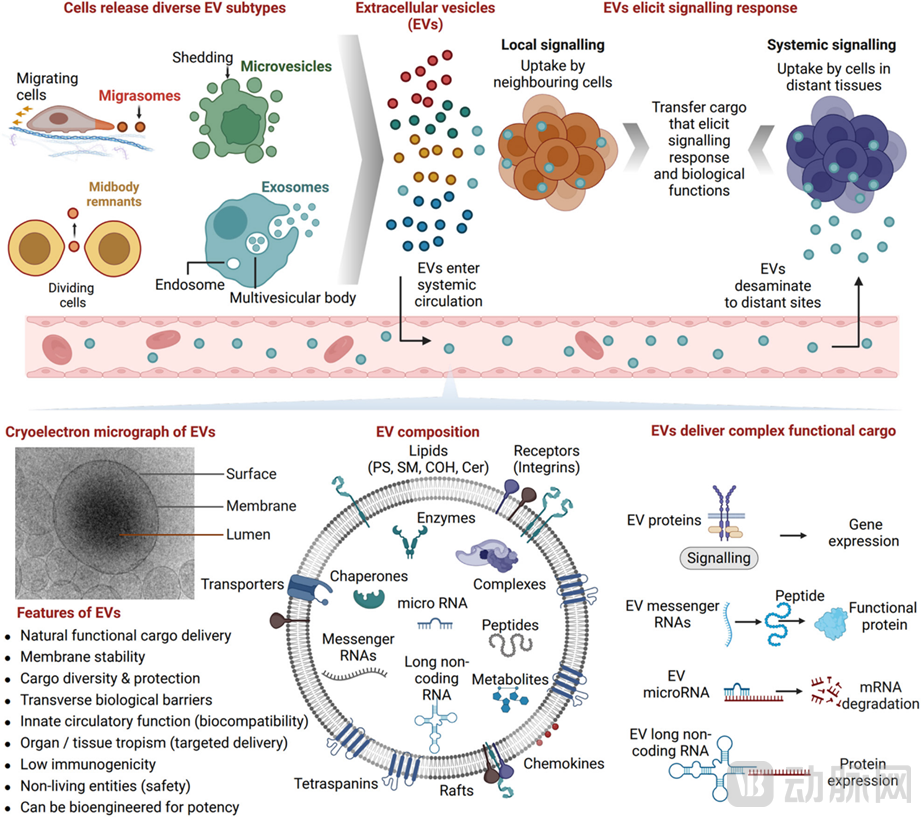
Exosome/Extracellular Vesicle Biogenesis and Structural Characteristics
In 2013, scientists James Rothman, Randy Schekman, and Thomas C. Südhof were awarded the Nobel Prize in Physiology or Medicine for their discoveries of machinery regulating vesicle traffic, a major transport system in our cells. In the more than decade since, exosomes, as a primary type of cellular vesicle, have entered a phase of explosive growth, attracting substantial research funding and yielding thousands of published papers annually, thereby becoming an undisputed hotspot in scientific research.
In the specific field of innovative drug carriers, naturally derived exosomes offer numerous advantages over viral vectors such as AAV and non-viral vectors like LNPs, including high histocompatibility, the ability to reach tissues and cells inaccessible to conventional carriers, large cargo capacity, and low production costs. Consequently, they are regarded as an ideal novel drug delivery vehicle.
Coincidentally, Raghu Kalluri, a co-founder of Codiak, previously served as the Director of Cancer Biology at the MD Anderson Cancer Center, where his laboratory primarily focused on the cellular and tissue microenvironment and the role of exosomes in cancer progression and metastasis. In June 2015, Kalluri’s team discovered that the cell-surface glypican Glypican-1 could serve as a biomarker for the diagnosis and screening of pancreatic cancer, with their findings published in Nature.
Another co-founder, Doug Williams, served as Executive Vice President of Research and Development at Biogen from January 2011 to July 2015. Prior to joining Biogen, he was the CEO and a board member of ZymoGenetics. Notably, during his tenure as CEO, ZymoGenetics was acquired by Bristol-Myers Squibb for $985 million. Earlier in his career, Williams served as Chief Scientific Officer and Executive Vice President of Research and Development at Seattle Genetics, as well as Senior Vice President at Amgen.
In 2015, after witnessing the validation of the feasibility of exosomes as drug delivery vehicles, Kalluri and Williams joined forces. With joint support from prominent investment firms ARCH Venture Partners and Flagship Pioneering, they founded the startup Codiak, which has become a recognized pioneer in the field of exosomes.
It is evident that Codiak was founded following the typical “scientist + professional manager” model, starting from a high baseline. The company’s subsequent development proceeded smoothly. In its inaugural year, Codiak completed a $31 million Series A financing round. Between 2016 and 2017, it successively closed a $61 million Series B round and a Series C round totaling $76.5 million. Within less than two years of operation, Codiak had raised nearly $170 million in cumulative funding.
During this period, Codiak underwent a major strategic adjustment. First, in terms of research direction, the Kalluri teamDiscovery that exosomes targeting KRAS (G12D) can treat pancreatic cancer, and development of technologies for the production of clinical-grade exosomes for pancreatic cancer therapy. It is worth noting that Codiak secured its first round of investment based on Kalluri’s research on pancreatic cancer diagnosis; and in 2017,The Company Began to Venture into Engineered Exosomes After Completing Financing。
In 2019, Codiak disclosed itsProprietary technology platform engEx™Over the following two years, the company advanced its operations in an orderly manner, with its pipeline candidates exoIL-12 and exoSTING sequentially entering clinical trials, and it reached collaborative agreements with multiple large pharmaceutical companies. In 2020, Codiak became the first to advance exosome therapy into human clinical trials and subsequently listed on the NASDAQ.
Just two years after its IPO, in August 2022, Codiak announced the discontinuation of clinical development for ExoIL-12 and ExoSTING, while simultaneously laying off 37% of its workforce. One year later, the company filed for bankruptcy.
Proprietary engEx™ Platform Expands Drug Adaptation Scope; Partnership Model Seizes First-Mover Advantage in New Drug R&D and Commercialization
Codiak leverages its engEx™ platform to incorporate various types of therapeutics—encompassing diverse bioactive molecules such as small molecules, nucleic acids, proteins, antibodies, enzymes, cytokines, and complex ligands—into meticulously engineered exosomes. These exosomes are targeted to specific cells and tissues, thereby modulating the biological functions of recipient cells to achieve the desired therapeutic effects.
Codiak’s current R&D pipeline consists entirely of novel immunotherapies targeting oncology indications. ExoIL-12 and ExoSTING are the most advanced candidates, while ExoASO-STAT6 is an emerging star within the company’s internal portfolio.
Among them,ExoIL-12 is the first engineered exosome therapeutic candidate to be evaluated in humans, and is also one of the two programs currently in clinical development by Codiak. exoIL-12 was designed using the company’s proprietary engEx™ platform,Aiming to use exosomal protein PTGFRN as a scaffold to display the potent antitumor cytokine IL-12 on its surface. The mechanism of ExoIL-12 involves displaying IL-12 (a member of the interleukin family that regulates immune cells and modulates immune responses) on the surface of exosomes, thereby enabling targeted delivery of IL-12 to the tumor microenvironment. This approach enhances local IL-12 dosing while minimizing systemic exposure, activates the human immune system to mount an anti-tumor immune response, and simultaneously reduces side effects associated with IL-12 exposure.ExoIL-12, a candidate drug, primarily focuses on the treatment of patients with tumors such as cutaneous T-cell lymphoma, melanoma, Merkel cell carcinoma, and triple-negative breast cancer.。
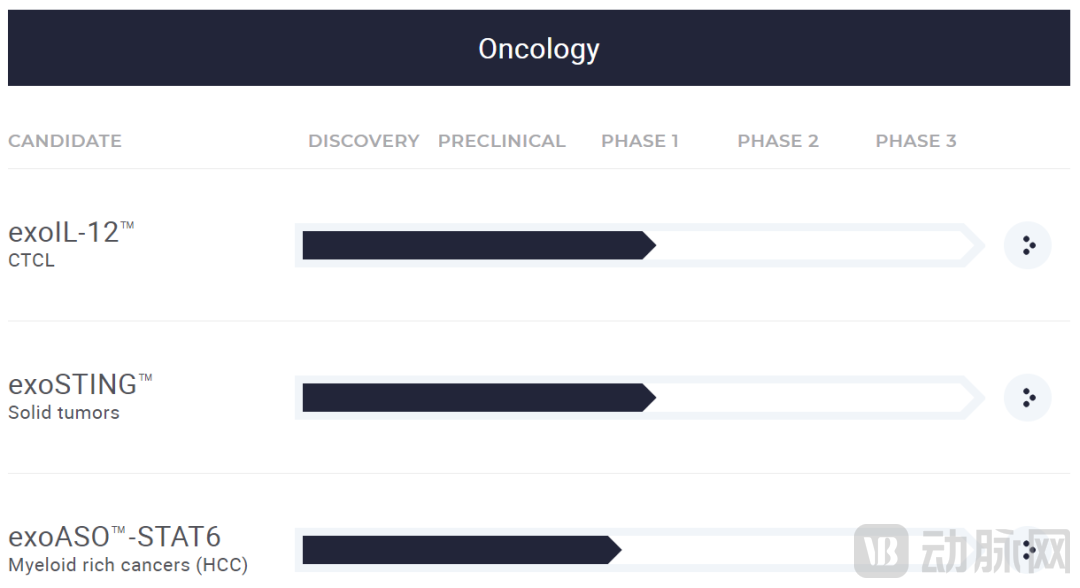
ExoSTING integrates STING (stimulator of interferon genes) agonists into the lumen of exosomes., while expressing the PTGFRN protein on the exosome surface. High-level expression of PTGFRN enables targeted delivery of STING agonists to antigen-presenting cells (APCs) within the tumor microenvironment, inducing the expression of interferon genes and locally activating the body’s immune response to kill tumor cells. The primary indication for ExoSTING is solid tumors, with potential therapeutic applications in patients with metastatic head and neck squamous cell carcinoma, triple-negative breast cancer, anaplastic thyroid cancer, and cutaneous squamous cell carcinoma.
ExoASO-STAT6 focuses on the treatment of diseases such as hepatocellular carcinoma, pancreatic ductal adenocarcinoma, and colorectal cancer.. ExoASO-STAT6 is also an engineered exosome-based precision drug candidate, designed toSelective Delivery of ASOs (Antisense Oligonucleotides), whose base sequence can be complementary to specific target RNA sequences, thereby affecting the expression of target genes (e.g., by binding to corresponding mRNA to silence it), in order to disrupt STAT6 signaling in tumor-associated macrophages (TAMs) and induce an anti-tumor immune response. TAMs promote tumor growth by exhibiting an immunosuppressive M2 phenotype; reprogramming TAMs into a pro-inflammatory M1 phenotype represents a potential strategy for inducing an anti-tumor immune response.
After establishing the core technologies for engineered exosome design,Codiak opts for a collaborative R&D model with pharmaceutical companies and well-funded research institutionsThis move enables Codiak, a young company burdened with heavy R&D costs yet possessing limited commercialization capabilities, to focus on the development of innovative drug delivery technologies, accelerate its R&D progress, and alleviate financial pressure through milestone payments. Furthermore, Codiak can leverage the biopharmaceutical partner’s industrial expertise in clinical trials, new drug applications, and commercial promotion to enhance the success rate of new drug development and market launch. It also positions Codiak to secure future royalty revenues from product sales in advance, thereby rapidly capturing market share in the exosome therapeutic sector.
In early 2019, Codiak entered into a collaboration agreement with Jazz. Under the terms of the agreement, Jazz agreed to pay Codiak an upfront payment of $56 million and up to $20 million in preclinical development milestone payments across all five programs. For each target achieving milestones, Jazz will pay up to $200 million. Furthermore, upon completion of Phase I/II clinical trials, Jazz will be responsible for subsequent clinical trials, New Drug Application (NDA) submissions, and commercialization.
In June 2020, Codiak entered into a collaboration agreement with Sarepta Therapeutics, a biopharmaceutical company specializing in rare diseases, to develop drugs targeting five neuromuscular disorders. Sarepta Therapeutics provided $10 million in research and development funding and secured exclusive options for the future commercial development of candidate drugs with promising potential. For candidates under these options, Codiak is responsible for preclinical research and development as well as regulatory filings for clinical trials, while Sarepta will oversee clinical development and future commercialization. Concurrently, given that this development phase coincided with the COVID-19 pandemic, Codiak established two strategic partnerships with the Ragon Institute to jointly develop engineered exosome-based vaccines against SARS-CoV-2 (the virus causing COVID-19) and human immunodeficiency virus (HIV), leveraging Codiak’s modular vaccine platform, exoVACC.
Inescapable Bankruptcy: The Curse of Innovative Drug R&D or Insufficient Product Differentiation?
However, even with financing funds and the initial payment from commercial collaborations, Codiak could not escape the fate of bankruptcy.
The first crack appeared in August 2022, when Codiak once again adjusted its strategy and laid off more than one-third of its employees (leaving only 53 full-time employees),and suspended the Phase II clinical development plans for two candidate drugs, which happened to be ExoIL-12 and ExoSTING, both of which had been progressing smoothly. Meanwhile, Codiak announced that the company would subsequentlyFocus resources on exoASO-STAT6, which was in Phase I clinical trials at the time.. Codiak also retained its preclinical pipeline, engEx-AAV, aimed at strengthening its AAV vector-based gene therapy pipeline.
At the end of September 2022, Codiak held $51.8 million in cash, cash equivalents, and securities. However, due to a net loss of $19.3 million for the quarter, the company needed to secure substantial funding to bridge the capital gap and sustain operations—a significant financial hurdle often encountered in innovative drug development.
However, some industry observers argue that any discussion of Codiak’s bankruptcy cannot bypass the development of exosome technology, nor can it overlookCodiak’s Internal Decision-Making and Clinical Outcomes of Its Pipeline Products。
ExoIL-12 and ExoSTING announced their Phase I clinical trial results in 2022. Phase I trials primarily focus on dose determination and safety assessment. Due to systemic toxicity, IL-12 has long faced challenges in drug development; therefore, Codiak’s ExoIL-12 has been highly anticipated within the industry. The Phase I clinical results demonstrated a favorable safety profile, with ExoIL-12 even achieving complete remission in cutaneous T-cell lymphoma. However, the issue lies inFavorable safety results have not elicited a significant response from the industry, after all, when exosomes emerged as a brand-new and highly popular concept, both the academic community and the market placed high expectations on related products, andFavorable safety results are still insufficient to meet such high expectations.。
Secondly, the indication for ExoIL-12 is a type of skin cancer, and the route of administration isIntratumoral Injection. Although this R&D direction was determined by an internal company decision, intratumoral injection itself is an approach that can be achieved by traditional chemotherapy as well as therapies such as oncolytic viruses, andCodiak Has Not Innovated in Drug Delivery Methods, which still falls somewhat short of expectations. As one of the founders, Kalluri has rarely publicly discussed the company’s exosome research business since 2020.
In an interview, Dr. Zeng, who previously worked at Codiak, stated, “As a drug delivery system, exosomes are expected to demonstrate superior advantages compared with other drug delivery systems, such as lipid nanoparticles (LNPs) and viral vectors.”"If it fails to demonstrate a particularly significant advantage, it becomes a negative factor. In many industries, anything that is not positive is negative, with no middle ground."”
Overall, as a pioneer, Codiak has successfully advanced two programs into clinical trials.The safety of heterologous exosomes has been demonstrated, while clinical outcomes have simultaneously reflected their efficacy.. The company’s GMP-certified manufacturing facilities have demonstrated that large-scale production and quality control are not significant hurdles for exosomes. If one must identify a shortcoming, it is perhaps the lack of appeal associated with intratumoral injection as a route of administration among a field of innovative products. For a company hailed as an “exosome pioneer,” this approach has failed to impress the industry, leading to modest valuation expectations from the capital markets and limiting Codiak’s ability to secure greater returns at this stage.
Characterized by favorable safety profiles, repeatability of administration, and the ability to cross biological barriers, exosomes have made drug delivery a highly promising and prominent focus in their clinical applications. For instance, pulmonary drug delivery via exosomes holds promise for non-invasive administration through inhalation. Given that exosomes possess inherent tissue selectivity and can maintain prolonged retention in the lungs, they offer distinct differential advantages. Furthermore, delivery scenarios and challenges that remain inadequately addressed represent areas where exosomes may achieve breakthroughs.
As for Codiak’s legacy, founder Williams’ words may serve as a summary: “It is encouraging to see one of Codiak’s core principles validated in current trials—namely, that engineered exosomes offer the opportunity to deliver customized therapeutic payloads to elicit positive biological responses while limiting unintended side effects.”