

Evelo Biosciences Files Dissolution Plan with SEC Following Clinical Failures in Exosome Drug Transition

Evelo Biosciences
Clinical-stage biopharmaceutical R&D company
On November 20, 2023, after experiencing a series of clinical trial failures, the board of directors of live biotherapeutic company Evelo Biosciences (hereinafter referred to as “Evelo”) filed its Dissolution Plans with the U.S. Securities and Exchange Commission, stating that this move was the best option to preserve the interests of the company’s shareholders.
Evelo focused on the microbiome in its early stages, striving toLeveraging Microbes to Modulate the Gut and Regulate Immune Responses, and was once favored by investors, with a market capitalization exceeding $2 billion (over RMB 10 billion). However, the chain reaction triggered by subsequent product failures caused this former star to plummet into abyss overnight. In a bid for survival, Evelo Biosciences exhausted every possible measure to turn the tide: from cutting its pipeline, pivoting R&D focus, implementing large-scale layoffs, and replacing management to seeking acquisition or merger. Nevertheless, it could not escape the fate of collapse. Primarily due to poor product performance and dim financing prospects, no party was willing to acquire its assets after its cash flow was completely depleted. Ultimately, Evelo Biosciences found that dissolution was the only viable option.
The stark contrast between Evelo’s rise as a rising star and its eventual liquidation and dissolution makes its fate lamentable. Incubated by the top-tier investment firm Flagship Pioneering, this biotech company explored uncharted territories and raised a cumulative $213 million in primary market financing based on novel technological concepts; it did not deserve such an outcome.
From Microbial Therapies to the Exosome Space: From a $2 Billion Market Cap to a 50% Plunge in Share Price
In 2015, the renowned venture capital firm Flagship Pioneering founded Evelo Biosciences. Evelo is a company that treats cancer, inflammatory diseases, and other conditions by identifying specific monoclonal bacterial strains that target small intestinal immune cells to modulate systemic immune responses. The combination of cancer immunotherapy and the microbiome has drawn significant attention to the company since its inception.
Thus, Evelo became the first company to treat cancer, autoimmune diseases, and inflammatory diseases by researching microbiome immunotherapy.
Dr. Simba Gill, Chief Executive Officer of Evelo Biosciences and Senior Partner at Flagship Pioneering, has extensive expertise in antibodies, stem cells, directed molecular evolution, gene therapy, and immunodiagnostics. He holds an MBA from INSEAD and a Ph.D. from King’s College London. Prior to joining Evelo, Dr. Gill served as President and CEO of moksha8 Pharmaceuticals. From 2016 to 2019, he also served as a Director of Realm Therapeutics PLC. Additionally, Dr. Gill has held key positions at Maxygen, Systemix, Verdia, Avidia, and Valentis.
One year after its founding, Evelo merged with Epiva Biosciences, a company dedicated to researching treatments for allergies, inflammation, and autoimmune diseases. The merged entity retained the name Evelo, but its development focus remained on microbiome-based immunotherapies.
Notably, since its inception, Evelo has completed four rounds of financing. Following the completion of its Series C funding in 2018, Evelo successfully listed on the Nasdaq and raised a total of $85 million through its initial public offering (IPO). It took Evelo only four years to go from establishment to its IPO.
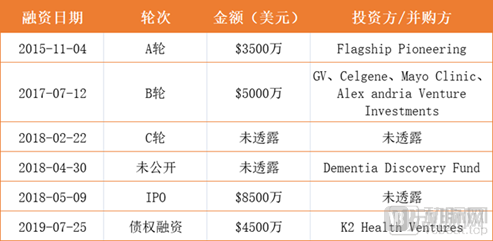
During this period, Evelo partnered with the University of Chicago to jointly advance microbiome-based cancer immunotherapy. Shortly thereafter, Evelo entered into a collaboration with the Mayo Clinic on immuno-microbiome cancer therapies, which leverage bacteria to activate the body’s immune system for tumor treatment. Under this partnership, Evelo utilized the Mayo Clinic’s proprietary technology to establish a tumor-associated bacterial library and identify bacterial strains within this library capable of helping combat tumors.
Evelo aims to develop orally delivered drugs based on the small intestine axis SINTAX™. The small intestine is a vital site for food digestion and absorption in the human body, as well as an important component of the immune system. The small intestine axis refers to the connection between the small intestine and all other organs and tissues; its existence enables the small intestine to exert significant regulatory control over the human biological system. SINTAX plays a core role in regulating immunity, metabolism, and the nervous system, but its importance in disease resistance was long overlooked by the academic community and has only gained recognition in recent years.
Evelo envisions encapsulating a single bacterial strain in capsules that, once ingested by patients, travel to the small intestine and gut-associated lymphoid tissue (GALT). Dendritic cells detect these microbial changes in the gut and alert the lymphatic system, prompting the body to mount specific immune responses tailored to the sensed microbes.To identify these special single strains, Evelo developed an integrated platform.
Evelo’s proprietary platform follows a four-step workflow: first, identifying microbial strains through compelling pharmacological characterization involving microbiology, in vitro human studies, and animal models; second, selecting individual strains and determining product formats based on the screened candidates; third, defining the drug’s target site, appropriate dosage form, and optimal dosing; and fourth, developing the drug through internal processes and partnerships to ensure product potency and quality.
Leveraging this platform, Evelo Biosciences has deployed a series of oral drug development programs based on single microbial strains, including its lead candidate EDP1503 for cancer treatment and EDP1815 for inflammatory diseases. Furthermore, as the company went public amid the COVID-19 pandemic, Evelo sought to capitalize on the trend by announcing the advancement of EDP1815 for the treatment of COVID-19, while also highlighting EDP1503 as a therapeutic candidate for tumors. However, this diversified strategy did not yield breakthroughs across multiple fronts; instead, it consumed substantial capital.
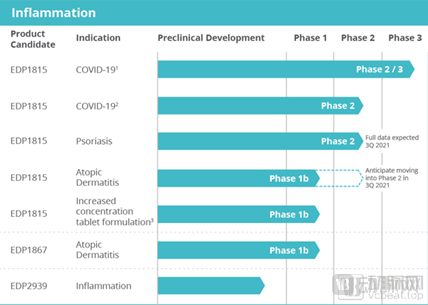
Evelo's Pipeline as of April 2021
However, although Evelo has a large number of pipeline candidates, in reality onlyEDP1867, EDP1815, and EDP2939 for the Treatment of Inflammatory Diseases Are Leading in Development Progress, carrying high expectations. On the other hand, after entering 2022, Evelo’s raised funds continued to be consumed, but its own luck had run out.
In April 2022, Phase I data for EDP1867 in the treatment of atopic dermatitis were released. Due to the lack of significant efficacy, the company announced the suspension of EDP1867’s development to focus on EDP1815.
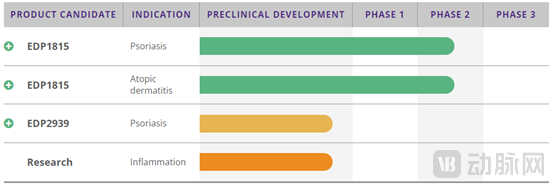
Evelo’s R&D Pipeline as of March 2023
In February 2023, Evelo Biosciences updated the results of its Phase II study of EDP1815 for the treatment of atopic dermatitis. The trial failed to meet its primary endpoint in Phase II clinical development, with efficacy even inferior to that of placebo. This data caused Evelo’s stock price to plummet by 50% on the same day. The company subsequently announced a 48% workforce reduction to conserve cash and sustain operations through the third quarter of 2023. On April 26, 2023, data from the fourth cohort of EDP1815 in the treatment of atopic dermatitis again failed to meet the primary endpoint of the clinical trial, marking the failure of the Phase II study.
Evelo has urgently halted further development of EDP1815 for the treatment of atopic dermatitis, redirecting resources to its next-generation exosome platform and the extracellular vesicle (EV) therapeutic candidate EDP2939. Concurrently, Evelo will implement workforce reductions to cut costs.
Exosome Drug Failure: The Last Straw
In March 2023, Evelo announced that its first EV candidate product, EDP2939, had been administered in a Phase II clinical trial for psoriasis after completing the safety and tolerability review in the first cohort of human volunteers. Safety and tolerability assessments across multiple ascending dose cohorts are ongoing.
Dr. Duncan McHale, Chief Medical Officer of Evelo Biosciences, stated that this isMilestones for EDP2939 and Evelo’s Broader Oral Exosome Platform, and claimed that this Phase II clinical trial marks the first-in-human study of oral administration of a potential bacterial extracellular vesicle (EV) drug. Safety and tolerability are core elements in Evelo’s drug development for treating inflammatory diseases across all stages and types.
Exosomes and EDP2939, as a novel SINTAX drug, have shown promise in preclinical studies, with the potential for biologic-like efficacy based on three factors: the high intrinsic potency of EVs in preclinical models, the quantity and concentration of EVs deliverable in a single capsule, and delivery to the target site in the proximal small intestine.
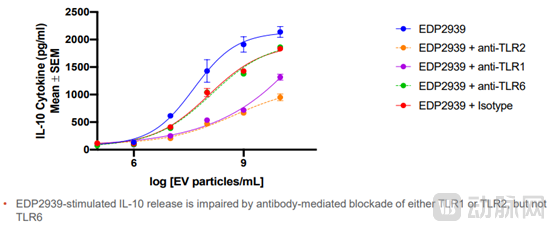
Preclinical Data Indicate EV as an Effective Therapy
EDP2939-101 is a multicenter, randomized, placebo-controlled Phase I/II trial evaluating the safety, tolerability, and clinical efficacy of EDP2939. The Phase I portion of the trial aims to determine the safety and tolerability of multiple ascending doses in human volunteers. The Phase II portion aims to determine the efficacy of EDP2939 at the proposed therapeutic dose in patients with moderate plaque psoriasis. The primary endpoint is the proportion of patients achieving a 50% improvement from baseline in the Psoriasis Area and Severity Index (PASI) score (PASI-50 response) after 16 weeks of daily oral administration of EDP2939 or placebo. The PASI-50 response was selected because it is clinically meaningful for patients with moderate psoriasis. Secondary endpoints include several physician- and patient-reported psoriasis outcomes, as well as further safety assessments. The trial is expected to enroll approximately 110 patients, who will be randomized in a 1:1 ratio to receive either EDP2939 capsules or matching placebo.
Subsequently, in October 2023, Evelo announced the topline results from its Phase II clinical trial of EDP2939 for the treatment of moderate psoriasis. The study’s primary endpoint—the proportion of patients achieving a ≥50% improvement from baseline in Psoriasis Area and Severity Index (PASI) scores (PASI-50 response) after 16 weeks of daily dosing—was not met. Overall safety data were consistent with those previously reported in the Phase I portion of this study: EDP2939 was well tolerated, with adverse events (AEs) comparable to those observed in the placebo group.
For Evelo, whose industry and market credibility had been eroding amid a string of disastrous clinical trial results from its pipeline in 2022–2023, these findings were undoubtedly the final straw. Codiak, a pioneer in exosome therapeutics, exhausted substantial resources without achieving efficacy; consequently, Evelo, seeking a rapid turnaround, found itself equally unable to break through this impasse.
$1.5 Billion Deal Emerges in Once “Unclaimed” Innovation Frontier
In addition to frequent management turnover, excessive financial pressure caused by insufficient capital efficiency (e.g., overly dispersed initial fund allocation),Evelo’s mid-strategy pivot to exosomes as its entry point was also viewed unfavorably by the industry., and the timing of Evelo’s pivot was hardly auspicious, as it coincided with the bankruptcy of Codiak, a pioneer in exosome therapeutics, due to clinical data that failed to meet expectations.
Codiak previously faced the challenge of pioneering from scratch, as exosomes represented an uncharted innovative frontier when it first entered the market. Although the industry grapples with the question of “how new life emerges after a giant falls,” the failures of Codiak or Evelo Biosciences do not imply that the technological pathway for exosome development is flawed. EVOX Therapeutics (hereinafter referred to as “EVOX”), a peer of Codiak, solidified its leading position in the exosome therapy field by acquiring Codiak’s engEx-AAV™ technology platform on June 20, 2023.
Capricor Therapeutics (NASDAQ: CAPR, hereinafter referred to as Capricor), a publicly listed company, is regarded as the frontrunner among exosome therapy enterprises. Capricor is dedicated to advancing translational cell and exosome therapies to redefine the treatment landscape for rare diseases. Its leading innovative candidate is deramiocel (CAP-1002), an allogeneic cardiac-derived cell therapy. Extensive preclinical and clinical studies have demonstrated that deramiocel exhibits immunomodulatory, anti-fibrotic, and regenerative effects specifically targeting muscular dystrophy and cardiovascular diseases.
On September 17, 2024, Capricor announced that it had entered into a binding term sheet with Nippon Shinyaku Co., Ltd. Under the terms, Nippon Shinyaku will commercialize and distribute Capricor’s primary asset, deramiocel, for the treatment of Duchenne muscular dystrophy (DMD) in Europe. Capricor will receive a $15 million equity investment at a 20% premium, along with a $20 million upfront payment upon execution of the definitive agreement. The deal includes potential milestone payments totaling up to $715 million and double-digit royalties on product sales. The total potential value of the comprehensive distribution agreement, including milestones, is approximately $1.5 billion, marking the largest transaction in the exosome field to date.
Moreover, other players with more robust “capabilities” are also entering this arena. As of the first half of 2024, there were over 50 companies worldwide engaged in the development of exosome-related products. In China, according to data from Weidu Zongheng, there are mainly 15 exosome-related enterprises: three (Qinglian Baiao, Ensair Bio, and Shenzhen Huixin) primarily provide exosome isolation, purification, and testing services; seven are developing exosome drug-delivery platforms and therapeutics; four focus on exosome-based diagnostics; and one (Weina Nucleic Acid Biotech) is involved in both exosome drug development and diagnostic services.